Removing rust from your kitchen knives is easier than you think. Start by using specialized metal polish or fine steel wool for stubborn spots. Natural remedies, like baking soda paste or vinegar, effectively break down rust without harsh chemicals. If the rust is extensive, consider a commercial rust remover. Always dry your knives immediately after washing and store them in a dry place to prevent future corrosion. Want to learn more about effective techniques and products? Keep going!
Understanding the Causes of Rust on Kitchen Knives
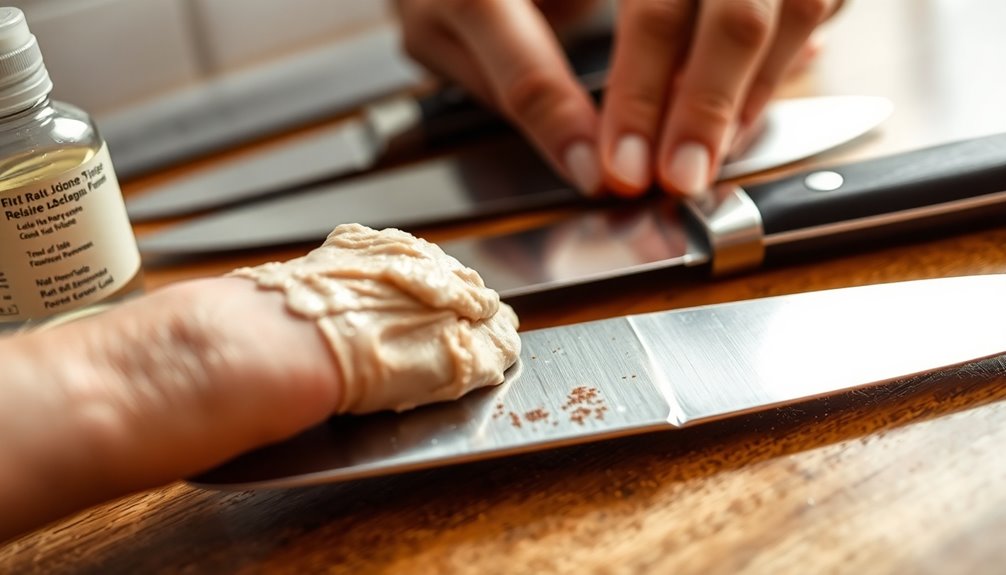
While you mightn’t think about it often, understanding the causes of rust on kitchen knives is vital for maintaining their quality and longevity. Rust formation occurs when your knives come into contact with moisture, especially in a humid environment.
Understanding rust causes on kitchen knives is crucial for preserving their quality and extending their lifespan.
If you wash your knives and leave them wet or fail to dry them properly, you’re inviting corrosion. Additionally, certain foods, like acidic ones, can accelerate rust development.
Knife care is essential; always hand wash your knives instead of tossing them in the dishwasher, which can cause scratches and damage the protective coating.
Finally, storing knives in a damp drawer can promote rust, so consider keeping them in a dry, well-ventilated area. Taking these steps can greatly reduce the risk of rust. Using eco-friendly methods for cleaning and maintaining your kitchen tools can also help prolong their life and prevent corrosion.
Essential Products for Rust Removal: A Quick Overview
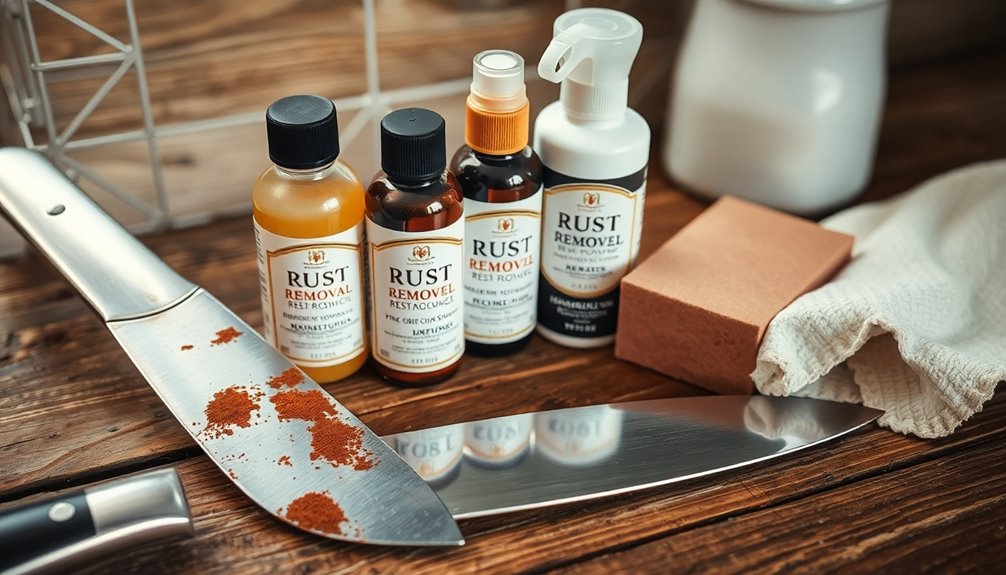
When it comes to removing rust from kitchen knives, having the right products on hand can make all the difference. Start with a good rust remover, like a specialized metal polish, which effectively tackles rust while protecting your blade.
For stubborn spots, consider using fine steel wool or a soft scrub pad; these cleaning tools can help without scratching the surface.
Don’t forget about rust prevention! After cleaning, apply a thin layer of mineral oil or food-safe wax to create a barrier against moisture.
Finally, keeping your knives dry and stored properly can greatly reduce rust formation. Regular inspection of knives for debris and damage ensures continued performance and longevity.
With these essential products, you’ll not only restore your knives but also maintain their longevity and performance in your kitchen.
Natural Remedies for Tackling Rust: Household Solutions
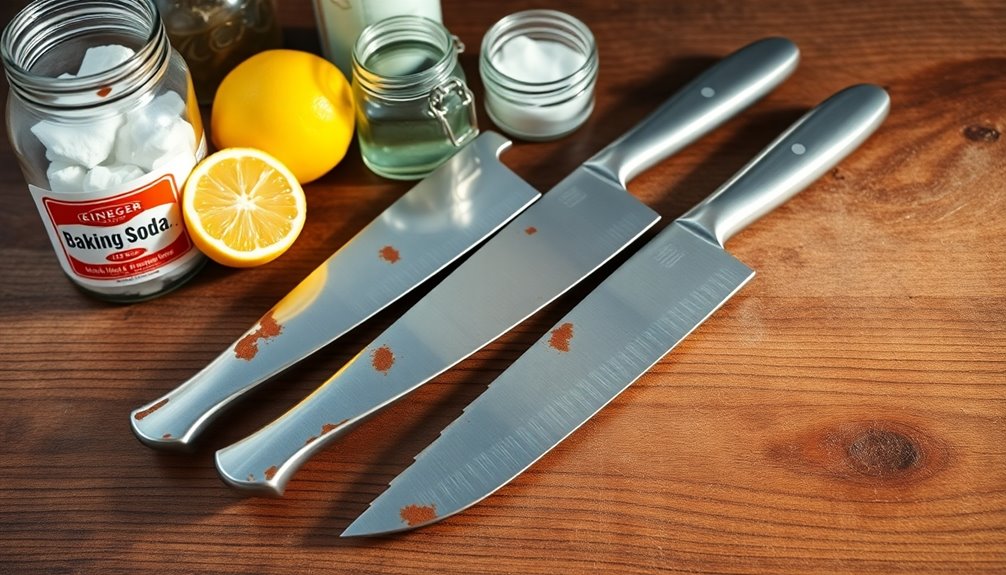
If you’re looking for effective and eco-friendly ways to remove rust from your kitchen knives, several household solutions can come to the rescue.
One of the simplest methods involves using lemon juice. Just squeeze fresh lemon juice onto the rusted areas, let it sit for about 10 minutes, and then scrub with a soft cloth.
For tougher rust spots, try a salt paste. Mix equal parts salt and lemon juice to create a thick paste. Apply it directly to the rust, letting it sit for 30 minutes before gently scrubbing with a cloth or sponge.
Rinse thoroughly and dry immediately. These natural remedies not only save your knives but also keep your kitchen safe from harsh chemicals. Additionally, using lemon juice as a natural degreaser can help maintain the overall cleanliness of your kitchen tools.
Commercial Rust Removers: When to Use Them?
Natural remedies can be great for minor rust spots, but sometimes you need a stronger solution. When rust takes over your kitchen knives, it’s time to contemplate commercial rust removers.
These products often deliver superior removal effectiveness, quickly breaking down stubborn rust that household solutions can’t handle. If you notice extensive corrosion or deep pitting, don’t hesitate to reach for a commercial rust remover.
They’re formulated to penetrate tough rust layers, making the restoration process much simpler and faster. Just remember to follow the manufacturer’s instructions closely to guarantee safety and ideal results. Additionally, be aware that rising raw material costs can affect the availability and pricing of these commercial products.
With the right commercial rust remover, you can restore your knives and keep them in top shape for all your culinary adventures.
How to Use Baking Soda for Rust Removal
Baking soda is an effective and affordable option for removing rust from your kitchen knives, especially if you want to avoid harsh chemicals.
Baking soda offers a safe and budget-friendly solution for rust removal on kitchen knives.
To use it, start by creating a paste with baking soda and a bit of water. Apply this paste directly onto the rusted areas of your knives. Let it sit for about 15-20 minutes to allow the baking soda effectiveness to take hold.
Then, scrub the rust gently with a soft cloth or sponge. Rinse your knife thoroughly with water and dry it completely to prevent further rust formation. For ongoing rust prevention, remember to store your knives in a dry environment and wipe them after use. With these tips, you’ll keep your kitchen knives rust-free! Additionally, using natural ingredients like baking soda aligns with the importance of non-toxic cleaners in promoting a safe and healthy kitchen environment.
The Power of Vinegar: A Step-by-Step Guide
Vinegar is a powerful ally in the battle against rust on your kitchen knives.
In this guide, you’ll learn how to effectively apply vinegar for rust removal and discover essential maintenance tips to keep your knives in great shape. Vinegar contains 4-6% acetic acid which is effective against bacteria and odors, making it a great choice for cleaning and rust removal.
Let’s get started on restoring your blades to their former glory!
Vinegar’s Rust-Removing Properties
If you’ve noticed rust forming on your kitchen knives, you’ll be pleased to know that vinegar can effectively tackle this common issue. The secret lies in its acetic acid content, which works wonders at breaking down rust.
Vinegar benefits your knives not only by removing corrosion but also by preventing future rusting when used regularly. This household staple is safe for most metals, making it an ideal choice for maintaining your kitchen tools.
Plus, it’s easy to find and inexpensive, giving you a practical solution without the need for harsh chemicals.
Application Method Explained
To effectively remove rust from your kitchen knives using vinegar, follow this simple step-by-step guide.
First, gather your materials: white vinegar, a soft cloth, and a non-abrasive sponge.
Submerge the rusty knife in vinegar for about 30 minutes. The acetic acid will work its magic, loosening the rust.
After soaking, use the sponge to gently scrub away the loosened rust. Rinse the knife thoroughly with water to guarantee all vinegar residue is removed.
Dry it immediately with a soft cloth to prevent further rust formation.
Finally, apply a thin layer of mineral oil to the blade for rust prevention.
Post-Cleaning Maintenance Tips
Once you’ve successfully removed rust from your kitchen knives, maintaining their condition becomes essential for longevity and performance.
To guarantee effective knife care, consider using vinegar as a rust prevention measure. After cleaning, wipe your knife with a vinegar-soaked cloth to create a protective barrier against moisture. This simple step helps prevent future rust formation.
Additionally, always dry your knives thoroughly after use and store them in a dry place. Avoid leaving them in the sink or submerged in water, as prolonged exposure to moisture can lead to rust.
Regularly oiling your knife blades with food-safe mineral oil can also enhance protection. By following these tips, you’ll keep your kitchen knives in top shape for years to come.
Preventative Measures: Keeping Your Knives Rust-Free
To keep your kitchen knives rust-free, it’s essential to adopt proper cleaning techniques and drying methods.
After each use, make sure to wash and thoroughly dry your knives to prevent moisture buildup. Additionally, consider effective storage solutions that protect your blades from the elements and potential damage. Regular maintenance contributes significantly to the longevity of stainless steel appliances, ensuring your knives remain in optimal condition.
Proper Cleaning Techniques
While it might seem tempting to toss your knives in the dishwasher after use, taking the time to clean them properly can prevent rust and extend their lifespan.
For effective knife care, wash your knives by hand using warm, soapy water and a soft sponge. Avoid abrasive cleaners or scouring pads that could scratch the blade. Rinse thoroughly to remove any soap residue, then dry immediately with a clean cloth.
Establish a regular cleaning frequency—after each use is ideal—to keep your knives in top condition. Remember, quick attention to food residue and moisture is key to preventing rust.
Treat your knives with care, and they’ll reward you with longevity and performance in the kitchen.
Drying Methods
After washing your knives, it’s crucial to dry them properly to prevent rust. You can choose between two effective methods: air drying and towel drying.
If you opt for air drying, place your knives on a clean, dry surface, guaranteeing they’re spaced out to allow for proper airflow. However, this method may take longer.
Towel drying, on the other hand, involves using a soft, lint-free cloth to wipe down each knife thoroughly. Make sure to dry all surfaces, including the handles and any crevices.
Whichever method you choose, always verify your knives are completely dry before putting them away. This simple habit can greatly extend the life of your kitchen knives and keep them rust-free.
Storage Solutions
Proper drying is just one part of keeping your kitchen knives rust-free; how you store them is equally important.
Using knife blocks is a great way to protect your blades. These blocks not only keep your knives organized but also shield them from moisture and contact with other utensils that can cause damage.
Alternatively, magnetic strips offer a stylish and functional storage solution. They keep your knives visible and easily accessible while promoting airflow, which helps prevent rust.
Whichever method you choose, make certain your knives are completely dry before placing them in storage.
Regularly check your storage area for any signs of humidity and take action to maintain a dry environment, keeping your knives in top condition for years to come.
Maintenance Tips for Long-Lasting Kitchen Knives
To keep your kitchen knives in top shape, regular maintenance is essential. Start by using proper sharpening techniques; a sharp knife not only performs better but also lasts longer. Invest in a good quality whetstone or honing rod, and practice your skills to maintain the blade’s edge.
Cleaning your knives immediately after use is vital; avoid soaking them in water to prevent rust. Dry them thoroughly with a soft cloth. Additionally, apply a light coat of mineral oil to the blade occasionally for added protection. Regularly inspecting and cleaning your knives helps to maintain flavor quality and ensures they remain in excellent condition.
Finally, store your knives safely to prevent chips and damage. By following these simple tips, you’ll enhance knife longevity and enjoy the benefits of well-maintained kitchen tools for years to come.
When to Seek Professional Help for Rusty Knives?
How can you tell when it’s time to seek professional help for your rusty kitchen knives? If you notice any of these signs indicating that DIY methods just won’t cut it, it’s best to contemplate professional restoration:
- Extensive rust that covers a large area
- Pitting or deep corrosion that affects the blade’s integrity
- Emotional attachment to a valuable knife
- Difficulty in achieving a satisfactory level of sharpness
- Uncertainty about proper restoration techniques
Don’t hesitate to reach out to a professional if your knives show these signs. They can help bring your kitchen tools back to life, ensuring they’re safe and effective for your culinary adventures. Regular maintenance with appropriate cleaning products is crucial for preserving the quality of your knives.
Reach out to a professional for restoration to ensure your knives are safe, effective, and ready for culinary adventures.
Protect your investment and enjoy cooking with restored, reliable knives!
Conclusion
In the kitchen, your knives are like trusty allies, ready to help you create culinary masterpieces. But just like any good friendship, they need care and attention to thrive. By using the right products and preventive measures, you can keep rust at bay, ensuring your knives remain sharp and reliable. Think of it as polishing a diamond; with a little effort, you’ll preserve their brilliance for years to come and enjoy the fruits of your labor.