To revitalize your painted wood furniture, clean it regularly and avoid abrasive materials. Dust it weekly and tackle stains with a mild soapy solution or a baking soda paste. For tougher spots, a mix of vinegar and water works wonders. Always dry the surfaces promptly to prevent moisture damage. Consider eco-friendly products for a safer clean. Want to discover more tips and techniques to keep your furniture looking fresh? There’s plenty more to explore!
How Often to Clean Painted Wood Furniture?
To keep your painted wood furniture looking its best, you should dust it at least once a week.
Regular cleaning is essential for maintaining that vibrant appearance you love. Dusting helps prevent scuffing and keeps dirt from accumulating, which can lead to stains and long-term damage.
If you notice any residue or stains, tackle them quickly to preserve the integrity of the painted finish. You’ll find that more thorough cleaning is necessary for painted furniture compared to natural finishes.
By incorporating consistent maintenance into your routine, you not only prolong the life of your furniture but also enhance the overall aesthetic of your space. Streamlined cleaning processes can enhance cleaning efficiency and make your routine more enjoyable.
Make cleaning a habit, and your painted furniture will stay beautiful for years to come.
How To Naturally Clean Painted Cabinets
Maintaining the beauty of your painted cabinets is easier than you might think.
To naturally clean painted cabinets, mix a 50/50 solution of vinegar and warm water. This effective mixture cuts through grime without damaging the finish. Mist the solution onto your cabinets using a spray bottle, then wipe it down with a soft cloth dampened with clean water to eliminate any residual cleaner.
For tough stains, create a paste with baking soda and water, and gently scrub with a moist sponge or soft toothbrush. Always avoid soaking your cabinets to prevent damage, and steer clear of harsh chemicals like bleach or ammonia.
Regular dusting with a microfiber cloth keeps your cabinets looking fresh and well-maintained. Additionally, incorporating regular inspections of your plumbing systems can prevent water damage that may affect your cabinetry.
Step By Step Process to Clean Painted Wooden Kitchen Cabinets
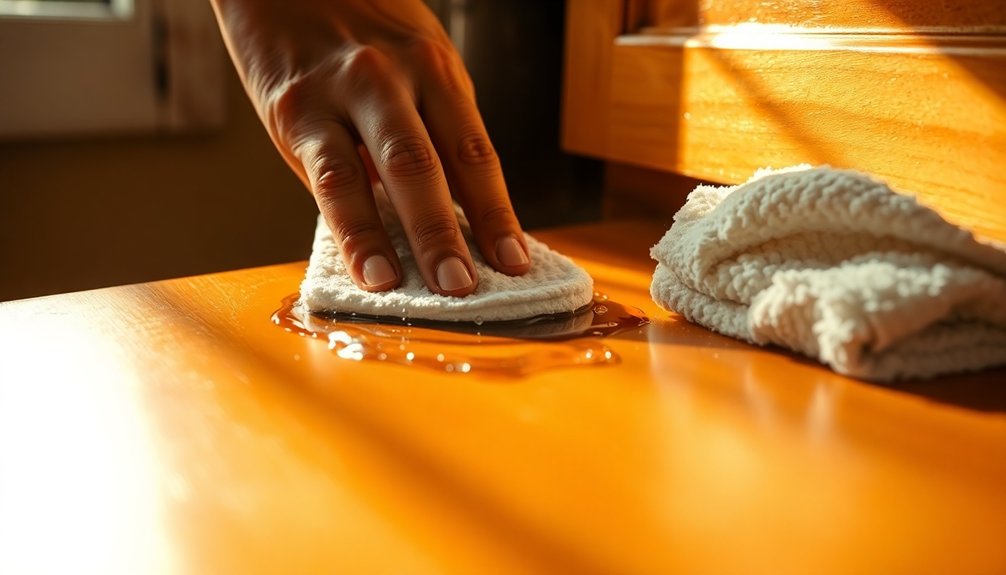
Cleaning your painted wooden kitchen cabinets can be a straightforward process that keeps them looking fresh.
Start by emptying the shelves to access all surfaces easily. Next, mix warm water with a few drops of dish soap, and use a soft cloth to wipe down the cabinet exteriors, avoiding excessive moisture.
Empty the shelves first for easy access, then mix warm water and dish soap to gently wipe down cabinet exteriors.
For tough grease stains, create a paste of baking soda and water, applying it to the stain and gently scrubbing with a moist sponge or an old toothbrush until it lifts.
Don’t forget to clean the interiors with the toothbrush to reach crevices. Make sure all surfaces are dry before replacing items to prevent moisture damage. Regular dusting and deep cleaning sessions will help maintain the paint finish. Additionally, using a soft sponge and mild dish soap during your cleaning routine can help reduce bacteria and odors.
Tips for Getting Rid of Spots on Painted Cabinets
While spots on painted cabinets can be frustrating, there are effective ways to tackle them without damaging the finish.
For fingerprints on painted cabinet doors, mix equal parts water and vinegar as your cleaning solution on a damp cloth. This method cleans effectively without harming the surface.
For grease stains, apply diluted vinegar directly to the affected area, then wipe it clean.
Always clean food spills promptly with a moist towel, then sprinkle a bit of baking soda to absorb any lingering residue.
To prevent water stains, use distilled water instead of tap water during cleaning.
Regular cleaning sessions, ideally weekly, will help maintain a spotless appearance and prevent dirt buildup on your cabinets. Additionally, consider using a reliable disinfectant like Clorox Free & Clear Multi-Surface Spray Cleaner to ensure surfaces remain germ-free while cleaning.
How to Clean White Painted Furniture Effectively
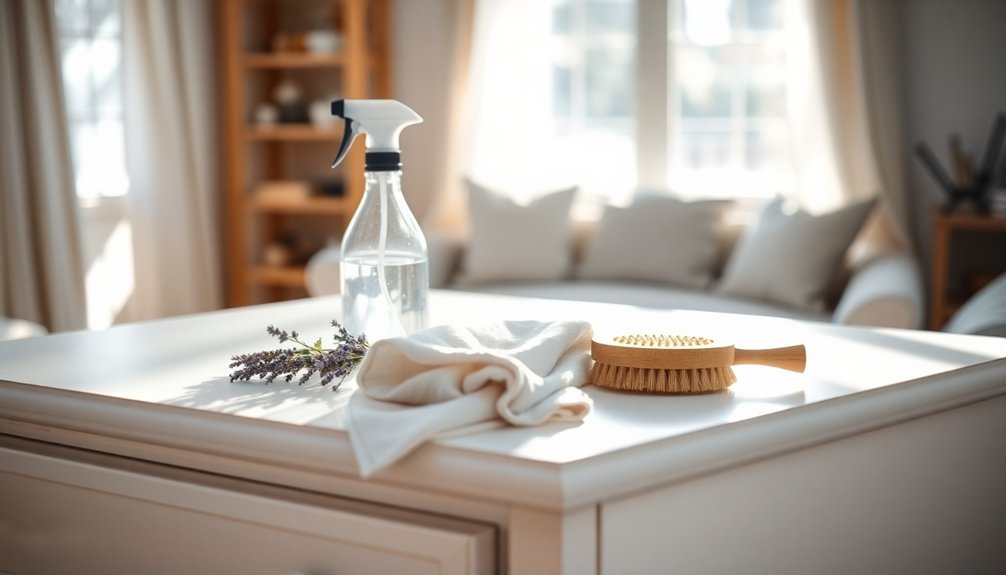
Cleaning white painted furniture requires gentle techniques to keep it looking fresh. You’ll want to schedule regular maintenance sessions to prevent dirt buildup that can lead to tougher stains. Regular cleaning can also enhance the longevity of surfaces and improve overall aesthetics.
Gentle Cleaning Techniques
To keep your white painted furniture looking pristine, use gentle cleaning techniques that won’t compromise its finish.
Start with regular cleaning to prevent dust buildup, which shows more on white surfaces. Use a soft, lint-free cloth to wipe away dirt, applying a mild soapy solution made from warm water and a few drops of dish soap. Always work in gentle, circular motions to protect the painted surface.
For tough stains, apply a baking soda paste lightly and follow up with a damp cloth to remove any residue. Be sure to dry the cleaned areas promptly with a second cloth to avoid moisture buildup, which can lead to unsightly water stains on your furniture’s finish.
Regular Maintenance Practices
Regular maintenance is essential for keeping your white painted furniture looking fresh and vibrant. Dust your pieces at least once a week using a microfiber cloth to prevent dirt and grime buildup.
When you clean painted furniture, use gentle, circular motions with a damp, lint-free cloth to tackle smudges and fingerprints, avoiding excessive pressure that could damage the paint.
For tougher stains, mix equal parts vinegar and warm water, applying it with a cloth and rinsing with clean water afterward. To prevent water damage, always clean with distilled water and dry the surface immediately.
Top Tips for Maintaining Painted Furniture
Maintaining the beauty of painted furniture requires a consistent cleaning routine that keeps surfaces looking fresh and vibrant. Here are some top tips to help you care for your furniture pieces:
- Dust Regularly: Use a microfiber cloth at least once a week to prevent dirt buildup and maintain a hygienic surface.
- Gentle Cleaning Solution: Mix warm water with a few drops of dish soap for effective cleaning painted furniture without damaging the finish.
- Address Tough Stains: For stubborn marks, apply a baking soda paste with a soft sponge, steering clear of harsh chemicals or abrasive materials that could harm the paint layer. Additionally, consider using natural cleaning solutions to minimize environmental impact while keeping your furniture in pristine condition.
Grease and Stain Removal Techniques for Painted Surfaces
Grease and stains can be a nuisance on painted surfaces, but with the right techniques, you can tackle them effectively.
For tough grease stains, create a paste using baking soda and water, applying it directly to the stain. Scrub gently with a moist sponge or soft toothbrush to protect the paint.
To cut through grease, mist a 50/50 vinegar and warm water cleaning solution onto the surface, then wipe away with a damp cloth.
Mist a 50/50 vinegar and warm water solution on the surface, then wipe away with a damp cloth for effective grease removal.
For fingerprints and smudges, use a damp cloth treated with diluted vinegar, wiping in gentle circular motions.
If spills occur, promptly blot the area with a moist towel and follow up with a baking soda application to lift the stain without damaging the painted surface. Regular use of DIY non-toxic cleaners ensures a safe and effective cleaning process while protecting your family’s health.
The Importance of Regular Maintenance for Painted Furniture
Regular maintenance is essential for keeping your painted furniture looking great and lasting longer. By cleaning it often, you prevent grime buildup that can ruin the finish and compromise its overall appearance. Plus, staying on top of upkeep helps you catch any stains early before they become a bigger issue. Additionally, using microfiber cloths during your cleaning routine can enhance the efficiency of your maintenance efforts.
Enhance Longevity and Appearance
While it might seem easy to overlook, keeping your painted wood furniture clean is essential for its longevity and appearance.
Regular maintenance not only enhances the look of your pieces but also protects them from everyday use.
Here are three simple steps to guarantee your furniture remains in top shape:
- Dust regularly with a clean cloth to prevent dirt buildup and maintain a fresh look.
- Wipe spills immediately to avoid stains that can dull the finish and compromise the paint.
- Use gentle cleaning products to preserve the protective layers, guaranteeing your painted furniture stays vibrant.
Prevent Grime Accumulation
Maintaining a clean surface on your painted wood furniture is key to preventing grime buildup that can tarnish its beauty.
To keep your furniture looking fresh, make it a habit to clean your painted surfaces at least once a week. This regular cleaning helps you spot sticky residue or stains early, ensuring they’re easier to address.
Pay extra attention to high-contact areas like cabinet handles and drawer tops, as these spots often gather grime quickly.
Use a mixture of water and white vinegar to avoid harsh chemicals that could damage the paint.
Common Mistakes to Avoid When Cleaning Painted Wood
When cleaning painted wood furniture, it’s crucial to avoid common mistakes that can damage the finish.
Here are three key pitfalls to steer clear of:
Be mindful of these three key pitfalls to protect your painted wood furniture during cleaning.
- Using Abrasive Cleaners: Don’t use abrasive sponges or scrubbers; they can strip away the protective layers of your painted wood surfaces.
- Applying Harsh Chemicals: Avoid applying all-purpose cleaners directly on painted surfaces without diluting them, as strong chemicals can harm the paint.
- Soaking the Furniture: Refrain from soaking cabinets or painted furniture with water; excessive moisture can lead to warping and damage to the paint. Additionally, using eco-friendly options for cleaning can help maintain the integrity of painted surfaces while protecting the environment.
Conclusion
To sum up, regular cleaning and maintenance can keep your painted wood furniture looking fresh and vibrant. For instance, imagine your once-dull kitchen cabinets transformed into a bright, inviting space after a thorough cleaning with natural ingredients. By following the tips outlined, you can easily tackle grime and stains while preserving the beauty of your furniture. Remember, a little effort goes a long way in ensuring your painted pieces remain a stunning focal point in your home.