Cleaning your stove and oven doesn’t have to stress you out. Start by gathering essential supplies like baking soda, vinegar, and lemon juice. Baking soda works wonders for tough stains, while vinegar serves as a natural degreaser. A quick wipe with lemon juice adds freshness. Use newspaper for a streak-free shine on glass surfaces. To avoid future messes, try a splatter guard. Ready to discover even more hacks? You’ll be amazed at what’s coming next!
Why Regular Cleaning Makes a Difference
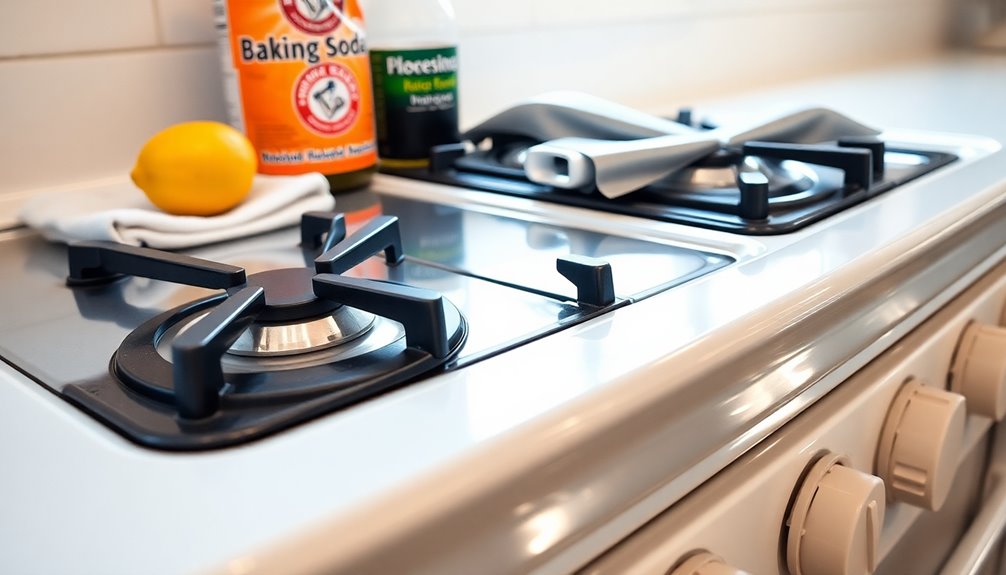
When you regularly clean your stove and oven, you not only enhance their performance but also extend their lifespan. Keeping up with a consistent cleaning frequency prevents the buildup of grease and grime, which can lead to inefficient cooking and even damage over time.
A clean appliance operates better, ensuring your meals cook evenly and efficiently. Moreover, regular cleaning contributes to significant health benefits. Residual food particles can harbor bacteria and attract pests, posing risks to your family’s health. Additionally, regular maintenance can reduce the need for deep cleaning and promote a sparkling kitchen.
Gather Your Cleaning Supplies: What You’ll Need
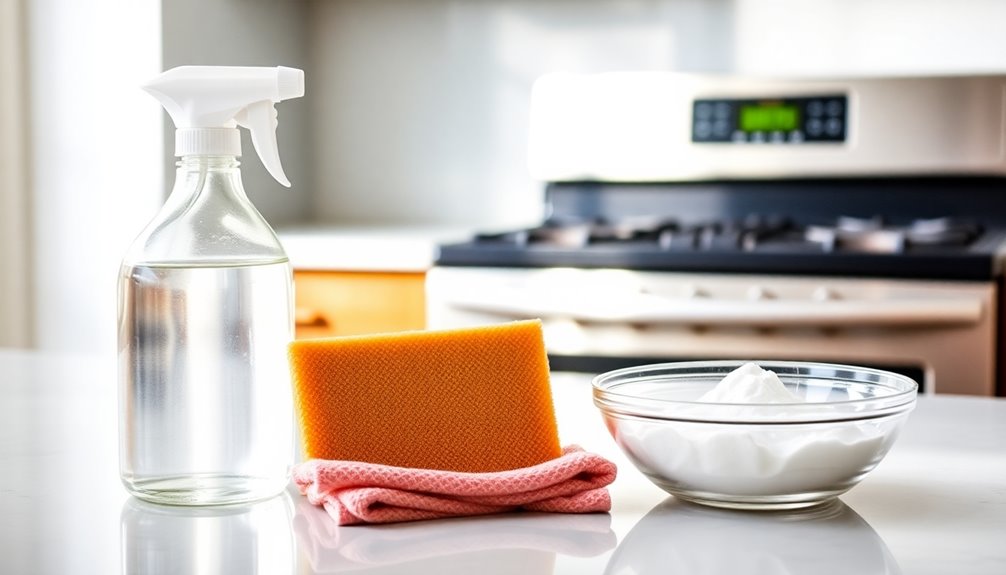
To kick off your cleaning session, you’ll need to gather a few essential supplies that make the job easier and more effective. Start with some reliable cleaning tools, like a scrub brush, microfiber cloths, and a spray bottle.
Gather your essential cleaning supplies, including a scrub brush and microfiber cloths, to make your cleaning session more effective.
If you prefer eco-friendly options, consider using vinegar, lemon juice, or baking soda, which are great for tackling tough stains without harsh chemicals. Natural ingredients can also restore your oven to a sparkling condition.
Don’t forget a pair of rubber gloves to protect your hands while you work. A putty knife can also be handy for scraping off stubborn grime.
With these supplies at your side, you’ll be ready to tackle that baked-on mess and restore your stove and oven to their sparkling best. Happy cleaning!
The Power of Baking Soda for Stubborn Stains
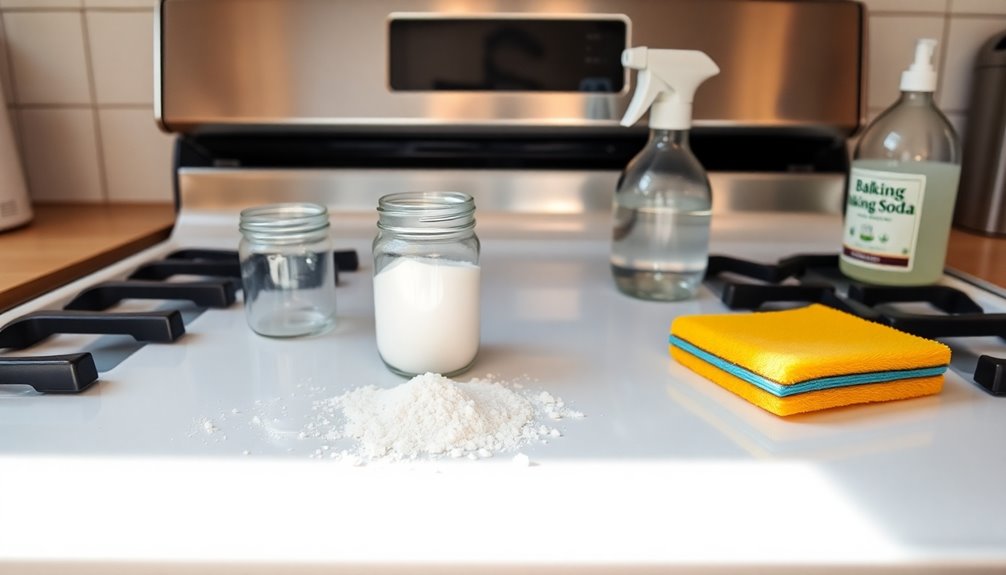
When it comes to stubborn stains, baking soda’s natural cleaning power is hard to beat. You’ll find it’s a versatile stain remover that can tackle everything from burnt-on food to grease. Let’s explore how you can harness its effectiveness for a cleaner stove and oven. Additionally, using baking soda and vinegar in combination can enhance the cleaning process and make tough stains easier to remove.
Natural Cleaning Power
While stubborn stains on your stove and oven can be frustrating, baking soda emerges as a powerful ally in the battle against grime. This natural ingredient works wonders by breaking down tough residues without harsh chemicals.
Simply sprinkle baking soda on the affected areas, add a little water to form a paste, and let it sit for a while. You’ll find that, after scrubbing, those baked-on messes lift away effortlessly.
Using baking soda not only provides effective cleaning but also offers eco-friendly solutions that are safe for your home. By opting for this natural alternative, you can tackle stains while being kind to the environment.
Versatile Stain Remover
Baking soda isn’t just a one-trick pony; it’s a versatile stain remover that tackles even the toughest messes in your kitchen.
You can easily whip up versatile stain remover recipes using just a few ingredients. For stubborn grease stains, mix baking soda with water to form a paste. Apply it to the stain, let it sit for a while, then scrub it off.
Alternatively, for burnt-on food, combine baking soda with vinegar. This powerful duo creates a fizzing action that loosens the grime.
Using these versatile stain remover techniques, you’ll find that baking soda not only cleans effectively but also leaves your surfaces fresh and odor-free.
Keep a box handy for all your kitchen cleaning needs!
Vinegar: A Natural Degreaser for Your Oven
Vinegar’s a fantastic natural degreaser that can tackle tough grease in your oven. It’s safe for all surfaces, so you won’t have to worry about damaging your appliance. Plus, applying it’s super easy, making your cleaning routine a breeze. Additionally, vinegar’s antimicrobial properties help reduce bacteria and odors, ensuring a cleaner cooking environment.
Effective Cleaning Solution
When your oven shows signs of grease buildup, a simple yet effective solution is at your fingertips.
Vinegar acts as a powerful natural degreaser, making it a perfect ingredient for your homemade solutions. Mix equal parts of vinegar and water in a spray bottle, and spray the affected areas generously. Let it sit for about 15 minutes to break down that stubborn grime.
Then, wipe it away with a clean cloth or sponge. Not only does this method cut through baked-on messes, but it’s also an eco-friendly cleaner that won’t harm your home or the environment.
Safe for All Surfaces
Although many cleaning products can damage surfaces, vinegar stands out as a safe and effective option for tackling grease in your oven. It’s made from natural ingredients, guaranteeing it’s safe for all surfaces.
Here are some reasons why you should consider vinegar:
- Non-toxic: It’s safe materials won’t harm your family or pets.
- Surface compatibility: Works well on glass, metal, and ceramic without scratching.
- Cost-effective: It’s an affordable solution you can find in your pantry.
- Environmentally friendly: Reduces the use of harsh chemicals, making it better for the planet.
Using vinegar not only helps you maintain a clean oven, but it also guarantees you’re protecting your surfaces and health.
Make the switch today!
Easy Application Method
If you want a simple and effective way to clean your oven, vinegar serves as a powerful natural degreaser that makes the job easy.
Start by mixing equal parts of water and vinegar in a spray bottle for an easy spray application. Spray the solution generously on the baked-on mess, letting it sit for about 10 minutes to loosen grime.
Then, grab a clean cloth or sponge and use the wipe down technique to scrub away the residue. You’ll be amazed at how easily the grease lifts off without harsh chemicals.
For stubborn spots, repeat the process as needed. With this method, you’ll enjoy a sparkling clean oven without any hassle!
Lemon Juice: Freshen up With a Citrus Twist
Lemon juice isn’t just a zesty addition to your culinary creations; it’s also a powerful natural cleaner for your stove and oven.
The lemon juice benefits extend beyond flavor, making it one of the best citrus cleaning alternatives. Here’s how to harness its cleaning power:
- Cut a lemon in half and rub it directly on greasy spots.
- Mix lemon juice with baking soda to create a paste for tough baked-on messes.
- Fill a bowl with lemon juice and microwave it for 5 minutes; the steam helps loosen grime.
- Use a spray bottle to apply diluted lemon juice for everyday cleaning.
Additionally, using lemon juice as a natural cleaner not only enhances your cleaning results but also deodorizes various areas in your kitchen, making it a versatile choice.
With these tips, you’ll freshen up your kitchen while enjoying the delightful scent of citrus!
Dish Soap: Your Everyday Cleaning Ally
Dish soap is a staple in every kitchen, and it’s not just for washing dishes. This versatile cleaner offers numerous dish soap benefits, making it an essential tool for tackling baked-on messes in your stove and oven.
Dish soap isn’t just for dishes; it’s your secret weapon against tough kitchen messes.
When combined with hot water, dish soap can break down grease and grime effectively. For best results, use a sponge or cloth to apply the soapy solution, letting it sit for a few minutes before scrubbing.
This simple cleaning technique allows the dish soap to penetrate tough stains, making it easier to wipe away baked-on residue. Plus, it’s safe for most surfaces, ensuring you can clean without worrying about damaging your appliances. Regular cleaning can prevent grease buildup, making your cleaning tasks easier in the long run.
Embrace dish soap as your go-to ally for a sparkling clean kitchen!
Use Hydrogen Peroxide for Deep Cleaning
When it comes to deep cleaning your stove and oven, hydrogen peroxide is a powerful ally for effective stain removal. However, it’s important to take safety precautions while using it to avoid any mishaps. Additionally, combining it with natural cleaning methods can enhance its effectiveness for a sparkling clean kitchen.
Effective Stain Removal
If you want to tackle tough stains on your stove and oven, hydrogen peroxide can be your best ally. This versatile cleaner works wonders on various stain types, making it essential for your cleaning routine.
To maximize its effectiveness, consider these tips:
- Identify the stain types: grease, burnt food, or sticky residues.
- Adjust your cleaning frequency: tackle stains weekly to prevent buildup.
- Apply hydrogen peroxide directly to the stained area, letting it sit for 10-15 minutes.
- Wipe with a clean cloth or sponge, rinsing thoroughly.
Safety Precautions Needed
While hydrogen peroxide is an effective cleaner, it’s crucial to take safety precautions to protect yourself and your surfaces.
Start by wearing protective gear, such as gloves and safety goggles, to shield your skin and eyes from any potential cleaning hazards. Always work in a well-ventilated area to prevent inhaling fumes that can irritate your respiratory system.
If you’re cleaning a stubborn stain, test hydrogen peroxide on a small, inconspicuous spot to verify it doesn’t damage the surface. Avoid mixing it with other cleaners, especially ammonia, as it can create toxic fumes.
The Magic of Steam Cleaning Your Oven
Steam cleaning your oven is a game changer, especially when you want to tackle tough grease and grime without harsh chemicals.
This method not only simplifies your oven maintenance but also makes it safer for your family.
Here’s how you can steam clean your oven effectively:
- Fill a baking dish with water and add lemon slices for a fresh scent.
- Place the dish on the top rack of a preheated oven at 400°F for about 30 minutes.
- Let the steam do its magic as it loosens baked-on food.
- Wipe down surfaces with a damp cloth once cooled, and watch the gunk wipe away effortlessly.
By incorporating regular steam cleaning into your routine, you can prolong the oven’s lifespan and enjoy a cleaner oven with less scrubbing!
With steam cleaning, you’ll enjoy a cleaner oven and less scrubbing!
Salt: A Simple Yet Effective Scrubbing Agent
When it comes to tackling stubborn stains and grime in your oven, salt is an incredibly effective scrubbing agent that you probably already have in your kitchen.
Use simple salt scrubbing techniques by sprinkling salt directly on the affected areas. For tougher spots, mix salt with a bit of water to form a paste, then apply it and let it sit for a few minutes before scrubbing.
The abrasiveness of salt helps lift baked-on messes without scratching your oven’s surface. Plus, one of the major salt cleaning benefits is that it’s non-toxic and safe for your family. Additionally, using eco-friendly products can further enhance your cleaning routine while protecting the environment.
Embrace this natural cleaner and watch as your oven shines without harmful chemicals or excessive effort!
Essential Oils for a Pleasant Cleaning Experience
Cleaning doesn’t have to be a chore when you incorporate essential oils into your routine. These aromatic solutions not only leave your kitchen smelling fresh but also offer natural disinfectant properties that help eliminate germs. Additionally, oils like lemon and tea tree are known for their proven antibacterial properties, making them excellent choices for tackling tough stains and grime. Let’s explore how these oils can transform your cleaning experience.
Aromatic Cleaning Solutions
While you tackle the task of scrubbing your stove and oven, incorporating essential oils can transform the experience into something aromatic and enjoyable.
These natural scents not only uplift your mood but also make cleaning less of a chore. Here are some essential oils to contemplate:
- Lemon – The bright citrus scent cuts through grease and leaves a fresh aroma.
- Lavender – Known for its calming properties, it adds a soothing touch to your cleaning routine.
- Peppermint – This invigorating scent brings energy to your tasks while masking any unpleasant odors.
- Rosemary – An aromatic herb that provides a revitalizing, earthy scent to your space.
Try these oils to create a pleasant atmosphere as you clean!
Natural Disinfectant Properties
In addition to creating a pleasant atmosphere, essential oils pack a punch when it comes to natural disinfectant properties.
When you’re cleaning your stove or oven, consider using oils like tea tree, lavender, or eucalyptus. These oils not only smell great but also boast powerful cleaning properties that can help eliminate bacteria and germs.
Simply add a few drops to your cleaning solution for an effective disinfectant that’s safe and non-toxic. You’ll enjoy the fresh scent while ensuring your surfaces are sanitized.
Plus, the antibacterial qualities of these essential oils can make your cleaning routine more enjoyable and effective.
Create a DIY Oven Cleaner Paste
If you want to tackle tough oven stains without harsh chemicals, creating a DIY oven cleaner paste is a simple and effective solution.
The benefits of a DIY cleaner are numerous, including being eco-friendly and cost-effective.
Here’s a quick homemade paste recipe to try:
- 1 cup baking soda – A natural abrasive that helps lift grime.
- 1/4 cup vinegar – Cuts through grease and adds disinfecting properties.
- 1 tablespoon dish soap – Aids in breaking down stubborn stains.
- Water – To adjust the consistency as needed.
Mix these ingredients into a paste, apply it to your oven, and let it sit for a while.
You’ll love the results without the harsh chemicals!
How to Clean Your Stove Grates Effortlessly
After tackling the oven with your homemade cleaner, it’s time to turn your attention to the stove grates.
For effortless cleaning, start by removing the grates and soaking them in hot, soapy water for about 15-20 minutes. This helps loosen baked-on food and grease.
While they soak, grab a scrub brush or sponge and prepare for some grate maintenance.
After soaking, scrub the grates with your brush, focusing on stubborn spots. Rinse thoroughly and dry before reattaching.
To maintain their cleanliness, aim for a cleaning frequency of once a week or after heavy cooking sessions. This simple routine keeps your stove grates looking fresh and makes future clean-ups a breeze!
Tackle Burnt-On Food With a Razor Blade
Before you start scraping away at that burnt-on food, make sure you take the right safety precautions.
Using a razor blade can be effective, but proper technique is essential to avoid damaging your surfaces.
Let’s explore how to do this safely and effectively.
Safety Precautions First
While tackling burnt-on food with a razor blade can be effective, it’s important to prioritize safety first.
Here are some key precautions to keep in mind:
- Wear Protective Gloves: Always protect your hands from cuts and chemicals.
- Use Proper Cleaning Gear: Confirm you have a sturdy scraper and a clean cloth handy.
- Work Slowly and Carefully: Rushing can lead to accidents; take your time to avoid slips.
- Keep Children and Pets Away: Ensure your work area is clear to prevent any unwanted incidents.
Proper Blade Technique
Using proper blade technique is essential for effectively tackling burnt-on food without damaging your stove or oven.
Start by ensuring blade safety; always hold the razor blade at a low angle and use gentle pressure. This minimizes the risk of scratching surfaces while maximizing your cleaning power.
Begin by scraping away the burnt residue in small sections, using smooth, controlled strokes. If you encounter stubborn spots, consider applying a cleaner beforehand to loosen the grime.
Remember to frequently wipe the blade to avoid pushing debris around.
Afterward, clean the blade with a cloth to remove any stuck-on particles.
Master these blade techniques, and you’ll make quick work of even the toughest baked-on messes while keeping your appliances in great shape.
The Best Way to Clean Glass Oven Doors
When your glass oven door is covered in grime and grease, it can be frustrating to see inside your oven.
Luckily, cleaning it doesn’t have to be a hassle. Here are some effective glass cleaner options and streak-free techniques to try:
- Vinegar and Water: Mix equal parts and spray the solution on the door.
- Baking Soda Paste: Combine baking soda and water, apply it, and let it sit for 15 minutes.
- Commercial Glass Cleaners: Choose a non-ammonia-based cleaner for a streak-free finish.
- Microfiber Cloth: Use this for wiping to avoid lint and achieve that crystal-clear shine.
Following these steps will leave your glass oven door sparkling and make cooking a breeze!
Using Newspaper for Streak-Free Shine
One clever trick for achieving a streak-free shine on your glass oven door involves using newspaper. Instead of paper towels, grab some old newspapers for their unique cleaning benefits.
First, mix equal parts vinegar and water in a spray bottle and generously spray the glass. Then, crumple the newspaper and use it to wipe down the surface.
You’ll notice how the ink in the newspaper helps lift grime without leaving lint behind. This cleaning technique not only gives you a crystal-clear finish but also saves you money by recycling.
Plus, it’s an eco-friendly choice! So next time you clean, don’t overlook those newspapers—they’re a simple yet effective way to tackle that stubborn shine.
Prevent Future Messes With These Tips
After achieving a sparkling clean oven door, it’s time to think about how to keep it that way.
Implementing some preventive maintenance can save you from future headaches. Here are four effective mess deterrents:
- Use a splatter guard while cooking to minimize spills.
- Line the bottom of your oven with aluminum foil to catch drips.
- Wipe up spills immediately after cooking to prevent buildup.
- Regularly check and clean the oven once a month to keep it in top shape.
When to Call in a Professional Cleaning Service?
How do you know it’s time to call in a professional cleaning service for your stove and oven? There are several signs to contemplate.
If you’ve tried scrubbing for hours and the baked-on grime just won’t budge, it might be time to hire experts who’ve the right tools and solutions.
Additionally, if you notice persistent odors or smoke while cooking, that could indicate deeper issues that require professional intervention.
If your stove and oven are older and need a thorough deep clean, don’t hesitate to reach out for help.
Trust your instincts—if the mess feels overwhelming, a professional cleaning service can save you time and guarantee your kitchen is sparkling clean again.
Final Thoughts: Enjoy a Sparkling Clean Kitchen
A sparkling clean kitchen not only enhances your cooking experience but also creates an inviting atmosphere for family and friends.
A pristine kitchen elevates your culinary adventures and welcomes loved ones with warmth.
To achieve those gleaming surfaces, consider these simple tips:
- Daily Wipe-Down: Quickly wipe surfaces after each use to prevent buildup.
- Natural Cleaners: Use vinegar and baking soda for effective, chemical-free cleaning.
- Deep Clean Weekly: Dedicate time each week for a thorough scrub of appliances and countertops.
- Organize Regularly: Keep your kitchen clutter-free to maintain a clean space effortlessly.
Conclusion
By keeping your stove and oven clean, you’re not just improving their appearance; you’re enhancing their performance and extending their lifespan. So, embrace these cleaning hacks, enjoy the satisfaction of a sparkling kitchen, and make cooking a joy again. With a little effort, a few supplies, and the right techniques, you can tackle those baked-on messes and prevent future ones. Remember, a clean kitchen isn’t just a dream—it’s a reality you can create!