When it comes to tackling organic kitchen spills, enzyme cleaners like Bac-Out and Nature’s Miracle are top choices. They break down stains and odors effectively without harsh chemicals, making your space fresh and safe. These cleaners contain live enzyme cultures that digest food residues, ensuring a thorough clean. Plus, they’re eco-friendly and safe for food preparation surfaces. Stick around to discover more about application tips and additional top picks for your kitchen.
What Are Enzyme Cleaners and How Do They Work?
When it comes to tackling organic spills in your kitchen, enzyme cleaners offer a powerful solution that’s both effective and eco-friendly.
These cleaning products use naturally occurring enzymes to break down organic stains, such as food spills and pet messes, without relying on harsh chemicals. Instead of just masking odors, enzyme cleaners digest the organic matter, ensuring a more thorough clean.
They typically contain a blend of live enzyme cultures that actively eliminate stains and odors, preventing them from coming back. Safe for use around food, these biodegradable cleaners are perfect for any kitchen. Additionally, using eco-friendly ingredients can enhance the cleaning process and promote sustainability in your home.
To maximize their effectiveness, let the product sit for a few minutes, allowing it to work its magic on those tough organic stains.
Benefits of Using Enzyme Cleaners in the Kitchen
Using enzyme cleaners in your kitchen means you’re choosing an eco-friendly solution that effectively tackles stubborn odors. These cleaners break down organic materials, ensuring your space smells fresh without harmful chemicals lingering around. Additionally, they support eco-conscious lifestyle choices by reducing reliance on harsh chemicals commonly found in traditional cleaning products.
Eco-Friendly Cleaning Solution
While keeping your kitchen clean, you want a solution that’s both effective and eco-friendly. Enzyme cleaners, made from plant-based ingredients, fit the bill perfectly.
These biodegradable products break down organic stains and odors caused by food spills and grease without harsh chemicals, making them a safe choice for eco-conscious consumers. By using enzyme cleaners, you can help maintain a healthier home environment, reducing harmful pollutants that often lurk in conventional cleaners.
Plus, they’re safe for use around food when applied as directed, giving you peace of mind while cleaning. Not to mention, their concentrated formulations mean you’ll need less product for effective cleaning, ultimately saving you money in the long run.
Choose enzyme cleaners for a cleaner, greener kitchen!
Effective Odor Elimination
Enzyme cleaners excel at tackling odors in the kitchen by breaking down organic spills and residues effectively.
Their bio-enzymatic formula targets the root cause of odors, digesting food residues and grease instead of just masking them with fragrances. This means you get effective yet gentle odor elimination that keeps your kitchen fresh and inviting.
Regular use of enzyme cleaners can help you banish tough smells from fruits, vegetables, and meats, contributing to a cleaner atmosphere. Plus, they’re safe for food preparation surfaces, making them a practical choice for maintaining hygiene.
If you have pets, enzyme cleaners also work wonders on pet-related odors, promoting a healthier living space for your family.
Enjoy a fresher kitchen with these powerful solutions!
Top Enzyme Cleaners for Tackling Organic Spills
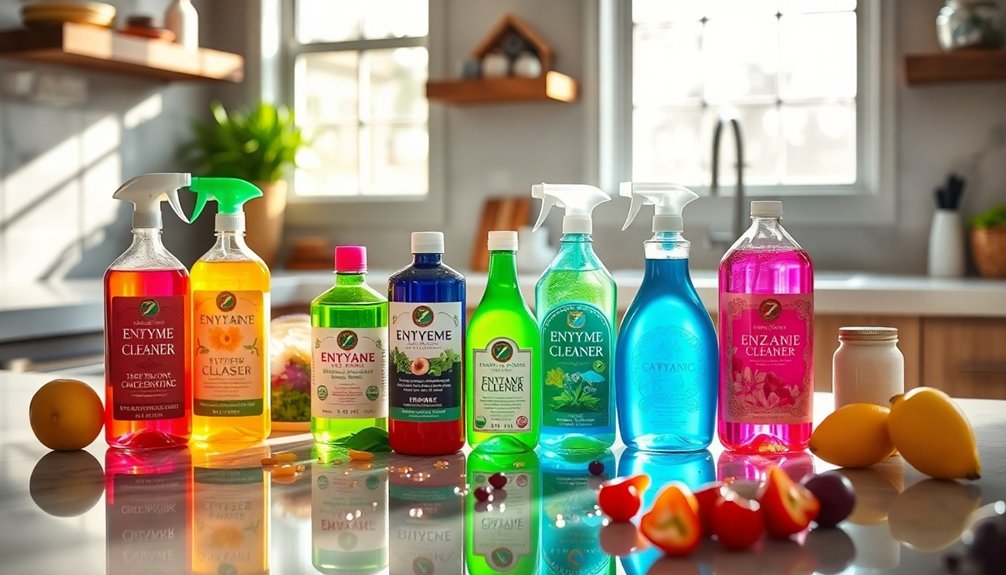
When it comes to tackling organic spills in your kitchen, having the right enzyme cleaner can make all the difference.
These enzyme cleaners utilize live enzyme cultures to break down stubborn stains and odors effectively. Here are some top choices:
- Bac-Out: Breaks down food residues and grease, perfect for tough messes.
- Nature’s Miracle: Specifically formulated for food and pet accidents, it’s a powerful stain and odor remover.
- Simple Green Bio-Base: A versatile cleaner that tackles grime without harsh chemicals.
- Biokleen Bac-Out: Combines grapefruit seed extract with live enzymes, ensuring a fresh scent while combating spills.
Incorporating non-toxic cleaners into your cleaning routine not only enhances effectiveness but also promotes a safer environment for your family.
These options will help you keep your kitchen clean and odor-free!
Application Tips for Effective Cleaning
To effectively clean organic spills in your kitchen, start by applying the enzyme cleaner directly to the stained area.
Allow it to sit for several minutes, giving the enzymes time to break down the organic material. After waiting, gently scrub the area with a microfiber cloth or sponge to lift the stain and any lingering odors.
Before applying, test the cleaner on a small, inconspicuous spot to verify the surface can handle it without damage. For larger spills, use a separate spray bottle for easier application.
Keep in mind that regular cleaning with enzyme cleaners not only tackles existing stains but also helps prevent buildup, making future spills easier to manage. Additionally, maintaining a clean kitchen environment is crucial for reducing health risks associated with harmful bacteria.
Safety Precautions When Using Enzyme Cleaners
When using enzyme cleaners, it’s essential to read product labels carefully to understand any specific safety instructions.
Before applying it to a larger area, always test the cleaner on a small, inconspicuous spot to avoid damage.
Don’t forget to verify proper ventilation while you clean to keep the air fresh and minimize any irritation. Additionally, ensure that the enzyme cleaners you choose are certified by the EPA’s Safer Choice Program to guarantee environmental and health safety.
Read Product Labels Carefully
How can you guarantee that your enzyme cleaner is safe and effective? The answer lies in reading product labels carefully. This confirms that the cleaning solution is suitable for the surfaces you want to clean and free from harsh chemicals.
Here are some key points to reflect on:
- Check for safety warnings regarding children and pets.
- Look for dilution ratios and specific application methods.
- Confirm the cleaner doesn’t contain harmful additives that could damage surfaces.
- Always perform a patch test on a small area to avoid discoloration.
Test on Small Areas
Even with careful reading of product labels, testing enzyme cleaners on small, inconspicuous areas is a wise precaution.
Before applying your chosen stain remover, place a few drops of the enzyme cleaner on a hidden spot. Wait a few minutes to check for any discoloration or adverse reactions. If there are no negative effects, feel confident to clean the larger area with the same product.
Remember to follow the manufacturer’s safety instructions throughout this process. Also, keep the enzyme cleaner out of reach of children and pets, as a precautionary measure.
If you’re using a product with essential oils, this testing step is especially important to guarantee compatibility with your surfaces.
Ensure Proper Ventilation
To guarantee a safe cleaning experience, always use enzyme cleaners in well-ventilated spaces.
Proper ventilation minimizes the inhalation of any fumes or strong scents released while tackling stains and odors. Open windows and doors, or use fans to enhance airflow.
- Keep children and pets away during application.
- Follow the manufacturer’s safety guidelines for protective gear, like gloves or masks.
- If you feel any irritation or discomfort, stop using the cleaner immediately and get some fresh air.
- Regularly check your cleaning area to ascertain it’s safe for use.
Comparing DIY Enzyme Cleaners to Commercial Options
When you’re faced with organic kitchen spills, you might wonder whether to reach for a DIY enzyme cleaner or opt for a commercial product.
DIY cleaners often use natural ingredients like vinegar and baking soda, but their effectiveness can vary. In contrast, commercial options, like Biokleen Bac-Out, boast a unique blend of live enzyme cultures that efficiently break down stains.
DIY cleaners may utilize simple ingredients like vinegar and baking soda, but commercial products like Biokleen Bac-Out offer more effective stain-fighting power.
While homemade solutions can save you money, they usually lack the concentrated formulations found in commercial cleaners, which often require less product for effective results.
Additionally, many commercial enzyme cleaners are designed to be safe around food when used as directed, offering a level of assurance that DIY options may not provide.
User feedback suggests commercial cleaners deliver more consistent results. Moreover, opting for eco-friendly cleaners can further enhance your cleaning routine while supporting sustainable practices.
Conclusion
In conclusion, enzyme cleaners are your kitchen’s secret weapon against organic spills, transforming chaos into cleanliness. With their natural power, they not only tackle tough stains but also make your space a healthier place to cook. By choosing the right product and applying it effectively, you’ll see the difference. So, arm yourself with these eco-friendly solutions, and let your kitchen shine like a beacon of freshness, reminding you that messes are just temporary.