The one cleaning tool every home needs is a microfiber cloth. These cloths capture dirt, dust, and allergens like no vacuum can, offering a streak-free clean on a variety of surfaces. They’re eco-friendly, reusable, and eliminate the need for harsh chemicals, making your home healthier. Plus, with proper care, they last for months. Without a doubt, incorporating microfiber cloths into your routine is a game changer. Discover more about maximizing their use and benefits ahead!
The Versatility of Microfiber Cloths
Microfiber cloths are an indispensable tool in any home, and their versatility makes them a favorite among cleaners. You can use these cloths for a variety of cleaning tasks, whether you’re tackling hard surfaces in the kitchen or wiping down bathroom counters.
Their ultra-fine synthetic fibers capture dirt, dust, and moisture effectively, allowing you to dust or clean damp surfaces without harsh chemicals. Plus, you can color-code your microfiber cloths for specific tasks, preventing any cross-contamination.
They’re machine washable and reusable, which means you’re making an eco-friendly choice while saving money. Whether you’re cleaning glass or shiny surfaces, microfiber cloths leave a streak-free finish that enhances your home’s appearance without scratching. Regular maintenance with eco-friendly options can further protect the integrity of your appliances and surfaces.
Benefits of Using Microfiber for Cleaning
Microfiber cloths are your go-to solution for capturing dirt and dust more effectively than traditional cleaning tools.
Not only do they clean surfaces without harsh chemicals, but they’re also eco-friendly and reusable, helping you reduce waste. Additionally, using microfiber cloths contributes to a positive corporate image by showcasing a commitment to environmental responsibility.
Superior Dirt Capture
When it comes to efficient cleaning, nothing beats the superior dirt capture of microfiber cloths.
These ultra-fine synthetic fibers can trap and hold up to seven times their weight in dirt and moisture, making them one of the essential cleaning tools every home needs.
When used dry, microfiber effortlessly captures dust and allergens without harsh chemical cleaners, promoting a healthier indoor environment.
Its unique structure dives into small crevices, ensuring a streak-free finish on glass and shiny surfaces.
Plus, microfiber cloths are machine washable and reusable, greatly cutting down on waste compared to disposable options.
Eco-Friendly Cleaning Solution
While many cleaning solutions rely on harsh chemicals, you can achieve impressive results with microfiber cloths that offer an eco-friendly alternative.
These ultra-fine synthetic fibers capture dirt, dust, and moisture more effectively than traditional options, often needing just water for a deep clean. Using a microfiber mop or cleaning brush reduces your reliance on chemical cleaners, minimizing your environmental impact.
Plus, they’re reusable and machine washable, cutting down on waste compared to disposable products. With the ability to remove up to 99% of bacteria, microfiber is gentle on delicate surfaces like glass and electronics.
In the long run, you’ll save money since these durable cloths can last up to 500 washes with proper care.
Proper Care and Maintenance of Microfiber Cloths
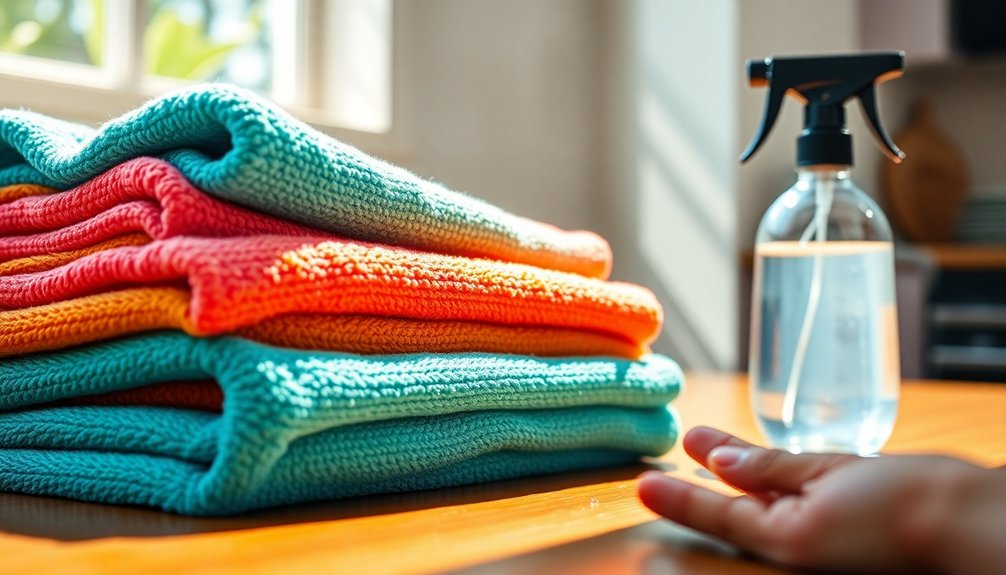
To keep your microfiber cloths in top shape, it’s essential to follow proper washing instructions. Always wash them without fabric softeners and store them in a clean, dry place to prevent contamination. Additionally, regularly cleaning the storage area where you keep your microfiber cloths can help maintain their effectiveness and longevity.
Washing Instructions
Caring for your microfiber cloths properly guarantees they remain effective tools in your cleaning arsenal.
Always wash your microfiber cloths in warm water without fabric softeners or bleach, as these can break down the fibers and hurt their cleaning performance.
It’s best to wash them separately to avoid lint transfer, which can compromise their effectiveness.
After each use, rinse the cloths thoroughly to remove dirt and debris before tossing them in the wash to prevent set-in stains.
For drying, air drying is recommended; if you use a dryer, choose a low heat setting to protect the fibers.
Regularly replacing microfiber cloths every 6-12 months keeps your cleaning routine efficient and hygienic.
Storage Tips
After washing your microfiber cloths, proper storage is key to maintaining their effectiveness.
Make certain to store them in a well-ventilated area to allow complete drying and prevent mold growth. Consider using cleaning caddies with designated compartments for each color-coded microfiber cloth; this system helps you avoid cross-contamination during your cleaning game.
It’s also a good idea to regularly inspect your cloths for any signs of wear and tear. Replace any that are frayed or less effective to guarantee peak performance.
Finally, always rinse your microfiber cloths thoroughly after use, especially when tackling hard-to-reach areas, as this removes dirt and grime, prolonging their life and maintaining their cleaning power.
How to Use Microfiber Cloths Effectively
While using microfiber cloths might seem straightforward, knowing how to utilize them effectively can markedly enhance your cleaning routine. These ultra-fine synthetic fibers trap dirt and dust, making them perfect for both dry dusting and damp cleaning without streaks.
To boost cleaning effectiveness, adopt a color-coded system: assign specific cloths for different areas, like one for the kitchen and another for bathrooms, to prevent cross-contamination. For spills or sticky spots, dampen the cloth with water or a suitable solution to lift dirt easily. Additionally, incorporating time-saving strategies can make your cleaning sessions more efficient and manageable.
Comparing Microfiber Cloths to Other Cleaning Tools
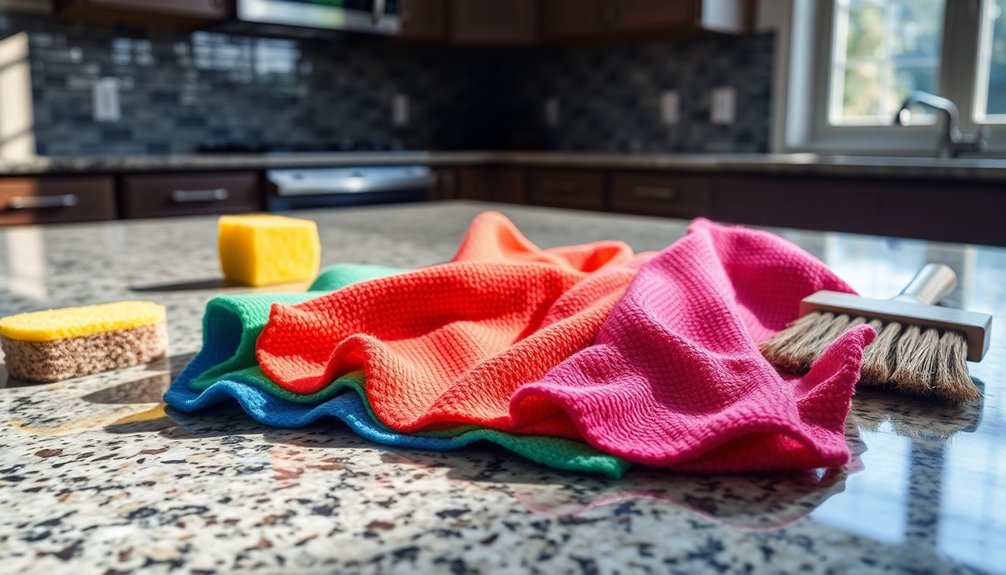
When it comes to cleaning tools, microfiber cloths stand out for their unique efficiency and versatility. Unlike traditional cotton cloths, which struggle to trap dust and allergens, microfiber cloths can capture up to 99% of particles, making them far more effective.
Microfiber cloths excel in efficiency, capturing up to 99% of dust and allergens, far surpassing traditional cotton cloths.
They work well on versatile surfaces, whether used dry for dusting or dampened for deeper cleaning without leaving streaks. Plus, they hold up to seven times their weight in water, effortlessly absorbing spills.
Reusable and machine washable, microfiber cloths greatly reduce environmental waste compared to disposable options like paper towels. Their color-coded system also minimizes cross-contamination, ensuring that you can clean specific areas safely, unlike sponges that may harbor bacteria. Additionally, using natural cleaning solutions alongside microfiber cloths can enhance your cleaning efficiency and contribute to a healthier indoor environment.
Make the switch for a cleaner home!
Eco-Friendly Aspects of Microfiber Cloths
Microfiber cloths offer a remarkable eco-friendly cleaning solution that not only enhances your cleaning routine but also reduces your environmental footprint.
Made from ultra-fine synthetic fibers, these cloths can capture up to 99% of dust, dirt, and allergens without the need for harsh cleaning products. This means you can clean effectively using just water, promoting sustainability in your home.
Their reusable nature allows you to wash and use them hundreds of times, considerably cutting down on waste compared to disposable paper towels.
Plus, many microfiber cloths are produced through eco-friendly manufacturing processes, further minimizing the carbon footprint associated with traditional cleaning materials. Additionally, using natural materials in cleaning products aligns with responsible waste management practices.
Choosing microfiber cloths is a smart step toward a greener, cleaner lifestyle.
Incorporating Microfiber Cloths Into Your Cleaning Routine
Incorporating microfiber cloths into your cleaning routine can greatly enhance your efficiency and effectiveness. These ultra-fine synthetic fibers trap dirt, dust, and moisture, guaranteeing a streak-free finish throughout your entire home.
To maximize their benefits, consider using a color-coded system; designate different colors for kitchens, bathrooms, and dusting areas to prevent cross-contamination.
When you use microfiber cloths dry, they excel at dusting by capturing particles instead of spreading them around. Dampen them for tougher spills and sticky spots.
Remember to wash them without fabric softeners and let them dry completely to maintain their structure and hygiene. Regularly replacing your microfiber cloths every few months will ensure peak performance, making them an essential cleaning tool. Additionally, using non-toxic cleaners in conjunction with microfiber cloths enhances your cleaning routine while prioritizing family safety.
Conclusion
Incorporating microfiber cloths into your cleaning routine is like having a Swiss Army knife for your home. Just as that versatile tool adapts to countless tasks, microfiber cloths tackle dust, grime, and spills with ease. With their ability to trap dirt and reduce chemical use, they’re indispensable for any homeowner. So, next time you reach for your vacuum, remember that this simple cloth can do wonders—transforming your space into a spotless sanctuary with just a swipe.