Lemon’s your go-to for cleaning and deodorizing! You can simmer lemon slices for a revitalizing home fragrance or rub a cut lemon on your cutting board to eliminate stains and odors. Want whiter laundry? Just add lemon juice! For tough stains, soak containers in lemon juice. It’s also great for sanitizing your garbage disposal and freshening the microwave. Looking to tackle rust? Lemon’s got you covered. Stick around to discover even more surprising uses!
Natural Home Fragrance
If you want to freshen up your home naturally, simmering lemon slices and cloves in water is a fantastic option.
This simple method creates a pleasant scent that effectively masks unwanted odors while adding a fresh, citrusy aroma to your space. As the lemony steam wafts through your rooms, it helps absorb odors, making it an ideal solution until you can identify and address the source of the smell.
You can easily adjust the intensity by varying the amount of lemon and cloves used, allowing you to customize your experience. Plus, this eco-friendly alternative avoids synthetic air fresheners that may contain harmful chemicals, contributing to a healthier home environment. Incorporating natural cleaning agents like lemon juice into your routine enhances overall cleanliness while promoting a fresh atmosphere.
Enjoy the uplifting effects of lemon as you create a more inviting atmosphere!
Clean Your Cutting Board
Cleaning your cutting board is a breeze with lemon.
Just rub a cut lemon over its surface to tackle tough stains and banish odors effectively.
Let it soak for a bit, and you’ll be left with a fresh-smelling, hygienic board ready for your next meal prep. Regular use of DIY non-toxic cleaners can help maintain the board’s condition while ensuring a safe cooking environment.
Natural Stain Removal
When you notice stubborn stains on your cutting board, reaching for a lemon can be a game changer. The citric acid in lemon juice acts as a natural cleaner, helping to remove stains effectively.
Simply cut a lemon in half and rub it directly on the stained areas. For best results, let the lemon juice soak into the board for about 20 minutes. This not only targets those tough stains but also neutralizes any lingering odors.
Afterward, rinse the board thoroughly with water to eliminate any sticky residue. Regularly using this method will keep your cutting board looking fresh and prolong its lifespan by preventing bacteria buildup.
Embrace this eco-friendly solution for a cleaner kitchen!
Odor Elimination Techniques
While you may not realize it, your cutting board can harbor stubborn odors from various foods. To tackle this, grab a fresh lemon and cut it in half.
Rubbing the cut lemon directly on the surface of your cutting board not only helps with cleaning but also works wonders for odor elimination. Let the lemon juice soak into the board for about 20 minutes to maximize its effectiveness.
The citric acid in the lemon has natural antibacterial properties, making it perfect for sanitizing. After scrubbing, rinse the board thoroughly with water to guarantee no residue remains.
Regularly using this technique will help prolong your cutting board’s lifespan by removing stubborn odors and stains. Enjoy a fresher kitchen!
Polish Copper and Wooden Furniture

If you’ve noticed your copper items losing their luster or your wooden furniture looking a bit dull, lemon can be your best ally.
For tarnished copper, dip half a lemon in coarse salt and rub it over the surface. The natural acidity of lemon juice effectively breaks down tarnish, restoring shine—just make sure to rinse thoroughly afterward.
For wooden furniture, mix equal parts lemon juice and olive oil. Apply this wood polish with a soft cloth and buff it out to enhance shine and remove dust. Regularly using this mixture not only cleans but also nourishes the wood, preserving its finish and extending its life. Additionally, using natural cleaning agents aligns with eco-friendly practices, making your cleaning routine both effective and sustainable. Always test lemon juice on an inconspicuous area first to avoid damage.
Brighten Whites and Freshen Laundry
Lemon juice isn’t just for culinary delights; it’s also a powerful ally in brightening whites and freshening laundry. By adding half a cup of fresh lemon juice to your laundry cycle, you can enhance the brightness of whites while infusing a delightful citrus scent into your clothes.
For tough stains, soak the affected fabric in lemon juice for an hour to lift discoloration, making it easier to wash out. You can even tackle deodorant stains by applying lemon juice directly and letting it sit in the sun for 15 minutes.
Best of all, using lemon juice is an eco-friendly alternative to harsh chemical bleaches, giving you effective results while promoting a healthier environment for your home. Incorporating natural cleaning methods into your routine can further enhance the freshness of your laundry.
Remove Stubborn Stains and Clean Stained Food Containers
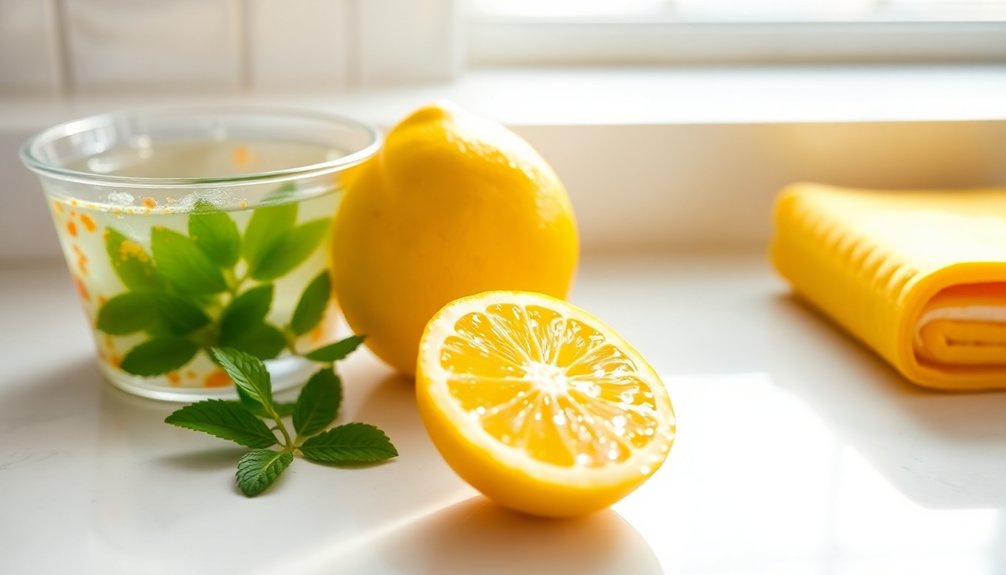
When it comes to stubborn stains on food containers, lemon juice is your best friend. You can soak them in lemon juice, mix it with baking soda for tough spots, or even let the sun help with discoloration. These simple techniques will make your containers look fresh and clean again. Additionally, homemade paste using baking soda and hydrogen peroxide can effectively tackle tougher stains on various surfaces.
Lemon Juice Application Techniques
Stubborn stains on food containers can be a real hassle, but with the right lemon juice application techniques, you can tackle them effectively.
Start by soaking the stained areas in lemon juice for about an hour; the citric acid works wonders in breaking down those tough stains.
For plastic containers, take half a lemon, rub it over the stains, and squeeze the juice inside. Then, let the container dry outdoors in the sun for enhanced cleaning.
If you have greasy pots and pans, mix equal parts lemon juice and dish soap to dissolve the grime.
For extra stubborn stains, allow items soaked in lemon juice to sit overnight before rinsing.
These natural cleaning methods make stain removal a breeze!
Baking Soda Combination Benefits
Combining baking soda with lemon juice creates a dynamic duo that tackles tough stains on food containers with ease.
This powerful stain-fighting paste effectively lifts stubborn stains from plastic and cookware, making your cleaning routine simpler. For particularly tough stains, soak the stained areas in a mixture of lemon juice and baking soda for about an hour to boost removal effectiveness.
You can also rub half a lemon over stained containers, sprinkle baking soda, and watch as the fizzing action helps dislodge dirt and grime. Not only does this combination clean, but it also deodorizes, leaving your food containers fresh and odor-free.
Say goodbye to stains and hello to sparkling, clean containers!
Sun Drying Method Effectiveness
The sun drying method is a game changer for tackling tough stains on plastic food containers. By harnessing the natural bleaching properties of lemon juice and sunlight, you can effectively remove those pesky marks without harsh chemicals.
Here’s how it works:
- Rub half a lemon over the stained areas.
- Squeeze lemon juice inside the container.
- Place it outdoors in direct sunlight.
- Let sit for several hours for ideal results.
The combination of sunlight and citric acid helps break down the pigments causing discoloration.
For particularly stubborn stains, you might need to repeat the process. Enjoy the eco-friendly benefits while keeping your food containers looking fresh and clean!
Clean Glassware and Glass Surfaces
Crystal-clear glassware and surfaces can elevate any space, but they often show fingerprints and smudges. You can easily tackle this by mixing lemon juice with a cup of water in a spray bottle.
This natural cleaner not only removes streaks but also restores sparkle to your glass surfaces. The citric acid in lemon juice acts as a powerful degreaser, making it perfect for lifting those pesky smudges. Regular disinfection of surfaces, including glass, is essential to reduce the risk of foodborne illnesses.
This natural cleaner effortlessly removes streaks and restores the sparkle to your glass surfaces, thanks to the powerful degreasing action of citric acid.
Simply spray your solution onto the glass, then wipe it down with a microfiber cloth for a streak-free finish. For best results, always test your lemon juice mixture on a small, inconspicuous area first.
Regularly cleaning with lemon juice not only keeps glassware clear but also adds a fresh, pleasant citrus scent to your home.
Sanitize the Garbage Disposal and Freshen It
A fresh-smelling garbage disposal can make a big difference in your kitchen’s overall cleanliness. To effectively sanitize and freshen it, try these tips:
- Drop half a lemon and a tablespoon of baking soda into the disposal for odor removal.
- Regularly run a cut lemon through the disposal to clean stuck-on food particles.
- The natural antibacterial properties of lemon juice sanitize the disposal, making it a safe alternative to harsh chemicals.
- Run warm water while grinding the lemon for thorough cleaning.
Using lemon not only helps with odor removal but also prevents build-up and clogs, enhancing the longevity of your garbage disposal. Regular maintenance is essential to keep your kitchen fresh and clean with this simple, eco-friendly cleaning method!
Clean the Microwave and Remove Odors
When you’re dealing with stubborn stains and lingering odors in your microwave, using lemon can be a game changer.
Mix a solution of lemon juice and water in a bowl, then heat it in the microwave for several minutes. This creates steam that loosens food particles and helps clean the surfaces.
Mix lemon juice with water in a bowl and microwave it to create steam that loosens stubborn food particles.
After heating, let the steam sit for a few minutes without opening the door to maximize its effect. The citric acid in lemon not only tackles tough stains but also neutralizes odors, leaving your microwave smelling fresh. Regularly disinfecting surfaces, including your microwave, reduces the risk of infections and illnesses, ensuring a healthier home environment.
Once the steam has worked its magic, simply wipe down the interior with a cloth to remove grime and any lingering smells.
For added freshness, try heating lemon slices in water too!
Detox the Dishwasher and Deodorize the Refrigerator
To keep your kitchen appliances fresh and odor-free, detoxing your dishwasher and deodorizing your refrigerator with lemon is an effective solution. Here are some quick tips:
- Place a lemon wedge on the top rack of your dishwasher during a wash cycle to freshen it and enhance cleaning power.
- Use lemon juice in a small container while running the dishwasher for brighter, shinier dishes.
- Cut a lemon in half and place it on a refrigerator shelf to absorb strange odors and leave a revitalizing scent.
- Boost odor absorption by adding two teaspoons of baking soda to the lemon in your refrigerator.
Regularly replacing lemon halves will help maintain a pleasant aroma, ensuring your dishwasher and refrigerator stay fresh and inviting. Additionally, using a strong disinfectant like Clorox Clean-Up Cleaner + Bleach can help maintain hygiene in your kitchen, especially on surfaces that come into contact with food.
Remove Rust
Rust can be a frustrating problem, but using lemon juice offers a simple and effective solution. To remove rust, squeeze fresh lemon juice over the affected area and sprinkle it with coarse salt.
Let it sit for several minutes to allow the citric acid to dissolve the rust. Afterward, grab a cork or cloth for scrubbing the surface gently. This natural method is safe for your metal items and avoids harsh chemicals found in commercial rust removers. Additionally, incorporating natural cleaning solutions can enhance your overall cleaning routine.
Once you’ve scrubbed the area, rinse it with water and wipe it dry to prevent rust from returning. Regularly applying lemon juice can help prevent rust from forming on tools and metal surfaces, creating a protective barrier that keeps them looking their best.
Conclusion
Incorporating lemon into your cleaning routine can work wonders, proving that you don’t need harsh chemicals to keep your home invigorating and spotless. From deodorizing your fridge to brightening laundry, lemon’s natural properties are a game-changer. So, next time you’re tackling household chores, remember that a little lemon can go a long way. With these tips, you’ll not only clean effectively but also enjoy the delightful scent that’ll have your home smelling like a refreshing breeze!