Vinegar’s versatility gives it impressive cleaning power! You can deodorize your garbage disposal by flushing it with ice cubes made of vinegar. Got ants? Spray undiluted vinegar around entry points to keep them away. Tenderize meat by soaking it in vinegar, and for streaky windows, use a vinegar-water solution. Clean your coffee maker with vinegar to remove buildup, and create a simple gnat trap with apple cider vinegar. Discover even more surprising uses for this household staple!
Deodorize the Garbage Disposal
One effective way to keep your kitchen smelling fresh is by deodorizing your garbage disposal. Food particles and moisture can linger, causing unpleasant odors.
A simple cleaning solution is to use white vinegar, a natural odor neutralizer that breaks down food residues effectively. Freeze vinegar in ice cube trays, then drop the cubes into the disposal while running cold water.
This method not only helps deodorize the garbage but also flushes away any loosened debris. The cold water keeps the disposal operating smoothly, and regular use of vinegar prevents odor buildup. Incorporating natural cleaning agents into your routine can enhance the effectiveness of this method.
Incorporate this cleaning solution into your routine, and you’ll notice a significant improvement in your kitchen’s freshness.
Repel Ants Naturally
If you’ve got an ant problem, vinegar can be your best friend.
Its strong smell disrupts their scent trails, making it a powerful, eco-friendly way to keep these pests at bay.
Just spray undiluted white vinegar around entry points daily to effectively tackle the issue. Additionally, vinegar’s natural deodorizer properties can help freshen the air in your home while keeping pests away.
Disrupt Ant Scent Trails
When you want to keep ants at bay, vinegar can be a powerful ally. The strong smell of vinegar disrupts the scent trails ants rely on for navigation, effectively keeping them away from your home.
To repel ants, just spray undiluted white vinegar along baseboards, entry points, and areas where you’ve spotted them. This simple cleaning method isn’t only effective but also eco-friendly, making it safe for homes with children and pets.
For maximum effectiveness, repeat the application daily until the ant problem is resolved. If you’re looking for enhanced pest control solutions, consider combining vinegar with salt and dish soap.
With vinegar in your arsenal, you can tackle ant issues naturally and effectively.
Eco-Friendly Pest Control
Vinegar isn’t just effective for disrupting ant trails; it also serves as a natural pest control solution for various unwanted critters. This eco-friendly method is perfect for those who want to keep their homes safe for children and pets.
To repel ants naturally, spray undiluted white vinegar along baseboards, entry points, and any areas where you notice ant activity. The strong smell of vinegar disrupts the scent trails that ants use to navigate, effectively driving them away.
For ideal ant control, repeat this application daily until you see a decrease in their population. Plus, vinegar isn’t just for ants; it can deter other pests too, making it a versatile solution for your home.
Application Techniques for Effectiveness
To effectively repel ants using vinegar, focus on strategic application techniques that maximize its potency. Start by spraying an undiluted vinegar solution along baseboards and entry points. The strong smell disrupts their scent trails, making it tough for them to invade your home.
Repeat this daily until you notice fewer ants, ensuring you cover every potential entry point for maximum effectiveness. Since vinegar works as an eco-friendly option, it’s a safe alternative to chemical pesticides, protecting your home and the environment.
For added punch, mix vinegar with essential oils like peppermint or tea tree oil, known for their pest-repelling qualities. Remember, consistency is key for long-term pest control, as vinegar may not eliminate entire colonies.
Tenderize Meat
Meat can be tough, but using vinegar as a marinade can work wonders.
Vinegar contains acetic acid, which effectively breaks down tough meat fibers, making it an excellent meat tenderizer. You only need 1–2 tablespoons of vinegar in your marinade to enhance both the flavor and tenderness of the meat.
For the best results, soak the meat in a vinegar solution for at least 30 minutes. If you want ideal tenderness, consider marinating it in the refrigerator for a longer period.
Not only does vinegar tenderize, but it also adds a delightful tangy flavor, making it a versatile ingredient for any marinade. Additionally, using vinegar as a marinade promotes sustainable cleaning practices by avoiding harsh chemicals in the cooking process.
Try this simple trick, and you’ll be amazed at the difference it makes!
Clean Streaky Windows
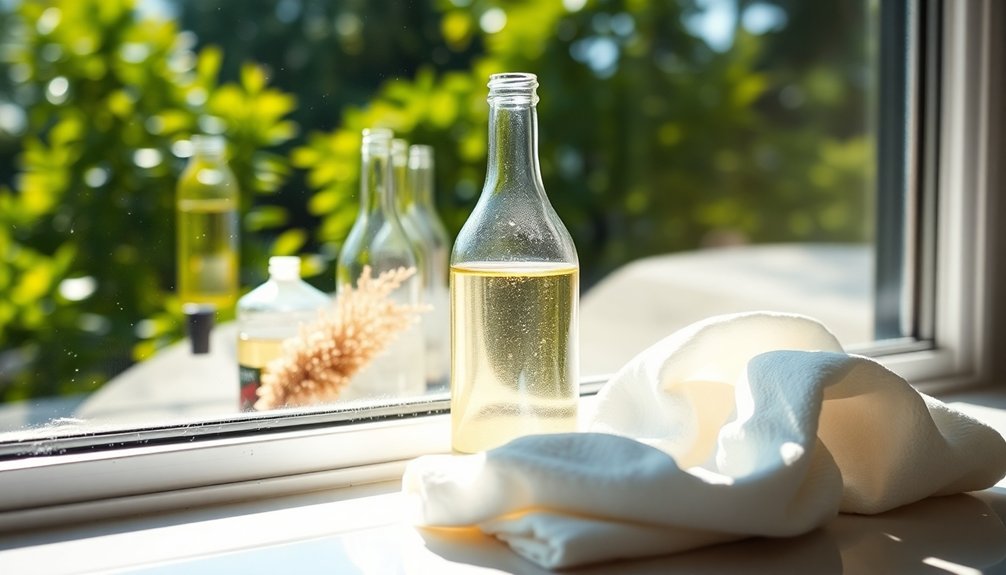
Achieving streak-free windows is easier than you might think. Simply mix equal parts of vinegar and water in a spray bottle for an effective cleaning solution.
Spray the vinegar-water mixture directly onto the glass, guaranteeing even coverage to get the best results. Grab a microfiber cloth or a squeegee, and wipe the glass in a circular motion. This technique helps prevent streaks and guarantees a thorough clean.
For a streak-free shine, spray the vinegar solution on the glass and wipe in a circular motion with a microfiber cloth or squeegee.
For ideal results, try cleaning your windows on a cloudy day or when the glass is cool to the touch, as direct sunlight can cause the solution to dry too quickly.
Regularly using vinegar not only removes dirt and grime but also helps repel dust, keeping your windows cleaner for longer. Additionally, using a microfiber cloth ensures that you trap dirt effectively while minimizing scratches on the glass surface.
Clean Your Coffee Maker
If you want to keep your coffee tasting great, cleaning your coffee maker is a must.
Start by mixing equal parts vinegar and water in the reservoir to tackle mineral buildup.
Running a brew cycle with this solution will help clear out those pesky deposits and maintain your machine’s performance. Additionally, using non-toxic cleaners like vinegar is a safe and effective way to ensure your kitchen remains hygienic without harmful chemicals.
Mineral Buildup Removal
Mineral buildup can noticeably affect your coffee maker’s performance and the taste of your brews. Hard water contributes to this issue, but vinegar is a simple solution.
Here’s how to clean your coffee maker effectively:
- Mix equal parts of vinegar and water, and fill the reservoir with this solution.
- Run a brew cycle without coffee until the reservoir is empty, letting the vinegar dissolve the mineral buildup.
- Follow up with 2-3 cycles of clean water to rinse out any vinegar residue.
Regular cleaning with vinegar not only guarantees a better flavor but also prolongs the life of your coffee maker.
Brew Cycle Instructions
After tackling mineral buildup with vinegar, it’s time to focus on the brew cycle instructions to keep your coffee maker in top shape.
Start by filling the reservoir with equal parts white vinegar and water. This mixture effectively dissolves any remaining mineral buildup, guaranteeing you enjoy better-tasting coffee.
Run a brew cycle without coffee, allowing the vinegar solution to pass through and clean the internal components thoroughly. Once the cycle is complete, discard the solution and rinse the reservoir with clean water to eliminate any vinegar taste.
Follow up with 2-3 cycles of fresh water to guarantee your coffee maker is free of vinegar and other deposits.
Regular cleaning every 1-3 months will maintain your coffee maker’s performance and extend its lifespan.
Enhance Ketchup Flavor

Here are three easy ways to spice up your ketchup:
- Add a Teaspoon: Stir in about one teaspoon of white or apple cider vinegar for a tangy kick.
- Maximize Bottles: When you’re running low, add a bit of vinegar, shake well, and enjoy the improved flavor while using up every last drop.
- Experiment with Types: Try balsamic or red wine vinegar to create unique gourmet variations of traditional ketchup.
Vinegar not only enhances taste but also adds a slight acidity that intensifies the flavors of your favorite dishes. Additionally, vinegar acts as a natural degreaser, making it a versatile ingredient in both cooking and kitchen grease removal.
Give it a try and transform your meals!
Make a Simple Gnat Trap
If you’re tired of pesky gnats buzzing around your kitchen, making a simple gnat trap can be an effective solution.
Start by pouring apple cider vinegar into a small bowl; its scent attracts gnats and fruit flies. Add a few drops of dish soap to the vinegar. This breaks the surface tension, so the gnats sink instead of escaping.
Pour apple cider vinegar into a bowl, add dish soap to trap gnats and fruit flies effectively.
Position the uncovered bowl near areas where gnats are commonly seen, like fruit bowls or garbage cans, for maximum effectiveness. To keep your trap working well, replace the vinegar mixture every few days.
This eco-friendly method avoids harmful chemicals, making it safe for households with children and pets. Additionally, using natural solutions like this promotes a non-toxic approach to pest control in your home. Say goodbye to those annoying gnats with this easy DIY trap!
Revive Dried-Out Wood Glue
When wood glue thickens or hardens, it can be frustrating, especially when you’re in the middle of a project.
Fortunately, you can easily revive it with a little vinegar. Here’s how to restore your glue:
- Add Vinegar: Pour a few drops of white vinegar into the dried-out glue.
- Shake Well: Secure the cap and shake the glue bottle vigorously to mix the vinegar thoroughly.
- Test Consistency: After letting it sit for a few minutes, check the glue’s consistency to verify it’s usable.
This simple method not only revives your glue but also saves you the hassle and cost of buying new products. Additionally, vinegar is known for its natural antibacterial properties, making it a versatile cleaning agent in various applications.
Give it a try, and get back to your project with confidence!
Clean Rust From Tools
Rusty tools can be a real hassle, but vinegar offers a simple and effective solution. Soak your rusty tools in white vinegar for 8 to 12 hours, allowing the acetic acid to dissolve the rust and corrosion.
Once they’ve soaked, grab a brush or some steel wool to scrub away the loosened rust. This cleaning method not only restores your tools but also saves you money, as vinegar is a cost-effective and non-toxic alternative to commercial rust removers. Additionally, vinegar’s acidity can also loosen burnt-on food from cookware, making it a versatile cleaning agent.
After scrubbing, rinse the tools thoroughly with water to remove any vinegar residue, preventing future rusting. Regular maintenance with vinegar can help prolong your tools’ life by keeping them free from rust and corrosion buildup.
Microwave De-Gunker
After restoring your tools with vinegar, you can tackle another common household challenge: a gunky microwave. This simple method not only cleans but also eliminates odors. Here’s how to do it:
- Fill a microwave-safe bowl with 1 cup of vinegar.
- Heat it in the microwave until it boils, about 5 minutes.
- Wipe down the interior with a sponge or cloth.
The steam from the boiling vinegar loosens stuck-on food, making cleanup a breeze. Plus, it disinfects the surfaces, ensuring a fresh-smelling microwave. Regularly using this vinegar method keeps grime and stains at bay, all while being eco-friendly—no harsh chemicals needed. Your microwave will thank you for this quick and effective de-gunking! Additionally, you can use vinegar as a natural fabric softener in your laundry to enhance freshness and softness.
Conclusion
Incorporating vinegar into your cleaning routine is like revealing a treasure chest of magical solutions! With just a splash, you’ll transform your home into a sparkling oasis, free from pesky odors and stubborn stains. Who knew a humble bottle of vinegar could wield such astonishing power? It’s the superhero your cleaning supplies have been waiting for! So, grab that bottle and let it work its wonders—your home (and your sanity) will thank you for it!