To create a dust-free, allergen-free bedroom, start by investing in allergen-proof bedding and wash linens weekly in hot water. Keep humidity between 30-50% to prevent dust mites and mold. Use a HEPA air purifier and vacuum with a HEPA filter to capture allergens. Maintain a regular cleaning routine, and establish pet-free zones to reduce exposure to dander. By following these steps, you’ll improve your sleep quality and overall health—discover more strategies to enhance your bedroom environment.
Understanding Allergies and Their Impact on Sleep
When you struggle with allergies, your sleep can take a serious hit. Allergy symptoms like nasal congestion, sneezing, and itchy eyes can disrupt your rest, leading to frequent awakenings.
Dust mite allergies are particularly troublesome in bedrooms, where bedding and carpets harbor these indoor allergens. Pet dander can worsen your symptoms, as it lingers in the air and clings to surfaces.
To improve sleep quality, focus on air quality by keeping humidity levels between 30-50% and maintaining a bedroom temperature below 25°C (77°F). These measures help reduce allergens, like dust mites and mold, making it easier for you to breathe at night and alleviating issues associated with allergic rhinitis. Implementing a weekly dusting routine can further enhance your bedroom’s cleanliness and reduce allergens, promoting a healthier sleep environment.
Improving air quality by managing humidity and temperature can significantly enhance sleep for allergy sufferers.
Prioritizing these changes can lead to more restful nights.
Identifying Common Bedroom Allergens
Identifying the allergens lurking in your bedroom is essential for improving sleep quality and overall health.
Dust mites are among the most common culprits, thriving in your bedding and soft furnishings, with mattresses potentially harboring up to 10 million.
Pet dander is another significant allergen, affecting up to 30% of allergy sufferers through fur, skin flakes, and saliva.
Mold can develop in damp corners, causing respiratory issues and allergic reactions.
Additionally, dust from surfaces contributes to poor air quality, with indoor allergens including pollen and dust mite waste.
To combat these allergens, wash sheets and pillowcases weekly in hot water (at least 130°F), and consider an allergen-proof bed to reduce exposure and enhance your sleeping environment. Furthermore, employing gravity-based cleaning techniques can help minimize dust accumulation and improve overall cleanliness in your bedroom.
Effective Strategies to Eliminate Dust Mites
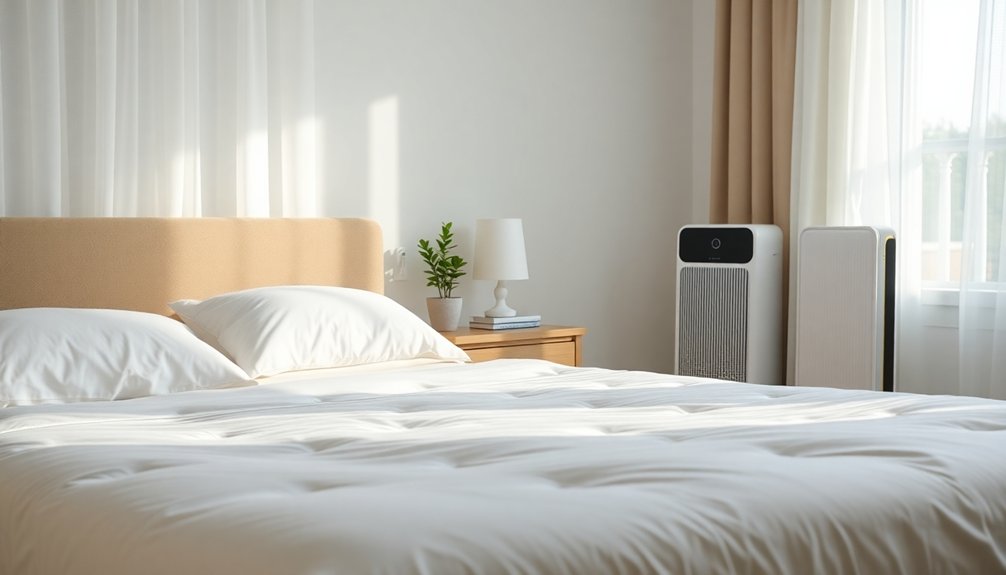
To tackle dust mites in your bedroom, start by investing in dust-mite-proof bedding solutions. Regularly washing your linens in hot water is also essential for keeping these pests at bay. Additionally, utilizing allergen-proof covers for your pillows and mattresses can significantly enhance your efforts in reducing dust mite populations. With these strategies, you’ll considerably reduce dust mite populations and improve your indoor air quality.
Dust-Mite-Proof Bedding Solutions
Eliminating dust mites from your bedroom starts with the right bedding solutions. Invest in dust-mite-proof covers for your pillows and mattress to prevent these pests from breeding and reduce your exposure to allergens.
Opt for hypoallergenic materials like Tencel or bamboo, which repel dust mites and minimize moisture, making your bedding inhospitable for them. Regularly wash all bedding, including sheets and pillowcases, in hot water (at least 130°F) to kill any lurking dust mites.
Additionally, use a vacuum cleaner equipped with a HEPA filter to capture dust mites and their waste from carpets and upholstery. For non-washable items like curtains, consider using a hot tumble dryer or high-temperature steamers to eliminate dust mites and further reduce allergens.
Regular Washing Practices
Since dust mites thrive in warm, humid environments, establishing a regular washing routine is essential for maintaining a dust-free bedroom.
Start by washing your bedding—sheets, pillowcases, and blankets—weekly in hot water (at least 130°F or 54°C) to kill dust mites and remove allergens.
Use allergen-proof covers on pillows, mattresses, and box springs to prevent dust mites from settling.
Don’t forget to regularly clean stuffed toys and other non-washable items using high-temperature steamers or dryers.
Sun-dry curtains and cushions to reduce humidity and naturally kill dust mites.
Incorporate a vacuum cleaner with a HEPA filter for weekly cleaning of carpets and rugs, ensuring you effectively remove allergens and dust mites from your bedroom environment.
Choosing the Right Bedding for Allergy Relief
When it comes to reducing allergies, choosing the right bedding is essential. Opt for hypoallergenic materials like Tencel or bamboo, and make sure to wash your bedding weekly in hot water to keep dust mites at bay. Additionally, selecting eco-friendly materials can further enhance your sleeping environment by minimizing exposure to harmful chemicals.
Hypoallergenic Material Selection
Choosing the right bedding materials can make a significant difference in reducing allergens and improving your sleep quality.
Opt for hypoallergenic bedding made from Tencel or bamboo, as their moisture-wicking and antimicrobial properties effectively reduce dust mites.
Don’t forget to invest in dust-mite-proof covers for your pillows and mattresses; these create a barrier that prevents dust mites from infiltrating your bedding.
When you select synthetic materials or specially treated hypoallergenic options, you’ll minimize exposure to allergens while ensuring comfort.
Regularly replace worn-out items, as older materials can harbor allergen buildup.
Remember, maintaining a low-allergen environment starts with thoughtful material selection in your bedroom.
A few simple choices can lead to a healthier, more restful sleep.
Regular Washing Routine
To keep your bedroom a safe haven from allergens, establishing a regular washing routine for your bedding is essential.
Wash your bedding weekly in hot water (at least 130°F) to effectively eliminate dust mites and their waste, common allergens in your home.
Choose hypoallergenic bedding materials like Tencel or bamboo, which have moisture-wicking and antimicrobial properties to deter dust mite breeding.
Encase your pillows, mattresses, and box springs in dust-mite-proof covers to create a strong barrier against allergens.
Regularly wash and replace pillowcases and duvet covers to maintain a clean sleep environment.
Additionally, using a hot tumble dryer to dry your bedding helps kill any remaining dust mites and prevents moisture buildup that can lead to mold growth.
Enhancing Indoor Air Quality in the Bedroom
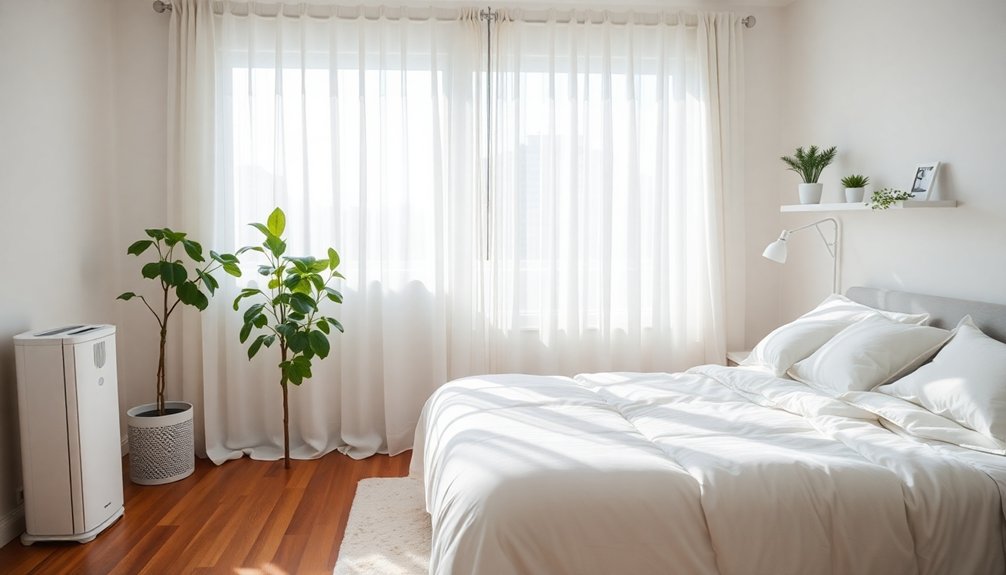
Improving indoor air quality in your bedroom is essential for a restful night’s sleep and overall health.
Start by maintaining humidity levels between 30-50% to prevent dust mites and mold growth—common bedroom allergens.
Invest in a HEPA air purifier to capture up to 98% of airborne allergens like pet dander and pollen.
Regularly wash your bedding in hot water to kill dust mites and eliminate allergens.
Use allergen-proof covers on pillows and mattresses to create a protective barrier against dust mites.
During high pollen seasons, keep windows closed and rely on air conditioning instead. Additionally, consider using non-toxic cleaners to maintain a hygienic environment that reduces allergens and promotes overall well-being.
The Importance of Regular Cleaning and Maintenance
Even with the best strategies for enhancing indoor air quality, regular cleaning and maintenance are essential for keeping your bedroom a dust-free haven.
Implementing a routine of vacuuming with a HEPA filter and damp dusting surfaces helps greatly reduce allergens like dust mites and pet dander. Wash your bedding, pillowcases, and blankets weekly in hot water to eliminate dust mites thriving in warm, humid conditions.
Maintaining a humidity level between 30-50% prevents mold and dust mite growth. Aim for deep cleaning carpets and upholstery once a month to remove embedded allergens. Additionally, vacuuming at least twice a week ensures that dirt and allergens are consistently managed in your bedroom environment.
Finally, keeping your bedroom clutter-free reduces dust accumulation and makes regular cleaning more effective, ensuring you maintain an allergen-free sleeping environment.
Managing Pet Allergens in Your Bedroom
While having pets can bring joy, managing pet allergens in your bedroom is essential for maintaining a healthy sleeping environment.
Managing pet allergens in your bedroom is vital for a restful and healthy sleep.
Here are three effective strategies to help you achieve an allergen-free space:
- Establish pet-free zones: Keep your bedroom off-limits to pets to greatly reduce dust and pet allergens, creating a cleaner environment for better sleep.
- Groom your pets regularly: Bathing and grooming them with hypoallergenic shampoos can help reduce dander and saliva shedding, minimizing allergy symptoms.
- Use air purifiers with HEPA filters: These devices effectively capture pet allergens, improving air quality and reducing allergic reactions. Additionally, incorporating regular grooming routines for pets can significantly decrease hair and dander presence in your living space.
Controlling Humidity and Preventing Mold Growth
Creating a dust-free bedroom goes beyond managing pet allergens; it also involves controlling humidity and preventing mold growth.
To reduce the risk of mold, maintain indoor humidity levels between 30-50%. Use dehumidifiers in damp areas like basements or bathrooms to manage moisture effectively. Guarantee proper ventilation in moisture-prone areas, such as kitchens and bathrooms, and fix leaks promptly.
If you notice visible mold, clean it immediately using appropriate solutions while wearing a mask to minimize exposure to mold spores. Monitoring your indoor humidity levels with a hygrometer can help you maintain ideal conditions for preventing mold growth. Regular inspections can also identify hidden issues that may affect plumbing systems, ensuring your home remains a safe and healthy environment.
Creating a Clutter-Free Sleeping Environment
A clutter-free bedroom not only enhances your space but also greatly reduces dust accumulation, making it easier for allergy sufferers to breathe easier at night.
By decluttering, you minimize surfaces where dust and allergens can hide, improving air quality. A minimalist bedroom design can also foster mental clarity and focus, supporting emotional stability and peace.
Here are three simple steps to create an organized sleep environment:
- Regularly remove unnecessary items like excess clothing and decorative objects.
- Utilize storage solutions such as under-bed containers and closed bins to keep belongings tidy.
- Implement a weekly cleaning routine, dusting surfaces with a damp cloth to prevent allergens from stirring up.
Conclusion
In your quest for a sanctuary, think of your bedroom as a canvas, where every choice paints a picture of tranquility. By embracing these strategies, you transform your space into a dust-free, allergen-free haven. Each clean surface and fresh breath symbolizes your commitment to restful sleep and vibrant health. As you step into this serene retreat, you’re not just eliminating allergens; you’re inviting peace and rejuvenation into your life. Let your bedroom be your refuge, a true masterpiece of well-being.