Color-coding your cleaning supplies is your secret weapon against cross-contamination and germs. By assigning colors to different tasks—like red for restrooms and green for kitchens—you’ll prevent harmful bacteria from spreading. This simple system keeps your home cleaner and safer, especially for vulnerable family members. Plus, using color-coded microfiber cloths can enhance your efforts even more. Curious about more tips to maintain a germ-free environment? There’s plenty more to explore!
Understanding Cross-Contamination and Its Risks
When you prepare food, it’s vital to understand the risks of cross-contamination, as it can lead to serious health issues. Cross-contamination occurs when harmful bacteria transfer from one surface to another, posing major threats, especially in food prep areas.
Vulnerable groups, like pregnant women and young children, face heightened risks of severe health effects. Symptoms can range from mild nausea to severe complications, including organ failure.
To prevent bacteria from spreading, effective cleaning systems are important. One such method is color coding your cleaning supplies, which creates a visual management system. By clearly distinguishing cleaning tools for different tasks, you greatly reduce the likelihood of transferring germs between high-risk and low-risk areas during food preparation. Using proper disinfectants for surfaces can further enhance your cleaning efforts and ensure a germ-free environment.
The Benefits of Color-Coding in Cleaning
Color-coding your cleaning supplies offers multiple benefits that enhance hygiene and safety in food preparation environments. By assigning specific colors to microfiber towels and mop heads, you can effectively prevent cross-contamination and simplify staff training.
Here are some key advantages:
- Red for restroom cleaning reduces germs in high-risk areas.
- Yellow designates restroom surfaces, ensuring thorough cleaning.
- Green is for kitchen areas, promoting food safety.
- Blue is used in general low-risk areas, minimizing contamination.
Visual cues improve accountability and compliance with cleaning protocols. Implementing a consistent color-coding system not only boosts hygiene in food service but also helps you meet regulatory standards, ensuring a safer environment for both employees and customers. Additionally, using non-toxic cleaners can further enhance sanitation without compromising health.
Implementing a Color-Coding System at Home
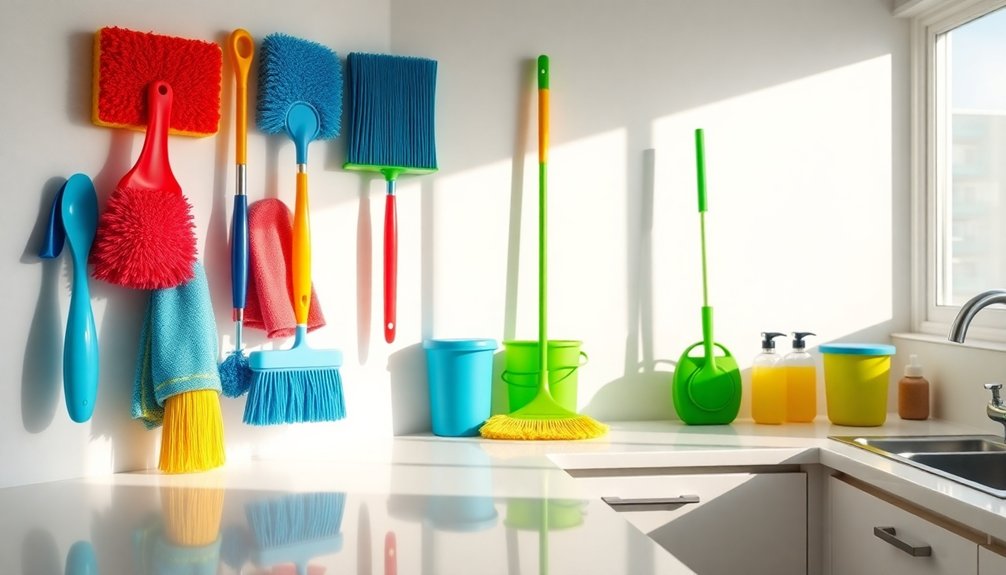
To create a cleaner and safer home environment, you can implement a color-coding system for your cleaning supplies. Assign specific colors to each type of cleaning task: use red for bathrooms, green for food areas, and blue for general surfaces.
This practice helps prevent cross-contamination by ensuring the right supplies are used in the appropriate locations. Consistency is key, so educate household members about the system, making sure everyone understands the importance of using the correct supplies. Additionally, using appropriate tools for different surfaces can enhance cleaning efficiency.
Store cleaning supplies in their designated areas and label them with corresponding colors to minimize confusion. For those who are color blind, consider adding patterns or labels to maintain clarity, ensuring everyone contributes to a germ-free home.
Choosing the Right Microfiber Products for Each Task
Implementing a color-coding system for your cleaning supplies sets the stage for choosing the right microfiber products for each task.
By selecting color-coded microfiber cloths, you minimize the risk of cross-contamination and maximize cleaning efficiency. Here are some tips to guide your choices:
- Use red cloths for restroom cleaning.
- Opt for green cloths for kitchen surfaces.
- Choose larger towels for spills and surfaces.
- Pick smaller cloths for detailed cleaning of electronics.
- Select dusters with electrostatic properties for dusting.
These microfiber products are designed for their specific purpose, trapping up to 99.54% of dirt and germs, far surpassing traditional cotton cloths. Additionally, utilizing specialized tools like toothbrushes can help reach small, intricate spots that regular cloths might miss.
Remember to keep them machine washable to maintain their effectiveness in the cleaning industry.
Best Practices for Maintaining a Germ-Free Environment
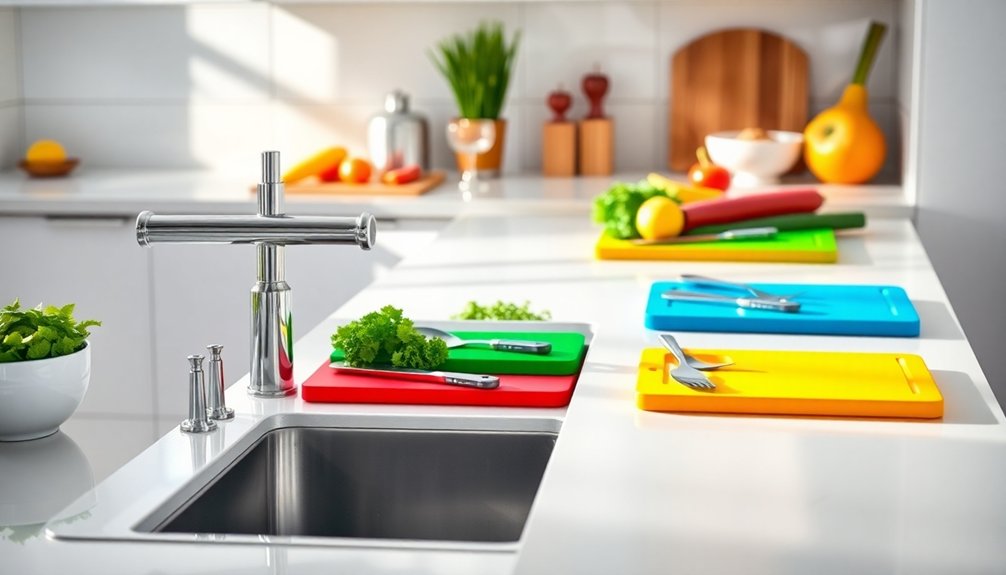
Maintaining a germ-free environment requires consistent practices that everyone can follow. Start by implementing a color-coded cleaning system, assigning specific colors to microfiber cloths and tools for different tasks, like red for restrooms and green for food preparation. This helps prevent cross-contamination effectively.
Confirm all staff members undergo training on this system, reinforcing its importance for hygiene and accountability. Regularly wash and store cloths designated for specific areas separately to minimize bacteria transfer.
Utilize visual management techniques, like labeling storage areas and cleaning carts with corresponding colors, to enhance adherence. Finally, monitor and conduct routine checks to verify that color coding protocols are consistently followed, reducing health risks and promoting a cleaner environment. Additionally, ensure that all cleaning tools are used according to material-specific cleaning guidelines to prevent damage while maintaining hygiene.
Conclusion
By adopting a color-coding system, you’re not just organizing your cleaning routine; you’re considerably reducing the risk of cross-contamination. Did you know that using the right cleaning cloth can cut bacteria transfer by up to 99%? This means your efforts can lead to a much healthier home environment. So, take the time to implement these practices and choose the right microfiber products—your family will thank you for it!