Sick days can cost your business billions each year, with absenteeism averaging $1,685 per employee. Maintaining high cleanliness standards can cut absenteeism by up to 20% and save you up to 40% on related costs. A clean work environment boosts employee morale and job satisfaction while reducing presenteeism. Investing in regular cleaning routines and providing hygiene resources not only protects your workforce but also enhances productivity. Discover how these strategies can transform your business outcomes.
Understanding the Financial Impact of Employee Sick Leave
When you consider the true cost of employee sick leave, it’s clear that absenteeism can take a significant toll on your business. U.S. employers lose approximately $225.8 billion annually due to absenteeism, translating to an average cost of $1,685 per employee. This includes not just wages for absent workers but also the overtime required to cover their shifts.
The issue of presenteeism further complicates matters, as sick employees working at reduced capacity can add another $150 billion to $250 billion in costs. Chronic diseases and an aging workforce exacerbate absenteeism, impacting both employee health and your bottom line.
Unscheduled absenteeism can cost you around $3,600 annually for each hourly worker, highlighting how critical it’s to address this challenge. Implementing efficient cleaning routines can significantly reduce the spread of illness in the workplace, ultimately leading to fewer sick days.
The Link Between Cleanliness and Reduced Absenteeism
You might be surprised to learn how much a clean workplace can impact your team’s health and attendance.
By maintaining high hygiene standards, you can greatly cut down on sick days, boosting morale and productivity.
A clean environment not only protects your employees but also saves your organization money in the long run. Additionally, implementing time-saving strategies for maintaining cleanliness can further enhance workplace efficiency and employee well-being.
Impact of Hygiene Practices
Maintaining rigorous hygiene practices in the workplace not only fosters a healthier environment but also plays an essential role in reducing absenteeism. By implementing these practices, you can greatly cut down on the spread of contagious diseases, lowering workplace absenteeism associated with illness.
This can save your business a staggering amount, as U.S. employers face $225.8 billion in costs annually due to absenteeism. A clean work environment boosts employee morale and job satisfaction, making workers feel valued and engaged.
Additionally, high cleanliness standards can reduce presenteeism, leading to improved productivity. Investing in hygiene protocols not only enhances health and safety but also lowers operational costs related to absenteeism, including overtime payments and temporary hires.
Clean Work Environment Benefits
A clean work environment directly contributes to reducing absenteeism and enhancing employee health. By maintaining high cleanliness standards, you can notably lower the spread of contagious illnesses, which in turn keeps your team healthier and more engaged.
Here are some benefits of prioritizing cleanliness in your workplace:
- Reduced sick leave: Cleanliness can decrease absenteeism by up to 20%.
- Cost savings: Implementing regular cleaning can save your business up to 40% on absenteeism-related costs.
- Improved morale: A clean workspace boosts employee satisfaction and retention.
Ultimately, focusing on cleanliness not only fosters a healthier atmosphere but also cultivates a positive workplace culture, leading to increased productivity and lower turnover rates.
The Hidden Costs of Presenteeism
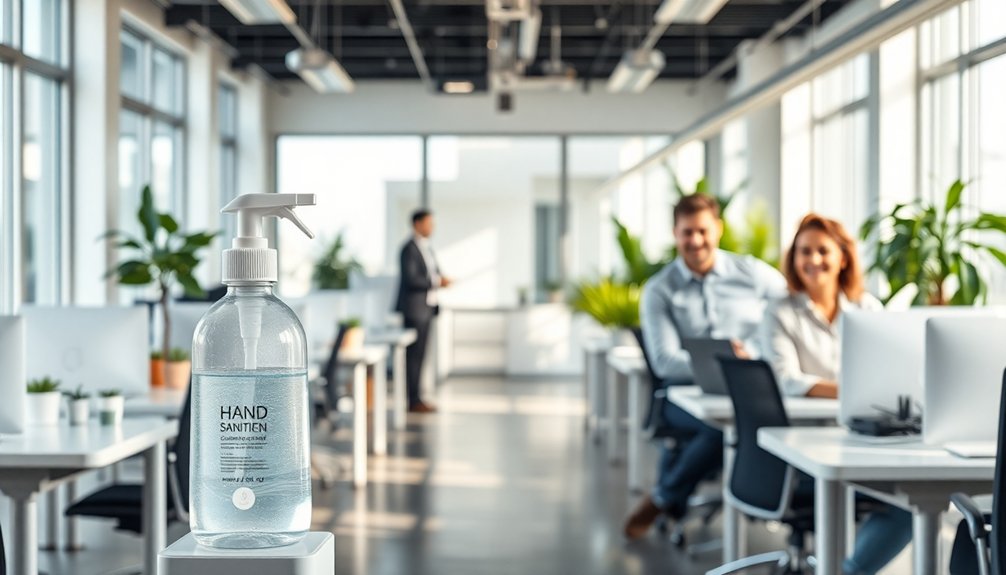
While many companies focus on the direct costs of absenteeism, the hidden costs of presenteeism can be even more detrimental. When employees come to work sick, you’re not just facing reduced productivity; you’re inviting a cycle that impacts everyone. Sick employees can spread illnesses, leading to more absences down the line and jeopardizing overall employee health.
A staggering 2% of workers consistently show up unwell, with particularly high rates among women and low-wage employees. This presenteeism not only diminishes team dynamics but also lowers morale, potentially increasing turnover and training costs. Regular cleaning routines that utilize non-toxic cleaners can help create a healthier workplace, further reducing the likelihood of illness spreading among employees.
Providing access to paid sick leave can help mitigate these issues, encouraging workers to take the time they need to recover and ultimately benefiting your business in the long run.
How Poor Hygiene Affects Employee Morale
When employees work in a dirty environment, it can quickly dampen their morale and motivation.
Poor hygiene not only affects health but also impacts how engaged and satisfied employees feel at work. A clean workspace can greatly boost employee morale and help reduce absenteeism, leading to a more productive atmosphere.
- 70% of employees feel more motivated in a clean environment.
- Higher cleanliness standards correlate with lower stress levels.
- Improved hygiene leads to better job satisfaction and retention rates. Additionally, regular decluttering habits can enhance overall cleanliness and create a more pleasant workplace atmosphere.
The Role of Preventive Healthcare in Reducing Absenteeism

Maintaining a clean workplace is just one piece of the puzzle in fostering employee well-being. Preventive healthcare plays an essential role in reducing absenteeism. By offering regular health screenings and vaccinations, you can greatly lower instances of sick leave, boosting attendance and productivity.
Early detection and proactive health management help minimize absences from minor illnesses that might escalate into serious health issues. Access to these services not only reduces the frequency of employee absences but can also lead to long-term savings for your business. Implementing green cleaning techniques focused on eco-friendly practices enhances workplace safety and contributes to overall employee health.
Implementing workplace wellness programs focused on preventive measures enhances morale and engagement, creating a healthier environment. Ultimately, a healthier workforce directly contributes to reducing the considerable productivity losses associated with absenteeism, which costs U.S. employers billions annually.
Strategies for Implementing Workplace Cleanliness
Creating a clean workplace is essential for promoting employee health and reducing absenteeism. By implementing effective strategies, you can considerably cut down on sick days and boost morale among employees.
A clean workplace fosters employee health, reduces absenteeism, and boosts morale, leading to a more productive environment.
Here are some key approaches:
- Establish a regular cleaning schedule: Daily disinfecting of high-touch surfaces can greatly reduce germ spread.
- Provide cleaning supplies: Encouraging personal responsibility for cleanliness helps foster a culture of health.
- Invest in professional cleaning services: This guarantees deep sanitation processes that can decrease sick days by up to 20%.
Additionally, improving air quality through ventilation and education on hygiene practices will further enhance workplace wellness. Implementing eco-friendly cleaning products can also contribute to a healthier work environment and demonstrate your commitment to sustainability.
These strategies not only keep employees healthier but also save your business money in the long run.
Measuring the Impact of Cleanliness on Absenteeism Rates
When you prioritize cleanliness in your workplace, you create a healthier environment that can considerably reduce absenteeism rates.
By minimizing the spread of germs, your team is less likely to take sick days, which can boost overall productivity. Understanding this impact helps you recognize the value of investing in rigorous cleaning protocols. Implementing regular disinfection practices, such as using diluted bleach solutions, can further enhance the cleanliness of your workspace and protect employee health.
Healthier Work Environment
A clean workplace not only promotes health but also greatly impacts absenteeism rates. By maintaining a hygienic environment, you can foster a healthier workplace for your employees.
Here’s how cleanliness can improve absenteeism:
- Reduces the spread of illness, leading to fewer sick days.
- Regular disinfection of high-touch surfaces can lower absenteeism rates by up to 40%.
- Organizations prioritizing cleanliness see an average cost reduction of $3,600 per year for each hourly worker.
Investing in cleanliness not only boosts employee morale and job satisfaction but also enhances retention and engagement.
When your employees feel healthy, they’re less likely to take sick leave and more likely to perform at their best, creating a win-win situation for everyone involved.
Reduced Contagion Spread
Maintaining cleanliness in the workplace directly impacts the spread of contagious illnesses, making it essential for reducing absenteeism. By prioritizing hygiene, you can greatly lower the incidence of flu-related absenteeism by up to 50%.
This reduction not only keeps your team healthier but also minimizes lost productivity during peak illness seasons. Regular cleaning and disinfection of high-touch surfaces effectively curtail germ transmission, ensuring fewer employees need to take sick leave.
Workplaces that adopt these practices have reported a 25% decrease in sick days, translating to substantial cost savings. Investing in cleanliness safeguards employee health and can save your business an estimated $225.8 billion annually in productivity losses linked to absenteeism, showcasing the importance of a clean work environment.
Long-Term Benefits of a Clean Work Environment
While you mightn’t think about it daily, a clean work environment plays an essential role in your overall well-being and productivity. A tidy workspace can greatly reduce sick leave, minimizing the negative impact of absenteeism on your business.
Here are some long-term benefits you can expect:
- Improved employee morale: A clean space fosters a sense of well-being and safety, enhancing job satisfaction.
- Higher productivity: Employees in clean environments are 20% more productive, leading to increased efficiency.
- Cost savings: Reducing absenteeism can save your business a substantial amount, as sick days cost U.S. employers around $225.8 billion annually. Regular use of specialized tools helps maintain hygiene and promotes a cleaner work environment.
Conclusion
In the grand scheme of your business, cleanliness isn’t just a nice-to-have; it’s an essential investment. By fostering a clean work environment, you’re not only reducing absenteeism but also boosting morale and productivity. Think of cleanliness as a shield against illness, protecting your workforce and your bottom line. As you embrace these strategies, you’ll see the long-term benefits unfold, ensuring a healthier, happier, and more engaged team ready to tackle any challenge that comes their way.