To keep your backpack clean and lasting longer, start by emptying it completely and shaking out debris. Spot-treat any stains with a mild detergent mixed with lukewarm water. You can either hand wash it by submerging it gently or machine wash if the care label permits. Rinse thoroughly and air dry in a well-ventilated area. Regular maintenance, like checking straps and storing it properly, is essential. There’s much more to explore about effective care and sustainability.
Prepping Your Backpack for Cleaning
Before you immerse yourself in cleaning your backpack, it’s essential to prep it properly. Start by emptying the backpack completely, ensuring all pockets and compartments are free of items.
Shake it out over a wastebasket to dislodge any loose debris, like crumbs or dirt. For a more thorough clean, use a handheld vacuum or hose attachment to reach the interior seams and pockets.
Next, grab a soft brush to gently brush off any visible dirt or buildup on the exterior.
Use a soft brush to gently remove any visible dirt or buildup from your backpack’s exterior for a fresh look.
Finally, remove any detachable straps, pockets, or metal frames. This will make the cleaning process more effective and safe, ensuring your backpack gets the care it deserves without risking damage to its components. Additionally, consider using eco-friendly cleaning products to ensure that your cleaning routine is both effective and environmentally responsible.
Spot-Treating Stains Effectively
Spot-treating stains effectively can make a significant difference in maintaining the appearance of your backpack.
To start, mix a small amount of mild detergent with lukewarm water. Use a soft-bristled brush or sponge to gently spot clean the stained area, scrubbing until the stain lifts. Always test the detergent mixture on a less visible part of the fabric first to avoid any fading or damage.
For tougher stains, a vinegar and water solution may work, but remember to test this as well. It’s essential to treat stains as soon as possible to prevent them from setting in. Regular use of non-toxic cleaners can help maintain the fabric’s integrity while keeping it safe for both you and the environment.
After you’ve spot cleaned, rinse the area thoroughly with clean, cool water to remove any soap residue that could attract dirt.
How to Hand Wash Your Backpack
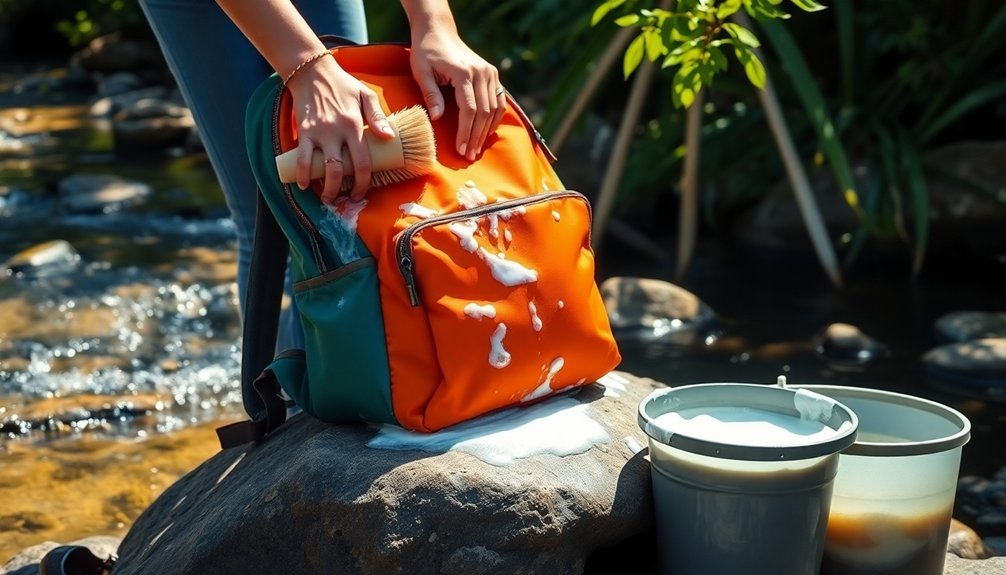
Ready to freshen up your backpack? Start by emptying all pockets and compartments, then shake it out to remove debris and brush off any visible dirt.
Mix a mild, fragrance-free detergent with lukewarm water to spot treat stains using a soft-bristled brush or sponge. If the care instructions allow, submerge your bag in lukewarm water, scrubbing both the exterior and interior gently for a deep clean.
Mix a mild, fragrance-free detergent with lukewarm water to gently spot treat stains for a thorough clean.
After rinsing with cool water, pat away excess moisture with an old towel; avoid using a dryer to prevent heat damage. Finally, hang your backpack in a well-ventilated area to air dry completely, taking about 24-36 hours for best results. Incorporating time-saving strategies into your cleaning routine can help you maintain your backpack without added stress.
Enjoy your refreshed, clean bag!
Machine Washing Your Backpack
If you’re looking for a quick and efficient way to clean your backpack, machine washing can be a great option—just make certain to check the care label first. Not all backpacks are suitable for this method, so confirm it’s safe to machine wash.
Here’s how to do it properly:
- Unzip all zippers, turn the backpack inside out, and use a mesh laundry bag to protect it.
- Select a gentle cycle with cold water and use a mild, non-bleach detergent to prevent damage.
- Avoid overloading the washing machine to guarantee thorough cleaning.
After washing, remember to air dry your backpack in a well-ventilated area, steering clear of the dryer to prevent shrinkage and heat damage. Additionally, to maintain its durability, consider regular use of enzyme cleaners to remove any lingering odors from the fabric.
Rinsing and Drying Techniques

Once you’ve finished washing your backpack, it’s important to rinse it thoroughly to remove any lingering detergent.
Drain the soapy water and rinse with clean, cool water. If you’re using a sponge for rinsing, soak it in water to help eliminate any remaining soap from the fabric.
After rinsing, gently pat your backpack with an old towel to absorb excess moisture, which prevents water spots and potential damage.
For drying, always hang your backpack in a well-ventilated area, preferably outside, to promote air drying.
Avoid using a dryer, as the heat can damage the fabric and compromise the bag’s structure. Additionally, regular maintenance of your backpack can help prolong its lifespan and keep it looking fresh.
Expect the drying process to take about 24-36 hours for best results.
General Maintenance Tips for Longevity
To keep your backpack in top shape, regular maintenance is essential. By taking a few simple steps, you can guarantee it stays clean and extends its life, preventing wear and tear.
Regular maintenance is key to ensuring your backpack remains clean, functional, and long-lasting.
- Check the Straps: Regularly inspect straps for any signs of wear and tear, adjusting or replacing them to maintain comfort and functionality.
- Store Properly: Keep your backpack in a cool, dry place away from direct sunlight to prevent fading and material deterioration.
- Empty Pockets: Regularly clear out pockets to minimize debris buildup, which can cause odors and damage over time. Additionally, consider using portable caddies to keep your cleaning supplies organized and easily accessible for quick maintenance.
Material-Specific Care Guidelines
When it comes to cleaning your backpack, knowing the material is key to choosing the right method.
Different fabrics require specific care techniques to maintain their look and durability, and protective coatings need special attention too. Incorporating eco-friendly cleaning solutions can enhance the cleaning process while minimizing environmental impact.
Let’s explore how to properly care for each type of material to keep your backpack in top shape.
Fabric-Specific Cleaning Techniques
Understanding that each fabric demands specific care can help you maintain your backpack’s appearance and longevity.
Always check the care label before washing your backpack to verify you’re using the right method. Here are some tailored cleaning techniques:
- Durable Fabrics: For materials like canvas, polyester, and nylon, machine washing works best. Just make sure to use a gentle cycle.
- Delicate Fabrics: Hand wash leather or embellished backpacks with a damp cloth to avoid damage.
- Waxed Canvas: Clean with a soft brush or damp cloth, and recondition it with a hairdryer to maintain water resistance.
Protective Coatings Maintenance
Maintaining the protective coatings on your backpack is essential for ensuring its longevity and performance, especially since these coatings enhance water resistance.
To keep them effective, periodically apply a suitable water repellent spray. If your backpack has waxed canvas, use a hot hairdryer to melt and restore the protective wax layer.
Regularly clean zippers and storm flaps with a damp cloth to prevent dirt from compromising the protective coatings. Avoid harsh chemicals and excessive scrubbing, as they can strip away these crucial layers.
Always refer to the care label for specific cleaning guidelines tailored to your backpack’s material.
Sustainability in Backpack Care
When it comes to caring for your backpack, using eco-friendly cleaning products is key to preserving both the environment and your bag’s lifespan.
By opting for non-toxic ingredients, you not only protect nature but also keep your backpack in top shape for years to come. Regular maintenance with eco-friendly methods can significantly reduce the need for harsh chemical cleaners that may harm both your backpack and the environment.
Let’s explore how proper care can enhance sustainability while you make the most of your gear.
Eco-Friendly Cleaning Products
Many people overlook the importance of using eco-friendly cleaning products when caring for their backpacks. These products are typically biodegradable and free from harsh chemicals, making them safer for you and the environment.
By choosing items with plant-based ingredients, you’ll minimize allergic reactions while reducing your ecological footprint.
Here are three benefits of using eco-friendly products:
- Reduced Water Pollution: They break down naturally, avoiding harmful substances in ecosystems.
- Minimized Packaging Waste: Concentrated formulas require less packaging, lowering your carbon footprint.
- Support for a Sustainable Economy: Your choice encourages innovation in environmentally responsible cleaning products.
Longevity Through Proper Care
Caring for your backpack properly not only keeps it looking fresh but also greatly extends its lifespan. Regularly deep cleaning with eco-friendly products helps maintain your backpack’s integrity, preventing wear and tear.
Utilizing a washing machine is convenient, but always check care labels to avoid damaging materials. Choosing high-quality, durable fabrics enhances longevity, contributing to sustainability by reducing replacements.
Mindful consumption, like repairing instead of replacing, supports a circular economy, benefiting both you and the environment. Engaging in recycling practices for old backpacks further promotes sustainability, ensuring they don’t end up in landfills.
Conclusion
By caring for your backpack, you’re not just cleaning a bag; you’re nurturing a trusty companion that carries your adventures. Think of each wash as a revitalizing rain shower, rejuvenating its fabric and stitching, readying it for new journeys. With a little effort and attention, your backpack can be a steadfast vessel, weathering the storms of daily life while holding your memories. So, keep it clean and let it carry you farther into the horizon of your experiences.