If you want to purify the air in your home, consider adding these top plants: Spider Plant, Snake Plant, Peace Lily, Aloe Vera, Boston Fern, Rubber Plant, and Golden Pothos. Each one effectively filters harmful pollutants, bringing fresh oxygen into your space. They’re low-maintenance and can thrive in various indoor conditions. Plus, they’ll beautify your home. Want to discover more about these amazing plants and their specific benefits? Keep exploring!
Spider Plant (Chlorophytum Comosum)
If you’re looking to improve your indoor air quality, the Spider Plant (Chlorophytum comosum) is an excellent choice. This hardy houseplant excels at purifying the air by absorbing harmful pollutants like carbon monoxide, formaldehyde, and benzene.
One Spider Plant can effectively clean the air in a space of up to 200 square feet, making it a powerful ally in your quest for fresher indoor air. Plus, it thrives in various light conditions, so you won’t need to worry about finding the perfect spot.
With minimal care, it can flourish and even produce “pups” that you can propagate. Regular watering and bright light will encourage growth, allowing you to expand your indoor greenery or share with friends. Additionally, incorporating eco-friendly cleaning products in your home can further enhance your indoor air quality by reducing harmful chemicals from common household items.
Snake Plant (Sansevieria Trifasciata)
The Snake Plant (Sansevieria trifasciata), also known as Mother-in-Law’s Tongue, stands out as one of the best plants for purifying indoor air.
The Snake Plant, or Mother-in-Law’s Tongue, excels at purifying indoor air and enhancing your living space.
It’s highly effective at removing indoor air pollution, tackling harmful pollutants like benzene, formaldehyde, and nitrogen oxides.
- Drought-tolerant and low-maintenance, perfect for busy individuals.
- Releases oxygen at night, enhancing your air quality while you sleep.
- Adapts easily to various indoor climates, making it a resilient choice.
With its slow growth and impressive height, the snake plant adds an aesthetic touch to any space. Additionally, incorporating plants like the snake plant into your home can enhance sustainable cleaning practices by contributing to a healthier indoor environment.
Whether you’re a plant novice or an expert, this hardy plant will thrive and help you breathe easier in your home or office.
Peace Lily (Spathiphyllum)
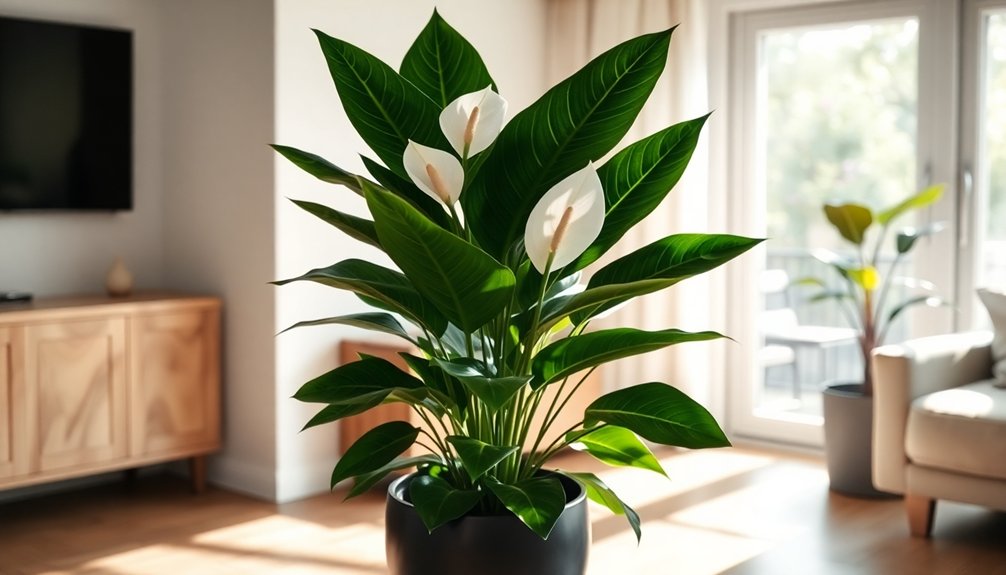
The Peace Lily (Spathiphyllum) is a fantastic choice for purifying your air, as it effectively removes toxins like formaldehyde and benzene.
With its beautiful white flowers, it adds a touch of elegance to any room while thriving in low-light conditions.
Plus, it’s low-maintenance, only needing water about once a week, so you can enjoy its benefits without too much hassle. Additionally, incorporating natural ingredients like the Peace Lily into your home can enhance overall indoor air quality while promoting a healthier living environment.
Air Purification Effectiveness
While many plants can help improve air quality, the Peace Lily (Spathiphyllum) stands out for its impressive ability to eliminate indoor pollutants like formaldehyde, benzene, and ammonia.
Recognized as one of the best air purifying houseplants, it effectively detoxifies the air, making your home healthier.
- Absorbs harmful chemicals from the environment
- Thrives in low to medium indirect light
- Releases oxygen, especially at night
With its strong air purification effectiveness, the Peace Lily not only enhances your indoor atmosphere but also contributes to a fresher environment.
Just remember, while it’s a fantastic air purifier, it’s toxic to pets, so be cautious about where you place it in your home.
Care and Maintenance Needs
Caring for a Peace Lily (Spathiphyllum) is straightforward, making it a popular choice for indoor plant enthusiasts.
This plant thrives in indirect, medium-to-low sunlight, so you don’t need to worry about placing it in bright spots.
Water it about once a week, ensuring the top inch of soil dries out to prevent overwatering.
To enhance its growth, mist the leaves regularly or place it near a humidifier, as Peace Lilies prefer a humid environment.
Keep in mind that they’re toxic to pets, so be cautious and keep them out of reach.
With simple care and maintenance, your Peace Lily can flourish while purifying your indoor air.
Aesthetic Appeal and Benefits
With its striking white flowers and lush green leaves, a Peace Lily (Spathiphyllum) instantly elevates your indoor space. This beautiful plant not only enhances aesthetics but also serves as a powerful air purifier.
Here are some standout features:
- Thrives in indirect, medium-to-low sunlight, making it perfect for various indoor settings.
- Removes harmful indoor toxins like alcohols, acetone, and formaldehyde, improving air quality.
- Requires minimal care—just water when the soil feels dry.
While it’s an excellent choice among indoor plants, keep in mind that Peace Lilies are toxic to pets, so place them out of reach.
Enjoy the visual appeal and air-purifying benefits while ensuring a safe environment for your furry friends!
Aloe Vera (Aloe Barbadensis Miller)
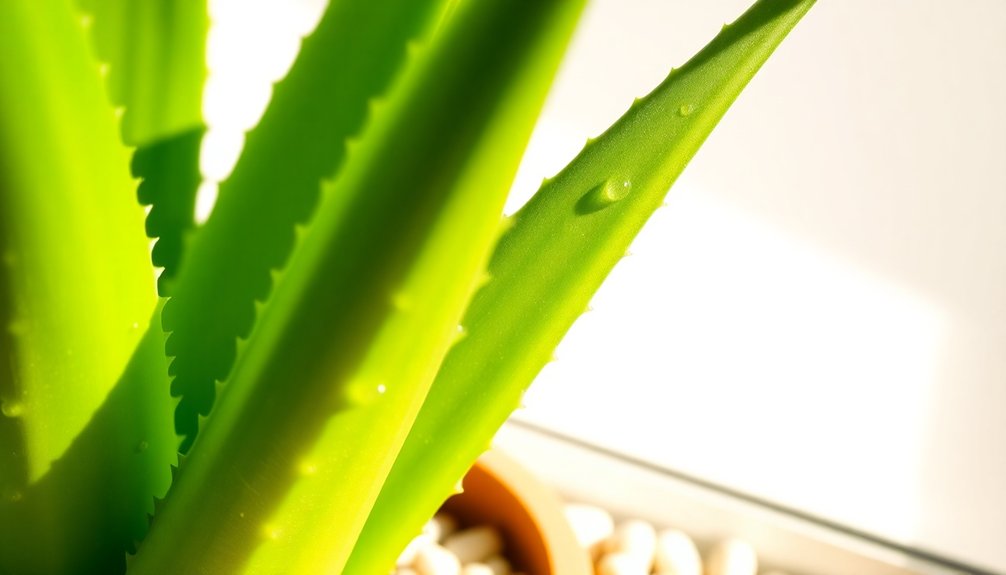
Aloe Vera isn’t just a pretty face; it actively cleans the air by removing harmful substances like formaldehyde and benzene.
You’ll love how easy it’s to care for this succulent, as it thrives in bright, indirect sunlight and needs minimal watering.
Plus, with its unique ability to release oxygen at night, it’s perfect for enhancing your air quality while you sleep. Additionally, incorporating eco-friendly cleaners into your cleaning routine can further improve indoor air quality.
Air Purification Benefits
While you might think of Aloe Vera primarily for its soothing gel, this remarkable plant also excels at purifying the air in your home.
Its air purification benefits make it one of the best houseplants to grow. Here’s why you should consider adding Aloe Vera to your indoor space:
- Removes harmful substances: Effectively eliminates formaldehyde and benzene, improving air quality.
- Oxygen production: Releases oxygen at night, enhancing your sleep environment.
- Minimal maintenance: Thrives in bright, indirect sunlight, making it easy to care for.
Care Requirements
To keep your Aloe Vera thriving and maximize its air-purifying benefits, understanding its care requirements is key.
This succulent prefers bright, indirect sunlight, so place it near a window without direct rays.
Water your Aloe Vera sparingly, allowing the soil to dry out completely between waterings to avoid overwatering.
It thrives in well-draining soil, and repotting every couple of years refreshes the growing medium and prevents root rot.
Regularly dusting the leaves helps maintain its ability to absorb toxins and improve air quality effectively.
Remember, Aloe Vera releases oxygen at night, making it a unique choice for enhancing your indoor air quality while you sleep.
With proper care, your Aloe Vera can flourish and purify your home.
Ideal Growing Conditions
For ideal growth, Aloe Vera (Aloe Barbadensis Miller) thrives in bright, indirect sunlight, making it essential to place it near a window that filters direct rays.
This succulent is a fantastic house plant, as it’s easy to care for and purifies the air effectively. To guarantee it flourishes, keep these conditions in mind:
- Use well-draining soil and water every 2-3 weeks, allowing the soil to dry out completely.
- Maintain temperatures between 60°F to 75°F (15°C to 24°C) and protect it from frost.
- Repot every couple of years to refresh the soil and give roots more space.
With the right ideal growing conditions, your Aloe Vera will thrive and enhance the air quality in your home.
Boston Fern (Nephrolepis Exaltata)
The Boston Fern (Nephrolepis exaltata) stands out as a superb air purifier, effectively filtering out harmful pollutants like xylene, toluene, and benzene from your indoor environment.
The Boston Fern is an exceptional air purifier, removing harmful pollutants like xylene, toluene, and benzene from your home.
This plant thrives in humid conditions, so keep it well-watered and mist its leaves regularly to maintain its lush appearance. It prefers indirect sunlight and cooler temperatures, which makes it perfect for indoor spaces away from direct heat sources.
In addition to purifying the air, the Boston Fern acts as a natural humidifier, restoring moisture that’s good for your skin during dry months. Properly maintaining this plant can also contribute to a cleaner and more hygienic indoor environment, which is essential for overall home hygiene.
However, it does require more attention than many houseplants, making it best suited for dedicated plant owners willing to nurture this beautiful air purifier.
English Ivy (Hedera Helix)
English Ivy (Hedera helix) is a fantastic choice for improving your indoor air quality by reducing harmful toxins like formaldehyde and benzene.
It’s easy to care for and thrives in cooler temperatures with indirect light, making it perfect for various spaces.
However, keep in mind that this beautiful plant is toxic to pets, so be sure to place it out of their reach. Regular maintenance and prevention strategies can help ensure a healthy environment for both plants and pets.
Air Quality Benefits
When it comes to improving indoor air quality, few plants match the effectiveness of English Ivy (Hedera helix). This adaptable plant not only beautifies your space but also offers significant air quality benefits.
Here’s how it can help cleanse the air in your home:
- Removes harmful indoor pollutants like benzene and formaldehyde
- Reduces airborne fecal matter, especially in bathrooms
- Thrives in various environments, making it versatile for any room
With its ability to purify the air, English Ivy is a smart choice for those looking to enhance their indoor atmosphere.
Just remember, if you have pets, this plant isn’t suitable, as it’s toxic to cats and dogs. Enjoy fresher air while adding a touch of greenery!
Care Requirements
Adding English Ivy (Hedera helix) to your home not only purifies the air but also requires some specific care to thrive.
This versatile plant prefers cooler temperatures and indirect sunlight, making it adaptable to various indoor settings. For ideal growth, water it moderately, allowing the soil to dry out between waterings to prevent root rot.
Keep an eye out for spider mites, as they can affect its health; regular monitoring is key. English Ivy can trail beautifully, perfect for hanging baskets or shelf displays.
Just remember, it’s best suited for pet-free homes since it’s toxic to cats and dogs. With the right care requirements, your English Ivy can flourish and enhance your space.
Pet Safety Concerns
While English Ivy (Hedera helix) is celebrated for its air-purifying qualities, it poses serious health risks for pets.
If you have cats or dogs, you’ll want to take into account these pet safety concerns:
- English Ivy is toxic to both cats and dogs.
- Ingesting the plant can lead to vomiting, abdominal pain, and diarrhea.
- It contains harmful compounds like saponins and polyacetylene.
Before bringing English Ivy into your home, weigh the benefits of air purification against the potential dangers to your furry friends.
Always keep this plant out of reach or explore pet-safe alternatives for air purification.
Consulting with your veterinarian about safe plants can help guarantee your pets stay healthy while you enjoy cleaner air.
Rubber Plant (Ficus Elastica)
The Rubber Plant (Ficus elastica) stands out as an excellent choice for anyone looking to improve indoor air quality, especially with its remarkable ability to eliminate formaldehyde.
This plant thrives in cooler temperatures and prefers filtered morning sunlight, making it suitable for various indoor conditions. Its attractive glossy leaves not only enhance your home décor but also serve as a natural air purifier.
You’ll appreciate its low maintenance needs, requiring watering just every 1-2 weeks, perfect for busy lifestyles. Plus, it can tolerate dim light, making it a versatile option for those less sunny corners of your home. Furthermore, incorporating plants like the rubber plant can contribute to a healthier home atmosphere by reducing indoor pollutants.
Adding a rubber plant can greatly benefit your indoor space while keeping the atmosphere fresh and inviting.
Golden Pothos (Epipremnum Aureum)
If you’re looking for another fantastic option to enhance your indoor air quality, consider the Golden Pothos (Epipremnum aureum).
This versatile plant is one of the best plants for removing benzene and other indoor pollutants. Its adaptability makes it perfect for beginners, thriving in low light with minimal care.
Here are some key features:
- Heart-shaped leaves with beautiful variegation
- Fast growth, reaching lengths of 10 feet or more
- Easy propagation through cuttings for multiple plants
Golden Pothos not only improves air quality but also adds aesthetic appeal to your space. Additionally, incorporating effective dusting techniques can further enhance the overall air quality in your home.
Keep an eye on the leaf color; darker leaves indicate a need for less light, ensuring this plant fits seamlessly into any environment.
Bamboo Palm (Chamaedorea Seifrizii)
When you’re looking to enhance your indoor air quality, the Bamboo Palm (Chamaedorea seifrizii) stands out as an excellent choice. This tropical beauty not only adds a lush aesthetic to your space but excels at absorbing carbon and eliminating harmful pollutants like benzene and formaldehyde.
Growing up to 12 feet tall, it’s perfect for larger rooms. The Bamboo Palm thrives in part sun to part shade and requires consistent watering, making it easy to care for, even if you forget occasionally.
Additionally, it helps increase humidity levels, promoting respiratory health, especially in dry environments. Recognized in Clean Air Studies, it’s a valuable addition to any home, combining beauty with impressive air-purifying capabilities. Moreover, incorporating tranquil greenery into your bedroom can foster a natural sanctuary feel, contributing to an overall sense of peace.
Dracaena (Dracaena Spp.)
Known for its striking appearance and air-purifying prowess, Dracaena (Dracaena spp.) is a fantastic choice for anyone looking to enhance indoor air quality.
Dracaena’s striking beauty and air-purifying abilities make it an ideal choice for improving indoor air quality.
These plants not only add beauty to your space but also help eliminate harmful pollutants. Here are a few reasons to contemplate Dracaena:
- Effectively removes toxins like trichloroethylene and formaldehyde.
- Thrives in low light and tolerates neglect, perfect for busy homeowners.
- Grows tall, reaching heights of up to 8 feet, making a stunning statement.
To keep your Dracaena healthy, ascertain it’s in well-draining soil and avoid overwatering to prevent yellowing leaves. Additionally, having plants like Dracaena can complement your efforts to use natural disinfectants in maintaining a cleaner and healthier home environment.
With its air-purifying capabilities and aesthetic charm, Dracaena is an excellent addition to any home.
Conclusion
Bringing these ten air-purifying plants into your home is like inviting a refreshing gust of clean air into your space. Picture lush green leaves dancing in the sunlight, filtering out toxins and releasing pure oxygen. Each plant not only enhances your decor but also creates a serene sanctuary where you can unwind and breathe deeply. So, go ahead, fill your home with these vibrant companions, and transform your living environment into a haven of health and tranquility.