To prevent dirt from spreading around your home, start by creating a shoe-free environment with designated areas for shoe storage. Use doormats to trap dirt before it enters and implement a daily cleaning routine to combat dust. Invest in air purifiers to filter out particles, and keep pet grooming supplies handy for quick cleanups. Establish a “clean as you go” policy in the kitchen, and maintain a consistent vacuuming schedule. Want more tips? There’s plenty to discover!
Create a Shoe-Free Home With Designated Areas
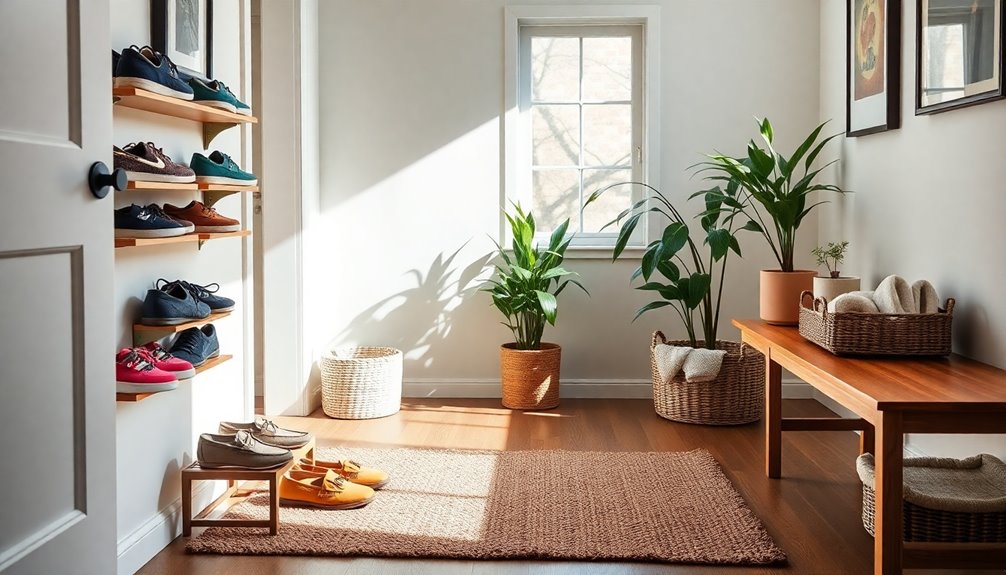
Since many outdoor shoes carry dirt and germs into your home, creating a shoe-free environment can greatly reduce clutter and contamination.
Start by designating a specific area near your entryway for shoe storage. You can use a stylish shoe rack or decorative bins to keep shoes organized and out of the way.
Designate a shoe storage area near your entryway with a stylish rack or decorative bins for a tidy and organized space.
Encourage family members and guests to leave their shoes in this area by providing a welcoming and functional space. Consider adding a bench for convenience when putting on or taking off shoes.
This simple entryway organization not only helps maintain cleanliness but also adds a neat touch to your home. Additionally, implementing cleaning routines can enhance your efforts in keeping a tidy environment throughout the house.
Use Doormats to Trap Dirt Before It Enters
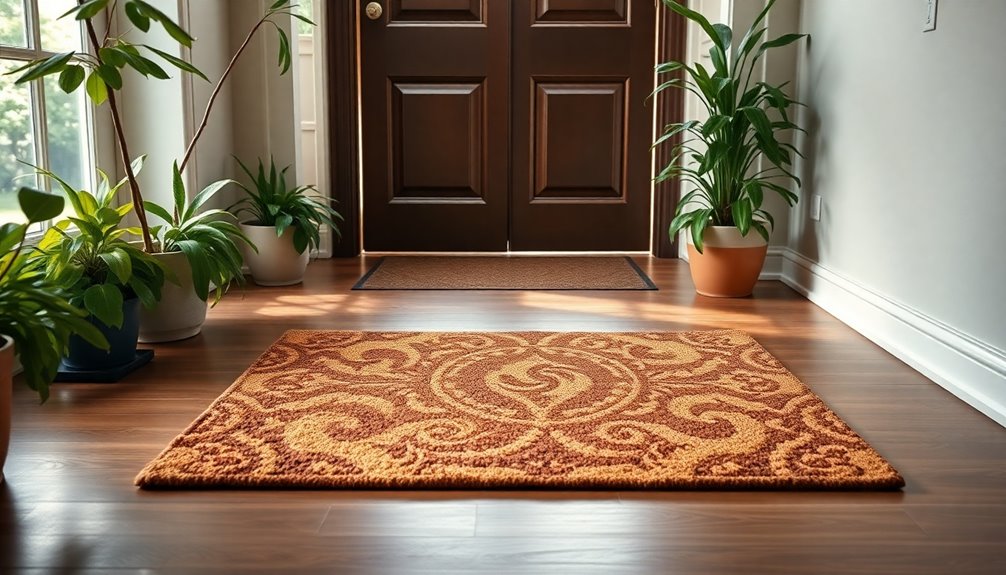
Creating a shoe-free home is a great start, but adding doormats can greatly enhance your dirt-trapping efforts. Choose the right doormat materials, like rubber or coir, as they’re effective at scraping off dirt and moisture from shoes. Place a sturdy mat outside your entrance to catch debris before it enters, and consider a softer mat inside for additional dirt absorption. Positioning them correctly is essential—ensure they’re large enough to accommodate multiple steps while entering. This way, you’ll maximize their effectiveness in trapping dirt. Remember to clean your doormats regularly to maintain their dirt-trapping abilities. By investing in quality doormats and thoughtful placement, you’ll markedly reduce the amount of dirt that makes its way into your home. Additionally, using drawer divider trays in your kitchen can help keep your space organized and free from clutter, making it easier to maintain a clean environment.
Implement a Daily Cleaning Routine to Combat Dust
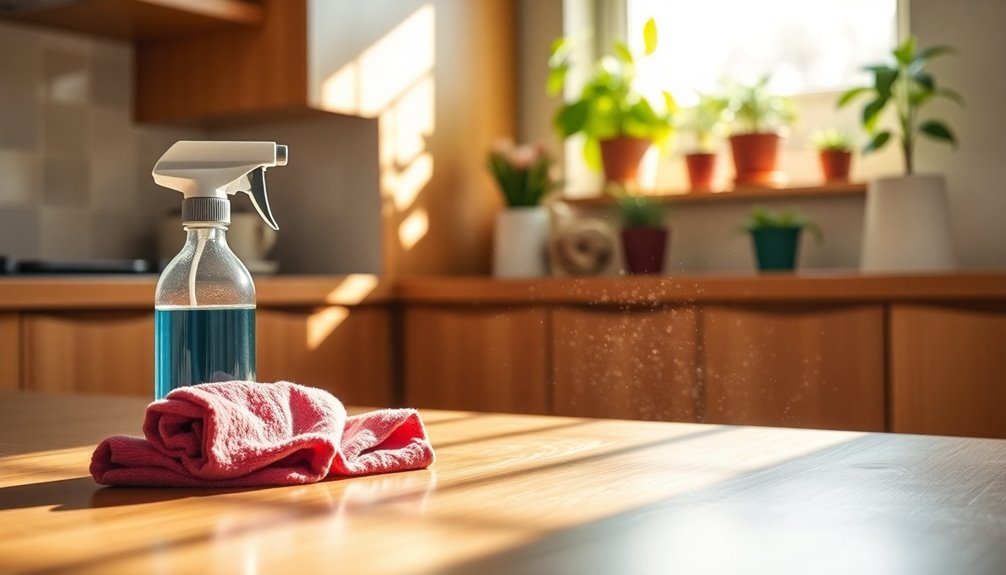
While you might think a deep clean is enough to keep dust at bay, implementing a daily cleaning routine can make a significant difference.
By committing to short, manageable tasks each day, you’ll effectively enhance your dust management. Start by dusting surfaces and vacuuming high-traffic areas daily.
Don’t forget to clean under furniture and in corners where dust tends to accumulate. Wipe down electronics and use microfiber cloths, which trap dust better than traditional rags.
You can also make your bed each morning, as a tidy space tends to collect less dust. Additionally, consider using allergen-proof bedding to further reduce the presence of dust mites and allergens in your sleeping environment.
With a consistent daily cleaning routine, you’ll create a healthier environment while reducing the need for extensive cleaning sessions. Your efforts will pay off in a fresher, dust-free home.
Invest in Air Purifiers to Reduce Dust Particles
Investing in air purifiers can be a game-changer for reducing dust particles in your home.
These devices work by filtering out allergens and dust, considerably improving your indoor air quality. When you run an air purifier, it actively traps dust and other microscopic particles, preventing them from circulating in the air you breathe.
This not only leads to better overall health but also reduces the need for frequent cleaning. Look for purifiers with HEPA filters, as they’re particularly effective for dust reduction. Additionally, using whole house dehumidifiers can further enhance air quality by maintaining optimal humidity levels.
Place them in high-traffic areas or rooms where dust tends to accumulate. By incorporating air purifiers into your home, you’ll create a cleaner, healthier environment for you and your family.
Keep Pet Grooming Supplies Handy for Quick Cleanup
Having pet grooming supplies readily available can make a big difference in keeping your home clean.
With essential tools like brushes and lint rollers, you can quickly tackle fur and dander before they spread. Regular grooming helps reduce shedding and dander, making your cleanup routine even more efficient.
Let’s explore some effective techniques to streamline your cleanup routine.
Essential Grooming Tools
To keep your home clean and free of pet hair, it’s essential to have the right grooming tools readily available.
By having these items on hand, you can quickly manage shedding and dirt before it spreads throughout your space.
- Grooming Brushes: Regularly brushing your pet not only reduces loose hair but also keeps their coat healthy and shiny.
- Pet Wipes: These are great for quick cleanups, especially after outdoor play. They help remove dirt and allergens from your pet’s fur.
- Slicker Brush: This tool is perfect for tackling mats and tangles, ensuring your pet looks their best while minimizing mess.
With these essential grooming tools, you’ll be better equipped to maintain a tidy home.
Quick Cleanup Techniques
A few quick cleanup techniques can make a world of difference in keeping your home tidy, especially when pets are involved.
Keep your pet grooming supplies handy, like brushes and wipes, so you can quickly tackle fur and dander before it spreads.
Use quick decluttering methods, such as a designated basket for toys or a small vacuum for quick sweeps.
When cleaning, keep effective cleaning supplies within reach – a spray bottle of pet-safe cleaner and microfiber cloths work wonders.
Set aside just a few minutes each day to do these quick tasks.
You’ll find that staying on top of messes can drastically reduce dirt and fur buildup, making your home a cleaner, more inviting space.
Design a Mudroom for Outdoor Gear Organization
While outdoor adventures can be exhilarating, they often leave you with a trail of dirt and clutter in your home.
Designing a mudroom can help keep your space organized and clean. By incorporating the right mudroom furniture and gear storage, you can create a welcoming area that minimizes mess.
Consider adding these three essential items:
- Hooks: Perfect for hanging jackets, hats, and bags.
- Benches: Provide a spot to sit while removing shoes and gear.
- Cubbies or Shelves: Great for organizing boots and outdoor equipment.
Incorporating a mudroom can enhance the functionality of your garage and promote a more organized living space.
With these elements, you’ll not only keep dirt at bay but also have a dedicated space for all your outdoor essentials.
Enjoy your adventures without the aftermath!
Use Storage Bins to Prevent Clutter Accumulation
Using storage bins is a smart way to tackle clutter in your home. Choose sizes that fit your space and needs, and don’t forget to label them for quick access. This simple strategy keeps your belongings organized and makes it easier to maintain a clean environment. Additionally, regular decluttering of visible surfaces can help reduce cleaning time and ensure that your storage bins remain effective.
Choose Appropriate Sizes
Choosing the right sizes for your storage bins can make a significant difference in keeping your home clutter-free.
By selecting bins with proper dimensions, you can guarantee everything has its place, preventing dirt from accumulating.
Consider the following tips:
- Assess the Space: Measure your available storage areas to find bins that fit perfectly without wasting space.
- Consider Size Variations: Use a mix of small, medium, and large bins to accommodate different items, allowing for versatile organization.
- Think About Contents: Choose bins that are sized appropriately for what you’ll store—bulky items need larger bins, while smaller items can fit in compact ones.
Label for Easy Access
Labeling your storage bins not only simplifies organization but also helps you quickly locate items when you need them. By implementing effective label organization, you create a system that guarantees everything has its place, reducing clutter and preventing dirt buildup.
When you store items in labeled bins, you don’t have to rummage through piles of stuff, which often leads to mess and dust accumulation. Instead, you can enjoy easy access to what you need, whether it’s cleaning supplies or seasonal decorations.
Use clear, easy-to-read labels that describe the contents of each bin, and consider color-coding for even quicker identification. This small effort can make a big difference in maintaining a tidy, dirt-free home.
Regularly Wash Curtains and Fabrics to Minimize Dust
Although it might seem like curtains and fabrics are just decorative elements, they can actually trap a significant amount of dust and allergens in your home.
Curtains and fabrics may look decorative, but they can collect substantial dust and allergens in your home.
To keep your environment clean, regular curtain cleaning and fabric maintenance are essential. Here are three tips to help you manage dust effectively:
- Wash curtains every 3-6 months, depending on the fabric type and dust accumulation.
- Vacuum upholstered furniture weekly using a brush attachment to remove dust and allergens effectively.
- Use fabric sprays designed to resist dust and allergens, applying them as needed to your curtains and cushions. Additionally, incorporating non-toxic cleaners into your routine can further enhance your cleaning efforts by minimizing irritants in your home.
Opt for Easy-to-Clean Surfaces in High-Traffic Areas
Keeping your home dust-free goes beyond regular cleaning of fabrics; it also involves selecting surfaces that are easy to maintain, especially in high-traffic areas.
Opt for easy maintenance materials like tile, laminate, or vinyl, which can withstand daily wear and tear. These surfaces not only resist stains but also simplify your cleaning routine.
Look for options with low scratch finishes, as they can hide minor marks and keep your space looking fresh longer.
When you choose the right materials, you’ll spend less time worrying about dirt buildup and more time enjoying your clean home. Additionally, opting for surfaces that promote better food management can help maintain cleanliness in your kitchen areas.
Employ Microfiber Cloths for Efficient Dusting
When it comes to dusting, microfiber cloths are your best friend. They collect dust more effectively than traditional cloths, making your cleaning routine quicker and more efficient. Plus, they’re reusable and eco-friendly, so you can keep your home clean while being kind to the planet. Additionally, microfiber cloths capture up to 99% of dust and allergens, promoting a healthier indoor environment.
Superior Dust Collection Ability
Since dust seems to settle everywhere, using microfiber cloths can greatly enhance your dusting routine.
With their superior filtration capabilities, these cloths trap dust particles effectively, preventing them from re-entering the air. This guarantees efficient airflow in your home, contributing to a cleaner environment.
Here are three reasons to switch to microfiber cloths for dusting:
- Electrostatic Attraction: Microfiber attracts and holds onto dust, dirt, and allergens, effectively reducing airborne particles.
- Versatility: You can use them on various surfaces, from electronics to furniture, without scratching.
- Durability: These cloths withstand multiple washes, maintaining their superior dust collection ability over time.
Incorporating microfiber cloths into your cleaning routine will make a noticeable difference in managing dust.
Reusable and Eco-Friendly Option
By choosing microfiber cloths for dusting, you’re not only enhancing your cleaning routine but also making an eco-friendly choice.
These cloths are reusable, which means you can ditch disposable products that contribute to waste. Unlike traditional dusters, microfiber effectively traps dust and allergens, reducing the need for chemical cleaners while promoting eco-friendly cleaning practices.
You can easily toss them in the wash, allowing you to use them repeatedly without losing effectiveness. Pairing your microfiber cloths with reusable bags for storage guarantees you’re minimizing your environmental footprint.
Versatile for All Surfaces
How can you guarantee every surface in your home stays dust-free? The answer lies in using microfiber cloths.
These versatile tools tackle dust on various surface materials, from wood to glass, without scratching or leaving residue.
Here are three reasons to choose microfiber cloths for your cleaning routine:
- Efficiency: They attract dust and dirt, reducing the need for excessive cleaning products.
- Durability: Microfiber cloths last longer than traditional cleaning materials, saving you money over time.
- Eco-Friendly: By using them, you minimize the number of disposable products and harsh chemicals you rely on.
Incorporate microfiber cloths into your cleaning arsenal, and you’ll notice a significant reduction in dust around your home.
Schedule Regular Deep Cleans to Maintain Freshness
While keeping your home clean might feel like a never-ending task, scheduling regular deep cleans can greatly enhance its vitality.
By incorporating effective deep cleaning techniques into your routine, you can tackle hidden dirt and grime that daily cleaning might miss. Aim for a deep clean every few months, focusing on areas like carpets, upholstery, and behind appliances.
Incorporate deep cleaning techniques into your routine to uncover hidden dirt and enhance your home’s freshness. Aim for every few months.
This not only boosts your home’s cleanliness but also supports vitality maintenance, helping to eliminate odors and allergens. Remember to create a checklist to guarantee you cover all the essential spots.
When you prioritize these deep cleaning sessions, you’ll find it easier to maintain a bright, inviting home that feels both clean and invigorating.
Limit Decorative Items That Collect Dust
When it comes to keeping your home dust-free, choosing a minimalist decor style can make a big difference.
Fewer decorative items mean less surface area for dust to settle, making cleaning easier.
Plus, regularly wiping down display surfaces helps maintain that fresh, tidy look you want.
Choose Minimalist Decor Styles
A minimalist decor style can considerably reduce the amount of dust that collects in your home.
By embracing clean lines and fewer decorative items, you create decluttered spaces that are easier to maintain.
Here are three ways you can implement minimalist decor:
- Choose minimalist furniture: Opt for sleek, simple designs that don’t have intricate details where dust can accumulate.
- Limit decorative items: Select a few meaningful pieces instead of cluttering surfaces with knick-knacks.
- Use multifunctional furniture: Look for items that serve multiple purposes, reducing the need for extra pieces.
Regularly Clean Display Surfaces
Regularly cleaning display surfaces is essential for keeping dust at bay and maintaining a tidy home.
Start by limiting decorative items that collect dust, such as knickknacks or intricate sculptures. Focus on display organization by choosing a few meaningful pieces instead. This not only simplifies cleaning but also creates a more appealing arrangement.
When it comes to surface materials, opt for easy-to-clean options like glass or metal, which don’t harbor dust as much as wood or fabric.
Make it a habit to dust these surfaces weekly, using a microfiber cloth that traps particles effectively.
Seal Cracks and Gaps to Keep Dirt Out
To keep dirt from invading your home, sealing cracks and gaps is essential.
It’s an easy yet effective way to reduce dirt accumulation.
Here are three steps to help you with crack sealing and gap filling:
1. Inspect Your Home: Check for cracks in walls, windows, and doors where dirt can sneak in.
Don’t forget the foundation!
2. Choose the Right Materials: Use caulk for small gaps and expandable foam for larger cracks.
These materials will provide a solid barrier.
3. Apply Sealants: Carefully apply your chosen sealant, ensuring you cover every gap and crack.
Let it cure as per the manufacturer’s instructions.
Utilize Indoor Plants to Improve Air Quality
Indoor plants can do wonders for the air quality in your home, helping you breathe easier while adding a touch of nature.
You’ll discover various air-purifying options, ideal placements for maximum benefit, and care tips to keep your plants thriving.
Let’s explore how to make the most of these natural air cleaners!
Air Purifying Plant Options
While you mightn’t think about it, adding air-purifying plants to your home can greatly improve your indoor air quality.
These plants not only enhance your decor but also provide significant air purifying benefits. Here are three excellent options to reflect on:
- Spider Plant: Known for its resilience, it effectively removes pollutants like formaldehyde.
- Peace Lily: This beautiful plant thrives in low light and can filter out ammonia and benzene.
- Snake Plant: An excellent choice for beginners, it converts CO2 into oxygen at night, improving your air quality while you sleep.
Incorporating these air-purifying plants into your home can create a healthier environment, making it easier to breathe and enjoy your space.
Give them a try!
Placement For Maximum Effect
When you strategically place air-purifying plants throughout your home, you can greatly enhance their ability to improve air quality.
Consider positioning them near dirt barriers, like entryways or high-traffic areas, to combat dust and pollutants right at the source. For maximum effect, place taller plants in corners to create a natural filter, while smaller ones can thrive on shelves or tabletops.
Positioning plants in rooms where you spend the most time, like the living room or bedroom, helps guarantee cleaner air.
Don’t forget to rotate your plants occasionally; this encourages even growth and maximizes their air-purifying benefits.
With these strategic placements, you’ll not only beautify your space but also promote a healthier environment.
Care Tips For Longevity
Caring for your air-purifying plants is key to guaranteeing they thrive and continue to improve your home’s air quality.
By following these longevity tips and setting a maintenance schedule, you can keep your plants healthy and effective:
- Water Wisely: Check the soil moisture before watering. Overwatering can harm roots, while underwatering can stress your plants.
- Provide Adequate Light: Make sure your plants receive the right amount of light, whether it’s bright, indirect sunlight or low-light conditions.
- Clean Leaves Regularly: Dust can accumulate on leaves, hindering photosynthesis. Wipe them down gently with a damp cloth to keep them clean and efficient.
With proper care, your indoor plants will thrive and enhance your home’s air quality for years to come!
Establish a “Clean as You Go” Policy in the Kitchen
Implementing a “Clean as You Go” policy in your kitchen not only keeps your workspace tidy but also makes cooking more enjoyable. As you prepare your meals, take a moment to clean up spills and put away ingredients as you finish using them. This practice minimizes mess and helps you maintain a clear countertop.
To enhance your kitchen organization, create a simple cleaning checklist tailored to your cooking routine. Include tasks like wiping down surfaces, washing utensils, and clearing clutter.
Use Lint Rollers for Quick Removal of Pet Hair
Although pets bring joy to our lives, their fur can quickly turn your home into a hair-covered haven. One of the best pet hair solutions is using lint rollers. They’re not only handy but also super effective.
Here are three lint roller benefits you shouldn’t overlook:
- Quick Cleanup: Lint rollers swiftly grab pet hair from furniture, clothes, and even car interiors.
- Portability: You can easily take them anywhere, making them perfect for on-the-go cleaning.
- Cost-Effective: Lint rollers are inexpensive and can last a long time, offering great value for quick hair removal.
Maintain a Consistent Vacuuming Schedule
To keep dirt and allergens at bay, sticking to a consistent vacuuming schedule is essential. Set aside specific times each week to vacuum your home. This routine helps catch dirt before it accumulates, making your cleaning efforts more effective.
Use various vacuuming techniques, like overlapping your strokes and changing directions, to guarantee you capture all debris. Don’t forget about vacuum maintenance; regularly check your vacuum’s filter and brush rolls to keep it working efficiently.
A well-maintained vacuum not only lasts longer but also improves indoor air quality. By following these steps, you’ll create a cleaner, healthier living environment that minimizes the spread of dirt and allergens throughout your home.
Educate Family Members on Cleanliness Habits
Keeping your home clean isn’t just about vacuuming; it also involves everyone who lives there.
Maintaining a clean home requires the commitment and participation of everyone who lives there.
Educating your family members on cleanliness habits is essential for maintaining a dirt-free environment. Here are some tips to help you get started:
- Create Cleaning Schedules: Develop a weekly cleaning schedule that outlines who’s responsible for which tasks. This makes everyone accountable.
- Assign Household Responsibilities: Clearly define each person’s role in household chores. When everyone knows their responsibilities, it reduces chaos and clutter.
- Lead by Example: Demonstrate good habits like picking up after yourself and keeping common areas tidy. Your actions set the standard for others.
Conclusion
By taking these simple steps, you’ll create a cleaner, more inviting home. Imagine stepping onto a plush doormat that catches dirt before it gets inside, or enjoying fresh air thanks to an air purifier. Picture your family effortlessly cleaning as they cook, and furry friends leaving less hair behind. With everyone on board, your home transforms into a sanctuary of cleanliness. So, embrace these tricks, and watch your space shine like never before!