To clean and disinfect your kitchen appliances, start by emptying each one and removing parts that need soaking. Use a vinegar-water solution or baking soda paste for effective grime removal. Wipe surfaces with a microfiber cloth after allowing cleaning solutions to sit. Regular maintenance is key; clean high-touch areas frequently. For best results, choose eco-friendly products. Want to know detailed steps for each appliance? There’s much more to explore to keep your kitchen spotless!
How to Clean Your Oven
Cleaning your oven can feel intimidating, but with the right approach, you can make it manageable.
Start by removing the oven racks and accessories, then wipe down any loose debris.
Next, apply a cleaning solution to the interior surfaces. For a more effective clean, create a baking soda paste using baking soda and water, and spread it inside the oven. Let it sit for several hours or overnight to loosen grime and grease.
Apply a cleaning solution or a baking soda paste to the oven’s interior and let it work its magic for hours.
When you’re ready, scrub away the paste with a damp cloth or sponge, ensuring you wipe down all surfaces thoroughly.
Don’t forget to clean the racks separately by soaking them in hot, soapy water. Regularly using nonstick oven liners will catch spills and simplify cleaning.
Regular maintenance will prevent buildup and extend your oven’s lifespan.
Tips for Maintaining Your Stove Top
To keep your stove top in top shape, make it a habit to clean it after each use.
This daily practice prevents stubborn stains and grease buildup that can be tricky to tackle later.
If tough stains do appear, don’t worry—there are effective methods to remove them without damaging your stove. Regular maintenance reduces the frequency of deep cleaning that might be necessary for your appliances.
Daily Cleaning Practices
While you might think a quick wipe down is enough, maintaining your stove top requires daily attention to keep it free of grease and food residue.
Start by cleaning the surfaces with a vinegar-water mixture or dish soap to effectively remove buildup. Don’t forget to remove burner grates and caps regularly, soaking them in warm, soapy water to loosen stuck-on grime.
If you have an electric stove, disconnect the burner coils and clean them separately. Use a soft cloth or sponge to scrub the stove top gently, avoiding abrasive materials that can scratch the surface.
Finally, inspect and wipe down high-touch areas like knobs and handles with disinfectant wipes to guarantee regular cleaning and sanitation in your kitchen.
Stubborn Stain Removal
Stubborn stains on your stove top can be a real headache, but tackling them doesn’t have to be intimidating.
Here are some effective tips to help you maintain a sparkling clean surface:
- Create a paste using baking soda and water, apply it to the stains, and let it sit for 15-30 minutes. This cleaning solution breaks down grime effectively.
- Use a non-abrasive sponge to scrub the area gently, ensuring you don’t damage the surface.
- For those tricky spots around knobs and burners, grab a soft-bristled brush or toothbrush to dislodge food particles.
After cleaning, always wipe down your stove top with a damp cloth to remove any residue, keeping your cooking surface safe and clean.
Effective Microwave Cleaning Techniques
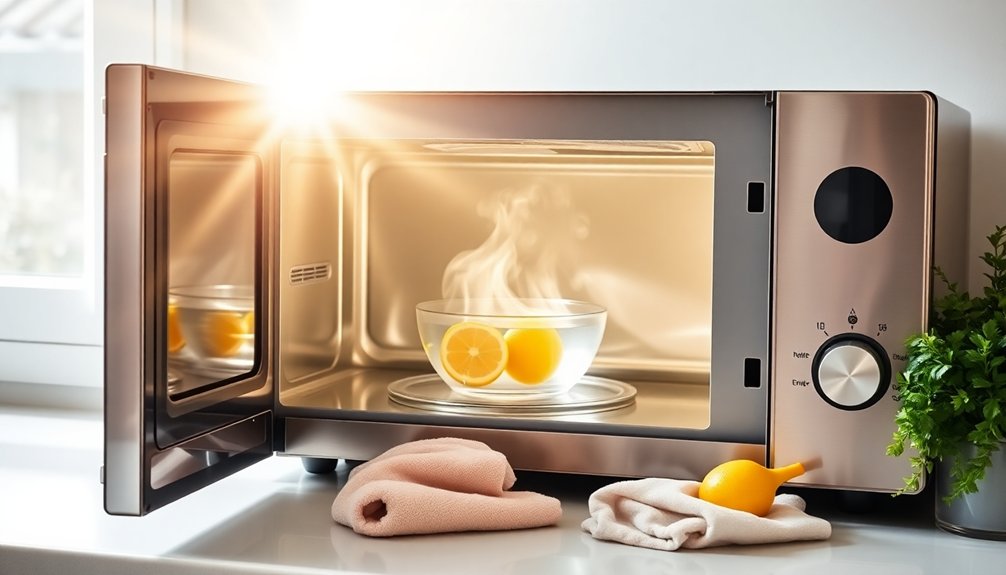
Microwave cleaning doesn’t have to be an intimidating task, and with a few simple techniques, you can keep yours fresh and odor-free.
Start by filling a microwave-safe bowl with equal parts water and white vinegar, then heat it on high for five minutes. The steam will loosen food grime and neutralize odors. For an extra fresh scent, add lemon slices to the vinegar-water solution.
Once the steaming is done, carefully remove the bowl with oven mitts and wipe down the interior surfaces using a damp microfiber cloth.
Don’t forget to clean the microwave turntable and ring separately in warm, soapy water. Regularly cleaning guarantees your microwave stays clean and sanitized, preventing unpleasant odors and bacteria buildup. Using non-toxic cleaners adheres to safe sanitization practices, ensuring a healthy kitchen environment.
Deep Cleaning Your Dishwasher
To keep your dishwasher running smoothly and efficiently, deep cleaning it regularly is crucial. Here’s how to tackle it:
- Remove the bottom rack and soak it in hot water mixed with two cups of white vinegar to eliminate grease and grime.
- Inspect the drain trap and spray arms for food remnants that could cause clogs. Clean them thoroughly to guarantee proper water flow.
- Run a hot cycle with a cup of vinegar on the top rack to deodorize and sanitize. After that, sprinkle one cup of baking soda on the bottom and run a short cycle to freshen and remove stains.
Regular maintenance, including monthly filter cleaning, can greatly improve the efficiency and longevity of your dishwasher while enhancing your overall kitchen appliance cleaning routine. Additionally, performing regular maintenance on your dishwasher is essential for preventing buildup and ensuring a hygienic kitchen environment.
Keeping Your Coffee Maker in Top Shape
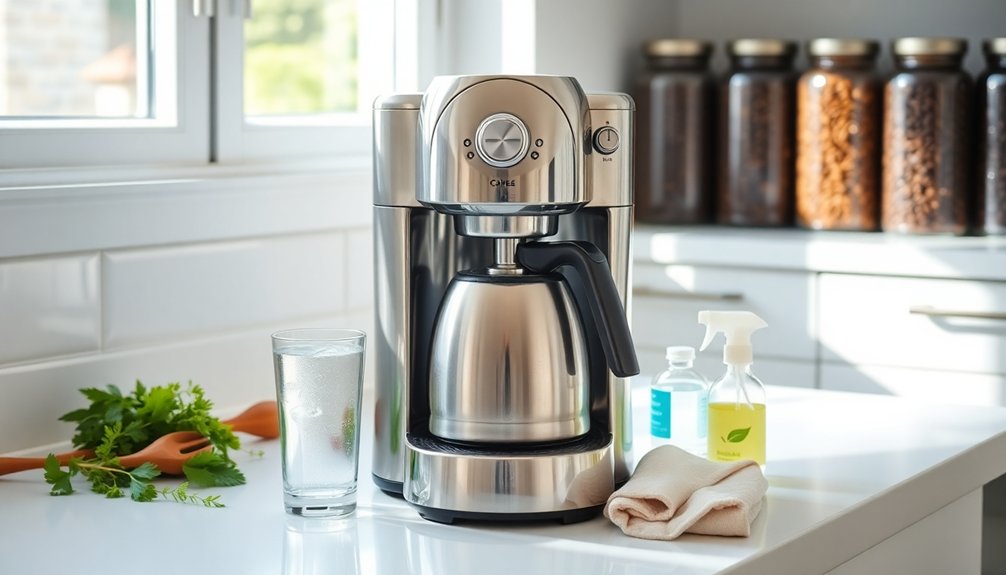
To keep your coffee maker in top shape, establish a regular cleaning schedule that includes washing the carafe and descaling with vinegar. This routine not only enhances your coffee’s flavor but also extends the lifespan of your machine. Additionally, using natural disinfectants like vinegar ensures that you’re maintaining a cleaner environment for your brewing process.
Regular Cleaning Schedule
Keeping your coffee maker clean is vital for brewing a delicious cup of coffee every time.
To maintain a clean kitchen and avoid foodborne illnesses, establish a regular cleaning schedule. Here are three important steps:
- Monthly Cleaning: Wash the carafe with warm, soapy water and run a mixture of one part water and one part vinegar through the machine to remove mineral buildup.
- Drying: After each use, keep the water reservoir lid open to allow it to dry out, preventing mold and mildew growth.
- Filter Maintenance: Regularly inspect and clean the coffee maker’s filter to maintain flavor quality and prevent clogging.
Following these steps guarantees your coffee maker stays in top shape and delivers great-tasting coffee every time!
Descaling With Vinegar
While regular cleaning is essential, descaling your coffee maker with vinegar is a crucial step in maintaining its performance and extending its lifespan.
To start, mix equal parts water and white vinegar in the reservoir. This solution helps dissolve mineral buildup that can affect your coffee maker’s performance. Run a complete brewing cycle with the vinegar mixture to effectively clean the internal components.
After descaling, brew a fresh pot of water to flush out any residual vinegar taste, ensuring your coffee’s flavor quality remains intact. Regular descaling every one to three months, depending on your water’s hardness, is recommended.
This cost-effective, eco-friendly method allows you to avoid harsh chemicals while keeping your appliance clean and functional.
Proper Carafe Maintenance
Maintaining your coffee maker’s carafe is essential for brewing great coffee. Regular cleaning and disinfecting will guarantee your coffee tastes fresh and delicious.
Here are three key steps to keep your carafe in top shape:
- Wash the carafe monthly with warm soapy water and a sponge to prevent coffee residue buildup.
- Every few months, fill the reservoir with a mixture of equal parts water and vinegar. Run this solution through the brewing cycle to descale and clean the internal components.
- After using the vinegar solution, brew a fresh pot of clean water to eliminate any lingering vinegar taste.
Don’t forget to scrub the lid and spout with a soft brush.
Allow the carafe to dry completely to guarantee longevity and cleanliness.
Essential Refrigerator Cleaning Steps
A thorough refrigerator cleaning can make a significant difference in both food safety and appliance efficiency. Start by emptying your fridge completely, checking for expired food, and discarding anything that’s no longer safe to eat.
Next, remove shelves and drawers to clean them easily; wash these parts with warm, soapy water to eliminate spills and stains. Use a mixture of mild dish soap and warm water to wipe down the interior surfaces, including sides and ceiling, which helps prevent bacteria buildup.
Don’t forget to wipe down the exterior with a neutral cleaner, focusing on door seals and handles, as these areas are often high-touch. Regularly inspect the drip pan and condenser coils for peak efficiency and odor prevention. Additionally, a regular cleaning routine is essential to promote a hygienic kitchen environment.
General Cleaning Advice for Kitchen Appliances
After ensuring your refrigerator is clean and organized, it’s time to tackle other kitchen appliances. Remember to follow these tips for effective cleaning:
After organizing your refrigerator, shift your focus to cleaning other kitchen appliances effectively for lasting performance.
- Start from the top of each appliance and work your way down. This way, dirt won’t fall onto areas you’ve already cleaned.
- Always consult the owner’s manual for appropriate cleaning solutions to avoid damaging your appliances.
- Perform regular maintenance by wiping down your microwave, kitchen sink, and other appliances with a damp cloth after each use.
Allow cleaning solutions to sit for the manufacturer-recommended time to effectively remove grime. Additionally, using natural cleaning methods like vinegar can help disinfect surfaces without harsh chemicals.
With proper care, your appliances will remain in great condition and serve you well for years to come.
Recommended Cleaning Products for Your Kitchen
Choosing the right cleaning products for your kitchen can make a significant difference in both cleanliness and safety.
Opt for non-toxic and eco-friendly cleaning products to minimize chemical exposure while promoting a healthier environment. When tackling germs, select solutions with antimicrobial agents that effectively kill bacteria, especially on surfaces that come into direct contact with food.
Food-safe sanitizers are essential for areas like countertops and cutting boards to prevent contamination.
Don’t forget about DIY options—mixing vinegar and baking soda creates a powerful, safe cleaner for various kitchen appliances and surfaces.
Always check labels and certifications to verify your chosen products meet safety standards, guaranteeing a clean and safe cooking space for you and your family. Additionally, consider using eco-friendly cleaners that are effective and align with sustainable practices for a healthier kitchen environment.
Conclusion
Cleaning and disinfecting your kitchen appliances isn’t just about hygiene; it can transform your cooking experience. Imagine whipping up dinner in a sparkling clean oven or brewing coffee in a fresh machine. By following these steps, you’ll not only maintain your appliances but also create a healthier environment for you and your loved ones. So grab those cleaning supplies and get to work—you might just rediscover the joy of cooking in a spotless kitchen!