A clean playroom’s key to boosting your child’s creativity and focus. Start by gathering your cleaning supplies and setting a schedule. Declutter by sorting toys into “Keep,” “Donate,” and “Trash” categories. Establish play zones for different activities and use clear, labeled storage options for easy access. Implement simple rules for maintaining tidiness, and include your kids in the process to teach responsibility. Stay tuned for more expert tips on keeping their rooms organized and fun!
Understanding the Importance of a Clean Playroom
When you keep your child’s playroom clean and organized, it not only enhances their focus and creativity but also creates an inviting space for imaginative play.
An organized playroom allows kids to make the most of their time, as they’re less distracted by clutter. Studies show that tidy environments boost children’s ability to concentrate and process information.
An organized playroom minimizes distractions, enhancing children’s focus and improving their ability to concentrate and learn.
By regularly maintaining a tidy playroom, you’re teaching kids valuable organizational skills and the importance of taking care of their personal spaces. This sense of responsibility can lead to a more harmonious home environment, reducing stress for both you and your child.
Plus, a well-maintained playroom minimizes hazards, ensuring safety by preventing tripping over toys or losing small items that could pose choking risks. Additionally, establishing daily cleaning routines can further enhance the playroom’s organization and upkeep.
Preparation for Cleaning
Preparing for a cleaning session in your child’s playroom can make the process smoother and more efficient. Start by gathering essential supplies to kick off your cleaning routine. Here are some items you won’t want to miss:
- Trash bags for easy disposal
- Vacuum or broom for quick clean-up
- Multi-surface cleaner for tackling spills
- Storage solutions like bins for organizing kids’ toys
Next, consider setting a cleaning schedule to maintain consistency.
Don’t forget to prepare sticky notes to define categories for toy organization, which will simplify sorting and decluttering.
Remember, addressing hidden messes guarantees a thorough clean. Incorporating time-saving strategies into your cleaning routine will further enhance efficiency and effectiveness.
With these cleaning tips in mind, you’ll transform the playroom into a tidy haven for your kids!
Decluttering and Sorting Toys
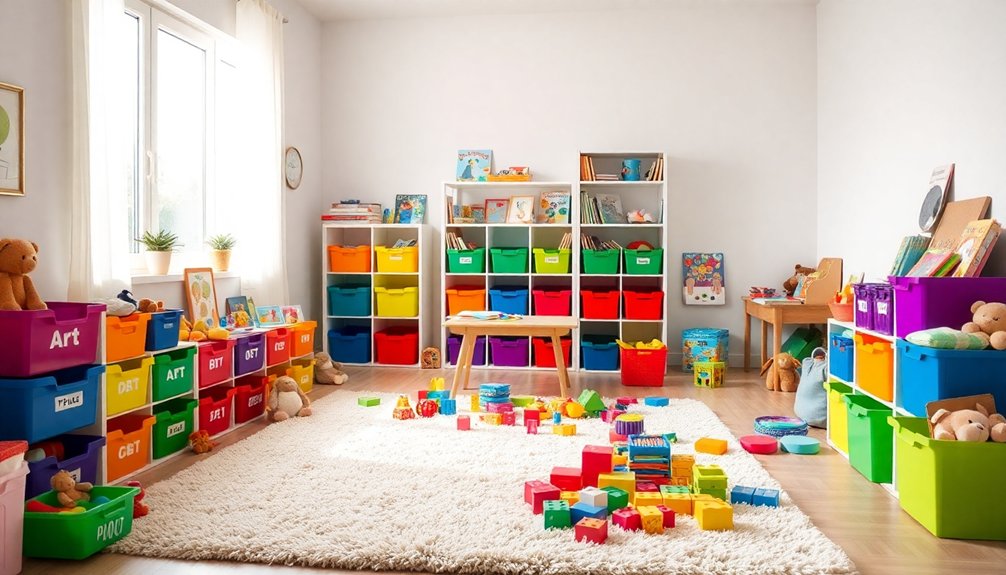
Start by evaluating the condition of your child’s toys, identifying those that are broken or no longer used.
Once you’ve cleared out the unnecessary items, categorize what’s left into groups like puzzles, arts and crafts, and dress-up clothes.
This approach not only simplifies organization but also makes it easier for your child to understand what they truly enjoy. Additionally, streamlining the process for sorting toys can enhance accessibility and improve the overall organization of the playroom.
Assessing Toy Condition
Regularly reviewing the condition of your child’s toys is essential for maintaining a safe and enjoyable play environment.
Start by evaluating toy condition during your cleaning and organization process. Here are some key points to take into account:
- Check for broken pieces and verify all items are functional and safe.
- Discard crayons that are broken or coloring books with more than 50% used pages.
- Remove puzzles missing pieces and games lacking components to avoid frustration.
- Review stuffed animals; discard those stained or ripped, but keep beloved favorites.
Categorizing Toy Types
While decluttering your child’s toys might seem overwhelming, categorizing them into specific types can make the process much easier and more enjoyable.
Start by sorting toys into categories like action figures, dolls, puzzles, arts and crafts, and educational games. Discard broken toys and donate those that are outgrown or no longer spark joy.
Group similar items within each category to simplify organization, making clean-up easier for your little ones. Use clear bins or labeled containers for each category, allowing for easy identification and encouraging kids to return toys to their designated spots.
Regularly reassess the toy categories based on your child’s interests and developmental stages to maintain a curated collection in the kids’ playroom that promotes creativity and engagement.
Decluttering Strategies Explained
When tackling the decluttering process, you’ll want to begin by carefully reviewing all toys, books, and games. Discard broken items and donate those that are outgrown or no longer bring joy.
To make organizing easier, sort remaining toys into specific categories:
- Puzzles
- Arts and crafts
- Dress-up clothes
- Building blocks
Use designated bags or boxes labeled “Keep,” “Donate,” and “Trash” to help with decision-making and manage clutter effectively.
Involve your kids in this process to teach them valuable organization skills and responsibility for their belongings.
Finally, consider a toy rotation system—store some toys away for a while to refresh playtime and minimize clutter. Your home will feel more organized, and your kids will appreciate their space!
Effective Cleaning Steps for Playrooms
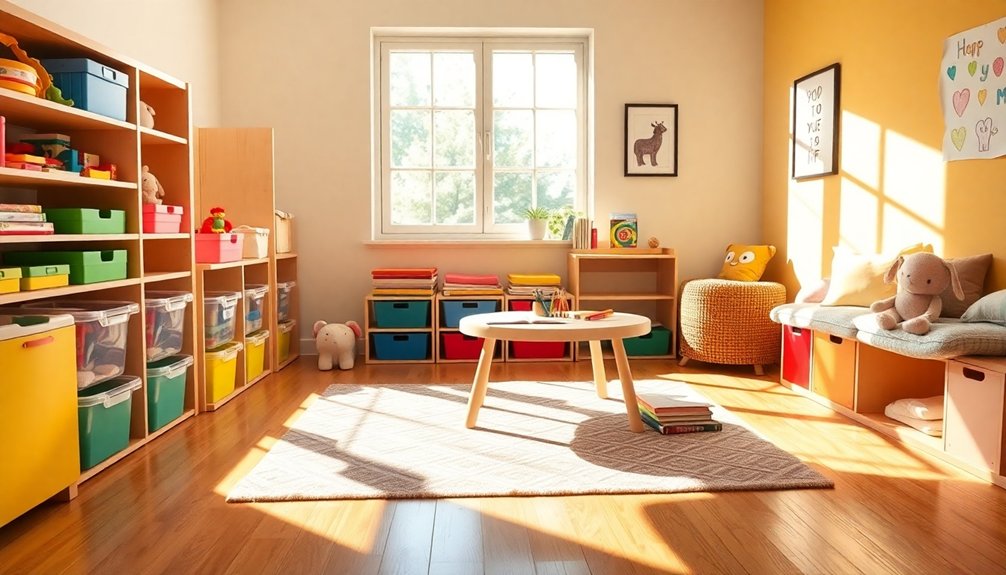
Before you start cleaning the playroom, gather all your cleaning supplies to make the process smoother.
Once you have everything ready, declutter and sort the toys to create a more organized space.
Establish clear play zones to help your kids understand where everything belongs.
Incorporating storage solutions can significantly enhance organization and accessibility, making it easier for your kids to maintain their play area.
Gather Cleaning Supplies First
To kick off your cleaning session, gather six essential supplies that will streamline the process: a trash bag, vacuum or broom, multi-surface cleaner, duster, glass cleaner, and disinfectant wipes.
With these cleaning supplies at hand, you’ll be ready to tackle that playroom efficiently.
Consider adding these items to your arsenal:
- Storage bins for organizing
- Cloths for wiping down surfaces
- Sticky notes to define toy categories
- A checklist to track your progress
Once you have everything you need, you can easily put toys away and create an organized space.
A clean playroom not only looks great but also enhances your kids’ focus and creativity, making playtime even more enjoyable!
Declutter and Sort Toys
A clean playroom starts with a thorough decluttering and sorting of toys.
Begin by removing all toys to create a clean slate. Use sticky notes to define categories, like puzzles, arts and crafts, and dress-up clothes, which’ll help keep similar items together.
As you declutter and sort toys, be honest about what to keep. Aim to keep only age-appropriate toys that support play and creativity.
It’s okay to let go of broken toys and those that no longer bring joy. Consider donating items that are outgrown instead of throwing away.
This streamlined selection won’t only reduce clutter but also enhance the playroom’s functionality, making it a more enjoyable space for your kids.
Establish Play Zones Clearly
Creating clearly defined play zones in your child’s playroom not only helps contain messes but also makes it easier for them to engage with their toys. By establishing play zones, you can keep the space organized and promote their independence during cleanup.
Here are some effective steps:
- Use removable rugs or mats to define areas for reading, arts and crafts, or sensory play.
- Install curtains or dividers to create separate zones, reducing distractions.
- Clearly label bins, shelves, and drawers with pictures or words for easy identification.
- Regularly adjust the layout to match your child’s evolving interests.
These strategies will enhance focus, creativity, and make cleaning a breeze!
Organizing the Playroom: Tips and Strategies
While organizing a playroom can seem intimidating, breaking it down into manageable steps makes it a fun project for both you and your kids.
Start by creating designated play zones to contain messes and clarify different activity areas, like reading or arts and crafts. Use labeled bins and baskets to group similar toys, allowing your kids to find and put away their belongings independently.
Implement a toy rotation system by storing some toys away for a few weeks, keeping playtime fresh and your space organized. Invest in colorful, transparent storage solutions that enhance the playroom’s visual appeal and make it easy for children to see and access their toys.
Involving your kids in choosing containers fosters a sense of responsibility, while also encouraging them to practice maintenance strategies to keep the playroom tidy.
Creating Fun and Functional Play Zones
Here are some ideas to enhance your child’s play space:
- Create a reading corner with comfy pillows and bookshelves.
- Use removable rugs to define arts and crafts areas, making cleanup easier.
- Install room dividers or curtains to separate zones for different activities.
- Label bins and shelves with words or pictures to help your child identify where toys belong.
Incorporating storage bins and baskets can further streamline organization and keep play areas tidy.
These strategies not only promote responsibility but can also complement a chore chart, making it easier for your child to maintain their play zones.
Implementing Rules and Routines for Maintenance
To keep your child’s room and playroom tidy, it’s essential to implement clear rules and routines that make maintenance manageable.
Start by setting guidelines for toy usage, like allowing your child to play with one or two toys at a time. Establish a nightly cleanup routine, assigning specific tasks such as putting away toys or hanging up clothes. This prevents clutter from building up over time.
Teach your child respect for toys by explaining their value and the importance of a tidy space. To motivate them, introduce a reward system for consistently keeping their rooms clean. Incorporate a cleaning checklist to streamline tasks and make cleaning more engaging.
Don’t forget to regularly review and update these rules and routines to guarantee they stay effective as your child grows.
Involving Kids in the Cleaning Process
Getting kids involved in the cleaning process not only makes tidying up more efficient but also teaches them essential life skills. By engaging them, you’re fostering responsibility and valuable organizational skills.
Here are some effective ways to involve your kids:
- Turn decluttering into a game, like a timed clean-up challenge.
- Let them choose their own storage bins and labels for a sense of ownership.
- Assign age-appropriate tasks, such as sorting toys or wiping down surfaces.
- Use positive reinforcement, like praise or small rewards, to encourage good cleaning habits. Additionally, incorporating regular decluttering habits helps maintain a cleaner environment and makes cleaning feel less overwhelming.
Long-term Strategies for Keeping Kids’ Rooms Tidy
Keeping kids engaged in the cleaning process sets a solid foundation for long-term tidiness in their rooms. Start by establishing a consistent cleaning schedule that includes daily, weekly, and monthly tasks.
Assign age-appropriate responsibilities to foster ownership and accountability. Utilize clear storage bins and labeled containers to make organization easier, helping kids know where items belong.
Implement a toy rotation system to keep playtime engaging while reducing clutter. This minimizes mess and overwhelm, making cleaning less intimidating.
Regularly review and declutter items every few months to guarantee only beloved and age-appropriate toys remain. These strategies not only maintain a clean environment but also instill lifelong habits of organization and responsibility in your kids. Additionally, regular reassessment of belongings can help prevent clutter buildup over time.
Conclusion
Cleaning your kids’ rooms and playrooms can feel like herding cats, but with a plan in place, it becomes a manageable task. By involving your children and instilling routines, you’re not just tidying up; you’re teaching responsibility and organization. Remember, a clean space fosters creativity and play, so embrace the process. Keep your strategies simple and fun, and you’ll find that maintaining order becomes second nature for both you and your little ones!