Using essential oils for cleaning is a smart, eco-friendly choice. Oils like tea tree, lavender, and eucalyptus pack powerful disinfecting properties while creating a pleasant atmosphere. However, not all oils are effective, and some can even irritate surfaces. Proper dilution is key to safety and effectiveness, and sticking to high-quality options is crucial. By following the right guidelines, you can enhance your cleaning routine. Discover more tips and insights to master the art of natural cleaning.
Why Use Essential Oils for Cleaning?
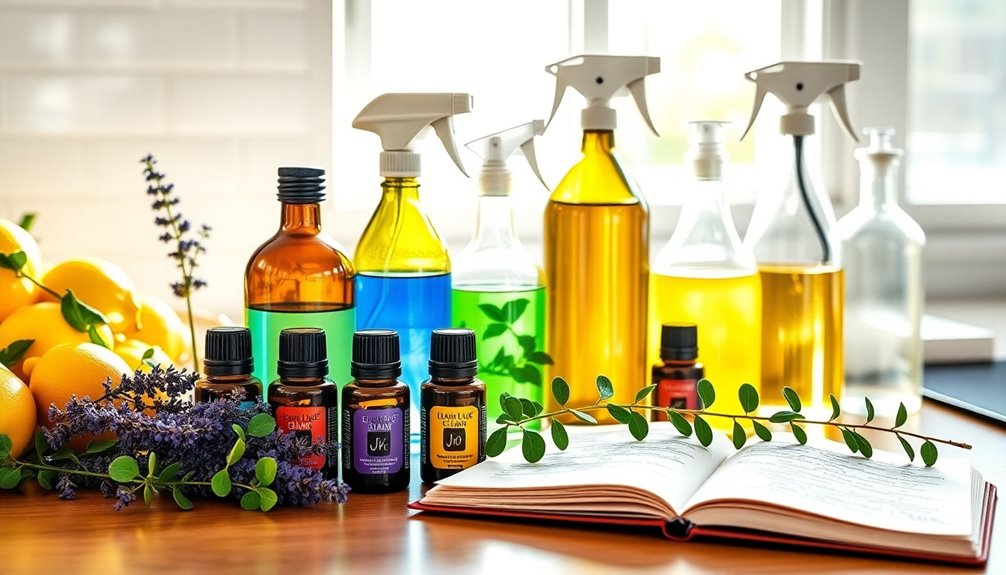
While many people rely on conventional cleaning products, you might find that using essential oils offers a more natural and effective alternative.
These oils not only provide powerful cleaning properties but also deliver aromatic benefits, enhancing your space’s atmosphere. Unlike synthetic cleaners, essential oils are eco-friendly alternatives that minimize your environmental impact. They’re derived from plants, meaning you can enjoy a cleaner home without harsh chemicals.
Plus, their pleasant scents can elevate your mood and create a relaxing environment while you clean. By incorporating essential oils into your cleaning routine, you’re not just maintaining a tidy space; you’re embracing a healthier lifestyle for you and your family. In addition, many eco-friendly cleaning products, such as those offered by companies like Thrive Market, emphasize biodegradable and cruelty-free formulations that complement the use of essential oils in your home.
The Best Essential Oils for Disinfecting Your Home
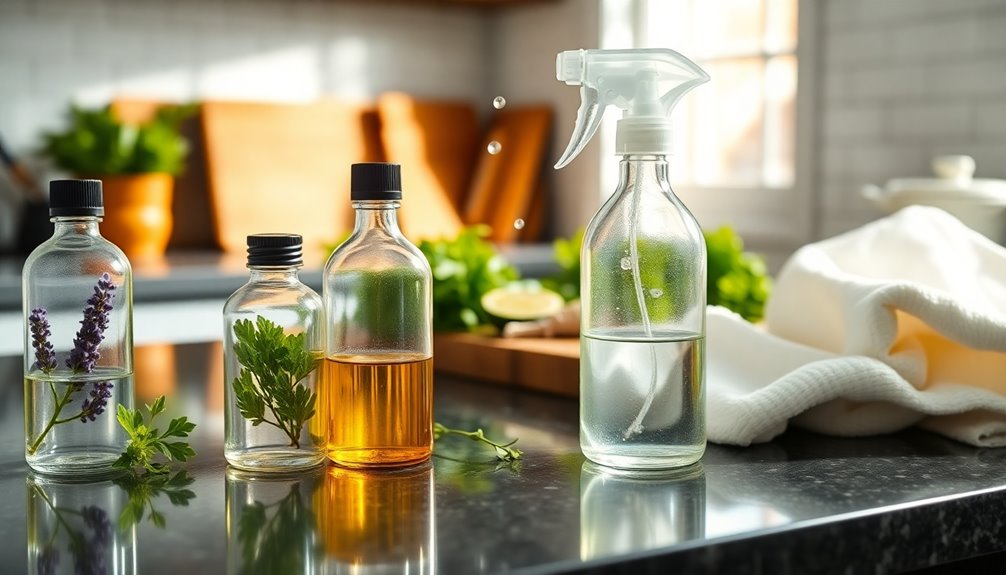
When it comes to disinfecting your home, certain essential oils stand out for their antibacterial properties. You’ll want to know the effective dilution ratios for each oil and the safe usage guidelines to guarantee ideal results. Let’s explore the top disinfecting essential oils that can keep your space clean and fresh, as they are known for their proven antibacterial properties.
Top Disinfecting Essential Oils
If you’re looking to create a cleaner, healthier home environment, using essential oils as disinfectants is a great choice.
Some of the top essential oils known for their powerful disinfectant properties include tea tree oil, lavender, and eucalyptus. These oils not only tackle germs effectively but also leave behind a pleasant scent.
You can also explore essential oil blends, like a mix of lemon and thyme, which enhances both cleaning power and aroma.
When using these oils, you’ll find they can be easily integrated into your cleaning routine, whether in sprays or diffusers.
Effective Dilution Ratios
To effectively harness the cleaning power of essential oils, knowing the right dilution ratios is crucial. Using these ratios correctly enhances cleaning efficacy and guarantees safety.
Here are three effective dilution ratios for you to contemplate:
- All-Purpose Cleaner: Combine 1 cup of water with 10-15 drops of essential oil (like lemon or tea tree) for a powerful disinfectant.
- Bathroom Cleaner: Mix 1 cup of vinegar, 1 cup of water, and 10 drops of your chosen essential oil (eucalyptus works well) for a rejuvenating clean.
- Floor Cleaner: Blend 1 gallon of warm water with 20 drops of essential oil (lavender is a great choice) for a fragrant finish.
Safe Usage Guidelines
Knowing the right dilution ratios is just the beginning of safely using essential oils for cleaning.
Always take essential safety precautions, like wearing gloves and ensuring good ventilation while you clean. Start with small amounts; you can always add more if needed.
When choosing oils, the best practices include using those known for their disinfecting properties, such as tea tree, lavender, and eucalyptus.
Avoid using oils that may irritate sensitive skin or cause allergic reactions. Always test your cleaning solution on a small, inconspicuous area first.
Remember, it’s essential to keep essential oils out of reach of children and pets.
With these guidelines in mind, you can enjoy a cleaner home that’s safe and fresh.
Essential Oils That Are Ineffective for Cleaning
While many people believe all essential oils are great for cleaning, that’s not always the case.
Some oils lack the necessary antimicrobial properties, making them less effective than you might think.
Plus, certain oils can even clash with common cleaning agents, reducing their overall effectiveness. Additionally, using eco-friendly methods can enhance cleaning results while minimizing health risks associated with harsh chemicals.
Common Misconceptions About Effectiveness
Many people assume that all essential oils are effective cleaners, but this isn’t always the case. Misunderstood potency leads to unrealistic expectations about their cleaning capabilities.
Here are three common misconceptions you should be aware of:
- All oils are equally effective: Not every essential oil has strong cleaning properties. Some are more suited for aromatherapy than cleaning.
- Dilution isn’t necessary: Using concentrated oils can be less effective and may even damage surfaces. Dilution is key.
- Natural means safe and powerful: Just because something is natural doesn’t mean it’s effective against dirt and grime.
Oils Lacking Antimicrobial Properties
Not all essential oils can tackle germs and bacteria effectively, so it’s crucial to know which ones might fall short in cleaning tasks. Oils like lavender and chamomile are popular for their pleasant scents but lack significant antimicrobial properties. While they can invigorate a space, they won’t eliminate harmful microbes as you might hope.
Similarly, citrus oils, though energizing, don’t always provide the cleaning punch needed. If you’re looking for effective cleaning alternatives, consider oils like tea tree or eucalyptus instead. They offer better antimicrobial benefits.
Incompatibility With Cleaning Agents
Even if you’re drawn to the soothing scents of certain essential oils, some simply don’t mix well with common cleaning agents. This can lead to ineffective cleaning and potential hazards.
Here are three essential oils you might want to avoid due to their poor cleaning agent compatibility:
- Lavender – While calming, it can interact negatively with bleach.
- Peppermint – Its menthol can react with ammonia, causing harmful fumes.
- Cinnamon – This oil can degrade certain plastics when mixed with strong cleaners.
Understanding essential oil interactions is essential.
Always test combinations before using them broadly, ensuring you’re getting the most effective and safe cleaning results.
Stick to oils that complement your cleaning agents for the best outcomes.
How to Safely Use Essential Oils in Cleaning Products
While incorporating essential oils into your cleaning routine can enhance both effectiveness and aroma, it’s crucial to use them safely to avoid any adverse reactions.
Start by following essential safety precautions: always dilute oils in a carrier solvent, like water or vinegar, to prevent skin irritation. Test a small area before applying any new mixture to verify compatibility with surfaces.
Always dilute essential oils in a carrier solvent and test a small area before use to ensure safety and compatibility.
When using oils, opt for those known for their cleaning benefits, such as tea tree or lemon. Always store essential oils in a cool, dark place, away from children and pets. Additionally, remember that certain oils, like tea tree and eucalyptus, may be toxic to pets, so it’s essential to research before using them.
Finally, be cautious of any allergies; consult a healthcare professional if you have concerns. By taking these steps, you can enjoy the advantages of essential oils while maintaining a safe cleaning environment.
DIY Cleaning Recipes With Essential Oils
Creating your own cleaning products with essential oils can be both fun and effective.
Not only do you get to customize scents using scent blending techniques, but you also create eco-friendly alternatives to commercial cleaners. Additionally, using essential oils can reduce reliance on synthetic chemicals, promoting a healthier home environment.
Here are three simple DIY recipes to get you started:
- All-Purpose Cleaner: Mix 1 cup of water, 1 cup of vinegar, and 10 drops of tea tree oil for a powerful disinfectant.
- Bathroom Spray: Combine 2 cups of water, 1 cup of rubbing alcohol, and 15 drops of lavender oil to keep your bathroom fresh.
- Carpet Freshener: Blend 1 cup of baking soda with 10 drops of your favorite essential oil, sprinkle on carpets, and vacuum after 15 minutes.
Get creative and enjoy the process!
Tips for Choosing Quality Essential Oils
When you’re crafting your own cleaning products, the quality of the essential oils you choose can make a significant difference in their effectiveness and safety.
Start by sourcing essential oils from reputable suppliers who provide transparency about their processes. Look for brands that offer third-party testing results to guarantee you of their oils’ purity.
Understanding purity is vital; pure essential oils should contain no additives, fillers, or synthetic ingredients. Check for the Latin names of the plants, as this indicates authenticity.
Additionally, consider organic options to avoid harmful pesticides. Always store your essential oils properly to maintain their quality and potency. Furthermore, using eco-friendly products can enhance the natural cleaning power of essential oils while reducing environmental impact.
With these tips, you can make certain your cleaning products are both effective and safe for your home.
Common Mistakes When Using Essential Oils for Cleaning
Have you ever wondered why your homemade cleaning products don’t work as well as expected? You might be making common mistakes that hinder their effectiveness.
Here are three errors to avoid:
- Overusing Essential Oils: Using too much can lead to overuse effects, making your cleaning products less effective and potentially irritating surfaces or your skin.
- Ignoring Dilution Guidelines: Not following proper dilution ratios can result in concentrated solutions that don’t clean better and might damage surfaces.
- Storage Mistakes: Storing oils in clear containers or in direct sunlight can degrade their quality, reducing their cleaning power. Additionally, using natural ingredients for your cleaning products can enhance their effectiveness and promote a healthier home environment.
The Future of Natural Cleaning: Trends and Innovations
The future is bright with trends focusing on sustainable packaging and eco-friendly alternatives. Brands are increasingly using biodegradable materials that reduce waste and environmental impact.
You’ll find concentrated formulas that require less packaging and shipping, minimizing carbon footprints. Additionally, many companies are incorporating refill stations, allowing you to reuse bottles and further cut down on plastic waste.
Innovations in formulation also mean you can expect more effective cleaning power from natural ingredients, making it easier to ditch harsh chemicals. Embracing these advancements not only enhances your cleaning experience but also contributes to a healthier planet for future generations. Moreover, using eco-friendly cleaning solutions can significantly reduce harmful chemical exposure, promoting a safer environment for everyone involved.
Conclusion
Incorporating essential oils into your cleaning routine can transform your home into a fragrant sanctuary, where fresh scents dance through the air and surfaces gleam with energy. By choosing the right oils and using them safely, you harness nature’s power to cleanse and refresh. As you commence on this aromatic journey, remember to avoid common pitfalls and embrace innovative trends in natural cleaning. Your home deserves this touch of nature, so let the essential oils work their magic!