When it comes to cutting through stubborn grease, vinegar outshines many store-bought sprays. Its acetic acid breaks down grime effectively while being non-toxic and environmentally friendly. Unlike chemical-laden sprays that may leave residues, vinegar leaves surfaces clean and safe. Plus, it’s budget-friendly and reduces plastic waste. If you’re curious about more advantages of using vinegar over commercial cleaners, you’ll find valuable insights ahead.
Understanding Grease: What Makes It So Stubborn?
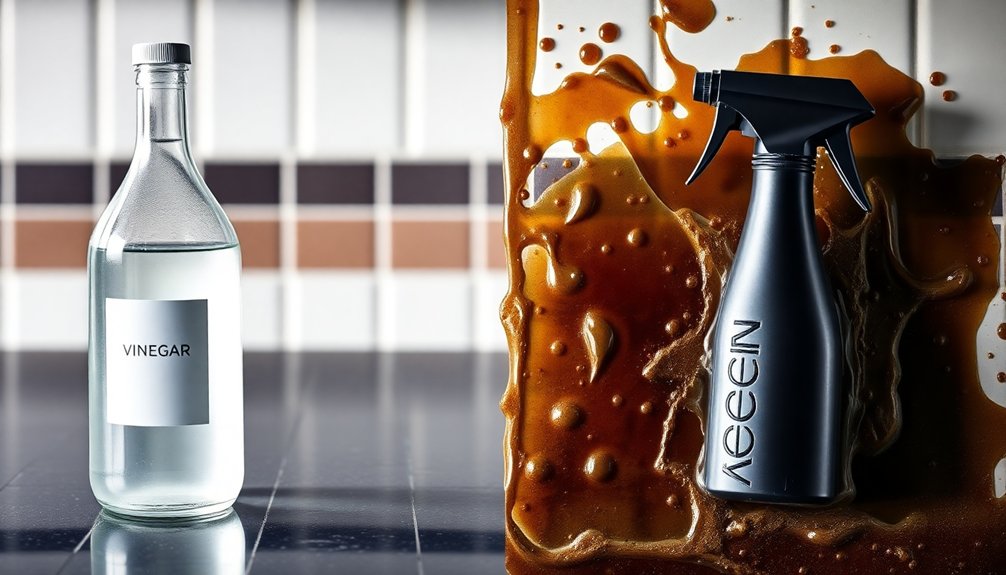
Why does grease cling so tenaciously to surfaces? The answer lies in its grease composition.
Grease is primarily made up of fats and oils, which are hydrophobic—meaning they repel water. This property makes it difficult for water-based cleaners to penetrate and break down those stubborn residues.
When grease accumulates, it forms a sticky layer that adheres firmly to surfaces, creating a challenging cleaning scenario. The longer it sits, the harder it becomes to remove, as it can oxidize and bond more tightly with the material beneath.
You might find that regular scrubbing isn’t enough; you’ll need a targeted approach to tackle those pesky grease spots effectively. Understanding this helps you choose the right cleaning method for your needs. Regular cleaning is crucial to prevent sticky grease layers.
The Science Behind Vinegar as a Cleaner
When you reach for vinegar as a cleaner, you’re tapping into the power of acetic acid, which makes it effective at breaking down grime and grease.
This compound gives vinegar its key cleaning properties, allowing it to dissolve mineral deposits and cut through tough stains. The low pH of vinegar disrupts the structure of grease, making it easier to wipe away.
Its cleaning efficacy isn’t just about breaking down dirt; vinegar also has antibacterial properties, which can help sanitize surfaces. By targeting both grease and germs, vinegar becomes a versatile cleaning agent.
Plus, it’s non-toxic and environmentally friendly, making it a safe choice for your home. Additionally, using vinegar as a cleaning agent aligns with green cleaning methods, ensuring your home remains safe for both your family and the environment.
Analyzing Common Store-Bought Spray Ingredients
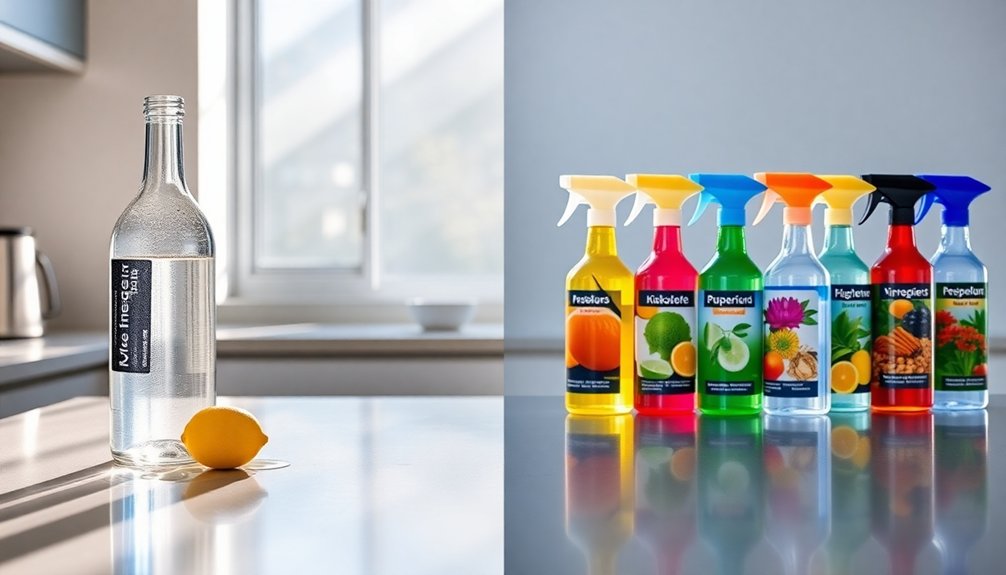
When you think about store-bought sprays, it’s crucial to evaluate their active ingredients and how they stack up against vinegar.
You should also weigh their environmental impact and whether they’re really cost-effective in the long run. Eco-friendly alternatives can often provide similar or better results without the use of harsh chemicals.
Let’s break down these factors to see what you’re really getting for your money.
Active Ingredients Comparison
Understanding the active ingredients in common store-bought sprays can help you make informed choices for your cleaning needs. Most store-bought sprays contain surfactants, solvents, and various fragrances that enhance their cleaning power. Surfactants break down grease, while solvents help dissolve tougher stains. However, their effectiveness often depends on the spray formulation.
In contrast, vinegar’s potency comes from its acetic acid, which naturally cuts through grime and grease. While some may prefer the convenience of ready-to-use sprays, vinegar provides a non-toxic alternative that’s budget-friendly.
When comparing these options, consider what ingredients align with your cleaning preferences and your home’s safety. Ultimately, knowing what’s in your cleaning products can lead to better results and a healthier environment.
Environmental Impact Assessment
Analyzing the environmental impact of common store-bought spray ingredients reveals some concerning truths. Many of these products contain harsh chemicals that contribute to air and water pollution, increasing their ecological footprint.
During a sustainability assessment, you might notice that ingredients like phosphates and synthetic fragrances not only harm aquatic life but also linger in the environment long after use.
Additionally, the production and packaging of these sprays often involve significant resource consumption and waste generation.
By opting for alternatives like vinegar, you can reduce your ecological impact, as it’s biodegradable and less harmful to ecosystems.
Making conscious choices about cleaning products can help you contribute to a healthier planet while effectively tackling grease.
Cost-Effectiveness Analysis
While many people reach for store-bought sprays due to their convenience, a closer look at their cost-effectiveness often reveals a different story.
These products can be pricey, especially when you consider the frequent purchases needed to tackle grease. In contrast, vinegar is an affordable option that brings significant cost savings over time.
When you invest in vinegar, you’re not just buying a cleaner; you’re making a long-term investment in your budget. Many store-bought sprays contain a mix of ingredients, some of which aren’t necessary for effective cleaning and can drive up costs.
Effectiveness of Vinegar on Different Types of Grease
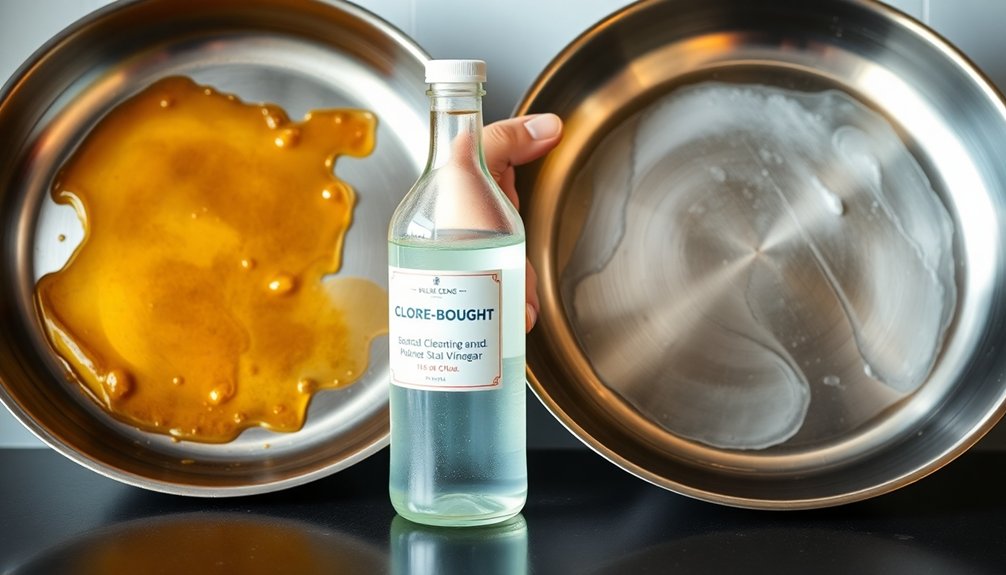
When you tackle grease, you’ll encounter various types, from cooking oil to baked-on grime. Vinegar’s unique chemical properties can break down certain grease types effectively. Let’s explore how well it works against these common offenders. Additionally, using natural degreasers like vinegar can be a cost-effective and eco-friendly option for kitchen cleaning.
Types of Grease Encountered
Grease comes in various forms, each presenting its own challenges during cleanup. You’ll encounter cooking oil splatters in the kitchen, often from frying food, which can leave behind stubborn baked residue.
Motor oil spills in the garage are another common issue, requiring a different approach. Industrial grease can be particularly tough, found in commercial kitchens or factories, where it clings to surfaces.
Finally, grease traps can accumulate thick layers of grime, making maintenance essential. Each type of grease demands a tailored cleaning solution, and understanding these differences is important in determining whether vinegar or a store-bought spray will work best for your cleaning needs.
Choose wisely based on the specific grease you’re tackling!
Vinegar’s Chemical Properties
Understanding vinegar’s chemical properties can greatly enhance your cleaning efforts, especially against various types of grease. The key lies in vinegar’s acidity, which typically ranges from 4% to 7%.
This acidity helps break down grease, making it easier to wipe away. When you apply vinegar to greasy surfaces, it interacts with the fat molecules, effectively emulsifying them. As a result, you’ll notice a significant boost in cleaning efficacy compared to water alone.
Whether you’re tackling kitchen grease or oily stains in the garage, vinegar’s natural composition makes it a formidable opponent. Just remember to let it sit for a few minutes for maximum effect, and you’ll see how well vinegar can tackle even the toughest grease.
Performance of Store-Bought Sprays on Greasy Surfaces
Although many people rely on store-bought sprays to tackle tough greasy surfaces, their effectiveness can vary greatly. Some sprays excel at breaking down grease, making your cleaning tasks easier, while others may leave behind a frustrating spray residue that requires additional scrubbing.
When selecting a product, it’s crucial to evaluate the active ingredients, as these can greatly impact store-bought effectiveness. You might find that certain formulations target specific types of grease better than others.
Additionally, proper application techniques, like letting the spray sit for a few minutes, can enhance results. Ultimately, testing different options will help you discover which store-bought sprays truly deliver on their promises and leave your surfaces sparkling clean without the hassle of sticky residue. Regular cleaning prevents grease from becoming a breeding ground for pathogens, ensuring a safer kitchen environment.
Environmental Impact: Vinegar vs. Store-Bought Sprays
When you consider the environmental impact of cleaning products, vinegar often emerges as a more eco-friendly choice compared to many store-bought sprays.
Vinegar is a natural substance, biodegradable, and free from harsh chemicals, making it a great option for your sustainability practices. In contrast, many commercial sprays contain synthetic ingredients and propellants that can harm the environment.
Vinegar is a biodegradable, natural cleaner that supports sustainability, unlike harsh commercial sprays filled with harmful chemicals.
By opting for vinegar, you’re supporting eco-friendly alternatives that minimize your carbon footprint and reduce plastic waste. Plus, vinegar’s versatility means you can use it for various cleaning tasks without needing multiple products. Additionally, many store-bought cleaners, such as Seventh Generation All-Purpose Cleaner, also provide effective cleaning solutions while promoting sustainable practices.
When you choose vinegar, you not only clean effectively but also contribute to a healthier planet for future generations. Embracing this simple switch can lead to significant positive impacts.
Cost Comparison: Which Option Is More Budget-Friendly?
Cleaning your home doesn’t have to break the bank, and comparing costs between vinegar and store-bought sprays can reveal significant savings.
When you consider budget considerations, vinegar often stands out as the more economical choice. A gallon of vinegar typically costs around $3, while a single bottle of store-bought grease cleaner can range from $5 to $10 or more.
This price comparison shows that you can clean effectively without overspending. Plus, with vinegar, you can dilute it with water for even greater savings, allowing it to last longer. Additionally, opting for eco-friendly cleaning products can further enhance your budget-friendly approach while promoting a healthier environment.
Conclusion
When it comes to cleaning grease, both vinegar and store-bought sprays have their pros and cons. Vinegar’s natural acidity makes it a powerful, eco-friendly option, while many sprays offer convenience and specialized formulas. Ultimately, it’s about finding what works best for you. Whether you’re a fan of the homemade route or prefer to grab something off the shelf, you’ll be able to tackle grease and grime without breaking a sweat. It’s all about knowing your options!