If your washing machine’s causing you trouble, don’t worry—you can tackle those woes easily! Check for leaks by tightening hose connections and inspecting the door seal for damage. If it’s loud, balance your loads and make certain it’s level. For fill issues, verify that water valves are open and hoses aren’t kinked. Regular maintenance, like cleaning detergent dispensers and running hot water cycles, keeps your washer fresh. Keep going to uncover more tips for a cleaner, more efficient washer!
Washing Machine Is Leaking
If your washing machine is leaking, it can be frustrating, but there are several common culprits you can check.
Start by examining the water hose connections; if they’re loose, simply tighten them to stop the leaks.
Examine the water hose connections; tightening any loose ones can effectively stop the leaks.
Next, inspect the door seal for any damage or debris, as a compromised seal can lead to water escaping during cycles.
Don’t forget to check the drain hoses too; if they’re worn out, it’s time for a replacement.
Finally, verify your washing machine is level. An unbalanced machine can cause improper drainage, resulting in leaks. Additionally, regularly cleaning the rubber door gasket can help prevent moisture buildup and leaks.
Washing Machine Is Noisy
A noisy washing machine can disrupt your home, but understanding the common causes can help you tackle the issue effectively.
First, check for an unbalanced load—if your clothes aren’t evenly distributed, you’ll hear banging or thumping sounds. Redistributing the laundry can minimize this noise.
Next, inspect the drum for foreign objects like coins or buttons that might be causing excessive noise; turning the drum can often dislodge them.
If your machine continues to be noisy, worn internal components like the motor or belt might be the culprit, requiring inspection or professional repair.
Finally, regular maintenance can help prevent issues and prolong your washer’s lifespan, keeping it quieter for longer. Incorporating efficient home maintenance tips into your routine can further enhance the performance of your washing machine.
Washing Machine Moves Around
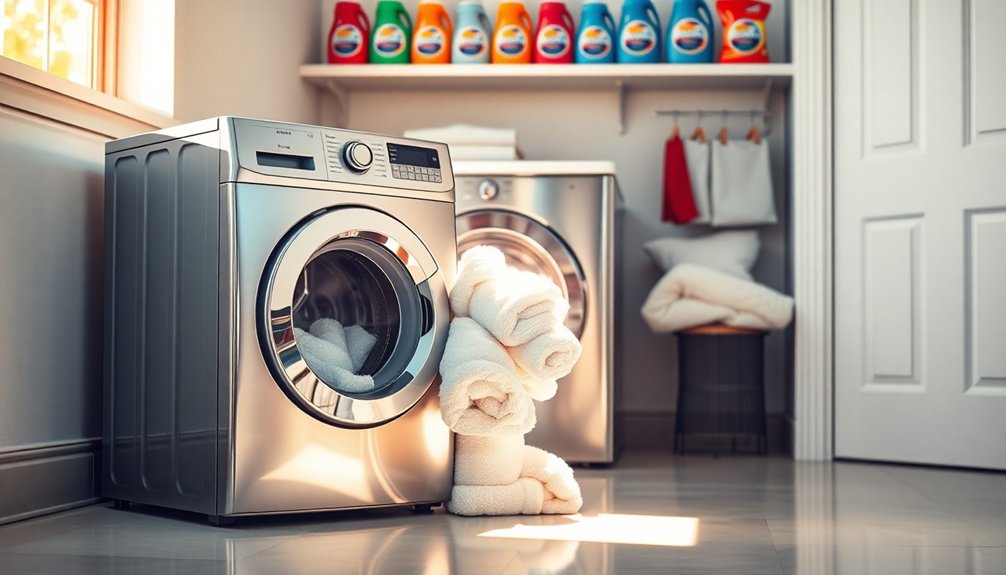
If your washing machine moves around during cycles, it mightn’t be level or secure.
Start by adjusting the feet to guarantee it sits evenly and check that all hose connections are tight. Taking these steps can help keep your machine stable and reduce unwanted vibrations. Additionally, you might want to consider regular maintenance of the vacuum cleaner, as it can provide insights into how to keep appliances functioning properly.
Leveling the Washing Machine
Leveling your washing machine is essential for its performance and longevity. When your washer isn’t balanced, it can rock and move during cycles, causing wear and tear.
To guarantee proper leveling, follow these tips:
- Adjust all four legs for full contact with the floor.
- Use a level to confirm it’s balanced side to side and front to back.
- Redistribute the load inside if it rocks or bounces.
- Tighten any loose bolts and screws to minimize movement.
Additionally, consider placing your washing machine on a sturdy, flat surface or using anti-vibration pads.
Secure Hose Connections
Securing your hose connections is essential to preventing leaks and excessive movement during washing machine cycles. Make certain all water hoses are tightly connected; loose connections can cause the washer to vibrate and shift.
Regularly inspect the hose clamps and connectors for any signs of wear or loosening, as these can lead to leaks and instability. When you install your washing machine, place it on a flat, level surface to minimize movement.
Tighten the adjustable legs to guarantee they make firm contact with the floor, adding stability. For additional support, consider using anti-vibration pads or mats under the washer’s feet.
These simple steps will help keep your machine steady and leak-free during operation.
Washing Machine Won’t Spin
If your washing machine won’t spin, there are several common causes to contemplate.
You’ll want to troubleshoot issues like overloading, unbalanced loads, or a blocked drain pump before calling for help. Additionally, ensure that the washer is regularly cleaned with vinegar cleaning to prevent buildup that may affect its performance.
Let’s explore what you can do to get your washer back in working order.
Common Causes Explained
When your washing machine refuses to spin, several common issues could be at play. Understanding these can help you pinpoint the problem:
- An overloaded drum that can’t balance itself for proper spinning.
- An unbalanced load, like a single heavy item, causing the machine to halt.
- A clogged drain pump or hose, obstructing water flow and stopping the spin cycle.
- A faulty lid switch that isn’t engaging, preventing the machine from moving forward.
Take a moment to assess these factors.
If your washing machine isn’t spinning, it’s important to check for blockages, redistribute clothing, and verify the lid switch is functioning correctly.
Identifying the root cause can lead to a smoother laundry experience.
Troubleshooting Steps to Take
Troubleshooting a washing machine that won’t spin involves several key steps to help you identify the issue quickly.
First, check if you’ve overloaded the washing machine’s drum—removing excess items can improve performance.
Next, verify the load is balanced; redistributing clothes evenly can aid the spin cycle.
Don’t forget to inspect the drain pump for any blockages, as a clogged outlet pipe can stop water flow essential for spinning.
Additionally, examine the drive belt for any damage or disconnection, since a faulty belt may prevent the drum from spinning altogether.
Finally, confirm that the lid is securely closed during operation, as top-loaders require the lid to be locked for the spin cycle to engage properly.
When to Seek Help
Although many spin issues can be resolved with simple adjustments, there are times when seeking professional help is the best option.
If your washing machine won’t spin after checking basic problems, it might be time to call for expert repair.
Consider professional assistance if you notice:
- An unbalanced load that won’t correct itself
- A lid that won’t securely close
- A drain pump clogged with debris
- A drive belt showing signs of wear or damage
Ignoring these signs can lead to more significant issues.
If you’ve tried troubleshooting and the problem persists, don’t hesitate to reach out to a professional. They can diagnose faulty internal components and guarantee your washing machine gets back to spinning smoothly.
Washing Machine Won’T Fill With Water
If your washing machine won’t fill with water, the first step is to check the water supply valves to make sure they’re fully open and functioning correctly.
Next, inspect the water hoses for kinks or blockages that might restrict water flow into the machine.
If everything looks fine but your machine still isn’t filling with water, the water inlet filter may be clogged. Cleaning it can help restore water flow.
Listen for a humming sound during the fill cycle; this indicates your machine is trying to draw water.
If you hear this but still have issues, the water level switch or water inlet valve may need professional inspection or replacement. Regular inspections of plumbing systems can help prevent these kinds of issues from arising.
Don’t hesitate to seek help if necessary!
Washer Door Doesn’t Open
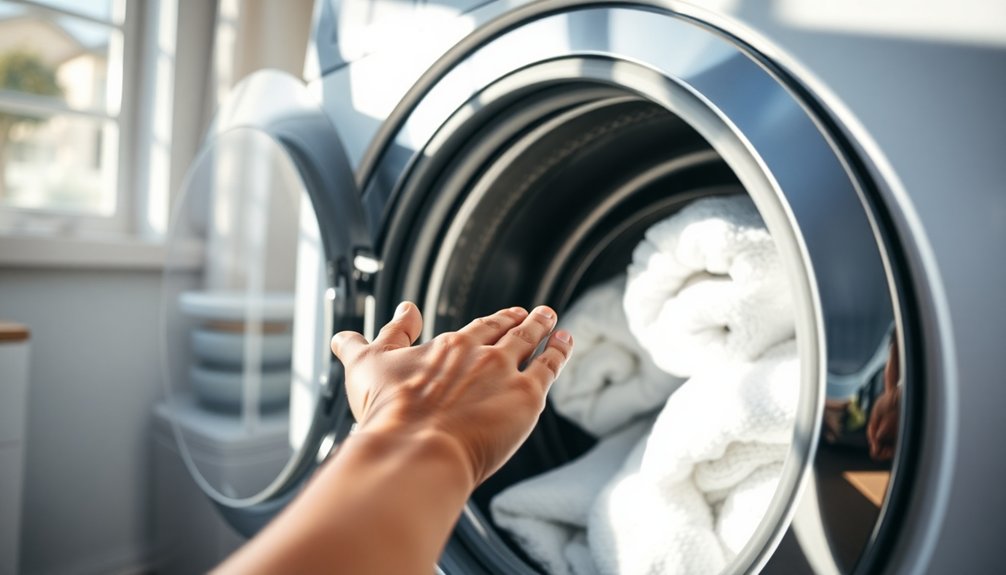
If your washer door won’t open, it might be due to a locked mechanism or a blocked drain and filter.
Check for any obstructions and verify the machine isn’t still filled with water.
If everything seems clear and it’s still stuck, you may need to look into the door switch or control board for issues. Regular maintenance of your kitchen sinks can help prevent similar issues in other appliances by ensuring that all your home utilities are functioning properly.
Lock Mechanism Issues
A common frustration with washing machines is when the door won’t open after a cycle. This issue often stems from the lock mechanism engaging during filling or washing, keeping you locked out.
If the machine’s overheated, letting it cool down may help. Here are some steps to evaluate:
- Check for water in the drum—ensure it’s empty.
- Listen for any clicks from the door switch.
- Look for blockages in the drain or filter.
- If problems persist, a professional inspection might be necessary.
Always make sure the machine is powered on before attempting to open the door.
Understanding these factors can help you troubleshoot and restore access to your washer quickly!
Blocked Drain and Filter
When your washing machine door won’t open, a blocked drain or filter might be the culprit. This issue often arises if the machine is still filled with water, keeping it secured.
Start by checking the drain and filter for clogs caused by lint, soap residue, or foreign items. If you notice a blockage, clear it out to restore proper drainage.
Additionally, if your machine is overheating, it may also prevent the door from releasing, so let it cool down before trying again.
After manually draining the washer, verify the lid switch works properly, as a faulty switch can hinder the door’s operation.
If everything seems clear and the door still won’t budge, consider calling a professional for further inspection.
Washer Won’t Drain / Washer Is Clogged
Water pooling at the bottom of your washing machine signals a drainage problem that needs immediate attention. Blockages in the drainage system can prevent water from flowing properly, often due to:
Water pooling in your washing machine indicates a drainage issue that must be addressed promptly to prevent further complications.
- Soap residue clinging to the walls
- Lint balls trapped in the drain pipe
- Foreign items like coins or buttons lodged inside
- A dirty filter that’s overdue for cleaning
To resolve these drainage issues, start by manually draining the washer and check hoses for obstructions. Don’t forget to clean the filter at the front of the machine regularly! If necessary, use a drain snake to clear any stubborn clogs. Additionally, consider using enzyme cleaners for a safe and effective way to digest organic matter and maintain plumbing integrity. Finally, run a short wash or rinse cycle to confirm your drainage system is back to normal.
Washer Is Smelly
If you notice an unpleasant smell coming from your washing machine, it’s likely due to mold and mildew growth fueled by leftover moisture and soap scum.
To tackle this smelly issue, start by measuring your detergent correctly based on load size and soil level. Overusing detergent can lead to soap scum buildup, which worsens odors.
Regular cleaning is essential; run an empty hot water cycle with one cup of white vinegar to break down soap scum and eliminate bacteria. Non-toxic cleaners can effectively assist in maintaining a fresh environment in your washer.
After washing, leave the door open to promote ventilation and reduce moisture.
Don’t forget to clean the drum, seals, and detergent dispenser regularly to maintain freshness and prevent smells from developing in your washer.
Washer Is Ruining Clothing
Even the best washing machines can ruin your clothes if you’re not careful. To keep your garments looking fresh and new, follow these simple tips:
- Sort clothes by color and fabric type to prevent color transfer.
- Avoid overloading the washing machine; it leads to uneven cleaning and wear.
- Use the correct amount of detergent; too much can leave residue and soap scum.
- Fasten zippers and buttons before washing to prevent snagging.
Additionally, regularly cleaning the washing machine’s drum and seals can eliminate grime buildup, ensuring it doesn’t transfer to your clothes. Regular sanitization of appliances promotes a hygienic laundry environment, preventing odors and residue on your garments.
Washing Machine Won’t Turn On
When your washing machine won’t turn on, it can be frustrating, but there are several troubleshooting steps you can take to identify the issue.
First, verify the machine’s plugged in and the outlet’s working; test it with another device or check the circuit breaker for tripped fuses.
Next, check if the door is fully closed, as many machines won’t work if the door’s ajar.
Inspect the lid switch for faults, especially in top loaders.
Look at the control board for any visible damage or loose connections.
If the washing machine won’t fill, it may need a reset. Unplug the machine for a minute, then plug it back in to clear any temporary glitches. Additionally, ensuring that your washing machine is properly maintained can help prevent future issues and extend its lifespan.
Conclusion
Now that you’re armed with solutions for those pesky washing machine problems, you can tackle any issue that comes your way. Don’t let a leaky washer or a noisy spin cycle dampen your laundry day spirit. With a little know-how, you can keep your washer running smoothly, just like a well-oiled machine. Remember, a clean washer leads to cleaner clothes, so give your appliance the TLC it deserves and enjoy the fresh results!