To keep your cat’s litter box odors under control, start by choosing a high-quality clumping litter and add baking soda for extra odor absorption. Maintain a regular cleaning schedule by scooping daily and changing the litter monthly. Place the box in a well-ventilated area and guarantee your cat is healthy with regular vet checkups. Monitor their diet for odor-causing ingredients, and encourage hydration. There are even more effective tips and tricks to explore for a fresher home!
Choose the Right Litter Type for Odor Control
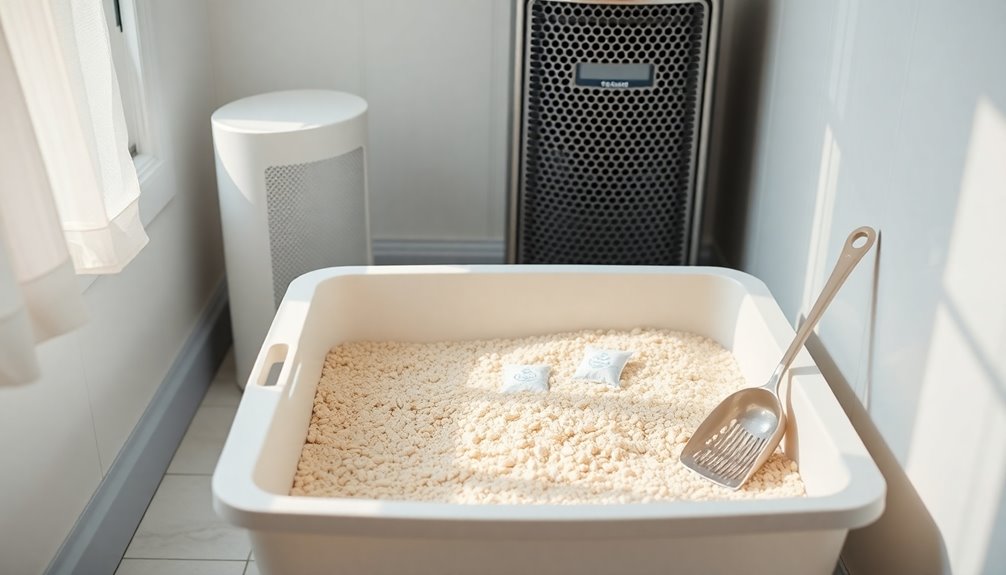
When it comes to managing litter box smells, choosing the right litter type can make all the difference.
Clumping litter is a popular choice because it forms solid clumps when wet, making it easier for you to scoop out waste and control odors. Look for clumping litters with added odor-fighting properties for enhanced performance.
Clumping litter effectively forms solid clumps for easy waste removal and improved odor control. Seek options with added odor-fighting features for best results.
If you prefer a more eco-friendly option, consider natural alternatives like wood, corn, or wheat-based litters. These options not only absorb moisture but often neutralize smells without harsh chemicals. Natural solutions can be effective in creating a fresher environment for both you and your furry friend.
Whichever type you choose, guarantee it suits both your cat’s preferences and your odor control needs.
With the right litter, you can create a fresher environment for both you and your furry friend.
Maintain a Regular Cleaning Schedule
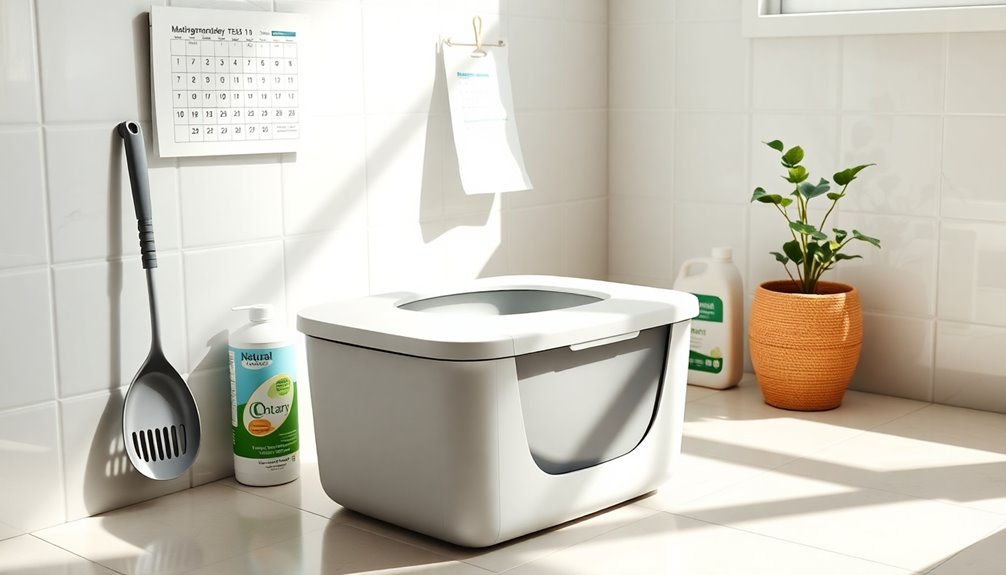
Regularly maintaining a cleaning schedule is essential for keeping litter box smells at bay. Set a cleaning frequency that works for you, whether it’s daily or every few days, to guarantee you’re consistently scooping out waste.
Mark your calendar or set schedule reminders on your phone to help you stick to this routine. When you clean regularly, you limit the buildup of odors and bacteria, making your space more pleasant for both you and your cat. Additionally, daily disinfection of bathroom sinks can help reinforce the importance of maintaining cleanliness in your home.
Also, consider changing the litter completely at least once a month to refresh the box. By committing to a cleaning schedule, you’ll create a healthier environment and reduce the chances of unwanted smells taking over your home.
Use a High-Quality Litter Box
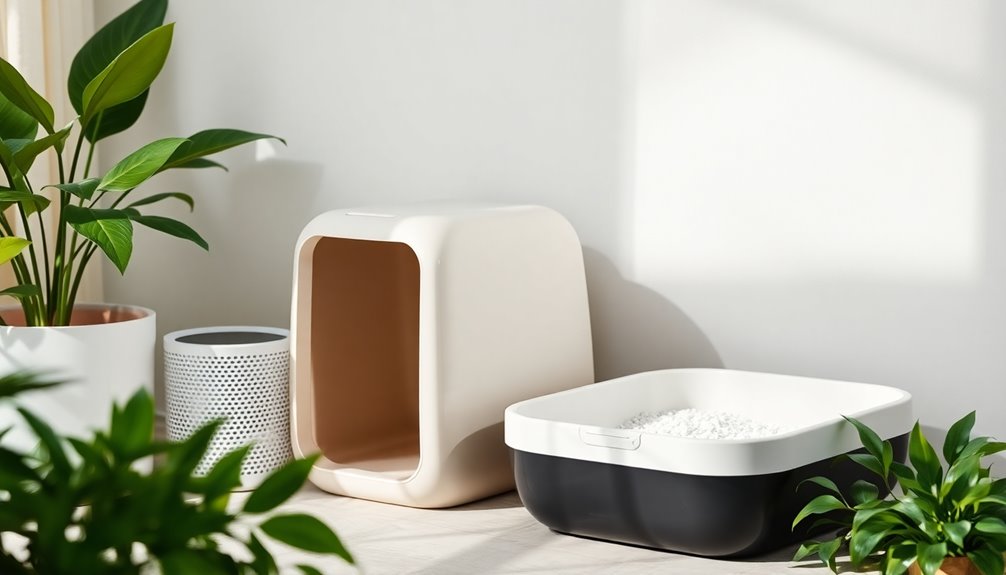
Choosing a high-quality litter box is essential for minimizing odors and ensuring your cat’s comfort.
Look for litter box materials that are non-porous and easy to clean, as these will help prevent odor absorption. Plastic is a popular choice, but you might also consider stainless steel or other odor-resistant materials.
Additionally, pay attention to the box design. A covered box can help contain smells, but make sure it has proper ventilation to avoid trapping odors inside.
Choose a size that accommodates your cat comfortably, allowing them to turn around easily. A well-designed litter box not only reduces odors but also encourages your cat to use it regularly, contributing to a fresher home environment. Incorporating non-toxic cleaners in your cleaning routine can further enhance odor control while ensuring a safe environment for both you and your pets.
Place the Litter Box in a Well-Ventilated Area
To keep litter box smells at bay, you should place it in a well-ventilated area. Open spaces work best, as closed rooms can trap odors. Consider using airflow solutions to enhance ventilation and maintain a fresher environment. Additionally, proper ventilation is essential for achieving a healthier living space.
Choose Open Spaces
While it might be tempting to tuck the litter box away in a corner, placing it in a well-ventilated area is crucial for controlling odors.
Open spaces allow for better air circulation, which helps in odor absorption and keeps your home smelling fresh. Look for spots near windows or vents, as these will enhance airflow and reduce unpleasant smells.
Avoid cramming the litter box into tight spaces where air can’t flow freely; this can lead to lingering odors that are hard to eliminate.
Remember, the right litter box placement not only benefits you but also creates a more pleasant environment for your cat.
Choose open areas to guarantee that odors dissipate quickly and effectively, promoting a healthier home.
Avoid Closed Rooms
Placing the litter box in a well-ventilated area is essential for managing odors effectively.
Avoid closed rooms where air circulation is limited; this can trap unpleasant smells and make them more pronounced. Instead, look for spots that allow for good airflow—like laundry rooms or bathrooms with windows.
Proper litter box placement is vital in your odor prevention strategies. You’ll notice a significant difference in how odors are controlled when your cat’s litter box is in an open, airy space.
Additionally, if it’s near a window, fresh air can help dissipate any lingering scents. By prioritizing ventilation, you’ll create a more pleasant environment for both you and your feline friend.
Utilize Airflow Solutions
A well-ventilated area can drastically reduce litter box odors. By placing the litter box in a space with good airflow circulation, you’ll help disperse any unpleasant smells.
Consider using ventilation techniques like opening windows or using fans to promote fresh air movement. This not only keeps the area smelling better but also creates a more comfortable environment for your cat.
If you can’t move the box, think about using air purifiers to help eliminate odors. Regularly cleaning the litter box and ensuring proper airflow will make a significant difference.
With these simple adjustments, you can effectively manage those smells and maintain a fresher home for both you and your furry friend.
Add Baking Soda to Control Odors
Baking soda is a powerful ally in your battle against litter box odors. This simple, affordable ingredient works wonders for odor absorption.
Baking soda is an effective and budget-friendly solution for combating litter box odors.
To use it effectively, sprinkle a thin layer of baking soda on top of the litter each time you change it. This will help neutralize unpleasant smells that can build up over time. You can also mix baking soda into the litter itself for even better results.
If your litter box starts to smell, don’t hesitate to add more baking soda as needed. It’s a safe and non-toxic option that won’t harm your furry friend. Regularly using baking soda not only keeps your home smelling fresh but also makes cleaning the litter box a much more pleasant task. Additionally, baking soda acts as a mild abrasive which can help in lifting stubborn litter residue.
Invest in a Litter Box With a Cover
Using baking soda is a great start, but there’s another effective way to keep litter box smells in check: investing in a litter box with a cover.
Covered litter boxes can greatly reduce odors by trapping smells inside, while also providing your cat with a sense of privacy. When choosing a covered box, consider the litter box materials; some are made from plastic, while others might be more eco-friendly. Eco-friendly methods can also help in maintaining a cleaner environment for both you and your pet.
Covered versus uncovered options can affect not only odor control but also your cat’s comfort. Make sure the entrance is spacious enough for your cat to enter easily.
Try an Automatic Self-Cleaning Litter Box
Have you ever wondered how much easier life could be with an automatic self-cleaning litter box?
Imagine how much simpler your life could be with an automatic self-cleaning litter box for your beloved cat.
These innovative devices come with automatic features that take the hassle out of maintaining a clean environment for your feline friend.
Here are three user benefits you’ll love:
- Less Odor: Automatic cleaning helps reduce unpleasant smells by promptly removing waste.
- Time-Saving: You won’t need to scoop daily, giving you more time to enjoy with your pet.
- Hygienic: Many models have covered designs that minimize mess and keep your home cleaner.
Investing in an automatic self-cleaning litter box might just transform your cat care routine, making it more efficient and enjoyable for both you and your furry companion. Additionally, just like eco-friendly solutions in drain cleaning services, these litter boxes prioritize sustainability and cleanliness.
Consider Using Deodorizing Litter Products
If you want to tackle litter box odors effectively, consider incorporating deodorizing litter products into your cat care routine. Scented litter can mask unpleasant smells while providing a more inviting environment for both you and your cat.
Look for options that utilize clumping technology, which makes it easier to scoop waste and maintain cleanliness. The clumps form quickly, reducing the chances of odors spreading throughout your home.
Additionally, many deodorizing litters contain natural ingredients that neutralize odors instead of just masking them. By choosing the right scented litter, you can markedly cut down on lingering smells and keep your cat’s space fresh.
Incorporating natural cleaning solutions like vinegar can also help eliminate odors in the surrounding area when cleaning the litter box.
Experiment with different brands to find the one that works best for you and your feline friend.
Utilize Air Purifiers in the Litter Box Area
To tackle litter box odors effectively, consider using air purifiers designed for this specific area. You’ll want to choose the right type and place it strategically for the best results, ensuring fresh air circulates where it’s most needed. Don’t forget about regular maintenance and filter changes to keep your purifier working efficiently. Additionally, incorporating activated charcoal filters can enhance the absorption of unpleasant smells and improve overall air quality.
Types Of Air Purifiers
When you want to keep the air fresh in the litter box area, choosing the right type of air purifier can make a significant difference.
Here are three options to take into account:
- HEPA Filters: These purifiers efficiently trap pet dander and odors, helping maintain cleaner air.
- Activated Charcoal: Known for its odor-absorbing properties, activated charcoal purifiers neutralize smells effectively.
- UV Sanitizers: Utilizing UV light, these devices eliminate airborne bacteria, guaranteeing a healthier environment.
You can also explore portable options for flexibility and look for models with smart technology for added convenience.
Keep an eye on noise levels and energy efficiency to maintain a pleasant atmosphere without breaking the bank.
Don’t forget to follow maintenance tips to guarantee peak performance!
Placement For Maximum Effect
Proper placement of your air purifier can greatly enhance its effectiveness in tackling litter box smells. Position it close to your litter box location, ensuring it captures odors as they escape.
Ideally, place the purifier at a height that maximizes airflow, such as on a shelf or elevated surface. This helps the device circulate fresh air more efficiently.
Additionally, consider using multiple purifiers if you have several litter boxes in different areas of your home. Incorporating these odor control strategies not only improves air quality but also makes your space more pleasant for both you and your pets.
Maintenance And Filter Changes
Regular maintenance and timely filter changes are essential for keeping your air purifier effective in combating litter box smells.
Follow these litter maintenance tips to guarantee peak performance:
- Check Filters Monthly: Regularly inspect your air purifier’s filters to see if they’re clogged or dirty.
- Replace Filters as Needed: Depending on your purifier model, adhere to the recommended filter replacement frequency, typically every 3-6 months.
- Clean the Unit: Wipe down the exterior and vents of the air purifier weekly to prevent dust build-up that can hinder airflow.
Keep the Litter Box Away From Food and Water
To maintain a fresh and pleasant environment in your home, it’s essential to keep the litter box away from food and water sources. Proper litter box placement is vital for both your pet’s hygiene and your family’s comfort.
When you separate the litter box from feeding areas, you reduce the chances of unpleasant odors lingering near where you eat and drink. Cats can be sensitive to smells, so ensuring a clear food water separation helps them feel more comfortable as well.
Ideally, position the litter box in a quiet, well-ventilated area, away from high-traffic zones. This simple measure can greatly enhance your home’s overall atmosphere and keep those pesky litter box smells at bay. Regularly cleaning the litter box not only promotes a healthier environment for your pet but also minimizes allergens and bacteria that can affect your family’s well-being.
Regularly Change the Litter Completely
If you want to keep litter box smells at bay, regularly changing the litter completely is crucial.
Start by choosing high-quality litter that effectively absorbs odors and clumps well.
Then, establish a schedule to guarantee you’re swapping it out consistently for a fresher environment.
Choose High-Quality Litter
Choosing high-quality litter can make a significant difference in managing litter box smells. When you invest in good litter, you enhance your cat’s comfort and keep odors at bay.
Here are three key benefits:
- Clumping Efficiency: High-quality litter offers better clumping, making it easier to scoop out waste and reducing lingering smells.
- Scent Masking: Many premium litters come with effective scent-masking properties, helping to neutralize odors before they spread.
- Dust Control: Top-tier litters often produce less dust, which not only keeps your home cleaner but also benefits your cat’s respiratory health.
Establish a Schedule
Establishing a regular schedule for completely changing the litter is essential for keeping odors in check. You should aim to do this at least once a week, depending on how many cats you have and their habits.
Consistent litter box maintenance not only prevents bad smells but also encourages your cat to use the box more willingly. When you change the litter, clean the box with mild soap and water to eliminate lingering odors.
Incorporate odor control techniques, like using baking soda or special deodorizers, for added freshness. By sticking to this schedule, you’ll create a cleaner environment for your cat and reduce unpleasant smells in your home.
Regular maintenance is key to a happy, odor-free space for both you and your feline friend.
Clean the Liner and Box With Mild Detergents
To keep your litter box smelling fresh, regularly clean both the liner and the box with mild detergents.
This step is essential for maintaining litter box hygiene and employing effective odor neutralization techniques.
Here’s how to do it:
- Remove the litter and liner: Empty the box completely to start with a clean slate.
- Wash with mild detergent: Use a gentle soap and warm water to scrub the box and liner. Avoid harsh chemicals that could harm your cat.
- Rinse and dry: Thoroughly rinse everything to remove any soap residue, then let it air dry before adding fresh litter.
Use Cat-Safe Essential Oils for Freshness
Using cat-safe essential oils can be a game-changer for keeping your litter box smelling fresh. Incorporating cat-friendly scents like lavender, chamomile, or cedarwood can help neutralize odors without harming your feline friend.
When using essential oils, always prioritize essential oil safety; never apply them directly to the litter or your cat’s skin. Instead, you can dilute a few drops in water and use it to spray around the litter box area.
This method not only freshens the space but also creates a calming environment for both you and your cat. Just remember to monitor your pet’s reaction to any new scents, ensuring they remain comfortable and happy in their litter area.
Implement a Litter Mat to Catch Excess Litter
While keeping your litter box smelling fresh is important, managing the mess around it’s equally essential. Implementing a litter mat can help catch excess litter, keeping your floors clean and odor-free.
Here are three litter mat benefits to evaluate:
- Easy Cleanup: Litter mats trap particles, making it simple to sweep or vacuum up the mess.
- Durability: Many mats are made from materials like rubber or PVC, ensuring they last through daily wear and tear.
- Comfort: Some mats have a soft texture that’s gentle on your cat’s paws, encouraging them to use the litter box without hesitation.
Ensure Your Cat Is Healthy and Regularly Checked
To keep your cat’s litter box smelling fresh, it’s essential to guarantee they’re healthy.
Regular vet checkups can catch potential issues early, while monitoring their litter box habits helps you spot any changes that might indicate a health problem.
Staying proactive about your cat’s well-being not only benefits them but also keeps your home smelling clean.
Regular Vet Checkups
Regular vet checkups are essential for keeping your cat healthy and preventing unpleasant litter box smells.
Regular vet visits not only help in health monitoring but also guarantee your feline friend stays happy and odor-free.
Here are three key reasons to prioritize checkups:
- Early Detection: Routine exams can catch health issues before they become serious, reducing added stress for both you and your cat.
- Vaccinations: Keeping up with vaccinations helps prevent diseases that could lead to litter box odor problems.
- Diet and Weight Management: Your vet can provide tailored advice on nutrition and weight to promote a healthy digestive system.
Monitor Litter Box Habits
Keeping an eye on your cat’s litter box habits is essential for their health and can help you detect potential issues early on. Pay attention to changes in litter box behaviors, like frequency, consistency, or straining.
If your cat suddenly stops using the box or shows signs of discomfort, it could indicate an underlying health problem. Regularly monitoring these habits allows you to spot any irregularities that may require a vet visit.
Also, keep track of how much your cat drinks and eats, as these factors can influence their litter box habits. By staying vigilant, you not only guarantee your cat’s health but also maintain a fresher litter box environment, reducing unpleasant odors.
Monitor Your Cat’s Diet for Odor Control
When you’re trying to minimize litter box odors, paying attention to your cat’s diet can make a significant difference.
Making some diet changes can lead to better odor reduction, so consider the following:
- Choose High-Quality Food: Opt for premium cat food with natural ingredients. This helps improve digestion and reduces waste odors.
- Limit Fillers: Avoid foods with excessive fillers like corn or soy. These can lead to more pungent waste, worsening odors.
- Monitor Protein Sources: Cats need protein, but different sources can affect smell. Experiment with various proteins to find what works best for your cat.
Encourage Hydration to Reduce Odor-Causing Urine
To help minimize litter box odors, encouraging your cat to stay hydrated plays an essential role in reducing the concentration of odor-causing urine.
Encouraging your cat to stay hydrated is key to reducing litter box odors by diluting urine concentration.
When your cat drinks more water, the hydration benefits include urine dilution, which helps lessen the pungency of odors.
You can promote hydration by providing fresh, clean water daily and considering a cat water fountain. Cats often prefer running water, making it more appealing.
Additionally, incorporating wet food into their diet can greatly boost their fluid intake.
Keep an eye on your cat’s drinking habits; if you notice they’re not drinking enough, consult your vet for advice.
Explore Natural Remedies for Litter Box Odors
If you’re tired of litter box odors, natural remedies might be your best bet.
Baking soda can work wonders for absorbing smells, while essential oils can add a pleasant scent without harsh chemicals.
Plus, vinegar offers a simple way to neutralize those pesky odors effectively.
Baking Soda Magic
Although managing litter box odors can be a challenge, baking soda offers a simple and effective solution. This natural remedy not only neutralizes odors but also has various baking soda applications that make it a must-have for cat owners.
Here are three ways you can utilize baking soda to keep your litter box smelling fresh:
- Sprinkle a layer of baking soda at the bottom of the box before adding litter to absorb moisture and odors.
- Mix baking soda into the litter to enhance its odor-fighting properties, extending its freshness.
- Dust the surface of used litter with baking soda regularly to keep unpleasant smells at bay.
With these baking soda benefits, you’ll notice a significant reduction in litter box odors.
Essential Oils Benefits
Essential oils can be a game-changer in combating litter box odors. By using essential oil blends, you can create a pleasant atmosphere while neutralizing unpleasant smells. Oils like lavender, lemon, and eucalyptus not only smell great but also have natural antibacterial properties.
To maximize their effectiveness, consider aroma diffusion methods. A diffuser can disperse the oils into the air, guaranteeing even coverage throughout the room. Just a few drops mixed with water can make a big difference.
Always verify the oils you choose are safe for pets, as some can be harmful. Regularly incorporating essential oils into your cleaning routine will help keep your home smelling fresh and inviting, while tackling those stubborn litter box odors effectively.
Vinegar Neutralization Method
When it comes to tackling litter box odors, vinegar is a powerful ally you can easily incorporate into your cleaning routine. Its natural acidity helps with odor elimination, making it a great choice for pet owners.
Here are three vinegar solutions you can try:
- Vinegar and Water Spray: Mix equal parts vinegar and water in a spray bottle. Use it to mist the litter box area regularly.
- Soak the Litter Box: Before cleaning, soak the box in a vinegar solution for 15-20 minutes to neutralize any stubborn odors.
- Add to Litter: Sprinkle a small amount of vinegar on top of the litter to help absorb odors throughout the week.
These vinegar solutions not only keep your space fresh but also promote a healthier environment for your furry friend.
Conclusion
By following these tips, you can create a fresher environment for both you and your cat. Imagine walking into your home after a long day, greeted by a pleasant scent instead of an unpleasant one. With the right litter, regular cleaning, and a few simple adjustments, you’ll find that controlling litter box odors isn’t just possible; it’s easy. Your furry friend will thank you, and you’ll enjoy a more inviting space to relax together.