To tackle common household stains, first identify the type—organic, inorganic, or biological. Gather essential tools like white paper towels, microfiber cloths, and cleaners such as detergent and vinegar. Act quickly to treat stains; for coffee, blot and rinse with cold water. For grease, sprinkle baking soda and scrub with dish soap. Always rinse after applying treatments. By knowing these strategies, you can keep your fabrics looking fresh, and there’s more helpful info to explore ahead!
Understanding Stains: Types and Causes
When it comes to tackling household stains, understanding their types and causes is vital for effective cleaning.
Stains fall into three main categories: organic, inorganic, and biological. Organic stains, like those from food and beverages, are often protein-based and can be treated effectively with enzyme-based cleaners.
Stains can be classified into organic, inorganic, and biological, each requiring specific cleaning methods for effective removal.
In contrast, inorganic stains, such as ink and paint, pose a challenge due to their chemical composition, requiring specialized removal techniques or solvents.
Biological stains, including blood or pet accidents, need cold water and enzymatic cleaners to break down the proteins involved. Effective odor removal techniques are crucial for ensuring that pet-related stains do not linger and cause persistent odors.
Identifying the source of the stain is essential for selecting the right cleaning methods and ensuring successful removal, helping you maintain a clean and inviting home.
Essential Tools and Products for Stain Removal
To effectively tackle stains, having the right tools and products at your disposal is essential. Start with white paper towels for blotting, along with microfiber cloths for wiping away residue.
A dedicated cleaning kit should include liquid detergent, stain remover, and rubbing alcohol for versatile solutions. Don’t forget baking soda, which can absorb odors and help create pastes for tougher stains.
Hydrogen peroxide is great for non-wood flooring; meanwhile, distilled white vinegar is a natural remedy for many stains. A portable stain remover pen, like Tide To Go, is perfect for on-the-go situations. Additionally, using common household items can provide effective alternatives for stain removal in your cleaning routine.
Step-by-Step Stain Removal Techniques
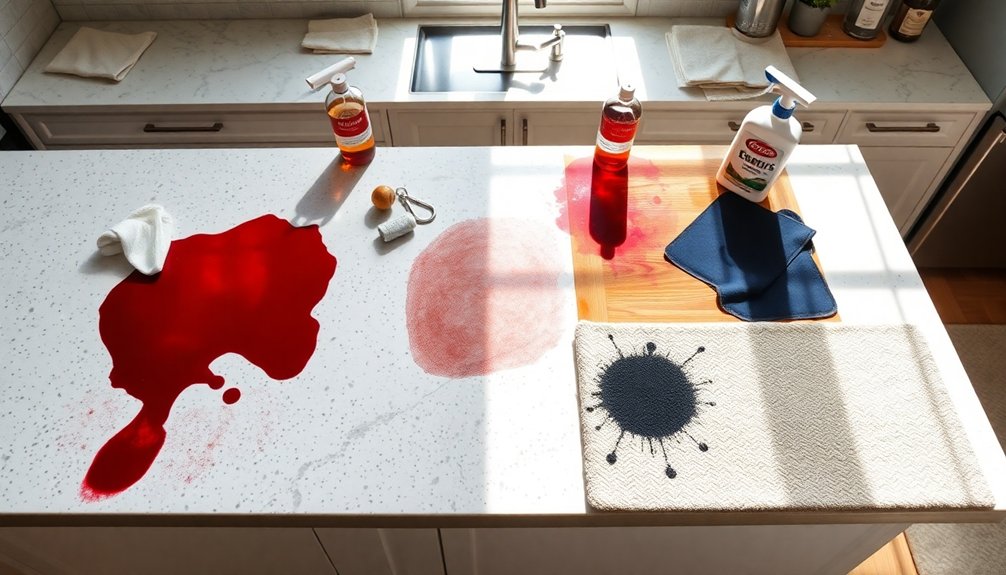
When it comes to common stains, knowing how to tackle them makes all the difference. You can use effective removal strategies tailored to each type of stain for the best results. Let’s explore the step-by-step techniques that will keep your fabrics looking their best. Immediate action is crucial for optimal stain removal to prevent the stain from setting and becoming more difficult to treat.
Common Stains Overview
Stains can be a nuisance, but tackling them doesn’t have to be overwhelming.
For coffee and tea stains, immediately blot the area with a paper towel, rinse with cold water, and apply liquid detergent.
With red wine, blot the stain, sprinkle salt or baking soda, and rinse with cold water before using a stain remover.
To remove grease, blot the excess, sprinkle baking soda, apply dish soap, and rinse with hot water if the fabric allows.
Blood stains need cold water treatment right away, then use liquid dish soap or hydrogen peroxide, followed by rinsing with cold water.
For ink, place a paper towel underneath, dab with rubbing alcohol, and rinse with cold water after most ink lifts.
Effective Removal Strategies
Effective stain removal starts with quick action.
For coffee and tea stains, immediately blot the spill, then rinse with cold water. Apply liquid detergent and soak in a vinegar solution for any stubborn residue.
For red wine, blot the spill, sprinkle salt or baking soda to absorb the liquid, and rinse with cold water before using a stain remover.
To tackle grease and oil stains, blot excess oil and sprinkle baking soda to absorb it, followed by dish soap and a rinse with hot water if the fabric allows.
For ink, place a paper towel underneath, dab with rubbing alcohol, and rinse with cold water.
Blood stains need immediate rinsing with cold water, followed by dish soap or hydrogen peroxide.
Stain-Specific Solutions for Common Household Stains
Dealing with pesky household stains can feel overwhelming, but with the right techniques, you can tackle them head-on.
For coffee stains, immediately blot the spill, rinse with cold water, and apply liquid detergent before laundering.
Red wine? Blot the area, sprinkle salt or baking soda to absorb the liquid, and rinse with cold water before washing.
To remove grease, blot excess oil, sprinkle baking soda or cornstarch, then scrub with dish soap and rinse with hot water if safe.
For ink stains, dab with rubbing alcohol using a cotton ball, rinse with cold water, and wash as usual.
Finally, blood stains need immediate treatment—rinse with cold water, apply liquid detergent, and consider hydrogen peroxide for stubborn spots. Immediate attention to spills reduces the likelihood of permanent stains.
Tips for Preventing Stains in the First Place

Here are some effective tips to keep your home stain-free:
- Use coasters and placemats under drinks and food items to prevent spills and protect surfaces.
- Implement a no-shoes policy indoors to reduce dirt and mud tracked onto carpets and upholstery.
- Invest in stain-resistant fabrics for furniture and clothing to minimize the absorption of spills.
- Encourage the use of bibs or aprons during meals, especially for children, to catch food and drink spills before they can stain clothing.
- Additionally, incorporating natural cleaning solutions can help maintain a cleaner environment and tackle any unavoidable stains more effectively.
Maintaining Clean Fabrics: Best Practices
Maintaining clean fabrics is essential for keeping your home looking fresh and inviting, especially since stains can happen at any moment.
To effectively remove stains, act quickly—blot with paper instead of rubbing to prevent further damage. Refer to the care label for specific washing instructions and use cold water for regular stains like coffee or tea.
For protein stains, try enzymes found in white vinegar or liquid laundry detergent. Always treat stains immediately to prevent them from setting.
Incorporate a stain-fighting kit with essential items like baking soda and enzyme-based pretreaters for quick access during emergencies. Additionally, employing a structured routine can enhance your overall laundry efficiency and help prevent stains from becoming a recurring issue.
Remember to launder items in cold water initially and guarantee they’re completely stain-free before drying to avoid heat setting any remaining marks.
Conclusion
Now that you’re armed with stain-fighting knowledge, envision this: you’re hosting friends, and someone accidentally spills red wine on your favorite tablecloth. Instead of panicking, you confidently grab your trusty stain remover and follow your newfound techniques. Just like that, you save the day! By using the right tools and methods, you’ll keep your home looking pristine. Remember, prevention is key, but when accidents happen, you’ve got everything you need to tackle those pesky stains head-on.