Last updated: · By Megan Hart
Home storage solutions are methods for putting belongings in designated places so that floors, counters and surfaces stay clear. The most effective options use space you already have, including walls, the area under the bed, the inside of closets and the depth of furniture. Choosing the right mix depends on your room size, what you store and whether you rent or own.
This guide covers ten practical approaches, with a focus on small bedrooms, along with safety limits and the research on how clutter affects people at home. Use it as a checklist: audit what you own, pick two or three solutions that match your problem, and add more only if you still lack space.
Key Takeaways
- A 2021 cross-sectional survey of 1,111 non-clinical adults published in ScienceDirect found that subjective clutter and psychological home strongly predicted wellbeing.
- A 2022 study in PubMed Central found that younger adults felt the negative effect of clutter on their sense of home more intensely than older adults, although clutter reduced psychological home for both groups.
- Vertical storage such as wall shelves, pegboards and hooks keeps items off the floor without taking up floor area.
- Under-bed rolling bins can add storage in space that is otherwise unused, but they should stay dry, labeled and easy to reach.
- Heavy items should never be stored on high shelves or in a lofted bed area, and wall-mounted units should be anchored into studs or rated hardware.
Why Does Clutter Affect Well-Being?
Clutter appears to be linked with lower well-being in several studies, but the research shows association rather than proof that clutter causes stress. Home storage solutions matter because they reduce the visual and physical clutter that these studies measure.
In a University of California, Los Angeles study of 60 dual-income couples, wives who described their homes using more clutter-related words showed flatter daily cortisol patterns in a study published through PubMed. Cortisol is a hormone that follows a daily rhythm, and a flatter pattern has been associated with adverse health outcomes in other research. This was a small study of one group, so it does not show that clutter itself causes these changes.
A ScienceDirect study of 1,111 non-clinical adults found that subjective clutter and psychological home were strong predictors of wellbeing. Because the survey was cross-sectional, it captured a single point in time and cannot show which way the relationship runs. A 2025 survey of 501 adults taken during the COVID pandemic found that home clutter predicted more negative affect and lower life satisfaction, and that perceived home beauty partly explained those links.
Research on older adults adds nuance. A study available through PubMed Central found that clutter reduced psychological home for both younger and older adults, but younger adults reported a stronger negative effect. The practical takeaway is that a tidier room is a reasonable goal, while the evidence does not prove that any single organizing system will change your mood or health.
How Do You Choose the Right Home Storage Solutions?
Start by identifying what you actually store and where it ends up, then match each category to a storage type. Most small bedrooms fail because items have no assigned home, not because there is too little space.
- List the categories in the room, such as clothing, shoes, books, bedding, bags and seasonal items.
- Sort each category into things you use daily, weekly and rarely. Keep daily items at waist to shoulder height.
- Measure wall, closet and under-bed dimensions, including door swing and the clearance from the floor to the bed frame.
- Choose one storage type for each category, starting with the solution that requires the least permanent change.
- Live with the setup for two weeks and adjust before buying more containers.
Buy storage after you sort, not before. Extra bins often become a second pile of clutter.
What Are the Best Vertical Storage Solutions?
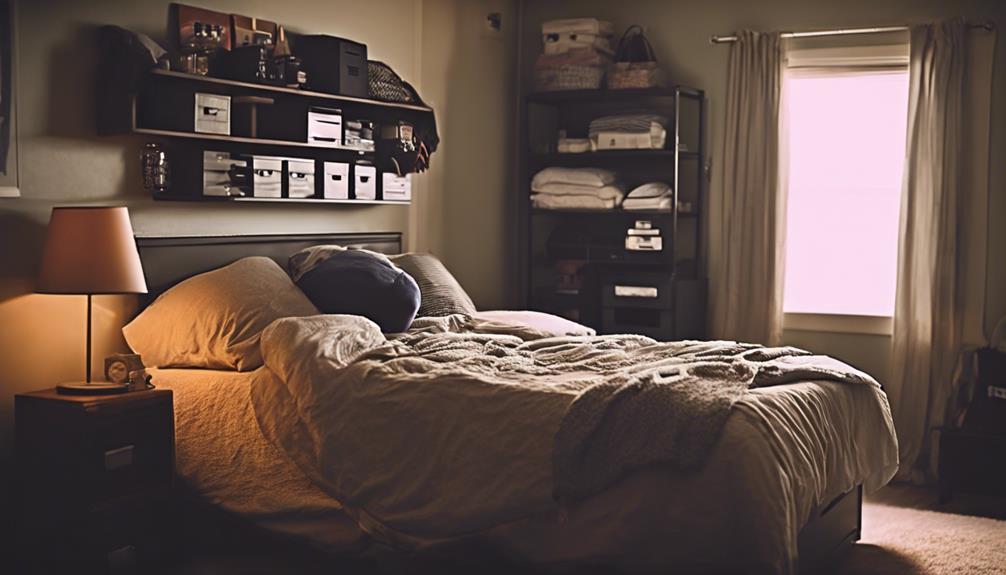
Vertical storage uses wall height to hold items that would otherwise sit on the floor or on furniture tops. Wall shelves, tall narrow bookcases, pegboards and wall hooks are the most common options for small rooms.
How do floating and wall-mounted shelves work?
Floating shelves hold books, decor and frequently used essentials without a visible base, which keeps the floor open. Mount them into wall studs or use hardware rated for the load, and keep heavier items on the lower shelves.
Are pegboards and wall hooks useful in a bedroom?
Yes, for bags, belts, scarves, jewelry and lightweight accessories. Pegboards are easy to rearrange, which helps when your needs change. Avoid overloading hooks with heavy coats or bags that could pull them off the wall.
How Can You Use Overhead Space for Storage?
Overhead storage is best for lightweight, infrequently used items such as seasonal bedding or extra pillows. A lofted bed with storage underneath can free up floor space, but it also changes how you access the room.
Choose lofted beds that carry a clear manufacturer weight rating and use a secure ladder or stairs. Keep the area under the loft clear of heavy objects, and never store items that could fall on a sleeping person. If you have children, check the bed’s guardrail design and the height of the top bunk.
What Is the Best Under-Bed Storage?
Under-bed storage works best with low, rolling bins or flat drawers that slide out easily. It is most useful for off-season clothing, shoes and bedding, not for items you need every morning.
Do rolling under-bed bins hold up well?
Rolling bins are practical because you can slide them out without lifting the mattress. Look for lids that keep dust out and wheels that roll smoothly on your floor type. Label each bin so you do not need to open every container to find an item.
What should you avoid when storing items under the bed?
Do not store anything under the bed that could hold moisture, such as cardboard boxes in a damp room, because moisture can encourage mold and attract pests. Keep paper, photos and fabrics in sealed plastic bins. Also check that the bin height leaves enough clearance for the bed frame and bedding.
How Do You Organize a Small Closet?
Closet organization is about making each section of the closet hold one category of items at a time. Dividers, double hanging rods and shelf organizers can roughly double usable space in a standard reach-in closet without any construction.
- Install a double hanging rod so shirts and folded items use different heights.
- Use slim, uniform hangers to free up rod space and keep clothes from sliding off.
- Add shelf dividers to keep stacks of folded clothing from collapsing.
- Use under-shelf baskets for belts, scarves and small accessories.
- Place an over-the-door organizer on the inside of the closet door for shoes or small items.
How Do You Organize a Dresser Efficiently?
Drawer dividers and consistent folding keep a dresser usable without extra furniture. Assign each drawer a single category, such as socks, tops or sleepwear, and keep it that way.
Does folding clothes vertically actually help?
Vertical folding lets you see every item at once, which reduces the need to dig through a stack. It is a simple habit that costs nothing and works well in shallow drawers. Clear organizers can also help you locate items quickly, especially in deep drawers.
Which Multi-Functional Furniture Adds the Most Storage?
Multi-functional furniture gives you a second purpose, such as seating, a surface or a table, along with concealed storage. It is one of the most efficient ways to add capacity in a small bedroom because one piece replaces two.
| Option | Best for | Main limitation |
|---|---|---|
| Storage bench | Blankets, pillows and extra linens at the foot of the bed | Lid can be heavy and may need a soft-close hinge |
| Nightstand with drawers | Chargers, medications and bedside essentials | Limited depth for bulky items |
| Storage ottoman | Seasonal clothing and throws | Not suitable as a regular seat for heavy use |
| Bed with built-in drawers | Off-season clothes and shoes | Often costs more and is harder to change later |
| Vintage-style crate | Books, magazines and small decor | Can look cluttered without a consistent system |
When buying furniture with storage, check that the hidden space fits what you actually own. A bench that holds more than you will use can encourage new clutter.
What Are the Safe and Renter-Friendly Storage Options?
Safe storage means anchoring tall furniture, keeping exits clear and avoiding loads that exceed a product’s rating. Renter-friendly storage uses freestanding furniture, tension-mounted systems or adhesive hooks rated for the weight you plan to hang.
- Anchor tall bookcases and dressers to the wall using anti-tip hardware, especially in homes with children or pets.
- Check the weight limit on every wall shelf, hook and bed before loading it.
- Keep a clear path to the door and any window used as an emergency exit.
- Ask your landlord before drilling, and check your lease for rules on wall mounts.
- Remove adhesive hooks slowly to avoid damaging paint or drywall.
Avoid storing flammable liquids, aerosols or heavy electronics in the bedroom. Keep items at least a short distance from heaters and lamps.
When Should You Get Professional Help With Clutter?
Consider talking with a doctor or licensed mental health professional if clutter is causing distress, safety problems or difficulty sleeping, or if you find it very hard to discard items. Persistent difficulty letting go of possessions can be a sign of a condition that responds to treatment. A professional organizer can help with logistics, but a clinician is the right person for emotional or safety concerns.
If mold, pests or allergens are involved, contact a licensed pest control provider or a qualified cleaner before storing items in those areas.
Frequently Asked Questions
What are the easiest home storage solutions to start with?
Start with a few wall hooks, one set of under-bed bins and a closet divider or shelf organizer. These options require little or no construction and can be removed later if your needs change. Sort your belongings first so you know what needs a place.
Does clutter really affect mental health?
Several studies link clutter with lower wellbeing, including a survey of 1,111 adults and a 2025 survey of 501 adults. These studies are correlational, so they do not prove clutter causes low mood. If you feel persistently low or anxious, speak with a healthcare professional.
Are under-bed storage containers safe?
They are generally safe if they are sturdy, dry and not blocking an exit or hiding hazards. Avoid storing heavy items that could slide or tip, and keep the area clear of anything flammable. Check that the bed frame has enough clearance for the bin height.
How can I store more in a small closet?
Use a double hanging rod, shelf dividers, slim hangers and an over-the-door organizer. Group items by category so each section has one purpose. Remove anything you have not worn or used in a year to free up more room.
Can I add storage if I rent?
Yes, many options are renter-friendly, including freestanding furniture, tension rods and adhesive hooks rated for your items. Check your lease before mounting anything to walls. Remove mounts carefully when you move out.
How much should I spend on storage?
Spend after you sort and measure, and start with the lowest-cost option that solves your main problem. Buying extra bins before you declutter often adds to the mess. Replace or upgrade pieces only after you have used the setup for several weeks.
Conclusion
Effective home storage solutions combine vertical shelving, under-bed bins, closet systems and multi-functional furniture, matched to what you actually own. Use the research on clutter as a reason to get organized, not as a promise of specific results, and keep safety limits in mind when you add weight to walls, beds and shelves. Start with one room, sort first and expand only where you still need space.
More on Home Storage Solutions
- 10 Under-the-Sink Organizers for Your Cleaning Supplies
- 18 Toy Organization and Cleaning Tips That Actually Last
- 20 Decluttering Tips That Make Cleaning Faster for Busy Parents
- Best Hampers to Keep Your Laundry Room Organized
- Best Organizers for a Spice Cabinet That Maximizes Space
- How to Clean Under the Bed Without Moving Everything Out
- How to Organize Your Deep Pantry Shelves Like a Pro
- Ice Bin for Freezer – Best Options for Ice Storage
- The Best Cutlery Caddies for an Organized Dining Experience
- Top 10 Best Laundry Hampers for Kids
- Top 10 Spice Cabinet Organizers for a Neat and Tidy Kitchen
Related guides: How to Clean the House When You’re Tired and Overwhelmed · Top 10 Cleaning Products for Beginners: A Basic Home Cleaning Kit · Shine On: The Best Floor Cleaners for Every Surface (Hardwood, Tile, Laminate & More!)
Free tools: Cleaning Products You Should Never Mix
Always follow the product label, test on a hidden area first, and never mix cleaning products such as bleach and ammonia. Read our safety disclaimer and editorial policy.