Are you using your vacuum attachments correctly? It’s important to match the right tool to each cleaning task. For instance, use the crevice tool for tight spaces and the upholstery brush for furniture. Avoid common mistakes like using the wrong attachment on delicate surfaces. Regularly clean and maintain your attachments for peak performance. By mastering these techniques, you’ll boost your vacuuming efficiency and keep your home spotless. Discover more tips to enhance your cleaning routine!
Understanding the Importance of Vacuum Attachments
When it comes to cleaning your home effectively, understanding the importance of vacuum attachments can make all the difference. These essential tools help you tailor your vacuuming to various surfaces and tight spaces, notably enhancing your cleaning efficiency.
For instance, using the upholstery tool allows you to clean upholstery thoroughly, while the crevice tool effectively targets debris in hard-to-reach areas. An extension wand can increase your reach by up to 18 inches, making it easier to clean high places without ladders.
By regularly incorporating vacuum attachments into your routine, you not only tackle pet hair and dust but also improve indoor air quality by removing allergens from carpets and upholstery. Additionally, using the multi-surface tool ensures versatility for various cleaning tasks, maximizing the effectiveness of your vacuuming efforts.
Regularly using vacuum attachments helps eliminate pet hair and dust while enhancing indoor air quality by removing allergens.
Don’t underestimate these tools; they’re vital for a cleaner home.
The Right Tool for Every Task
When you tackle different cleaning tasks, using the right vacuum attachment can make all the difference.
Each specialized tool is designed to maximize efficiency and tackle specific challenges, from tight corners to delicate surfaces. For instance, using a crevice tool can help you reach those hard-to-access areas and ensure no dirt is left behind. However, it’s essential to avoid common misuse to guarantee you get the best results every time.
Choosing the Right Attachment
How do you choose the right vacuum attachment for each cleaning task? Start by evaluating your needs.
For tight spaces, the crevice tool is essential to reach between furniture and along baseboards, effectively removing hidden dust.
If you’re tackling pet hair on your couch, the upholstery attachment will guarantee a thorough clean without damaging the fabric.
For delicate surfaces like electronics, use the dusting brush with its soft bristles to gently eliminate dust without scratches.
Need to reach high areas? The extension wand adds significant reach for cleaning ceiling corners and light fixtures.
Finally, when working on hardwood or tile, the bare floor attachment protects surfaces while picking up dirt efficiently.
Choose wisely, and your cleaning will be much more effective!
Specialized Tools for Efficiency
Choosing the right vacuum attachment is just the beginning. To maximize your cleaning efficiency, you’ll want to use specialized attachments tailored for different tasks.
For instance, the upholstery tool and dusting brush are perfect for cleaning specific surfaces while protecting delicate fabrics. The crevice tool is essential for reaching tight spaces, like along baseboards or between furniture.
If you need to tackle high areas, an extension wand is your best friend, allowing you to clean ceiling corners without a ladder. For pet owners, the power brush attachment, with its rotating brush roll, excels at removing pet hair from carpets and upholstery.
Regularly using these specialized tools can transform your vacuuming routine into a more efficient and effective cleaning experience.
Common Misuse to Avoid
While it may seem straightforward to grab any vacuum attachment, using the wrong tool can lead to damage and ineffective cleaning. Always match your vacuum attachments to the surface type.
For instance, use a hard floor attachment on wood or tile to avoid scratches. Reserve the crevice tool for tight spaces like baseboards and air vents, not wooden furniture.
The upholstery attachment is great for pet hair on furniture but can damage delicate fabrics. Avoid using the turbo brush on curtains, as it can snag; it’s best suited for carpets and fabric chairs.
Finally, remember to do regular cleaning of your vacuum attachments to maintain suction efficiency and prevent dirt spread. Choose wisely for best results!
Common Mistakes When Using Attachments
Many common mistakes can undermine the effectiveness of your vacuum attachments, often stemming from a lack of understanding or maintenance.
For instance, neglecting to clean your vacuum attachments regularly can lead to clogs and reduced suction.
When using the crevice tool, be careful not to scratch wooden furniture by matching the attachment to the surface.
Additionally, using the upholstery tool on delicate fabrics without adjusting suction can cause damage.
Don’t forget the extension wand; failing to use it for high or hard-to-reach areas can leave dust unaddressed.
Finally, remember that using the dusting brush on flat surfaces instead of the upholstery tool can greatly improve your cleaning effectiveness.
Regular vacuuming with HEPA-filter vacuums is essential for reducing dust mites and improving indoor air quality.
Avoid these common mistakes to get the most out of your vacuum.
Maximizing Efficiency With the Crevice Tool
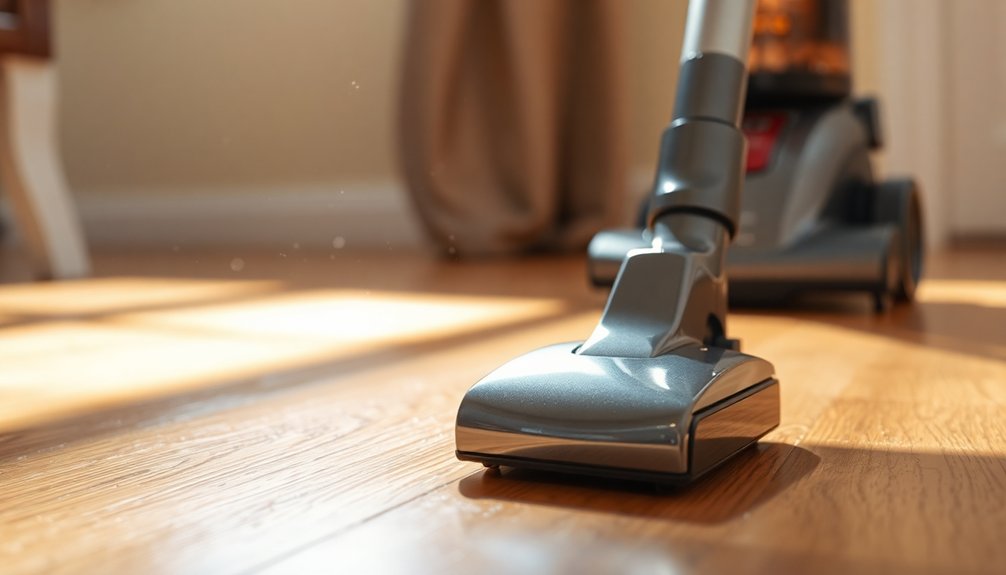
The crevice tool is a game changer when it comes to maximizing your vacuuming efficiency. This narrow attachment lets you tackle those hard-to-reach places where dust tends to accumulate.
The crevice tool revolutionizes vacuuming by reaching tight spaces where dust hides.
Here’s how to make the most of it:
- Use it along baseboards and between appliances.
- Target air vents, window frames, and furniture gaps.
- Be cautious to avoid scratching surfaces, as it lacks a brush.
- Regularly incorporate it into your routine for a more thorough clean. Additionally, maintaining a clean environment can reduce harmful bacteria, which is essential for overall home hygiene.
Dusting Brush: Gentle Yet Effective
A dusting brush is an essential tool for anyone looking to maintain a clean and allergen-free home. Its long, soft bristles effectively capture dust without scratching delicate surfaces, making it perfect for furniture, cabinets, and picture frames.
You’ll appreciate its versatile use, as the round shape allows you to easily clean curved or uneven areas that standard tools struggle with. By regularly using the dusting brush, you can greatly reduce allergens by removing dust from surfaces that typically harbor them, like shelves and electronics.
Unlike traditional dust rags and feather dusters, the dusting brush traps particles instead of just moving them around, ensuring a more thorough clean. Don’t underestimate this gentle yet effective tool in your cleaning arsenal! Additionally, consider using microfiber cloths alongside your dusting brush for even better dust capture and a more eco-friendly cleaning experience.
The Versatility of the Extension Wand
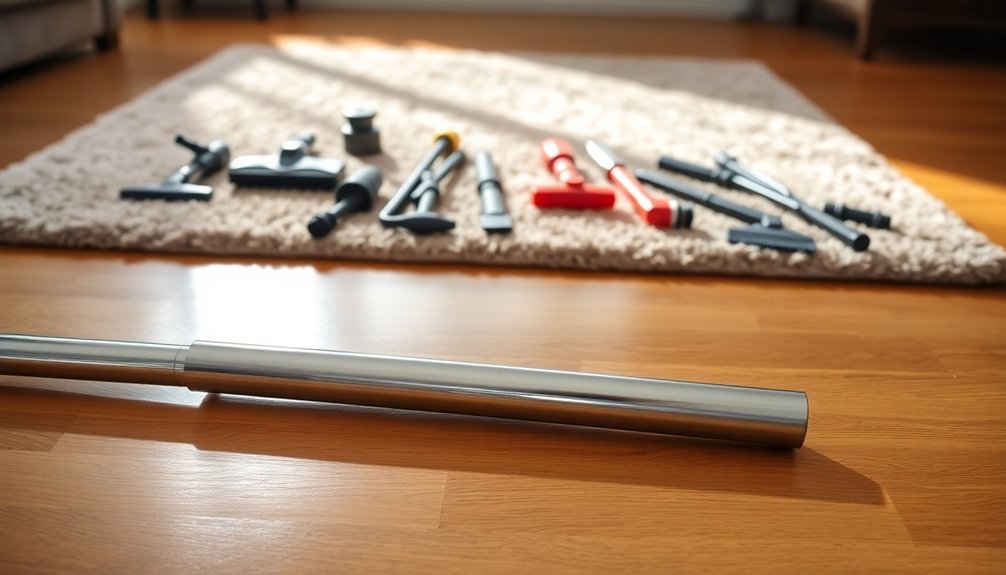
With an extension wand, you gain an impressive 18 inches of reach, making it a game-changer for cleaning hard-to-reach areas like ceiling corners and light fixtures.
This tool’s versatility shines when paired with various attachments:
- Dusting brush for delicate surfaces
- Crevice tool for tight spots
- Upholstery attachments for furniture
- Floor nozzle for larger areas
Using an extension wand reduces physical strain, allowing you to clean high places without excessive bending or stretching. Additionally, cleaning tools after each use helps maintain their performance and longevity.
Using an extension wand minimizes physical strain, enabling you to effortlessly clean high areas without uncomfortable bending or stretching.
Start with larger areas, then tackle tight spots with the crevice tool for thorough cleaning.
Remember, properly storing the extension wand alongside your vacuum keeps it in great condition and ready for your next cleaning task.
Enjoy the ease and efficiency it brings to your routine!
Upholstery Brush: A Must-Have for Furniture
An upholstery brush is essential for keeping your furniture looking its best. This specialized attachment features short, tough bristles that effectively remove dust, dirt, and pet hair from upholstered surfaces without snagging the fabric.
Typically 4 to 6 inches wide, it maneuvers easily around cushions and tight spots for thorough cleaning. Regular use of an upholstery brush helps maintain fabric integrity and prolongs your furniture’s lifespan by preventing allergen buildup. Additionally, using an upholstery brush as part of your regular maintenance routine can streamline the cleaning process and enhance the overall cleanliness of your furniture.
Some brushes even include a removable thin brush for enhanced agitation, effectively lifting stubborn hair and dirt from textured surfaces. To keep your furniture fresh and clean, aim to vacuum upholstery at least once a month, especially if you have pets or high foot traffic.
Specialty Attachments for Unique Cleaning Needs
When it comes to tackling unique cleaning challenges, specialty attachments can make all the difference.
These tools are designed to help you reach and clean areas that standard attachments might miss. Here are some must-have specialty attachments:
- Upholstery tool: Use the mattress refresher to eliminate lint and allergens while cleaning larger furniture.
- Radiator brush: Perfect for reaching between radiator fins and cleaning refrigerator coils.
- Multi-angle brushes: These allow you to clean light fixtures and crown molding easily.
- Car-cleaning nozzle: This wedge-shaped tool targets dirt in your car mats and patio furniture.
Additionally, using the proper steam cleaner technique can enhance your cleaning results, especially for car upholstery and other delicate materials.
With the right specialty attachments, you can tackle any cleaning task with confidence, ensuring every corner of your home stays spotless.
Tips for Maintaining Your Vacuum Attachments
To keep your vacuum attachments in top shape, regularly clean them, especially the bare floor and upholstery tools, at least once a month. Use a soft brush or cloth to gently remove debris from the dusting attachment, preserving the bristles’ integrity. Inspect crevice tools for cracks that could affect suction power; replace any damaged pieces to avoid scratches. Also, periodically check and clean the suction hose to guarantee consistent airflow. Finally, store vacuum attachments properly to prevent damage and loss. Following these cleaning tips will help maintain superior performance, making your vacuuming more efficient, and incorporating time-saving strategies into your routine can further streamline the cleaning process.
Conclusion
So, you thought vacuum attachments were just fancy add-ons, didn’t you? But really, they’re your secret cleaning weapons! By using them correctly, you’re not just tidying up; you’re mastering the art of efficiency. It’s ironic, isn’t it? The tools you might’ve overlooked are the ones that can save you time and effort. So, grab those attachments and show your vacuum what it’s truly capable of – because who knew cleaning could be this easy?