Last updated: · By Megan Hart
Streaky mirrors usually come from one of three problems: residue left behind by the cleaner, dust or grime smeared into a wet film, or lint and moisture left by the wrong cloth. Effective glass and mirror cleaning addresses all three by dusting first, using a mild solution on a microfiber cloth, and buffing with a dry towel. This guide covers why streaks form, the method that works, and the precautions that protect a mirror’s silvered backing, which most people never think about.
Key Takeaways
- Streaks most often come from dust or grime smeared while wet, leftover cleaner residue, or lint from paper towels and old rags.
- Dusting the mirror with a dry microfiber cloth before adding any liquid prevents grit from turning into streaks.
- A 1:1 mix of white vinegar and water is a common, low-residue homemade option, and it works best when applied to the cloth rather than sprayed onto the glass.
- A U.S. Patent and Trademark Office filing states that water entering through exposed mirror edges can weaken the bond between the silver layer and the glass.
- A two-towel method, with one damp towel for cleaning and one dry towel for buffing, removes most moisture before it can dry as streaks.
Why Do Mirrors Streak After Cleaning?
Mirrors streak when a thin film of water, cleaner, or dirt dries unevenly on the glass. The film is usually created by the cleaning process itself, not by the mirror. Identifying which film you are dealing with tells you how to fix it.
The most common causes are:
- Dust and grit: Wiping a dusty mirror with a wet cloth turns particles into a smear that dries as a haze.
- Cleaner residue: Using too much cleaner, or a product that does not rinse cleanly, leaves a film behind.
- Lint: Paper towels and worn cotton shed fibers that stick to the wet surface.
- Hard water spots: Minerals left by evaporated water can look like streaks, especially in bathrooms.
- Fast drying: Cleaning in direct sun or under hot air causes the solution to dry before you can buff it off.
Why Should You Pre-Clean a Mirror First?
Pre-cleaning means removing loose dust and debris with a dry cloth before any liquid touches the glass. Dry dust is easy to lift, but once it gets wet it spreads across the surface and dries into streaks. A dry pass takes about a minute and makes the wet step far more effective.
Use a clean, dry microfiber cloth and wipe in overlapping strokes from top to bottom. Pay attention to the corners and the frame edge, where dust collects. Shake or rinse the cloth often so you are not simply moving grit around.
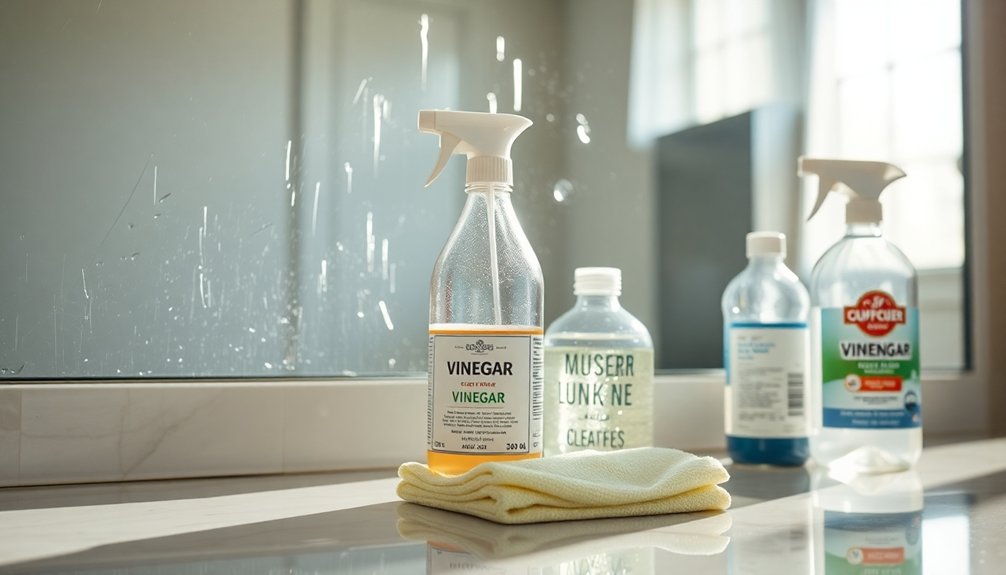
Some spots need a little more help. Toothpaste splatter and hard water spots often respond to a small amount of white vinegar on a damp cloth, followed by a clean buff. Rubbing alcohol can lift greasy marks, but it is flammable, so use only a small amount in a ventilated room and keep it away from heat sources.
Which Cleaner Works Best for Mirrors?
The best mirror cleaner is a mild solution that rinses away cleanly and leaves little behind. A 1:1 mix of white vinegar and water is a widely used homemade option, and it has no added fragrance or dyes that can leave a film. Many commercial glass cleaners also work well, so choose a product that is labeled for glass and read the directions.
You can also make a simple dish soap solution. Add only a single drop of mild dish soap to a cup of warm water, because excess soap is a common cause of streaks. For a fuller recipe, see this homemade glass and mirror cleaner guide.
| Cleaner option | Best for | Watch out for |
|---|---|---|
| 1:1 white vinegar and water | Routine cleaning and hard water film | Acidic, so use it diluted and do not let it sit; avoid it on surfaces that the manufacturer says to avoid |
| One drop of dish soap in warm water | Fingerprints and light grime | Too much soap causes streaks; rinse with a water-dampened cloth |
| Commercial glass cleaner | Convenience and heavier buildup | Read the label; do not combine with other cleaners |
| Rubbing alcohol (small amount) | Quick touch-ups of greasy spots | Flammable; use in a ventilated area |
Ammonia-free products are often recommended, but ammonia is not the main cause of streaks; residue and dirty tools are. Avoid abrasive powders, bleach, and strong alkaline or acid cleaners on mirrors, because harsh agents can damage the coating. The next section explains why this matters for the silver layer.
What Tools Prevent Lint and Streaks?
Microfiber cloths are the most reliable tool for streak-free mirrors because they trap dust and absorb moisture without shedding fibers. Paper towels tend to leave lint, and old cotton rags can do the same. Old newspaper, which some people recommend, is less suitable because modern print quality varies and can leave ink on the glass.
Use this checklist when you set up:
- Two clean microfiber cloths: one for cleaning, one for buffing
- A small spray bottle for your solution
- A squeegee for large or floor-to-ceiling mirrors
- A bucket if you mix a larger batch of solution
- A bright light or window to check for missed spots
A squeegee works well on large mirrors because it removes liquid in a single pass. Wipe the blade clean after each stroke so it does not redeposit moisture. Store cloths dry and wash them without fabric softener, which can leave a film that causes streaks.
How Do You Clean a Mirror Without Streaks?
To clean a mirror without streaks, dust it dry, apply a light amount of solution to a cloth, wipe in overlapping strokes, and buff with a dry towel. This sequence limits moisture and removes residue before it can dry. Work in a shaded area if possible.
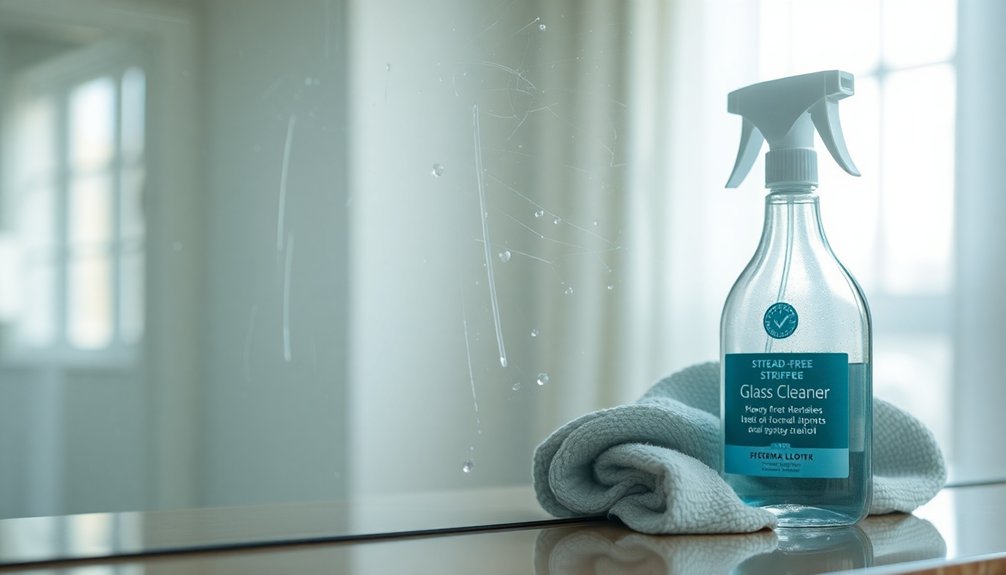
- Dust the mirror with a dry microfiber cloth from top to bottom.
- Tape or cover the mirror edges if liquid could run behind the frame.
- Lightly mist your solution onto the cloth, not onto the mirror.
- Wipe in an S pattern or overlapping strokes so you do not spread dirt back onto cleaned areas.
- Immediately buff the surface with a second, dry microfiber cloth.
- Inspect the mirror from several angles under good light and correct any remaining film.
How Much Cleaning Solution Should You Use?
Use just enough solution to dampen the cloth, not drip. Excess liquid runs down the glass and can reach the edges. Check the cloth and mist it again only if the glass still feels dirty after one pass.
How Can You Protect Mirror Edges and Backing?
Keep liquid away from the exposed edges and avoid harsh chemicals, because moisture and certain agents can damage the silver layer behind the glass. Two U.S. Patent and Trademark Office filings describe this process. Patent 7775497 notes that darkening at a mirror’s perimeter is the usual early sign of age-related edge oxidation, and that its silver and copper layers can react with humidity and harsh cleaning agents, according to the patent describing mirror edge and support design.
Patent 4780372 adds that water entering through exposed edges or coating flaws can weaken the silver-to-glass bond, and that iron and alkali ions gather at that interface and are suspected of speeding silver degradation, as described in the patent on silicon nitride protective coatings for silvered mirrors.
These are patent descriptions of how mirrors are built and where they fail, not controlled studies of household cleaning routines, so the practical risk to your mirror depends on age, quality, and exposure. Still, the guidance is consistent: spray on the cloth, keep liquid off the edges, and avoid harsh products. Cleaning is unlikely to reverse edge oxidation once it has started.
How Often Should You Clean Mirrors?
Clean bathroom mirrors about once a week and other mirrors every two weeks or as they show smudges. Light dusting between full cleanings keeps buildup from forming. Frequency depends on humidity, splashes, and how many people touch the glass.
Quick habits help. Wipe splashes right away, dust mirrors when you dust the room, and keep cleaning supplies within reach. The same method also works on other glass surfaces; for ideas on glass tables and similar pieces, read these coffee table and glass surface cleaning tricks.
What Safety Precautions Should You Take?
Never mix vinegar, ammonia, or other cleaners with bleach, because the combinations can release harmful gases. Read labels before you clean and use one product at a time. For a fuller list of combinations to avoid, see cleaning products you should never mix.
Ventilate the room when you use any strong product, and wear gloves if your skin reacts to cleaners. Store products out of reach of children and pets, and keep rubbing alcohol away from heat.
- If someone swallows a cleaner or has trouble breathing after exposure, call 911 right away.
- For questions about a product exposure in the United States, call Poison Control at 1-800-222-1222.
- If irritation to the eyes, skin, or airways lingers, or if asthma symptoms worsen after cleaning, contact a doctor.
What If Streaks Will Not Go Away?
If streaks return after you follow the method, the cause is usually residue, hard water, or a damaged surface rather than your technique. Try a single clean with a fresh solution and new cloths to rule out a contaminated bottle or towel. Then check the mirror under bright light from several angles.
Dark spots or darkening around the perimeter are different from streaks. Those usually point to backing damage, which cleaning cannot fully fix, so a professional glazier or mirror installer can assess whether replacement is the practical option.
Frequently Asked Questions
Why do my mirrors streak even after I clean them?
Streaks usually come from dust smeared when wet, leftover cleaner, lint from paper towels, or drying too fast. Dust the mirror first, use only a light amount of solution, and buff with a dry microfiber cloth. If the problem continues, change your cloths and solution to rule out contamination.
Is vinegar safe for mirrors?
A diluted 1:1 vinegar and water solution is a common homemade mirror cleaner and is generally considered low-residue. Vinegar is acidic, so avoid using it undiluted or letting it soak into edges. Check product labels for any finish or frame that the manufacturer says to avoid.
Can I use rubbing alcohol on mirrors?
Rubbing alcohol can lift greasy marks in small amounts on a cloth. It is flammable, so use it only in a ventilated room and away from heat. Do not spray it heavily, because liquid running toward the edges can harm the backing over time.
Do I need a squeegee for mirrors?
A squeegee is not required, but it helps on large mirrors because it removes liquid quickly in a single pass. Wipe the blade after every stroke so it does not redeposit moisture. For small bathroom mirrors, two microfiber cloths usually produce the same result.
Can I fix dark spots or dark edges on a mirror?
Dark spots and perimeter darkening are usually signs of damage to the silver backing, not dirt. Patent filings describe perimeter darkening as a common early sign of age-related edge oxidation. Cleaning is unlikely to reverse this, so consult a professional glazier if the damage spreads.
Is it safe to mix mirror cleaner with other products?
No. Do not combine glass cleaners with bleach, ammonia-based products, or other cleaners, because some combinations can release harmful gases. Use one product at a time, rinse the cloth and tools between uses, and ventilate the room. If you were exposed and feel unwell, call Poison Control at 1-800-222-1222.
Conclusion
Good glass and mirror cleaning comes down to a simple sequence: dust dry, apply a mild solution to a cloth, wipe in overlapping strokes, and buff with a dry microfiber towel. Keep liquid off the edges and avoid harsh chemicals, because moisture and strong agents can damage the silver backing over time. With consistent habits and the right tools, your mirrors will show clearer reflections, and any damage that does not clean off should be checked by a professional.
More on Glass and Mirror Cleaning
- 14 Coffee Table and Glass Surface Cleaning Tricks for a Clear Shine
- 15 Ways to Keep Your Stainless Steel Appliances Streak‑Free
- 16 TV Screen and Electronics Cleaning Tips (No Streaks, No Damage)
- 16 Ways to Clean Windows and Glass Doors Covered in Pet Nose Prints
- How to Clean Stainless Steel Appliances Without Streaks
- How to Clean a TV Screen Safely
- How to Make Your Own Streak-Free Glass and Window Cleaner
- Stainless Steel Wipes vs. Sprays: Which Leaves Less Streaks?
- The Only DIY Glass and Mirror Cleaner You’ll Ever Need
- The Secret to Streak-Free High-Gloss Cabinet Cleaning
- Top 5 Shower Glass Door Cleaners for a Spotless Finish
- Top Rated Glass Cooktop Cleaners for Scratch-Free Shine
Related guides: Best Shower Spray Cleaners for a Sparkling Bathroom · 7 Essential Cleaning Cloth Types for Every Household · Top 10 Cleaning Products for Beginners: A Basic Home Cleaning Kit
Free tools: Cleaning Products You Should Never Mix
Always follow the product label, test on a hidden area first, and never mix cleaning products such as bleach and ammonia. Read our safety disclaimer and editorial policy.
One Reply to “Why Your Mirrors Are Streaky (And How to Fix It)”