When it comes to quick kitchen cleanups, select antibacterial wipes that effectively kill 99.9% of harmful bacteria. Look for brands like Clorox or Lysol, which are designed for kitchen surfaces and tackle grease without leaving residue. Prioritize wipes with natural ingredients for safety and consider hypoallergenic options if you have sensitivities. Proper storage also extends their lifespan. Keep your kitchen germ-free with these essentials, and there’s more to explore about maintaining hygiene effortlessly!
Why Antibacterial Wipes Are Essential for Kitchen Cleanliness
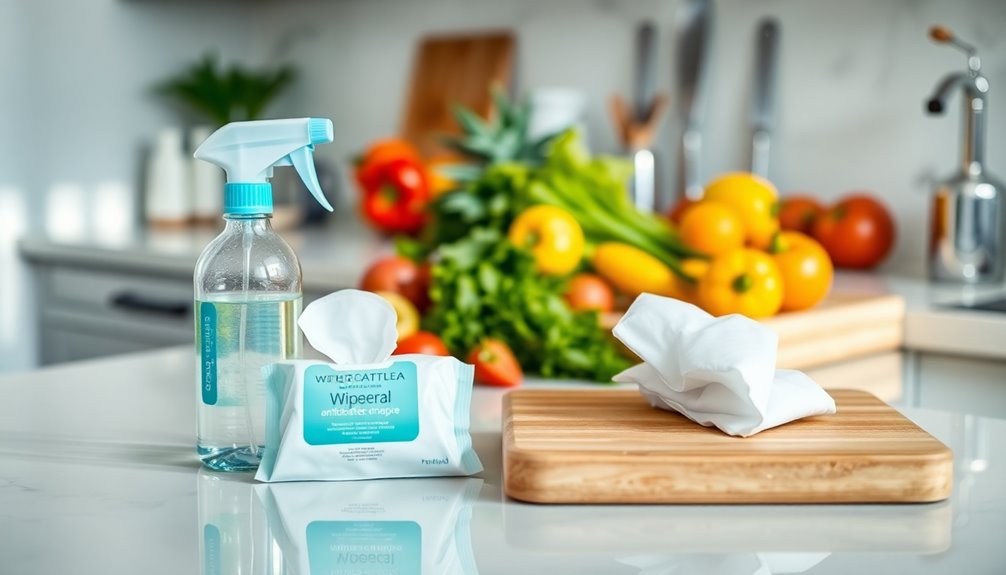
When you consider the high potential for bacteria in your kitchen, it’s clear why antibacterial wipes are essential for maintaining cleanliness. You prepare food, handle raw ingredients, and often forget how quickly germs can spread.
By using antibacterial wipes, you guarantee effective kitchen hygiene, killing harmful bacteria on countertops, cutting boards, and utensils. These wipes are convenient and ready to use, making them perfect for quick cleanups after cooking or snacking.
Plus, they’re designed specifically for germ control, providing peace of mind as you keep your space safe for food preparation. Incorporating antibacterial wipes into your routine can greatly reduce the risk of cross-contamination, allowing you to enjoy your cooking and dining experiences without worry. Additionally, using natural disinfectants can enhance your cleaning routine while being gentle on the environment.
How to Choose the Right Antibacterial Wipes for Your Kitchen
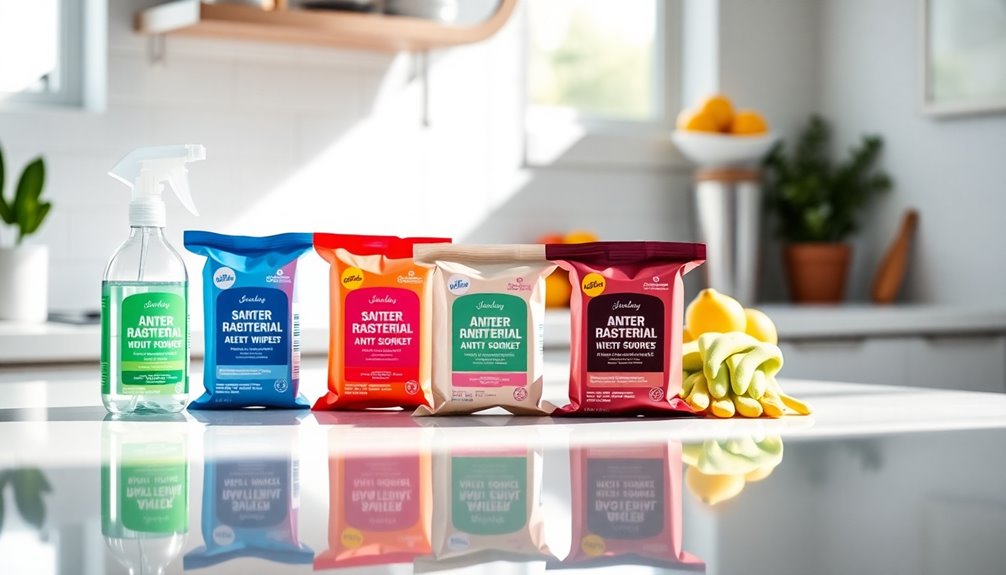
When choosing antibacterial wipes for your kitchen, you’ll want to take into account the ingredients to guarantee they’re effective yet safe. Think about surface compatibility, too, so you don’t damage your countertops or appliances. Finally, pay attention to fragrance and sensitivity factors, especially if you or anyone in your home has allergies. Additionally, consider opting for products that are non-toxic and eco-friendly, ensuring a healthier environment for your family and pets.
Ingredients To Look For
Choosing the right antibacterial wipes for your kitchen can be overwhelming, especially with the variety of ingredients available.
To make the best choice, focus on these key components:
- Natural Ingredients: Look for wipes that utilize plant-based extracts, which are effective and safer for your family.
- Alcohol: This is a potent disinfectant that evaporates quickly, minimizing residue.
- Chlorine-Free Bleach: It’s effective against bacteria but less harsh than traditional bleach, making it safer for surfaces.
- No Chemical Additives: Avoid wipes with unnecessary fragrances or dyes that can irritate sensitive skin.
Surface Compatibility Considerations
Understanding the ingredients in antibacterial wipes is just the start; it’s equally important to contemplate the surfaces you’ll be cleaning. Different materials require different care, especially in the kitchen.
For wood surfaces, look for wipes that are specifically labeled as safe for wood to avoid damage or discoloration. You want to guarantee they won’t strip away the finish or cause warping.
On the other hand, when cleaning stainless steel, choose wipes that effectively cut through grease and grime without leaving streaks. Always check the packaging for compatibility information, as using the wrong product can lead to costly repairs or replacements.
Fragrance and Sensitivity Factors
Though antibacterial wipes can be a convenient solution for quick kitchen cleanups, it’s essential to take into consideration fragrance and sensitivity factors before making a choice.
Here are some key points to contemplate:
- Fragrance Preferences: Choose wipes with scents you enjoy; strong fragrances can be overwhelming.
- Skin Sensitivity: If you have sensitive skin, opt for hypoallergenic wipes that minimize irritation.
- Natural Options: Contemplate wipes made with natural ingredients, which often contain fewer harsh chemicals.
- Test Before Use: Always test a small area on your skin or a hidden surface in your kitchen to guarantee compatibility.
Top Features to Look For in Antibacterial Wipes
When you’re choosing antibacterial wipes, it’s crucial to take into account key features that guarantee effective cleaning.
Look for wipes that promise effective bacteria elimination, are safe for various surfaces, and dry quickly.
These factors will help you keep your kitchen safe and clean with ease. Additionally, consider wipes that are formulated with non-toxic cleaners to ensure a safe cleaning environment for your family and pets.
Effective Bacteria Elimination
To effectively eliminate bacteria in your kitchen, it’s essential to choose antibacterial wipes that boast specific features.
Look for wipes that guarantee maximum bacteria resistance and high surface efficacy. Here are four key features to take into account:
- Broad-spectrum effectiveness: Choose wipes that kill a wide range of bacteria, including common kitchen pathogens.
- Fast-acting formula: Wipes should show rapid results, ensuring bacteria are eliminated quickly.
- Durability: Select wipes that don’t tear easily, allowing you to clean surfaces thoroughly without worrying about rips.
- Moisture retention: Look for wipes that stay wet longer, ensuring effective bacteria elimination on various surfaces.
Safe Surface Compatibility
Choosing the right antibacterial wipes for your kitchen isn’t just about bacteria elimination; safe surface compatibility is essential too.
You want to verify that the wipes you choose have undergone thorough surface testing to confirm they won’t damage your countertops, appliances, or utensils.
Look for wipes specifically labeled for various materials, like stainless steel, wood, or plastic, to guarantee material safety. This way, you can confidently clean without worrying about harmful reactions or discoloration.
Remember, the right wipes should effectively kill germs while being gentle on your surfaces.
Quick Drying Formula
A quick drying formula is a key feature to look for in antibacterial wipes, especially for kitchen use. When you choose wipes with this attribute, you’ll enjoy several formula benefits that make cleaning more efficient.
Here are four key features to take into account:
- Rapid Evaporation: Quick drying wipes evaporate swiftly, leaving surfaces clean without excess moisture.
- Streak-Free Finish: These formulas help prevent streaks, ensuring your countertops and appliances shine.
- Improved Grip: A quick drying texture enhances your grip while cleaning, so you can wipe surfaces effectively.
- Convenience: With fast drying times, you can resume cooking or eating without delay, making it easier to maintain a tidy kitchen.
Opt for antibacterial wipes with a quick drying formula for a smoother cleanup experience!
The Benefits of Using Antibacterial Wipes Over Other Cleaning Methods
While many cleaning methods can tackle germs in the kitchen, antibacterial wipes stand out for their convenience and effectiveness. You can grab a wipe and quickly clean surfaces, ensuring that you eliminate harmful bacteria without the need for additional tools or sprays.
Their antibacterial effectiveness is impressive, often providing a kill rate of 99.9% against common pathogens. Plus, they’re safe to use on a variety of surfaces, so you don’t have to worry about damaging your countertops or appliances.
Unlike traditional cleaners, which can require rinsing or long drying times, wipes allow you to disinfect and wipe down surfaces in one easy step. This saves you time and effort, making kitchen cleanup a breeze. Additionally, incorporating non-toxic cleaners into your cleaning routine can promote a safer environment for your family.
A Comparison of Disposable vs. Reusable Antibacterial Wipes
When it comes to antibacterial wipes, you’ll find yourself weighing the pros and cons of disposable versus reusable options. The choice impacts your cleaning routine considerably, so consider these factors:
- Disposable Convenience: They’re ready to use, requiring no extra prep or cleaning, making quick kitchen cleanups effortless.
- Reusable Sustainability: They’re eco-friendly, allowing you to reduce waste and save money in the long run.
- Effectiveness: Disposable wipes often contain stronger antibacterial agents, ensuring a thorough clean.
- Maintenance: Reusable wipes need regular washing to remain effective, which can be a hassle for some.
Ultimately, your choice will depend on whether you prioritize convenience or sustainability in your cleaning habits. Additionally, using products like Lysol Disinfectant Spray can enhance your cleaning routine by effectively eliminating germs during your quick cleanups.
The Best Antibacterial Wipes for Quick Kitchen Cleanups
Choosing the right antibacterial wipes can make all the difference during quick kitchen cleanups.
Look for wipes specifically designed to tackle kitchen surfaces, as they’re often formulated to cut through grease and kill germs effectively. Brands like Clorox and Lysol offer excellent options that guarantee a thorough clean without leaving a residue.
For convenient wipe storage, keep a pack under your sink or in a kitchen drawer for easy access. This way, you can quickly grab a wipe whenever messes occur, whether it’s a spilled drink or crumbs from your last meal. Regularly cleaning with natural degreasers can also help maintain a grease-free environment in your kitchen.
How to Effectively Use Antibacterial Wipes in Your Kitchen
Having the right antibacterial wipes on hand is just the first step; knowing how to use them effectively can enhance your kitchen cleaning routine. Here are some essential usage tips to get the most out of your wipes:
- Keep wipes storage accessible: Store your antibacterial wipes near your cleaning supplies for quick access.
- Use on high-touch surfaces: Focus on areas like countertops, handles, and appliances, where germs thrive.
- Allow for proper contact time: Let the wipes sit on surfaces for the recommended time to guarantee maximum effectiveness.
- Dispose responsibly: Always discard used wipes in the trash, not down the sink, to avoid plumbing issues.
- Incorporate microfiber cloths alongside wipes for a thorough cleaning experience.
The Importance of Checking Active Ingredients in Antibacterial Wipes
When you grab a pack of antibacterial wipes, it’s essential to check the active ingredients.
Not all ingredients are equally effective against germs, and knowing what’s in your wipes can make a big difference in your kitchen’s cleanliness.
Understanding these components helps you choose the best option for keeping your space safe and sanitary. Additionally, opting for products with non-toxic ingredients can enhance your indoor air quality while ensuring cleanliness.
Common Active Ingredients
While antibacterial wipes are a convenient solution for quick kitchen cleanups, it’s essential to pay attention to their active ingredients. Understanding these ingredients helps guarantee you’re choosing wipes with effective ingredient efficacy.
Here are four common active ingredients you might encounter:
- Benzalkonium Chloride – Effective against a broad spectrum of germs.
- Alcohol (Isopropyl or Ethyl) – Known for rapid evaporation and quick disinfection.
- Chlorine Compounds – Powerful for sanitization but can be harsh on surfaces.
- Quaternary Ammonium Compounds (Quats) – Great for long-lasting antimicrobial effects.
Effectiveness Against Germs
Effectiveness against germs is an essential factor to take into account when choosing antibacterial wipes for your kitchen. You want wipes that boast high wipe effectiveness, ensuring they eliminate a broad spectrum of harmful bacteria.
Check for active ingredients like benzalkonium chloride or alcohol, which are known for their germ resistance. Don’t just rely on marketing claims; look for third-party testing that confirms their ability to kill germs effectively.
Remember, not all wipes are created equal, and some may fall short in performance. By selecting the right antibacterial wipes, you’ll keep your kitchen surfaces sanitized and safe.
Always prioritize effectiveness; it’s your best defense against unwanted germs in your home.
Eco-Friendly Antibacterial Wipes: Are They Worth It?
Are eco-friendly antibacterial wipes truly worth the investment? If you’re conscious about the environmental impact of your cleaning supplies, these eco-friendly options can be a smart choice.
Here are four reasons to evaluate them:
- Biodegradable Materials: Many eco-friendly wipes break down naturally, reducing landfill waste.
- Non-Toxic Ingredients: They often use plant-based formulas that are safer for your family and pets.
- Effective Cleaning: These wipes can still combat germs effectively, ensuring your kitchen stays sanitary.
- Sustainable Practices: Brands often prioritize environmentally responsible sourcing, supporting better practices. Additionally, using eco-friendly options can significantly reduce waste reduction compared to traditional disposable products.
Understanding the Difference Between Disinfecting and Antibacterial Wipes
Eco-friendly antibacterial wipes provide a great option for those mindful of their cleaning choices, but it’s important to know how they differ from disinfecting wipes.
Antibacterial wipes focus on killing bacteria, providing antibacterial effectiveness that helps reduce germs on surfaces. However, they may not eliminate viruses or other pathogens.
Antibacterial wipes effectively reduce bacteria on surfaces, but they may not target viruses or other pathogens.
On the other hand, disinfecting wipes are designed to kill a broader range of germs, including viruses and fungi, making them more effective for thorough cleaning.
If you’re tackling a high-risk area, like a kitchen, consider using disinfecting wipes for maximum protection. For everyday cleaning, antibacterial wipes can maintain hygiene without harsh chemicals. Additionally, opting for natural cleaning alternatives can enhance your cleaning routine while being safer for health and the environment.
Understanding these differences can help you choose the right product for your cleaning needs.
Common Mistakes to Avoid When Using Antibacterial Wipes
When it comes to using antibacterial wipes, avoiding common mistakes can make a significant difference in your cleaning routine.
Here are four pitfalls to watch out for:
- Ignoring wipes expiration: Check the expiration date before use. Expired wipes lose effectiveness.
- Using on the wrong surfaces: Not all surfaces are suitable for wipes. Always read the label to avoid damage.
- Rushing the process: Allow the wipes to stay wet on surfaces for the recommended time to guarantee proper disinfection.
- Improper storage: Store wipes in a cool, dry place. Exposure to heat or moisture can compromise their effectiveness.
How to Store Antibacterial Wipes for Maximum Longevity
Proper storage of antibacterial wipes can greatly extend their lifespan and maintain their cleaning power. To guarantee maximum longevity, keep your wipes in a cool, dry place, away from direct sunlight and heat sources. This helps prevent them from drying out and losing effectiveness.
Consider sealing the container tightly after each use; this simple step can protect against moisture loss. Additionally, avoid storing wipes in humid areas like the kitchen or bathroom, as excess moisture can lead to contamination.
For extra storage tips, you might want to label the container with the purchase date, so you use older wipes first. By following these longevity strategies, you’ll guarantee your antibacterial wipes remain potent and ready for quick kitchen cleanups.
What Are the Best Brands of Antibacterial Wipes on the Market?
Looking for the best brands of antibacterial wipes can be overwhelming, given the many options available on the market.
To help you navigate through brand comparisons and user reviews, here are four top contenders:
- Clorox – Renowned for its effective disinfecting power, Clorox wipes are a household favorite.
- Lysol – Known for tackling tough germs, Lysol wipes come in various scents and formulations.
- Seventh Generation – If you prefer eco-friendly options, these wipes are plant-based and biodegradable.
- Purell – Often recognized for hand sanitizers, Purell also offers reliable antibacterial wipes for surfaces.
Tips for Keeping Your Kitchen Germ-Free Beyond Wipes
To keep your kitchen truly germ-free, a regular deep cleaning schedule is essential.
Don’t forget to practice safe food handling techniques, as they play a vital role in preventing contamination.
Regular Deep Cleaning Schedule
While antibacterial wipes are great for quick cleanups, they shouldn’t replace a regular deep cleaning schedule in your kitchen.
Establishing a routine helps maintain kitchen hygiene and guarantees you tackle the hidden germs that wipes can miss.
Here’s a simple cleaning checklist to keep you on track:
- Daily: Wipe down counters and high-touch surfaces.
- Weekly: Clean appliances, including the microwave and refrigerator handles.
- Monthly: Deep clean the oven and sanitize your sink.
- Quarterly: Organize and clean your pantry, discarding expired items.
Use Safe Food Practices
Although antibacterial wipes can help reduce surface germs, implementing safe food practices is essential for maintaining a truly germ-free kitchen.
Start by washing your hands with soap and warm water before handling food. Always separate raw meats from other ingredients to prevent cross-contamination. Use separate cutting boards for meats and vegetables, ensuring you’re promoting kitchen hygiene.
Store food at safe temperatures—refrigerate perishables promptly and check for spoilage regularly. When cooking, make sure to reach the appropriate internal temperatures for meats to kill harmful bacteria.
Finally, don’t forget to clean kitchen tools and surfaces after each use. By following these safe food practices, you’ll enhance your kitchen hygiene and keep your space clean and safe for everyone.
Frequently Asked Questions About Antibacterial Wipes?
Have you ever wondered how effective antibacterial wipes really are for kitchen cleanups? They offer several important benefits, making them a popular choice.
However, it’s essential to take into account their safety as well. Here are some common questions that might help clarify:
- How do antibacterial wipes work? They contain disinfecting agents that kill bacteria on surfaces.
- Are they safe for food contact surfaces? Yes, but always check the label for safe usage instructions.
- Do they replace regular cleaning? No, they’re best as a supplement to regular cleaning routines.
- Can I use them on all surfaces? Most kitchen surfaces are safe, but avoid porous materials or unsealed wood.
Understanding these aspects can help you maximize antibacterial wipes benefits while ensuring antibacterial wipes safety.
Conclusion
In the bustling kitchen, antibacterial wipes are your trusty shield against germs, like a knight’s armor protecting a domain. By choosing the right wipes and using them wisely, you can keep your culinary domain clean and safe. Remember, while wipes are a powerful ally, they’re just one part of your cleaning arsenal. Embrace a holistic approach to kitchen hygiene, and you’ll not only conquer messes but also create a sparkling sanctuary for your delicious creations.