As a pet owner, keeping your home fresh and clean can feel like a challenge, but it doesn’t have to be! Use baking soda to absorb odors and white vinegar for quick stain treatments. Grab damp rubber gloves to remove fur effortlessly, and a lint roller for those stray hairs. Plus, training your pets can help reduce messes. There are plenty more tips to guarantee your space stays inviting and tidy, so let’s explore them together!
How to Use Baking Soda for Pet Odor Removal
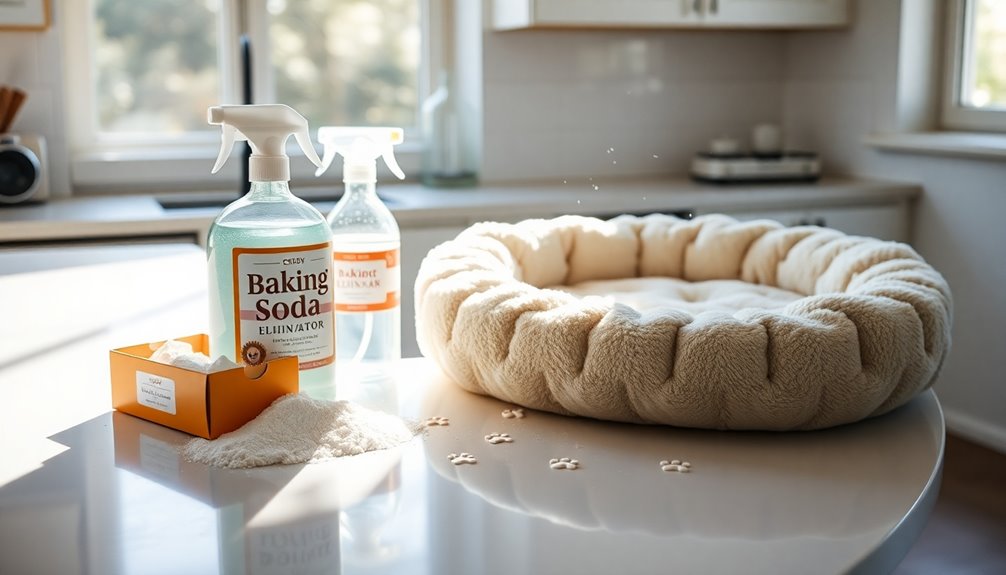
When your furry friend leaves behind unwanted odors, baking soda can be your best ally. This versatile powder boasts numerous baking soda uses that make it a go-to for pet odor solutions.
Start by sprinkling a generous amount on carpets or upholstery where the smell lingers. Let it sit for at least 15 minutes to absorb the odors, then vacuum it up.
Sprinkle baking soda on carpets or upholstery, let it sit for 15 minutes, then vacuum for a fresher smell.
For tougher spots, mix baking soda with a bit of water to create a paste, apply it directly, and let it dry before vacuuming. You can even add baking soda to your pet’s bedding or litter box to neutralize smells. Additionally, remember to regularly sanitize sponges used for cleaning to prevent any cross-contamination or lingering odors from your pets.
With these simple steps, you’ll have a fresher home and happier pets in no time!
The Magic of White Vinegar for Stain Treatment
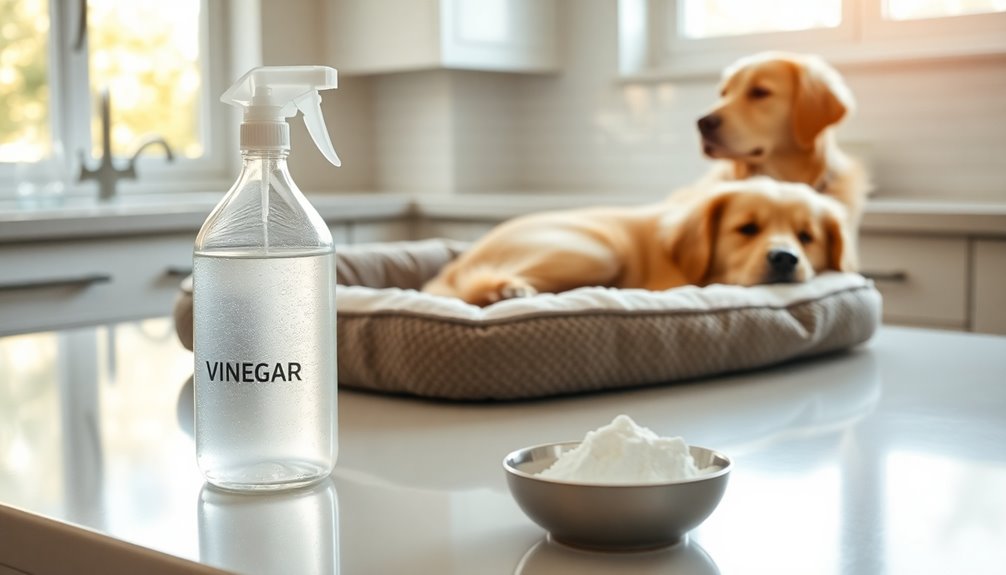
When it comes to tackling tough pet stains, white vinegar is your secret weapon. Not only does it effectively remove stains, but it also neutralizes odors, leaving your home fresh and clean. Additionally, its active ingredient, acetic acid, helps to kill germs and prevent mold growth, making it an excellent choice for pet-friendly cleaning. Let’s explore some easy techniques for using this kitchen staple to keep your space pet-friendly.
Stain Removal Techniques
One powerful solution for tackling pet stains is white vinegar, a basic household item that’s often overlooked.
It works wonders on various stain types, including urine, vomit, and food spills. To use it effectively, mix equal parts white vinegar and water in a spray bottle.
Spray the affected area and let it sit for about 10 minutes. Then, blot with a clean cloth to lift the stain.
For tougher spots, you might need to repeat the process or combine vinegar with baking soda as a removal product.
This natural technique not only helps in lifting stains but also avoids harsh chemicals, making it a safe choice for your furry friends and your home.
Odor Neutralization Benefits
While tackling pet stains is essential, neutralizing odors is equally important for maintaining a fresh home. One of the best odor elimination strategies you can use is white vinegar.
This natural deodorizing solution not only cancels out unpleasant smells but also helps break down stains. Simply mix equal parts of white vinegar and water in a spray bottle, then apply it to the affected area.
Let it sit for a few minutes before blotting with a clean cloth. The vinegar smell will dissipate, leaving your space odor-free. For persistent odors, repeat the process as necessary.
With this simple hack, you’ll keep your home smelling fresh, ensuring a comfortable environment for both you and your furry friend.
Quick and Easy Fur Removal With Rubber Gloves
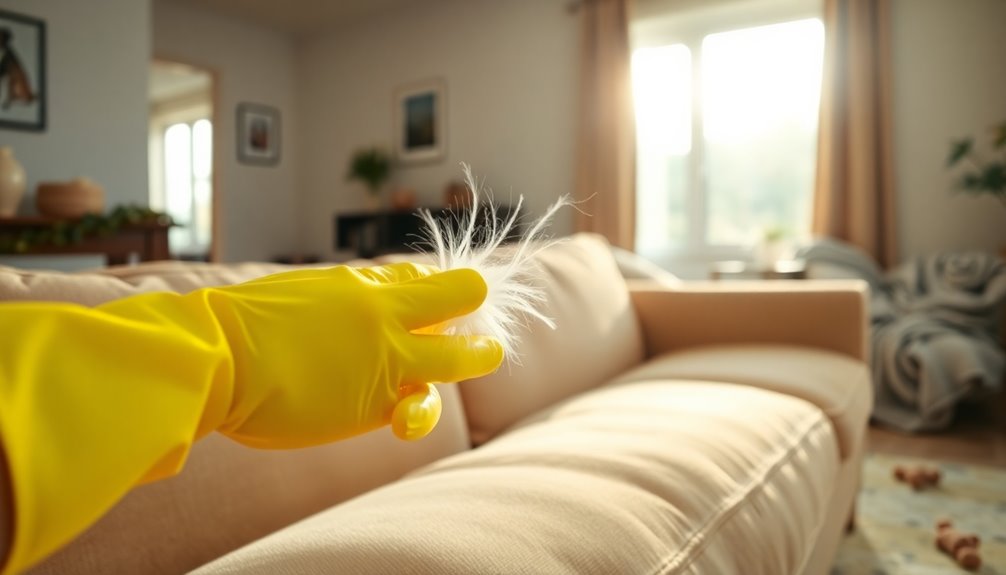
Rubber gloves can be your best friend when it comes to quickly removing pet fur from your furniture and clothing.
The rubber glove technique is simple and effective. Just put on a pair of slightly damp rubber gloves, and run your hands over the surfaces where fur collects. The static electricity generated will attract and clump the fur, making it easy to gather and toss away.
This method works wonders on upholstery, carpets, and even your clothes! For extra fur removal tips, try using a lint roller afterward to catch any stray hairs. Regular grooming maintains a healthy coat and reduces shedding and dander, making the rubber glove technique even more effective.
With this quick and easy approach, you’ll keep your home fur-free and your cleanup hassle-free. Say goodbye to stubborn pet hair!
Creating a DIY Pet Stain Cleaner
Creating a DIY pet stain cleaner can save you both time and money while keeping your home fresh and clean.
You can whip up an effective solution using natural ingredients you probably already have at home. Start with one cup of white vinegar and one cup of water, then add two tablespoons of dish soap. Mix it all in a spray bottle.
When your pet has an accident, spray the affected area generously and let it sit for about five minutes. Blot the stain with a clean cloth to lift it away.
This mixture not only aids in stain removal but also neutralizes odors, making your space smell great without harsh chemicals. Additionally, using non-toxic cleaning solutions helps protect your family’s health and creates a safer environment for your pets.
Enjoy a cleaner home while caring for your furry friend!
Utilizing Lint Rollers for Quick Cleanups
After tackling those pesky pet stains with your DIY cleaner, you might still find yourself dealing with fur and dander on your furniture and clothing. That’s where lint rollers come in handy!
These simple tools are perfect for quick cleanup tricks. Just roll the sticky sheets over your couch, chairs, or even your clothes, and watch the fur disappear.
For effective lint roller techniques, try using a sweeping motion to capture more hair in one pass. If you’re dealing with larger surfaces, consider using multiple sheets at once for faster results.
You can also keep a lint roller in your car to tackle pet hair on the go, especially if you pair it with a pet hair attachment for your vacuum cleaner. With these handy tips, maintaining a fur-free home becomes a breeze!
Best Vacuum Cleaners for Pet Hair
When it comes to keeping your home free of pet hair, investing in the right vacuum cleaner can make all the difference.
Look for models from top pet brands that boast the best vacuum features tailored for pet owners. Here are some key features to take into account:
- Strong suction power: Effectively lifts embedded hair from carpets and upholstery.
- Tangle-free brushes: Prevents hair from wrapping around the brush roll.
- HEPA filters: Traps allergens and dander, improving air quality.
- Attachments for pet-specific cleaning: Make it easier to tackle furniture and tight spaces.
Choosing a vacuum with these features guarantees you’ll keep your home clean and comfortable for both you and your furry friends! Additionally, consider options like the Dyson V12 Detect Slim, which offers automatic suction adjustment for various carpet types.
How to Make Your Own Pet-Friendly Carpet Cleaner
If you want to keep your carpets clean and safe for your furry friends, making your own pet-friendly carpet cleaner is a great option. You’ll need a few essential ingredients and a simple step-by-step process to whip it up. Additionally, using natural ingredients like distilled white vinegar ensures a nontoxic environment for both you and your pets. Let’s get started so you can enjoy a fresh home without harmful chemicals!
Essential Ingredients Needed
Creating your own pet-friendly carpet cleaner can be both simple and effective, especially when you use the right ingredients.
By opting for natural cleaners, you’re choosing eco-friendly options that are safe for your furry friends.
Here are four essential ingredients you’ll need:
- White vinegar: Great for neutralizing odors and breaking down stains.
- Baking soda: A powerful deodorizer that helps lift dirt and grime.
- Castile soap: A gentle, plant-based soap that cleans without harmful chemicals.
- Essential oils: Choose pet-safe options like lavender or lemon for a fresh scent.
With these ingredients, you can whip up a safe and effective cleaner that keeps your carpets looking and smelling great while ensuring your pets stay healthy.
Step-By-Step Instructions
To make your own pet-friendly carpet cleaner, gather your essential ingredients and follow these simple steps.
Start with two cups of warm water, one cup of white vinegar, and a few drops of mild dish soap. Mix these ingredients in a spray bottle, shaking gently to combine.
Before using it on your carpet, do a patch test to ascertain it won’t damage your fabric. Apply the solution directly to stains and let it sit for about 10 minutes. Blot with a clean cloth until the stain lifts.
For a fresh scent, add a few drops of essential oil. These eco-friendly products not only clean effectively but are also safe for your pets, making them perfect for your pet proofing tips.
The Power of Essential Oils in Pet Odor Control
While pet odors can be a persistent challenge, essential oils offer a natural and effective solution for revitalizing your home.
You can harness the power of essential oil blends to tackle those stubborn smells and enhance odor absorption. Here are some tips to get you started:
- Lavender: Calming scent that neutralizes odors.
- Tea Tree Oil: Antimicrobial properties help eliminate bacteria.
- Lemon: Fresh and uplifting, great for masking unwanted smells.
- Peppermint: Invigorating aroma that enlivens your space.
Mix a few drops of your favorite oils with water in a spray bottle and spritz around your home. Adding natural alternatives to harsh chemicals can further enhance your cleaning routine.
You’ll enjoy a cleaner, invigorated environment without resorting to harsh chemicals.
Your pets will appreciate it too!
Tips for Cleaning Pet Accessories and Toys
Keeping your pet’s accessories and toys clean is essential for their health and well-being. Start with effective cleaning methods like soaking toys in a mixture of warm water and mild soap.
For rubber or plastic toys, a dishwasher is a great option—just make certain they’re made of safe materials. Regular toy maintenance, such as checking for wear and tear, helps prevent accidents.
For fabric items, wash them in the machine using pet-safe detergent. Accessory hygiene is equally important; clean collars and leashes with a damp cloth or toss them in the wash if they’re machine-safe. Additionally, using non-toxic cleaners ensures a safe environment for both pets and family members during the cleaning process.
How to Tackle Muddy Paw Prints on Floors
Whenever your furry friend bounds inside after a rainstorm, muddy paw prints can quickly turn your floors into a mess.
To tackle this challenge effectively, you’ll want to focus on both muddy print prevention and efficient floor cleaning techniques. Here are some tips to keep your floors spotless:
- Wipe paws before entering: Use a towel or pet wipes to clean their paws as soon as they come in.
- Designate a mudroom: Create a space near the entrance with mats and towels to catch mud.
- Choose washable rugs: Opt for rugs that can be easily washed after muddy adventures.
- Use a steam cleaner: For stubborn stains, a steam cleaner can effectively lift dirt without harsh chemicals.
Additionally, regularly inspecting your cleaning tools, like sponges, is crucial as they can harbor millions of coliform bacteria that may contaminate your home.
With these strategies, you’ll keep your floors looking pristine!
Keeping Your Couch Fur-Free: Best Practices
After tackling muddy paw prints on your floors, you might find that your couch is the next victim of pet hair. To keep it fur-free, consider using couch covers. They not only protect your furniture but also make cleaning a breeze.
Protect your couch from pet hair with washable covers for easy cleaning and added comfort.
Opt for washable covers; this way, you can toss them in the laundry whenever needed.
Additionally, apply fabric protectors to your couch to create a barrier against hair and stains. These protectors make it harder for hair to cling, simplifying your cleaning routine.
Regularly using a lint roller or a vacuum with a pet hair attachment can also help maintain a fur-free couch.
With these best practices, you can enjoy cuddling with your pet without worrying about the mess!
How to Get Rid of Flea Dirt in Your Home
Although you may love your pets, dealing with flea dirt can be a frustrating aspect of pet ownership. To tackle this issue effectively, you’ll need some flea infestation solutions and effective cleaning methods.
Start by identifying areas where your pet spends the most time. Here are some steps to help you get rid of flea dirt:
- Vacuum carpets, rugs, and furniture thoroughly.
- Wash all pet bedding in hot water to eliminate any flea eggs.
- Use a damp cloth to wipe surfaces like baseboards and windowsills.
- Sprinkle diatomaceous earth in affected areas to dehydrate fleas.
Effective Ways to Clean Pet Bedding Regularly
When it comes to keeping your pet’s bedding clean, choosing machine washable options is a game changer.
Regularly vacuuming the pet beds also helps eliminate hair and dirt that accumulate over time.
Choose Machine Washable Bedding
Choosing machine washable bedding is a game changer for pet owners. It makes cleaning up after your furry friend a breeze, saving you time and effort. With the right bedding, you can easily toss it in the wash and have it fresh and clean in no time.
Here are some benefits of choosing machine washable pet bedding:
- Convenience: Easily removable and washable for quick cleaning.
- Durability: Designed to withstand frequent washing without losing quality.
- Hygiene: Regular washing helps eliminate odors, allergens, and bacteria.
- Variety: Available in various styles and colors to fit your home decor.
Investing in machine washable pet bedding not only keeps your space clean but also guarantees your pet has a comfortable and healthy place to rest.
Regularly Vacuum Pet Beds
Regularly vacuuming your pet’s bed is essential for maintaining a clean and healthy environment. Dust, dander, and hair accumulate quickly, so make pet bed maintenance a priority. Aim to vacuum the bed at least once a week, or more frequently if your pet sheds heavily. This routine helps reduce allergens and keeps the bedding fresh.
When vacuuming, use a pet hair attachment to effectively remove stubborn fur. Don’t forget to check the seams and corners, where debris often hides. If you notice any stains, treat them promptly before vacuuming.
Consistently following this vacuum frequency not only prolongs the life of the bed but also creates a cozy space for your furry friend. Happy cleaning!
Best Practices for Dealing With Pet Urine Stains
Although dealing with pet urine stains can be frustrating, knowing the best practices can make the process much easier. Start by acting quickly to prevent long-term damage.
Use urine enzyme cleaners specifically designed to break down stains and odors. Here are some best practices for effective cleaning:
- Blot the stain with paper towels; don’t rub!
- Rinse the area with cold water to dilute the urine.
- Apply the enzyme cleaner according to the product instructions.
For pet stain prevention, consider training or using absorbent mats.
How to Clean Pet Drool From Furniture and Fabrics
Pet drool can be a sticky situation, but you can tackle it with some quick cleaning solutions.
Knowing how to prevent future stains will save you time and effort in the long run.
Let’s explore effective ways to keep your furniture and fabrics looking fresh and clean.
Quick Cleaning Solutions
Cleaning up after your furry friend doesn’t have to be a chore, especially when it comes to tackling drool on your furniture and fabrics.
With a few pet proofing essentials and emergency cleaning supplies, you can quickly restore your space. Here are some effective solutions:
- Damp cloth: Use a microfiber cloth to blot the drool immediately.
- Pet-safe cleaner: Spray a gentle cleaner and wipe away the residue.
- Baking soda: Sprinkle it on the area, let it sit, then vacuum to eliminate odors.
- White vinegar solution: Mix equal parts vinegar and water for a natural disinfectant.
Preventing Future Stains
To keep your furniture and fabrics looking fresh and stain-free, it’s important to adopt some preventative measures.
Start by investing in stain-resistant fabrics for your upholstery and cushions. These materials repel liquids and make cleanup much easier.
If you’re unable to replace your furniture, consider applying a fabric protector spray to your existing pieces. Regularly check for drool spots and clean them immediately to prevent stains from setting in.
You can also create designated pet areas with washable throws or blankets, so your furniture stays protected.
Finally, maintain your pet’s oral hygiene to reduce excess drool.
The Right Way to Wash and Maintain Pet Collars
While your furry friend may love to romp around outdoors, their collar often ends up collecting dirt, grime, and even odors.
To keep it clean and fresh, follow these simple tips based on collar materials and washing frequency:
- Nylon Collars: Machine wash every 2-4 weeks to maintain cleanliness.
- Leather Collars: Wipe with a damp cloth weekly and condition monthly to prevent cracking.
- Fabric Collars: Hand wash with mild detergent weekly to remove odors.
- Metal Collars: Use a soft cloth to polish and prevent rust, doing this bi-monthly.
Tips for Removing Dander From Your Home
If you’re a pet owner, dealing with dander is part of the package.
Establishing a regular vacuuming schedule and using air purifiers can greatly reduce allergens in your home.
Let’s explore how these simple steps can make a big difference in your living space.
Regular Vacuuming Schedule
A regular vacuuming schedule can make a world of difference in managing pet dander in your home.
Maintaining an appropriate vacuuming frequency helps keep allergens at bay and improves your indoor air quality.
Here are some tips to create an effective cleaning schedule:
- Vacuum High-Traffic Areas: Focus on spots where your pet spends the most time.
- Use a HEPA Filter: This captures smaller particles and dander effectively.
- Schedule Weekly Sessions: Consistency is key to preventing buildup.
- Don’t Forget Upholstery: Vacuum furniture and carpets to remove hidden dander.
Use Air Purifiers
To further enhance your home’s air quality and combat pet dander, consider using air purifiers.
These devices can greatly improve allergen reduction, making your living space healthier for both you and your furry friends.
Look for purifiers with HEPA filters, which are designed to capture tiny particles like pet dander, dust, and pollen.
Place them in common areas where your pets spend the most time, like the living room or bedroom.
Ideally, run them continuously to maintain the best air quality.
Don’t forget to change the filters regularly to guarantee efficiency.
How to Clean Pet Food and Water Bowls
Since your furry friend relies on their food and water bowls daily, keeping these dishes clean is essential for their health.
Regular food bowl sanitation and water bowl maintenance can prevent bacteria build-up and guarantee your pet stays healthy.
Maintaining clean food and water bowls is vital for preventing bacteria and ensuring your pet’s health.
Here’s how to effectively clean their bowls:
- Wash bowls with hot, soapy water daily.
- Use a non-toxic disinfectant weekly to eliminate germs.
- Rinse thoroughly to remove any soap or cleaning residue.
- Dry the bowls completely before refilling them.
Simple Solutions for Freshening Up Your Pet’s Space
Although your pet brings joy and companionship, their space can sometimes become less than fresh. To tackle odors and messes, start by using pet safe cleaners on surfaces like floors and furniture.
Regularly wipe down their favorite spots to keep things clean and inviting.
Next, focus on space organization. Guarantee their toys, blankets, and supplies are neatly stored to minimize clutter.
Consider using labeled bins or baskets to make clean-up quick and easy.
Additionally, washing their bedding weekly with a pet safe detergent can work wonders.
Finally, don’t forget to air out their space; open windows to let fresh air in.
These simple solutions will help maintain a clean and pleasant environment for both you and your furry friend.
How to Use Cornstarch for Pet Hair Removal
If you’re tired of pet hair clinging to your surfaces, cornstarch could be your new best friend.
It not only helps lift hair but also offers alternative uses you mightn’t have considered.
Let’s explore the benefits and techniques for making the most of this versatile product.
Cornstarch Benefits for Cleaning
When you’re battling stubborn pet hair on your carpets or furniture, cornstarch can be a surprisingly effective ally. Its unique properties make it a great addition to your cleaning toolkit.
Here are some cornstarch uses that can help you tackle that pesky pet hair:
- Absorbs moisture and odors, leaving your carpets fresh
- Acts as a gentle abrasive for scrubbing stubborn stains
- Helps to lift hair from surfaces when mixed with water
- Works as a natural deodorizer for pet bedding
If you’re looking for cornstarch alternatives, consider baking soda or vinegar, but cornstarch remains a top choice for pet owners.
With these benefits, you’ll find that cleaning up after your furry friends becomes a lot easier!
Application Techniques Explained
To effectively remove pet hair from your carpets and furniture, you can easily incorporate cornstarch into your cleaning routine.
Start by sprinkling a light layer of cornstarch onto the affected areas. Let it sit for about 10-15 minutes; this allows the cornstarch to absorb oils and loosen the hair.
Next, use a stiff brush or a vacuum cleaner with a brush attachment to agitate the area, lifting the pet hair away. Make sure to follow up with your regular cleaning products for a thorough clean.
This application method not only helps in hair removal but also minimizes the need for harsh chemicals. Remember, consistency is key for maintaining a fur-free environment!
Alternative Uses for Cornstarch
Cornstarch isn’t just handy for absorbing oils and loosening pet hair; it has several alternative uses that can make your cleaning routine even more effective.
Here are some cornstarch benefits and applications specifically for pet owners:
- Pet Hair Removal: Lightly sprinkle cornstarch on furniture or carpets, let it sit for a few minutes, then vacuum. It helps loosen stubborn pet hair.
- Stain Absorption: Use cornstarch to absorb pet accidents on carpets; just sprinkle, let it sit, and then vacuum.
- Deodorizing: Mix cornstarch with your favorite essential oils and place in an open container to freshen up pet areas.
- Dusting: Dampen a cloth with cornstarch and use it to dust surfaces, trapping dirt and pet dander effectively.
These simple applications can transform your cleaning habits!
Fast Ways to Clean Up After a Pet-Sitting Gig
Although pet-sitting can be a joyful experience, it often comes with the challenge of cleaning up afterward. To make your life easier, keep a few pet sitting essentials on hand for quick cleanups.
Start with a lint roller to effortlessly remove fur from furniture and clothing. For spills or accidents, grab an enzyme cleaner that neutralizes odors and stains.
Microfiber cloths are your best friends; they quickly wipe down surfaces without leaving streaks. Don’t forget to have a vacuum handy for those larger messes—it’s efficient and saves you time.
Finally, a designated trash bag for pet waste will keep everything organized. With these tips, you’ll leave the pet owner’s home looking spotless in no time!
How to Prevent Pet Odors From Building Up?
When you bring a pet into your home, keeping odors at bay can be a challenge, but it’s definitely manageable with a few proactive steps.
Start by maintaining a clean environment, as regular cleaning prevents odors from settling in.
Here are some effective tips to keep odors in check:
- Use air fresheners specifically designed for pet owners.
- Invest in odor absorbers like activated charcoal or baking soda.
- Wash your pet’s bedding and toys frequently.
- Vacuum regularly to remove pet hair and dander.
Seasonal Cleaning Tips for Pet Owners
As you work to keep odors at bay, seasonal cleaning can play a significant role in maintaining a fresh home for both you and your pet. Each spring, tackle seasonal decluttering by sorting through toys, bedding, and supplies. Discard anything that’s damaged or no longer used. This not only frees up space but helps eliminate hidden odors.
During your spring cleaning routine, focus on deep-cleaning carpets and upholstery, as pet hair and dander can settle in. Use pet-safe cleaners to guarantee a healthy environment.
Don’t forget to wash your pet’s bedding and favorite spots to keep things smelling fresh. Incorporating these seasonal cleaning tips will help create a clean, welcoming space for both you and your furry friends.
How to Train Pets to Reduce Messes at Home?
How can you train your pets to keep messes at bay? It’s easier than you think! Using positive reinforcement techniques, you can encourage your furry friends to adopt better habits that lead to mess reduction.
Here are some effective strategies:
- Reward your pet with treats when they use their designated potty area.
- Teach commands like “leave it” to prevent them from chewing on items they shouldn’t.
- Introduce a specific area for playtime and praise them for staying there.
- Regularly reinforce good behavior with affection and praise to establish a routine.
The Importance of Regular Grooming for Less Mess
Keeping your home clean goes beyond training your pets; regular grooming plays a significant role in minimizing messes, too. By brushing your pet regularly, you’ll enjoy several grooming benefits, including reduced shedding. Less fur around means less vacuuming and dusting for you.
Grooming also helps remove dirt, debris, and allergens trapped in your pet’s coat, keeping your home fresher and healthier. Regular baths will further decrease odors and keep your pets looking great.
Establishing a grooming routine not only promotes a clean living space but also strengthens your bond with your furry friend.
Plus, it allows you to check for any skin issues or parasites. So, grab that brush and make grooming a regular part of your pet care routine!
Conclusion
Incorporating these cleaning hacks into your routine can make pet ownership feel like a walk in the park—rather than a never-ending battle against fur and odors! By using simple items like baking soda and vinegar, you can tackle messes with ease. Remember, regular grooming and training your pets can drastically reduce the chaos at home. Embrace these tips, and you’ll wonder how you ever managed without them. Your clean, happy home awaits!