To keep your kitchen sponge free from bacteria, clean it every few days and replace it weekly. You can microwave it for 1-2 minutes, soak it in a bleach solution, or run it through a hot dishwasher cycle. Watch for signs like bad odors, slimy textures, or visible wear—these mean it’s time to toss it. Storing sponges dry and using natural cleaners helps too. There’s more on keeping your sponges hygienic and effective if you continue on.
How Often to Clean Your Kitchen Sponge
You should clean your kitchen sponge every few days to keep bacteria at bay.
Kitchen sponges can harbor millions of germs, including coliform bacteria, making frequent cleaning essential. To effectively disinfect, you can soak your sponge in a vinegar solution, microwave it for 1-2 minutes, or run it through a hot dishwasher cycle.
It’s advised to clean your kitchen sponge often to clean and minimize the risk of foodborne illnesses. Regular inspection is vital, as studies show that 75% of sponges contain coliform bacteria. Additionally, using non-toxic cleaners can help maintain a safe and healthy kitchen environment.
Don’t forget, if you notice any damage or odor, it’s time to replace it. Maintaining hygiene in your kitchen starts with properly caring for your sponges, so make this routine a priority!
How Often to Replace Your Kitchen Sponge
Although kitchen sponges are crucial for keeping your dishes clean, they can quickly become a breeding ground for bacteria, making regular replacement essential. To maintain hygiene and minimize contamination, you should replace your sponge weekly.
Kitchen sponges are vital for cleanliness but can harbor bacteria; replace them weekly to ensure hygiene.
Here are signs that indicate it’s time to replace your sponge:
- Bad odors
- Slimy texture
- Visible wear or damage
- Discoloration
- Persistent contamination
Regularly inspect your sponge, as contaminated ones may harbor millions of bacteria. Additionally, using disinfectant sprays can help ensure that your kitchen surfaces remain germ-free, further enhancing cleanliness.
For enhanced kitchen cleanliness, consider using alternatives like antibacterial kitchen wipes or machine-washable microfiber towels. Keeping a large pack of sponges on hand can guarantee you’re always prepared for replacements, helping you maintain a clean and safe kitchen environment.
Effective Cleaning Methods for Sponges
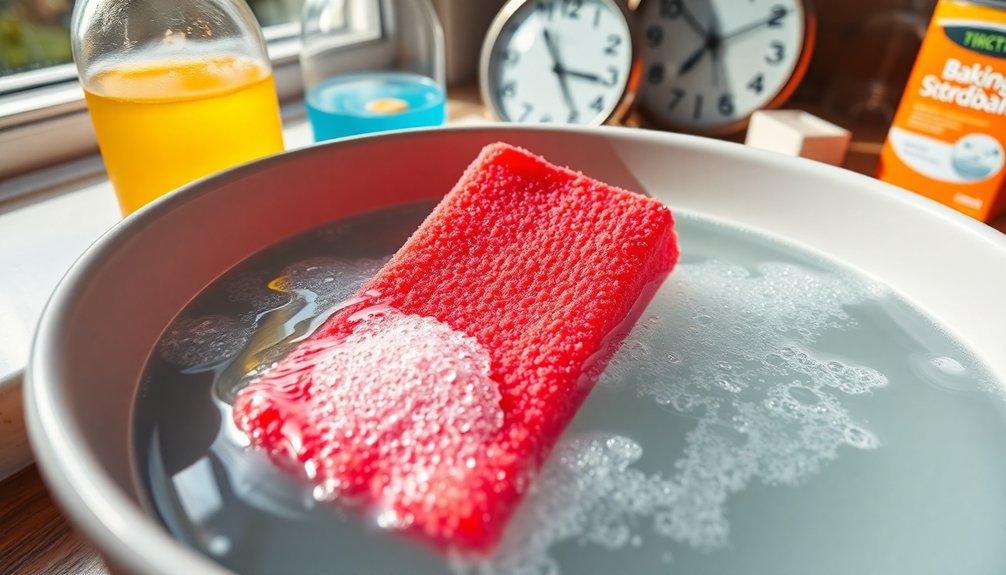
Keeping your kitchen sponge clean is essential for maintaining a hygienic cooking environment. One of the most effective cleaning methods is microwaving a sponge, which can kill up to 99% of bacteria in just 1-2 minutes.
If you prefer, you can also soak the sponge in a bleach solution (1 quart water to 3 tablespoons bleach) for five minutes to disinfect it. The vinegar method is another great option; soak the sponge in white vinegar for 5-7 minutes, then rinse with hot water.
You can also boil a sponge in water for 5-7 minutes or place it on the top rack of your dishwasher and run a hot cycle, ensuring your cleaning sponges stay fresh and safe for use. Regular disinfection of your sponge is crucial as it helps reduce harmful bacteria, preventing potential infections and ensuring a safer cooking environment.
Signs Your Kitchen Sponge Needs Replacing
A kitchen sponge is an essential tool in maintaining cleanliness, but it’s important to know when it’s time to say goodbye.
Here are some signs your kitchen sponge needs replacing:
- A bad smell indicates bacterial growth and a dirty sponge.
- A slimy texture shows it’s become a breeding ground for germs.
- Visible signs of wear, like fraying, mean it can’t clean effectively.
- If you’ve been using it for more than a week, it’s time to replace it to minimize the risk of foodborne illnesses.
- Keeping a clean dish towel handy can help while you’re replacing your sponge.
To keep your kitchen hygienic, consider regularly disinfecting your sponge with chemical disinfectants to reduce harmful bacteria.
Stay vigilant about these signs to guarantee your kitchen remains a safe and hygienic space!
Best Practices for Sponge Hygiene
Once you recognize the signs that your kitchen sponge needs replacing, it’s time to focus on maintaining hygiene for the sponges you choose to keep.
To disinfect your sponge, consider a quick microwave soak for 1-2 minutes or a bleach solution soak. These methods help eliminate bacteria from the sponge, but remember, you should often replace sponges weekly to minimize contamination risks.
Disinfect your sponge with a microwave soak or bleach solution, but replace it weekly to reduce contamination risks.
Store your sponges in a dry place after wringing them out, as moisture combined with food particles creates a breeding ground for germs.
For best practices, consider using alternative cleaning tools like dishcloths or brushes to enhance overall kitchen hygiene. Incorporating natural cleaning agents like vinegar and baking soda can also contribute to effective and eco-friendly cleaning practices in your kitchen.
These steps will help keep your kitchen cleaner and safer for food preparation.
Conclusion
Just like a weary knight needs a fresh suit of armor to battle grime, your kitchen sponge deserves regular care and renewal. By cleaning it frequently and knowing when to replace it, you’re ensuring it’s always ready for the next culinary quest. Treat your sponge like a trusty companion; with proper hygiene and timely replacements, it’ll help you conquer kitchen messes and keep your domain safe from lurking bacteria. A clean sponge means a healthier kingdom!