To clean your dishwasher and boost its performance, start by removing the bottom rack to access the filter and spray arms. Rinse the filter under hot water with dish soap and wipe the door gaskets with a vinegar-water mix. Next, run a wash cycle with a container of white vinegar on the top rack. Consider using dishwasher cleaner tablets for extra freshness. Finally, make sure to clean the exterior regularly for a tidy look. More tips await you!
Why Clean Your Dishwasher?
Cleaning your dishwasher is crucial because neglecting it can lead to performance issues and unpleasant odors. Regular maintenance helps you deep clean your dishwasher, ensuring it operates efficiently.
Over time, food particles, soap scum, and limescale accumulate, negatively impacting its performance. By taking the time to clean, you can remove these residues, preventing the development of unpleasant odors that can linger in your kitchen.
Food particles, soap scum, and limescale can build up over time, harming your dishwasher’s performance and causing unpleasant kitchen odors.
A clean dishwasher guarantees that your dishes come out sparkling and hygienic, contributing to overall kitchen cleanliness. Plus, consistent maintenance can prolong its lifespan, saving you time and money on costly repairs or replacements down the line. Regular cleaning also minimizes the risk of germ accumulation that can affect your kitchen hygiene.
Steps to Deep Clean Your Dishwasher
A clutter-free dishwasher not only washes your dishes effectively but also contributes to a better kitchen environment.
To deep clean your dishwasher and keep it running smoothly, follow these steps:
- Remove the bottom rack, then take out the dishwasher filter and spray arms for thorough access.
- Rinse the dishwasher filter under hot water with dish soap, scrubbing stubborn food particles with a soft toothbrush.
- Clean the inside by wiping the door gaskets with a mixture of water and white vinegar to eliminate buildup.
- Run a wash cycle with a dishwasher-safe container filled with white vinegar on the hottest setting to trap food odors and dissolve residues. Regular use of DIY non-toxic cleaners ensures a hygienic space without safety compromises.
For extra cleanliness, consider using a dishwasher cleaner tablet as needed.
Removing the Dishwasher Filter and Spray Arms
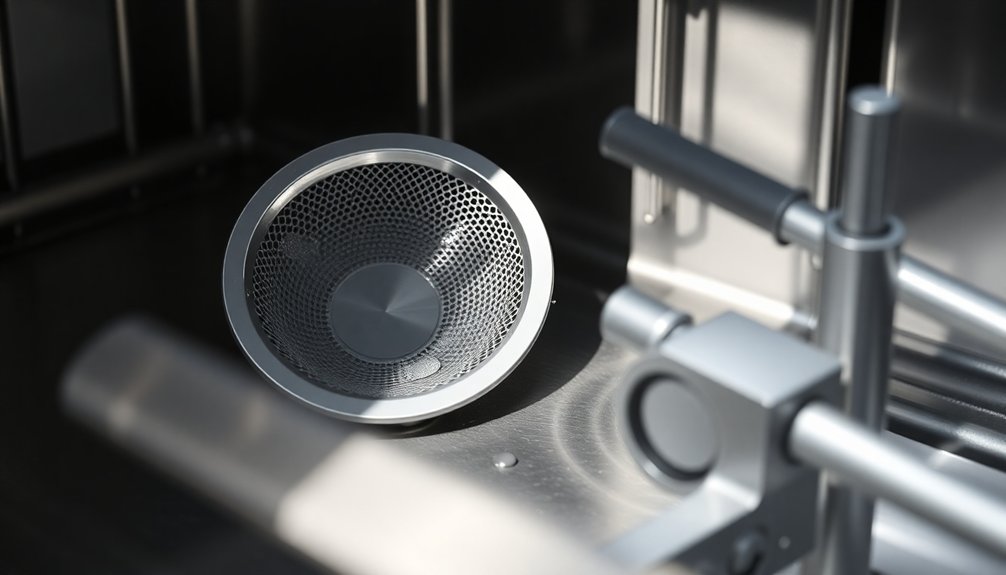
Regularly cleaning the dishwasher filter and spray arms is essential to keep your appliance running smoothly.
Start by removing the bottom rack to access these components easily.
Once you’ve got them out, you can follow the steps to guarantee they’re free from debris and working effectively. Additionally, eco-friendly cleaning methods can be used to ensure that the cleaning process is safe for both your appliance and the environment.
Importance of Regular Cleaning
To keep your dishwasher running efficiently, it’s essential to remove and clean the filter and spray arms regularly. Neglecting this maintenance can lead to food debris buildup, causing unpleasant odors and poor cleaning performance.
Here are four reasons to prioritize this task:
- Improved Performance: A clean filter guarantees effective water flow, which results in spotless dishes.
- Odor Prevention: Regular cleaning helps eliminate food debris that can cause bad smells.
- Extended Lifespan: Maintaining these components can prevent long-term damage to your appliance.
- Efficient Cleaning: Clogged spray arms can hinder water distribution, leaving greasy dishes behind.
Steps to Remove Parts
Cleaning your dishwasher starts with removing key parts like the filter and spray arms, ensuring maximum performance.
First, pull out the bottom rack to clear your workspace. The filter is usually located beneath the bottom spray arm; gently twist and lift it out to clean. Rinse the filter under hot running water, using dish soap and a soft brush to scrub away any trapped food particles.
Next, remove the spray arm by twisting it counterclockwise or lifting it straight up. Rinse it under water to clear any debris from the spray holes.
For specific instructions tailored to your model, refer to your user manual. This will help you efficiently remove and clean these essential components.
Cleaning the Door Gaskets
Cleaning the door gaskets is essential to prevent mold growth and remove built-up grime.
You’ll want to focus on the rubber seals, as they can trap food particles and moisture.
Regular maintenance will keep your dishwasher smelling fresh and functioning properly. Furthermore, neglecting these areas can lead to the buildup of harmful bacteria, which may affect your overall home hygiene.
Prevent Mold Growth
Mold growth can sneak into your dishwasher if you don’t pay attention to the rubber seals along the door.
To prevent this, follow these simple steps:
- Regularly clean the rubber seals to remove any buildup that can harbor mold and bacteria.
- Use a steam cleaner or a soft brush with a mixture of water and vinegar to scrub the gaskets.
- Wipe down the gaskets and surrounding areas with a damp microfiber cloth to eliminate residual grime.
- Pay special attention to hidden crevices where dirt and moisture can accumulate.
Implementing a weekly cleaning routine for the door and gaskets will help maintain a hygienic environment in your dishwasher, keeping mold growth at bay.
Remove Built-Up Grime
While it may be easy to overlook, removing built-up grime from your dishwasher’s door gaskets is essential for maintaining its performance and hygiene.
Start by inspecting the rubber seals for any dirt or mold. Use a steam cleaner or a brush with a mixture of water and vinegar to effectively remove the hidden dirt.
Once you’ve tackled the grime, wipe the area with a damp cloth to guarantee everything is clean and hygienic. Don’t forget to pay attention to crevices where dirt can accumulate.
Implementing a weekly cleaning routine for the door and gaskets will greatly enhance your dishwasher’s performance and longevity.
A clean dishwasher not only operates better but also keeps your dishes fresh and odor-free.
Running a Wash Cycle With Vinegar
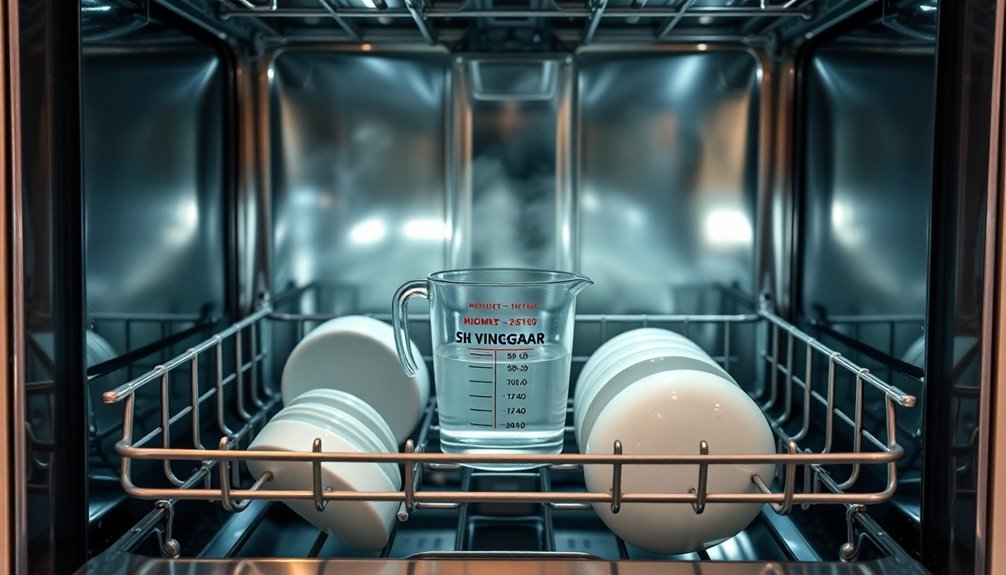
One effective way to refresh your dishwasher is by running a wash cycle with vinegar. This simple method not only cleans but also sanitizes your appliance, ensuring a hygienic environment for your dishes.
Here’s how to do it:
- Fill a dishwasher-safe container with white vinegar.
- Place it on the top rack of your empty dishwasher.
- Set the machine to run on the hottest cycle available, without any detergent.
- Avoid using bleach, especially if your dishwasher has stainless steel components.
Vinegar will effectively break down grease and mineral deposits while acting as a natural deodorizer, helping to eliminate any unpleasant odors. Regular use of natural ingredients promotes sustainability and protects both appliances and the environment.
Enjoy a cleaner, fresher dishwasher with this easy step!
Using Dishwasher Cleaner Tablets
After revitalizing your dishwasher with vinegar, you might want to take your cleaning routine a step further by using dishwasher cleaner tablets.
These tablets are specially formulated to tackle tough stains, limescale, and grease build-up, ensuring your dishwasher operates efficiently.
For best results, empty the dishwasher, place a tablet in the detergent cup or on the bottom rack, and run a cleaning cycle without additional soap or detergent.
Many brands recommend using their dishwasher cleaner monthly for ideal maintenance and to prevent buildup that can affect performance.
Always check the packaging for compatibility with your specific dishwasher model.
Regular use of these tablets can help prolong the lifespan of your appliance by maintaining its cleanliness and functionality. Additionally, regular maintenance promotes a tidy kitchen and ensures a safe and healthy environment.
Maintaining the Dishwasher Exterior
To keep your dishwasher looking its best, regularly clean the exterior with a soft, damp microfiber cloth or sponge and a mild detergent.
Avoid abrasive cleaners that can scratch surfaces, especially on stainless steel appliances.
Here are some tips to maintain your dishwasher’s appearance:
- Wipe in the direction of the grain on stainless steel to prevent streaks.
- Regularly clean the control panel and handles to remove grime and fingerprints.
- Don’t spray cleaner directly onto the appliance to protect electronic controls.
- For stubborn stains, consider specialized stainless steel cleaners, but always check the manufacturer’s recommendations first. Additionally, using a vinegar solution can effectively break down oils and maintain the shine of stainless steel surfaces.
Conclusion
By giving your dishwasher a little TLC, you’ll guarantee it runs like a well-oiled machine, keeping your dishes sparkling clean. Regular maintenance not only boosts its performance but also extends its lifespan. So, don’t let grime build up and turn your appliance into a shadow of its former self. Embrace these simple cleaning steps, and your dishwasher will thank you with every wash, turning your kitchen into a haven of cleanliness and efficiency!