To get your coffee table and glass surfaces gleaming, start with essential supplies like microfiber cloths and a good all-purpose cleaner. Tackle stubborn smudges with a warm damp cloth or a vinegar-water mix. Don’t forget to avoid common mistakes, like cleaning in direct sunlight. Regular dusting and protective measures, like using coasters, help maintain that shine. Keep going to discover homemade solutions and deeper cleaning tips for a spotless shine you’ll love.
Essential Supplies for Coffee Table and Glass Surface Cleaning
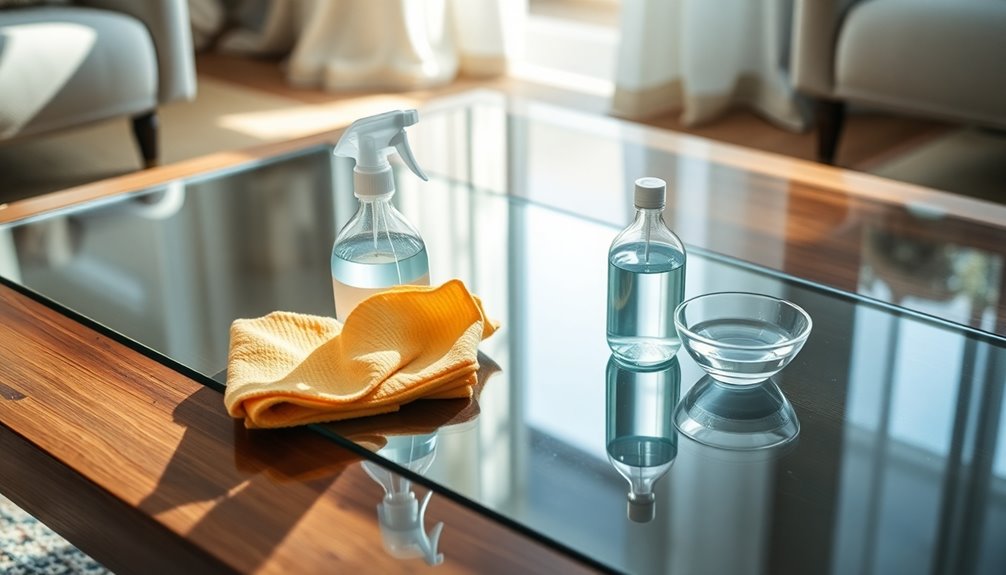
To tackle coffee table and glass surface cleaning effectively, you’ll need a few essential supplies. Start with a microfiber cloth; it’s perfect for wiping surfaces without scratching.
For effective coffee table and glass surface cleaning, a microfiber cloth is essential to avoid scratches while wiping.
Next, grab an all-purpose cleaner suitable for various surface types. For glass tables, a glass cleaner or a vinegar-water solution works wonders.
Don’t forget a soft sponge or a gentle scrub pad for tougher spots, but be careful not to damage your surfaces. If you’ve got wood coffee tables, a wood polish can help maintain their shine.
Finally, keep a bucket handy for mixing solutions and a vacuum or broom for debris. With these cleaning materials, you’re well-equipped to keep your coffee table and glass surfaces sparkling clean! Additionally, using microfiber cloths can enhance your cleaning routine by providing a streak-free shine.
How to Tackle Stubborn Smudges Effectively
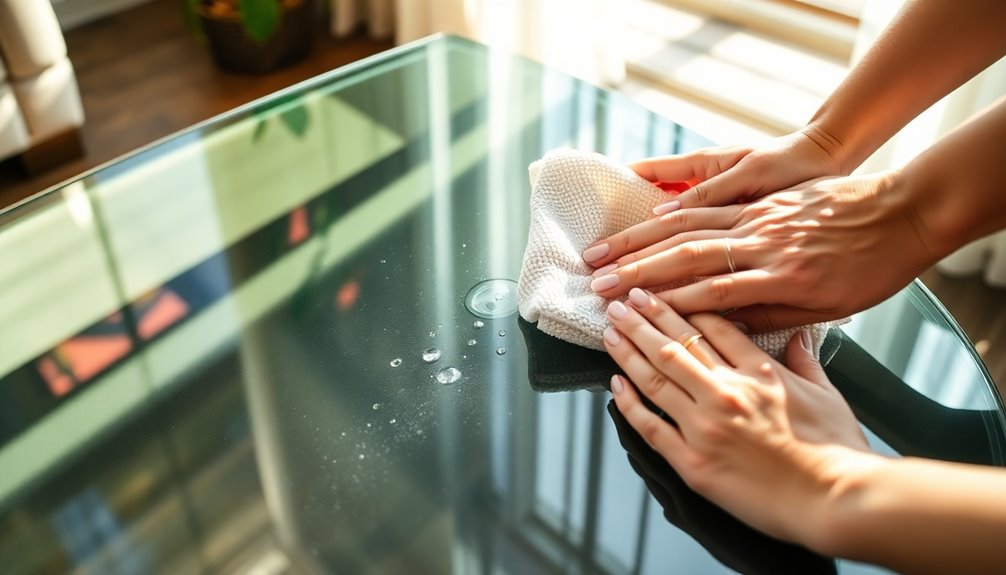
Even if you’ve got the right supplies, stubborn smudges on your coffee table can be frustrating to deal with. To tackle those stubborn marks effectively, start by dampening a microfiber cloth with warm water. This helps lift the smudges without scratching the surface.
For tougher stains, mix equal parts vinegar and water, applying it directly to the area. Let it sit for a few minutes before wiping it away. You can also use a little baking soda for those really stubborn spots; just make a paste with water and gently scrub. Consider using a homemade cleaner to achieve a more effective clean without harsh chemicals.
Remember to rinse the area with clean water afterward, ensuring no residue is left behind. With these effective techniques, you’ll achieve a clear shine in no time!
The Best Homemade Cleaning Solutions You Can Make
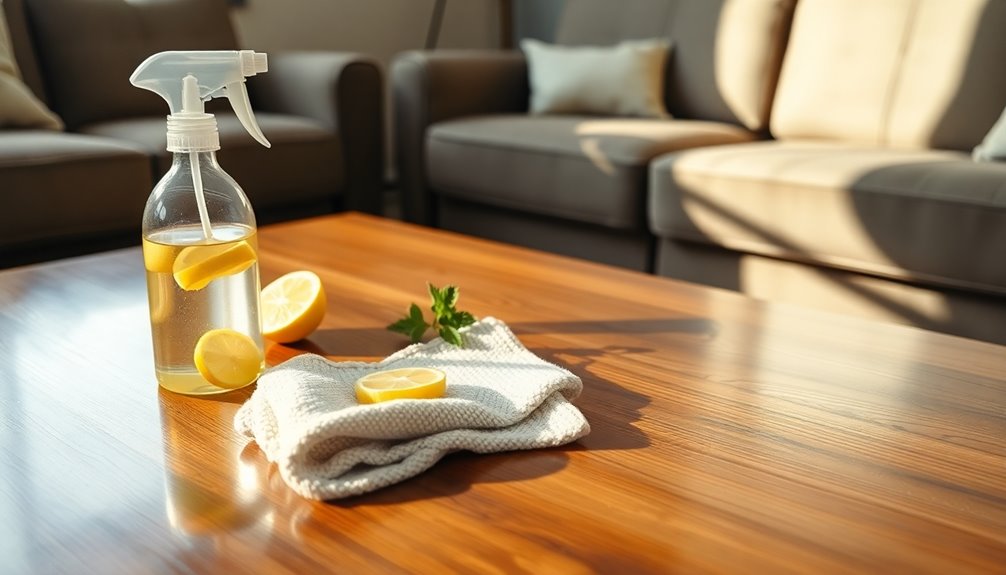
When it comes to cleaning your coffee table, homemade solutions can be surprisingly effective. A simple vinegar and water mix or a baking soda paste can tackle dirt and stains without harsh chemicals. Additionally, using an all-purpose cleaner made from vinegar can help eliminate bacteria and odors while ensuring a safe environment for your family. Let’s explore how you can whip up these easy cleaning remedies at home.
Vinegar And Water Solution
A simple vinegar and water solution is one of the best homemade cleaning tricks you can whip up for your coffee table. The vinegar benefits are impressive; it cuts through grime, disinfects, and leaves surfaces gleaming.
To make this solution, mix equal parts vinegar and water in a spray bottle. This water dilution guarantees you get all the cleaning power of vinegar without damaging your furniture.
Just spray the mixture onto your coffee table and wipe it down with a soft cloth. You’ll notice how easily it removes fingerprints and smudges, giving your table a clear shine.
Plus, it’s an eco-friendly alternative to harsh chemicals, making it a win-win for your home and the environment!
Baking Soda Paste
Baking soda paste is another fantastic homemade solution for cleaning your coffee table.
To make it, mix three parts baking soda with one part water until you get a thick paste. This simple baking soda recipe leverages the baking soda benefits, like its natural abrasive properties that help lift dirt and grime without scratching surfaces.
Apply the paste to the stained areas using a soft cloth or sponge, then let it sit for about 10-15 minutes.
After that, gently scrub in circular motions, and rinse the area with a damp cloth. You’ll be amazed at how easily it restores your coffee table’s shine.
Plus, it’s safe for most surfaces, making it a go-to cleaning solution!
Using Microfiber Cloths for a Streak-Free Finish
When it comes to achieving a streak-free finish on your coffee table, choosing the right microfiber cloth is key. You’ll want to use a high-quality, lint-free cloth and follow proper cleaning techniques for the best results. Regular maintenance helps prevent dirt buildup and maintain clarity. Let’s explore how to select the ideal cloth and the steps to clean effectively.
Optimal Microfiber Cloth Types
To achieve a streak-free finish on your coffee table, selecting the right type of microfiber cloth is essential. There are various microfiber cloth types designed for different cleaning tasks.
For general cleaning, opt for a medium-density cloth; it balances softness and scrubbing power. If you’re tackling glass surfaces, choose a low-pile microfiber cloth, as it minimizes lint and streaks.
For heavier cleaning, a high-density cloth works best, as it absorbs more liquid and dirt. Remember, the material matters too; synthetic microfiber is durable and effective, while natural blends may not perform as well.
Proper Cleaning Techniques
Achieving a streak-free finish on your coffee table requires using proper cleaning techniques with your microfiber cloth.
To guarantee streak prevention and surface protection, follow these steps:
- Use a damp cloth: Lightly moisten your microfiber cloth with water or a gentle cleaner.
- Wipe in a circular motion: This helps distribute the cleaning solution evenly while picking up dirt.
- Dry with a separate cloth: Use a dry microfiber cloth to buff the surface and eliminate any remaining moisture.
- Change cloths frequently: Don’t let dirt build up, as this can cause scratches.
- Store properly: Keep your microfiber cloths clean and dry to maintain their effectiveness.
The Power of Vinegar: Natural Cleaning Benefits
While many cleaning products promise effective results, vinegar stands out as a powerful, natural alternative that’s gentle on surfaces yet tough on grime.
Its vinegar versatility makes it perfect for various cleaning tasks around your coffee table. You can mix equal parts of vinegar and water in a spray bottle to create a natural disinfectant that tackles fingerprints, dust, and sticky spills without harsh chemicals.
Simply spray the solution on your table and wipe it down with a microfiber cloth for a clear shine. Plus, vinegar’s acidity helps break down mineral deposits and eliminate odors, leaving your space fresh and clean. Additionally, using vinegar as a natural disinfectant ensures a healthier home environment by reducing exposure to harmful chemicals.
Embrace the power of vinegar for a safe and effective cleaning routine that benefits both your furniture and the environment.
Baking Soda: Your Secret Weapon Against Stains
When it comes to tackling tough stains on your coffee table, baking soda’s your go-to solution. Not only does it effectively lift stains, but it also neutralizes odors and acts as a gentle abrasive cleaner. With just a sprinkle and a little scrubbing, you can restore your table to its former glory. Regular use of natural solutions promotes hygiene without health risks.
Effective Stain Removal Method
If you’ve ever faced a stubborn stain on your coffee table, baking soda might just be the solution you need. This versatile powder acts like magic when it comes to tough stains.
Here’s how to effectively use it:
- Mix baking soda with water to form a paste.
- Apply the paste directly to the stain.
- Allow it to sit for 10-15 minutes.
- Gently scrub with a soft cloth or sponge.
- Wipe clean with a damp cloth.
Incorporating baking soda into your stain prevention methods can keep your coffee table looking pristine.
Plus, following cleaning frequency recommendations guarantees you deal with stains before they set, making your maintenance routine easier and more effective.
Odor Neutralizing Properties
Baking soda not only excels at removing tough stains but also serves as an effective odor neutralizer for your coffee table. When you sprinkle baking soda on the surface, it works its magic through scent absorption techniques, capturing unwanted odors and leaving your space fresh.
For best results, let it sit for at least 15 minutes; this allows the baking soda to fully absorb the unpleasant smells. Afterward, simply vacuum or wipe it away, revealing a clean and odor-free surface.
This method is one of the simplest odor elimination methods available, making it a go-to solution for any coffee table in need of a refresh. Embrace this versatile ingredient to keep your space smelling delightful!
Gentle Abrasive Cleaner
While stains on your coffee table can be frustrating, a gentle abrasive cleaner like baking soda can effectively tackle them without damaging the finish.
Its mild abrasive properties allow for gentle scrubbing, ensuring surface safety while removing stubborn marks.
Here’s how to use it:
- Mix baking soda with water to create a paste.
- Apply the paste directly to the stain.
- Use a soft cloth or sponge for gentle scrubbing.
- Rinse the area with clean water and wipe dry.
- Enjoy your sparkling clean coffee table!
Quick Tips for Dusting Without Leaving Residue
To guarantee your coffee table shines without a trace of residue, start by using a microfiber cloth, which effectively traps dust and dirt without spreading it around. This cloth is perfect for those dusting techniques you need for a spotless surface.
Lightly dampening the cloth with water can enhance its dust-trapping ability, ensuring thorough residue removal. Avoid using fabric softeners or dryer sheets, as they can leave a film behind.
For hard-to-reach spots, try using a soft-bristled brush or a vacuum with a dusting attachment. Remember to dust in a circular motion to catch every particle. Regular dusting will keep your coffee table looking pristine while preventing the buildup of grime. Additionally, using microfiber sponges can further boost your cleaning effectiveness by providing superior absorbency and dirt-lifting capabilities.
How to Properly Clean Different Types of Glass?
When it comes to cleaning glass surfaces, knowing the right techniques for different types can make a significant difference.
Each glass type requires specific cleaning methods to avoid damage and achieve a clear shine. Here are some essential tips:
Different glass types need tailored cleaning methods to prevent damage and ensure a sparkling finish.
- Tempered glass: Use a soft cloth with a mild glass cleaner to prevent scratching.
- Frosted glass: Wipe with a damp microfiber cloth to avoid leaving streaks.
- Mirrored glass: Spray cleaner directly on the cloth, not the surface, to prevent drips.
- Stained glass: Use a mixture of vinegar and water for a gentle clean.
- Double-glazed windows: Clean the external glass with soapy water and a squeegee for a streak-free finish. Regular maintenance can help maintain a streak-free shine on all glass surfaces, ensuring they remain clear and appealing.
The Benefits of Using Rubbing Alcohol for Cleaning
If you’re looking for an effective and versatile cleaning solution, rubbing alcohol should be at the top of your list. This powerful agent boasts numerous cleaning benefits that make it ideal for tackling tough stains and grime.
Rubbing alcohol evaporates quickly, leaving surfaces streak-free, which is especially useful for glass and shiny finishes. Its antibacterial properties help sanitize surfaces, ensuring your coffee table isn’t just clean but also hygienic.
Plus, it’s safe to use on a variety of materials, including wood and metal, making it a go-to for multi-surface cleaning. By incorporating rubbing alcohol into your cleaning routine, you’ll achieve a sparkling shine and a fresh environment that’s ready for guests or a relaxing evening at home. Additionally, for tougher stains, consider using a glass cooktop cleaner for optimal results.
The Right Way to Clean Glass With Newspaper
Cleaning glass with newspaper is a great trick that many swear by. Not only does it leave your surfaces streak-free, but it also helps recycle old paper. Let’s go through the step-by-step method to make your glass shine like new. Additionally, using a squeegee after each shower can help reduce soap scum and hard water stains, keeping your glass looking pristine.
Benefits Of Using Newspaper
Using newspaper to clean glass can be a surprisingly effective method, especially when you want a streak-free shine without spending a fortune on cleaning supplies.
Here are some newspaper advantages that make it a great choice for your glass surfaces:
- Cost-effective: You can reuse old newspapers instead of buying expensive cloths.
- Absorbency: Newspapers soak up cleaning solutions, leaving surfaces sparkling.
- Non-abrasive: Unlike some materials, newspapers won’t scratch your glass.
- Eco-friendly materials: They’re recyclable and reduce waste, making them a green option.
- Lint-free: You won’t have to deal with annoying lint or fibers that other materials might leave behind.
Step-By-Step Cleaning Method
To achieve a spotless shine on your glass surfaces, follow these simple steps for the best results with newspaper.
First, gather your eco-friendly glass cleaner and crumpled newspaper. Spray the cleaner directly onto the glass surface. Avoid oversaturating it—just a light mist will do.
Next, take your newspaper and start wiping in circular motions. This helps eliminate streaks and lifts dirt effectively. For tougher spots, apply a little more cleaner and give it another go.
Once you’ve finished, use a dry section of the newspaper to buff the glass to a gleam. Incorporate this method into your regular cleaning schedules to maintain a crystal-clear finish effortlessly.
Enjoy your sparkling surfaces!
Avoiding Common Mistakes When Cleaning Glass Surfaces
While it might seem straightforward, cleaning glass surfaces can easily go wrong if you’re not aware of common pitfalls.
To guarantee you’re using effective glass cleaning techniques, steer clear of these common glass mistakes:
- Using paper towels: They can leave lint and streaks behind.
- Cleaning in direct sunlight: It can cause cleaners to dry too quickly, leaving streaks.
- Over-saturating: Too much cleaner can result in a hazy finish.
- Neglecting corners: Grime builds up in hard-to-reach areas, so don’t skip them.
- Not drying properly: Leaving moisture can lead to water spots or streaks.
How to Maintain Your Coffee Table’s Shine Long-Term?
Maintaining your coffee table’s shine long-term requires a few simple habits that can make a big difference.
Start by regularly dusting the surface with a microfiber cloth to prevent dirt buildup. Consider applying a protective coating tailored for your table’s material; this adds a barrier against scratches and stains.
When spills happen, wipe them up immediately to avoid lasting damage. Avoid using harsh chemicals that can strip the finish; instead, use gentle cleaners specifically designed for your table’s surface.
Finally, rearranging decor occasionally can help distribute wear evenly and keep your table looking fresh.
Seasonal Tips for Deep Cleaning Glass Surfaces
Keeping your coffee table looking great isn’t just about regular maintenance; seasonal deep cleaning can make a significant difference, especially for glass surfaces.
Seasonal deep cleaning elevates your coffee table’s appearance, especially for those gleaming glass surfaces.
A spring refresh is the perfect time to tackle those hard-to-reach spots and restore your table’s shine.
Here are some tips for effective seasonal cleaning:
- Use a glass cleaner or a vinegar-water solution for streak-free shine.
- Remove all items from the table to clean every corner.
- Wipe down with a microfiber cloth to avoid scratches.
- Check for any scratches or chips; consider using a glass repair kit.
- Don’t forget to clean underneath the table for a thorough job.
With these steps, your glass surfaces will shine like new all year round!
Eco-Friendly Cleaning Alternatives for a Greener Home
As you seek to create a greener home, consider eco-friendly cleaning alternatives that are both effective and gentle on the environment.
You can start by using vinegar and baking soda, which aren’t only powerful cleaners but also made from sustainable materials. Instead of harsh chemicals, opt for plant-based cleaners that promote green cleaning practices.
Microfiber cloths are great for dusting and polishing without the need for additional chemicals, reducing waste. Additionally, essential oils can add pleasant scents and antimicrobial properties without harming the planet.
Conclusion
By using these tricks, you can transform your coffee table and glass surfaces into gleaming showpieces that enhance your home’s ambiance. Remember, a clear shine isn’t just about looks; it reflects your dedication to a clean living space. So, gather your supplies, embrace the power of natural cleaners, and make maintenance a breeze. With each wipe, you’re not just cleaning—you’re creating a welcoming environment that invites warmth and comfort into your life.