Last updated: · By Megan Hart
Cleaning sponges are the everyday tools you use to wipe, scrub and absorb messes, and the right one depends on the surface and the job. For light wiping and dishes, a soft cellulose or microfiber sponge works well, while a dual-sided scrub sponge is the usual choice for stuck-on food. Because a damp sponge can hold food particles and bacteria, how you clean and disinfect it matters as much as which type you buy.
Key Takeaways
- The CDC defines cleaning as removing most germs, dirt and impurities from a surface, and disinfecting as killing most germs, with surfaces cleaned before they are disinfected.
- In a study of 20 households that used polyurethane sponges for four weeks, regularly microwaved sponges did not carry fewer bacteria than unsanitized ones.
- In a study of heavily contaminated sponges, one minute in the microwave was the most effective household method tested, leaving under 0.4 log CFU (colony-forming units, a count of living bacteria) per sponge.
- Sponges with metal scrubbing pads should never go in the microwave, and a sponge must be fully wet before microwaving or it can catch fire.
- Match the sponge to the surface: cellulose for everyday wiping, scrub sponges for stuck-on food, microfiber for glass and high-gloss finishes, and silicone for low-absorbency, easy-rinse tasks.
What Are the Main Types of Cleaning Sponges?
The main types are cellulose, dual-sided scrub, microfiber, silicone and natural sea sponges, and each handles a different job. Cellulose and microfiber suit everyday wiping, scrub sponges handle caked-on residue, and silicone is chosen when you want a sponge that rinses clean easily. For more options across rooms, see our guide to the best sponges for cleaning every surface.
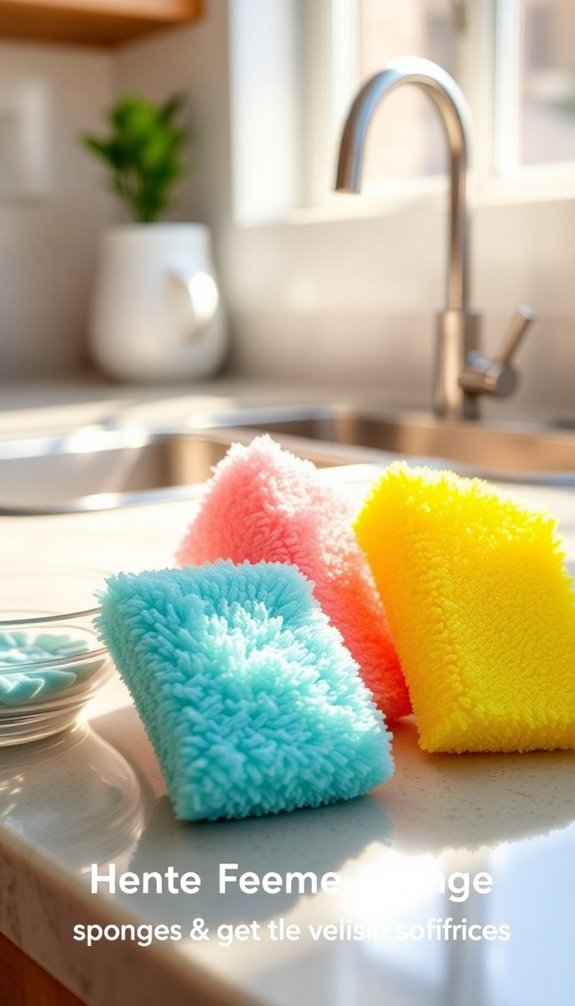
| Sponge type | Best for | Things to watch |
|---|---|---|
| Cellulose | Light spills, dishes, countertops | Wears faster under heavy scrubbing |
| Dual-sided scrub | Stuck-on food, pots and pans | Abrasive side can dull some nonstick or delicate finishes |
| Microfiber | Glass, stainless steel, high-gloss surfaces | Can be washed and reused, but needs proper laundering |
| Silicone | Grease and easy-rinse tasks | Absorbs less liquid than cellulose |
| Natural sea sponge | Gentle cleaning of delicate items | Sustainability depends on how it was harvested |
Cellulose Sponges for Everyday Wiping
Cellulose sponges are made from plant-based fibers, absorb liquids well and are soft enough for most countertops and dishes. They are a practical default for everyday spills. Because they are soft, they wear out faster under heavy scrubbing, so switch to a scrub sponge for baked-on food.
Scrub Sponges for Stuck-On Food
A dual-sided scrub sponge has a soft side for wiping and a rougher side for caked-on residue. Use the scrubbing side on pots and baked-on messes, and the soft side on counters and dishes. Check the manufacturer’s guidance before scrubbing nonstick or delicate finishes, since the abrasive side can dull some coatings.
Microfiber Sponges for Streak-Free and Delicate Surfaces
Microfiber sponges use very fine synthetic fibers that trap dust, dirt and grease, which makes them well suited to glass, stainless steel and high-gloss finishes. You can use them damp or dry. Wash them in the washing machine and air dry them, and skip fabric softener, which can coat the fibers and reduce their grip.
Silicone Sponges for Hygiene-Focused Tasks
Silicone is non-porous, so it holds less moisture than cellulose and food residue tends to rinse off rather than soak in. The tradeoff is lower absorbency, so silicone works better for scrubbing and wiping grease than for mopping spills. Rinse and dry it thoroughly after each use.
Natural Sea Sponges for Gentle Cleaning
Natural sea sponges are gentle on delicate items and absorb well. They are an animal-derived material, so their environmental impact depends on how they were harvested. Look for sourcing information on the label, and remember that natural does not mean disinfected; the same cleaning and drying habits apply.
Do Cleaning Sponges Carry Germs?
Yes, a damp sponge can hold bacteria, especially after wiping raw meat juices or food spills. Cleaning removes germs from a surface, while disinfecting kills most of them, so the two steps serve different purposes. The U.S. Centers for Disease Control and Prevention explains when and how to clean and disinfect your home, and it advises cleaning surfaces before disinfecting them.
Routine sanitizing alone may not keep a sponge clean. In a study published through PubMed Central, 20 households used polyurethane sponges for four weeks, and sponges that were regularly microwaved did not carry fewer bacteria than unsanitized ones. The researchers suggested that surviving bacteria likely repopulated the sponge quickly. This points to the value of drying sponges between uses and replacing them on time, not only disinfecting them.
Does Microwaving a Sponge Kill Germs?
Microwaving can kill many bacteria, but it is not a complete fix. In a study of heavily contaminated kitchen sponges, one minute in the microwave was the most effective household method tested, leaving under 0.4 log CFU per sponge alive, according to a ScienceDirect study on household disinfection methods for kitchen sponges.
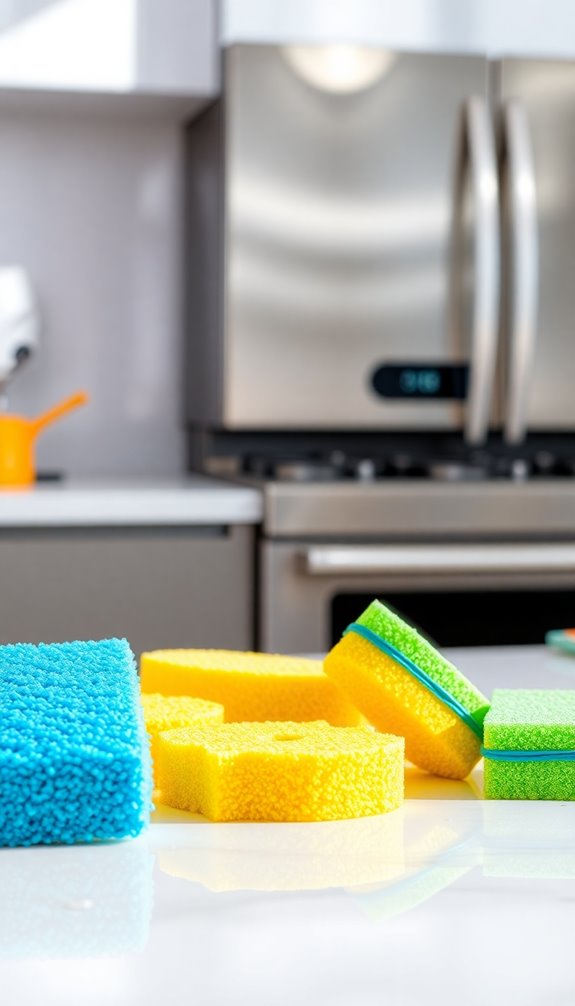
The limits matter. The household study used heavily contaminated sponges, and the 20-household study found that regular microwaving did not lower bacterial counts in real use. Treat microwaving as one tool among several, alongside drying and timely replacement.
How to Microwave a Sponge Safely
Michigan State University Extension advises that sponges with metal scrubbing pads should never go in the microwave, and a sponge must be fully wet before microwaving to reduce the risk of fire. Follow these steps:
- Confirm the sponge has no metal scrubbing pad or metal parts.
- Soak the sponge and squeeze it so it is fully wet but not dripping.
- Place it in the microwave and run it on high for one minute.
- Use oven mitts or tongs to remove it, since it will be very hot, and let it cool before handling.
- Wring it out and let it air dry completely before the next use.
If a sponge smells, smokes, or the microwave shows signs of trouble, stop and discard the sponge. Do not leave a microwave unattended while it runs.
Other Ways to Clean Sponges
Some sponges can go in the dishwasher, but check the label first, since not all designs tolerate heat. Rinsing thoroughly after each use and squeezing out excess water helps the sponge dry faster, which limits bacterial growth. Keep sponges away from raw meat, and use separate sponges for the kitchen and the bathroom.
How Often Should You Replace a Cleaning Sponge?
Replace a sponge when it smells, tears, breaks down or stays grimy after rinsing and sanitizing. No single schedule fits every household, so use these signs as your guide. For a fuller set of routines, see our best practices for using and sanitizing sponges.
- It has a persistent odor even after washing and drying.
- It is torn, shredded or no longer holds its shape.
- It spreads residue instead of lifting it.
- It has been used on raw meat or heavy grease and cannot be cleaned thoroughly.
Frequently Asked Questions
Can a Microwave Kill All Germs on a Sponge?
No. The household study found that one minute in the microwave was the most effective method tested, but it still left some bacteria alive. The 20-household study also found that regular microwaving did not reduce bacterial counts in everyday use. Use microwaving with drying and regular replacement.
Are Cleaning Sponges a Health Risk?
A dirty sponge can spread germs from one surface to another, so the main concern is cross-contamination. Keep sponges separate for different tasks and replace them when they show wear. If someone in your home has a weakened immune system or a recent infection, ask your doctor or local health department for specific cleaning advice.
Should I Use Separate Sponges for the Kitchen and Bathroom?
Separate sponges help prevent spreading germs from the bathroom to food-contact surfaces. Label or color-code them so family members do not mix them up. This is a practical habit rather than a product requirement.
Is Silicone More Hygienic Than Cellulose?
Silicone’s non-porous surface holds less moisture, which can make it easier to rinse and dry. However, none of the sources reviewed here compared silicone and cellulose sponges directly for germ levels. Any sponge still needs drying and replacement to stay clean.
Are Natural Sea Sponges Eco-Friendly?
Natural sea sponges are made from a natural material, but their environmental impact depends on how they were harvested. Check the label or manufacturer for sourcing information before you buy. Also remember that they still need proper cleaning and drying.
Conclusion
Choosing the right cleaning sponges means matching the type to the surface, then cleaning and drying them consistently. Research shows that microwaving can reduce bacteria but does not guarantee a clean sponge, so replacement is part of good hygiene. Keep chemicals separate and read labels carefully, as explained in our guide to cleaning products you should never mix.
More on Cleaning Sponges
- 10 Best Sponges for Cleaning Every Surface in Your Home
- Best Dish Brushes for Effortless Kitchen Cleanup
- Cleaning Sponges: Best Practices for Using and Sanitizing Sponges
- How to Clean Scrub Brushes and Make Them Last Longer
- How to Clean Your Kitchen Sponge (And How Often You Should Do It)
- How to Clean a Scrub Brush the Easy Way
- How to Disinfect a Kitchen Sponge (And When to Toss It)
- Restoring Your Cast Iron Skillet: The Best Chainmail Scrubbers
- Review: The Best Bamboo Dish Brushes on the Market
- Scrub Daddy vs. Scrub Mommy: Which Sponge Reigns Supreme?
- The Magic Eraser: What It Is and How to Use It Safely
- The Secret to No More Germs: How Color-Coding Prevents Cross-Contamination
- The Ultimate Guide to Cleaning Reusable Water Bottles
- Top 10 Biodegradable Sponges for a Zero-Waste Kitchen
Related guides: 7 Essential Cleaning Cloth Types for Every Household · Top 5 Best Mops and Buckets for a Sparkling Clean Floor · Best Shower Spray Cleaners for a Sparkling Bathroom
Free tools: Cleaning Products You Should Never Mix
Always follow the product label, test on a hidden area first, and never mix cleaning products such as bleach and ammonia. Read our safety disclaimer and editorial policy.
3 Replies to “10 Essential Cleaning Sponges for a Sparkling Home”