If you’re looking for an eco-friendly way to clear clogged drains, baking soda and vinegar might be your best bet. When you mix them, they create a reaction that produces carbon dioxide gas, helping to dislodge debris and clean your pipes. Just pour one cup of baking soda followed by one cup of vinegar down the drain, cap it for 30 minutes, and then flush with hot water. Want to learn more about preventing future clogs?
The Science Behind Baking Soda and Vinegar Reactions
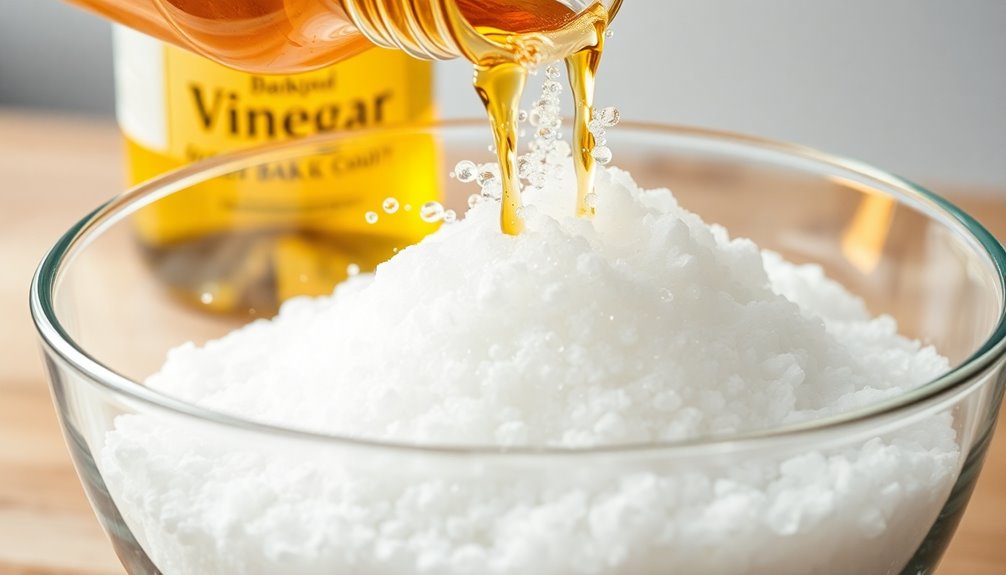
When you mix baking soda and vinegar, a fascinating chemical reaction occurs that’s both fun and effective for unclogging drains. This reaction is due to the combination of sodium bicarbonate (baking soda) and acetic acid (vinegar).
When they meet, they create carbon dioxide gas, which forms bubbles that can help dislodge debris in your pipes. This bubbling action not only lifts stubborn clogs but also contributes to the cleaning process.
Unlike many commercial household cleaners, this method is eco-friendly and safe for your plumbing. So, instead of reaching for those harsh chemicals, consider harnessing the power of these simple ingredients. Using this natural remedy helps preserve waterways and promotes a cleaner environment in your home.
With baking soda and vinegar, you’re embracing both science and sustainability in your cleaning routine!
Why Use Baking Soda and Vinegar for Clogs?
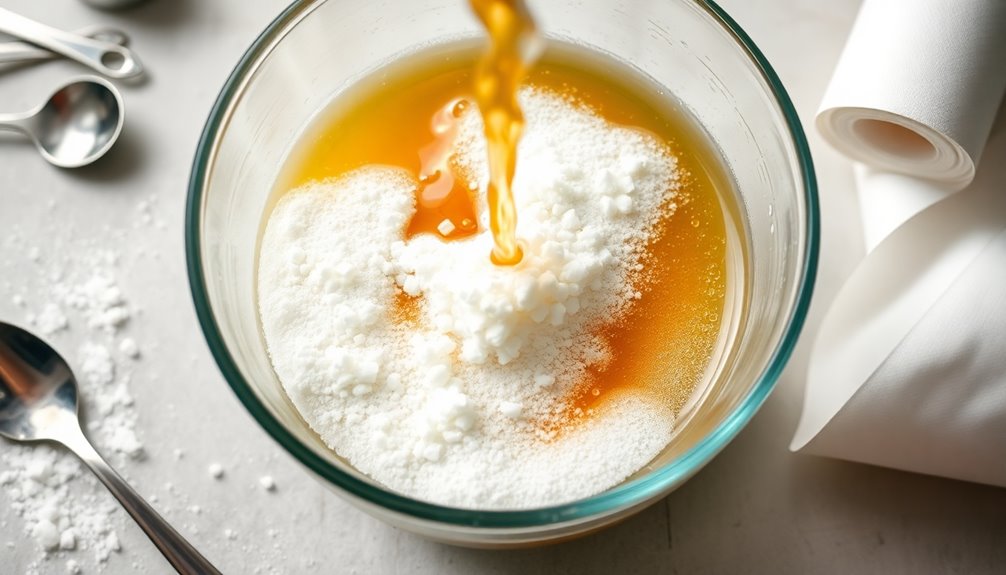
Using baking soda and vinegar for clogs offers a natural and effective solution that’s easy to implement.
These eco-friendly alternatives not only break down debris but also help with clog prevention, ensuring your drains stay clear.
Here’s why you should consider this method:
- Non-toxic: Safe for your family and pets.
- Cost-effective: You probably already have these ingredients at home.
- Environmentally friendly: Reduces the need for harsh chemicals that can harm the planet.
- Simple to use: Just mix, pour, and let it work its magic. Additionally, regular use can help prevent future blockages and maintain smooth plumbing.
How to Prepare Your Drain for De-Clogging
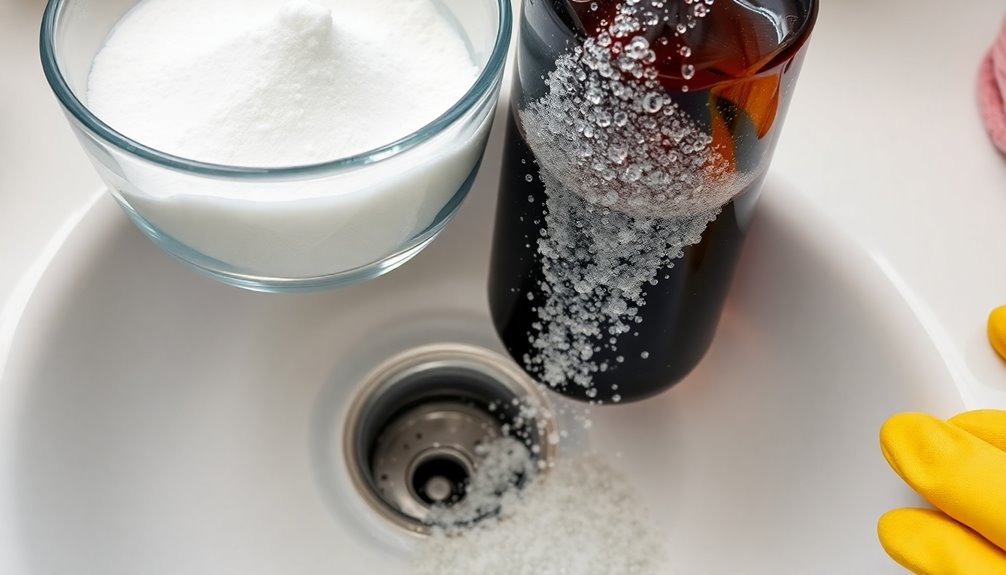
Before diving into the de-clogging process, it’s vital to prepare your drain properly. Start by clearing debris around the drain’s opening. Remove any visible hair, food particles, or other obstructions that might block the flow.
You can use a pair of gloves and a small tool, like a bent wire hanger, to help with this task. Next, run hot water down the drain for a few minutes to loosen any lingering grime.
This drain preparation guarantees that when you apply the baking soda and vinegar mixture, it can work effectively without additional blockages. Taking these steps will maximize your chances of a successful de-clogging experience, so don’t skip this vital part! Additionally, using non-toxic cleaners during the process can enhance your overall cleaning routine while ensuring a safe environment for your family.
Step-by-Step Guide to Using Baking Soda and Vinegar
Now that you’ve prepared your drain, it’s time to tackle the clog with a simple yet effective method: baking soda and vinegar. This eco-friendly solution not only helps with drain maintenance but also eliminates harsh chemicals.
It’s time to address that clog with an eco-friendly baking soda and vinegar solution for effective drain maintenance.
Here’s how to do it:
- Pour 1 cup of baking soda down the drain.
- Follow with 1 cup of vinegar.
- Cover the drain with a cloth or stopper to keep the reaction contained.
- Wait for about 30 minutes before flushing the drain with hot water.
This method harnesses a natural reaction to break down clogs, making it a safe choice for your plumbing and the environment. Regular use can help maintain clear drains and prevent future blockages! Additionally, using vinegar for cleaning aligns with natural, non-toxic cleaning agents that contribute to a healthier home environment.
What to Expect During the Reaction Process
As the baking soda and vinegar mix in your drain, you’ll notice a fizzing reaction that indicates they’re working together to break down the clog. This effervescent action creates bubbles as carbon dioxide gas is released, which helps to loosen debris.
You may hear fizzing sounds that signal the reaction is in full swing. Typically, the reaction duration lasts about 15 to 30 minutes, so give it some time to work its magic. Additionally, this method is effective due to the non-toxic properties of vinegar, making it a safe alternative for cleaning.
After the fizzing subsides, run hot water down the drain to flush away any loosened material. If you hear any remaining fizzing, it means the reaction is still ongoing, so don’t rush the process.
Patience is key to achieving a clear drain!
Common Types of Clogs That Baking Soda and Vinegar Can Fix
Clogs can be a homeowner’s worst nightmare, but baking soda and vinegar offer a powerful solution for many common issues.
These two ingredients create a chemical reaction that can effectively break down various blockages in your drains.
Here are some clogs you can tackle with this dynamic duo:
- Hair clogs: Perfect for those pesky strands that build up in your shower or bathroom sink.
- Soap scum: Great for dissolving the residue left behind from bar soap and body wash.
- Food particles: Effective in breaking down small bits of food that cause kitchen sink backups.
- Grease buildup: Helps cut through oily residue from cooking, keeping your kitchen drain clear.
In addition to tackling clogs, regular disinfection of surfaces can prevent bacterial growth, ensuring a healthy environment.
With these tips, you can easily manage common clogs and keep your drains flowing smoothly!
Tips for Maintaining Clean Drains With Baking Soda and Vinegar
To keep your drains clean, establish a regular maintenance schedule using baking soda and vinegar. Make sure to avoid pouring grease down the drain, as it can lead to buildup. Finally, flushing your drains with hot water helps keep everything flowing smoothly. Additionally, using drain strainers can effectively catch hair and debris before they enter the drain.
Regular Maintenance Schedule
Maintaining clean drains doesn’t have to feel like a chore when you incorporate a regular maintenance schedule with baking soda and vinegar.
By setting up a routine, you can guarantee effective drain maintenance without the hassle of sudden clogs. Here are some tips to help you stay on track:
- Schedule reminders monthly to pour baking soda down your drains.
- Follow with vinegar for a bubbly reaction that cleanses your pipes.
- Flush with hot water after the reaction to wash away residues.
- Keep track of any unusual slowdowns, so you can address them promptly.
Avoid Grease Buildup
Even with a regular maintenance schedule, grease buildup can still sneak into your drains, leading to unwanted clogs.
To keep your kitchen hygiene on point, consider using baking soda and vinegar as a preventative measure. Start by pouring a cup of baking soda down the drain, followed by a cup of vinegar. Let the mixture fizz for about 15 minutes before rinsing with hot water. This reaction helps break down grease and prevents it from settling in your pipes.
Also, remember to clean your grease traps regularly to catch any excess fat before it reaches the drain.
Flush With Hot Water
Flushing your drains with hot water regularly is a simple yet effective technique for keeping them clean. This method helps dissolve any buildup and enhances the effectiveness of your baking soda and vinegar treatments.
For ideal drain maintenance, consider these tips:
- Use boiling water for maximum effect, especially after using baking soda and vinegar.
- Flush once a week to prevent clogs from forming.
- Combine with your routine cleaning schedule to make it a habit.
- Avoid pouring cold water immediately after treatments, as it can solidify fats and oils.
When to Avoid DIY Solutions for Drain Issues?
While DIY solutions can be tempting for tackling drain issues, there are critical situations where you should steer clear of these methods.
If you’re dealing with severe blockages, it’s best to call in professional plumbing. These blockages can indicate deeper problems within your plumbing system that homemade remedies won’t fix.
Additionally, if you’ve tried multiple DIY attempts without success, don’t waste more time—get a professional involved. Using harsh chemicals or improper techniques might even worsen the situation, leading to costly repairs.
Finally, if you notice recurring clogs, it’s a sign of an underlying issue. In these cases, trusting a professional plumbing service is the smartest choice to guarantee your drains function properly and efficiently. Furthermore, be aware that using reliable disinfectants can help maintain a clean environment, preventing buildup that leads to clogs.
Alternative Eco-Friendly Drain Cleaning Methods
If you’re looking for eco-friendly ways to clear your drains, you’ve got some great options.
Natural enzyme cleaners break down clogs without harsh chemicals, while boiling water can often do the trick for minor blockages.
You might also try a mix of salt and lemon for a fresh, effective solution. Additionally, using eco-friendly paper towel alternatives can help with cleaning up spills and messes that may contribute to drain clogs.
Natural Enzyme Cleaners
Natural enzyme cleaners offer an eco-friendly solution to stubborn clogs, breaking down organic matter without harsh chemicals. You’ll appreciate the enzyme benefits, as these cleaners use natural alternatives to tackle grease, hair, and food particles effectively.
By choosing enzyme cleaners, you not only help the environment but also maintain your plumbing system’s health.
- Safe for septic systems
- Non-toxic and biodegradable
- Effective on a variety of clogs
- Easy to use and apply
Using these enzyme cleaners can keep your drains clear while minimizing your chemical footprint.
Boiling Water Method
One simple and effective method for clearing minor clogs is using boiling water. This technique isn’t only easy but also eco-friendly, making it a popular choice among drain cleaning techniques.
Pouring boiling water down your drain helps dissolve soap scum, grease, and other debris that may have built up over time. The boiling water benefits your pipes by breaking down these materials without harsh chemicals.
For best results, boil a kettle of water and slowly pour it down the drain in stages, allowing time for it to work its magic. Repeat as needed, and you’ll find that this straightforward method can often resolve minor clogs quickly and effectively, keeping your drains running smoothly.
Salt and Lemon
While many people may overlook the power of simple kitchen staples, salt and lemon can be a dynamic duo for tackling stubborn drain clogs. The salt benefits include its abrasive properties, which help dislodge debris, while lemon’s acidity works to break down grease and grime.
Together, they create an eco-friendly solution that’s easy to use.
Here’s how to harness their power:
- Mix half a cup of salt with the juice of one lemon.
- Pour the mixture down the clogged drain.
- Let it sit for about 30 minutes to allow the reaction to work.
- Flush with hot water to clear any remaining residue.
This combination not only cleans your drain but also leaves a fresh scent behind!
How to Prevent Future Clogs in Your Drains
To keep your drains flowing smoothly, it’s essential to adopt some simple habits in your daily routine.
Start by practicing good drainage habits; avoid pouring grease or food scraps down the sink. Use a strainer to catch hair and debris in your shower and sink drains.
Regularly flush your drains with hot water to help break down buildup. Additionally, consider investing in basic plumbing tools, like a plunger or a drain snake, for quick fixes when minor clogs occur.
Schedule periodic cleanings with a mixture of baking soda and vinegar to maintain a fresh flow. By staying proactive, you can prevent future clogs and keep your plumbing system in top shape. For more serious issues, consider contacting a reliable local drain cleaning service for professional assistance.
Troubleshooting: What to Do If Your Drain Still Doesn’t Clear?
Even after trying various methods to clear your drain, you might still find it clogged, which can be frustrating.
Don’t worry; there are steps you can take to tackle this issue. First, perform a thorough drain inspection to identify the problem. A proper clog diagnosis might reveal deeper issues or stubborn blockages.
Consider these options:
- Use a plumber’s snake for stubborn clogs.
- Check the P-trap for blockages.
- Pour boiling water to help dissolve grease.
- Call a professional plumber for advanced help.
Conclusion
Now that you’ve armed yourself with the powerful duo of baking soda and vinegar, picture your drains bubbling away, releasing stubborn clogs like a mini volcanic eruption. It’s satisfying to watch as the gunk dissolves and your pipes flow freely once more. Remember, a little prevention goes a long way in keeping those drains clear. So, keep this natural remedy in your toolkit, and let your plumbing sing its sweet, uninterrupted tune!