Want a powerful yet eco-friendly cleaner for your sinks? A DIY soft scrub made with baking soda and soap is your go-to solution. Just mix 1 cup of baking soda with 1/4 cup of liquid castile soap for a paste. Apply it with a sponge, scrub away stubborn stains, and rinse thoroughly. It’s cost-effective and safe for your family. If you’re curious about variations and tips for best use, there’s plenty more to explore!
Why Choose a DIY Soft Scrub for Your Sinks?
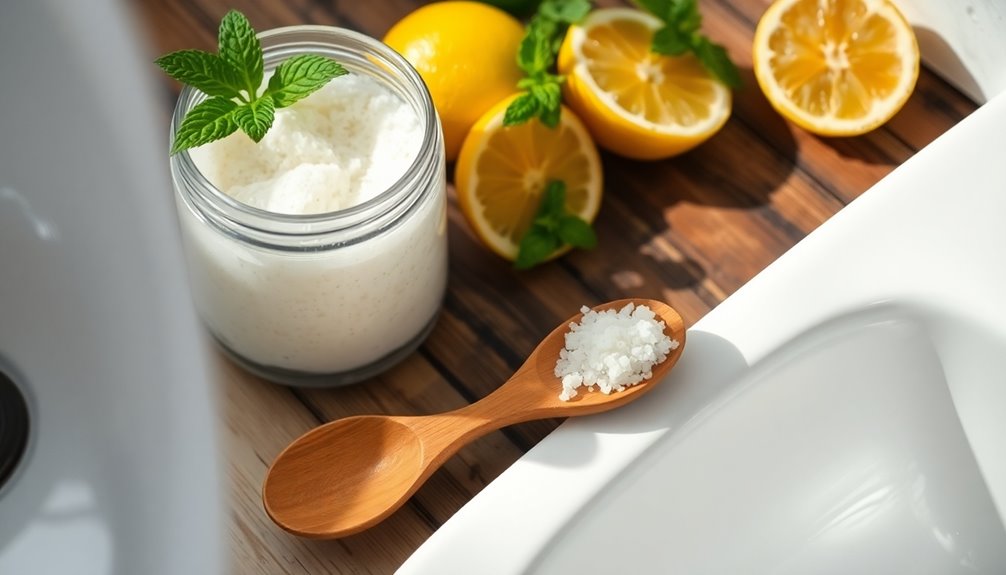
When you consider the importance of maintaining a clean and safe kitchen, choosing a DIY soft scrub for your sinks makes perfect sense. Not only is it an effective method for tackling grime and stains, but it’s also a fantastic way to make eco-friendly choices.
Many commercial cleaners contain harsh chemicals that can harm the environment, while your homemade scrub uses simple, natural ingredients you likely already have at home.
Plus, it’s cost-effective cleaning at its best; you can save money while ensuring your kitchen remains spotless. By opting for a DIY approach, you gain control over what goes into your cleaning supplies, promoting a healthier space for you and your family. Additionally, using natural cleaning products reduces exposure to harmful chemicals, ensuring a safer environment for children and pets.
Essential Ingredients for Your Soft Scrub
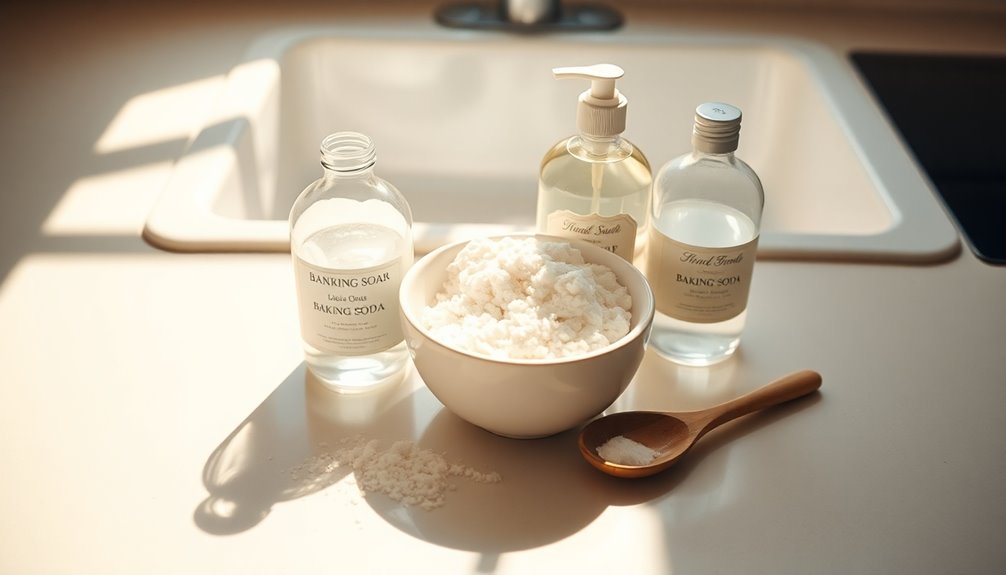
To create an effective DIY soft scrub, you’ll need some key ingredients.
Baking soda is a powerhouse for cleaning, while choosing the right soap guarantees it works effectively.
You can also consider optional additives to boost your scrub’s cleaning power and scent. Additionally, using white vinegar can enhance your scrub’s effectiveness due to its antibacterial properties.
Baking Soda Benefits
Baking soda is a powerhouse ingredient in your DIY soft scrub, offering a multitude of benefits for cleaning. Its natural abrasiveness helps tackle tough stains without scratching surfaces, making it perfect for sinks.
One of the most popular baking soda uses is neutralizing odors, so it keeps your kitchen smelling fresh while you clean. The alkaline baking soda properties break down grease and grime, making it easier to wipe away dirt and residue.
Plus, it’s non-toxic, so you can feel good about using it around your family. By incorporating baking soda into your soft scrub, you’re not only enhancing its cleaning power but also embracing an eco-friendly approach to household cleaning.
Choosing the Right Soap
Soap plays an essential role in your DIY soft scrub, enhancing its cleaning effectiveness. When choosing the right soap, look for natural soap options that are free from harsh chemicals.
These eco-friendly ingredients not only clean well but also minimize your impact on the environment. Castile soap is a popular choice, as it’s made from plant-based oils and biodegradable.
You might also consider liquid soaps or bars labeled as ‘natural’ or ‘organic’. Avoid soaps with synthetic fragrances or dyes, as they can leave residues that aren’t good for your sink or the planet.
Optional Additives for Scrub
Once you’ve selected a suitable soap for your DIY soft scrub, consider enhancing its cleaning power with optional additives.
You can add essential oils for optional scents, like lemon or tea tree, which not only smell great but also provide antibacterial properties. Just a few drops will do!
If you’re looking to make your scrub visually appealing, consider using natural colorants such as spirulina for green or beet powder for a lovely pink hue. These colorants are safe and will give your scrub a fresh look.
Step-by-Step Instructions for Making the Scrub
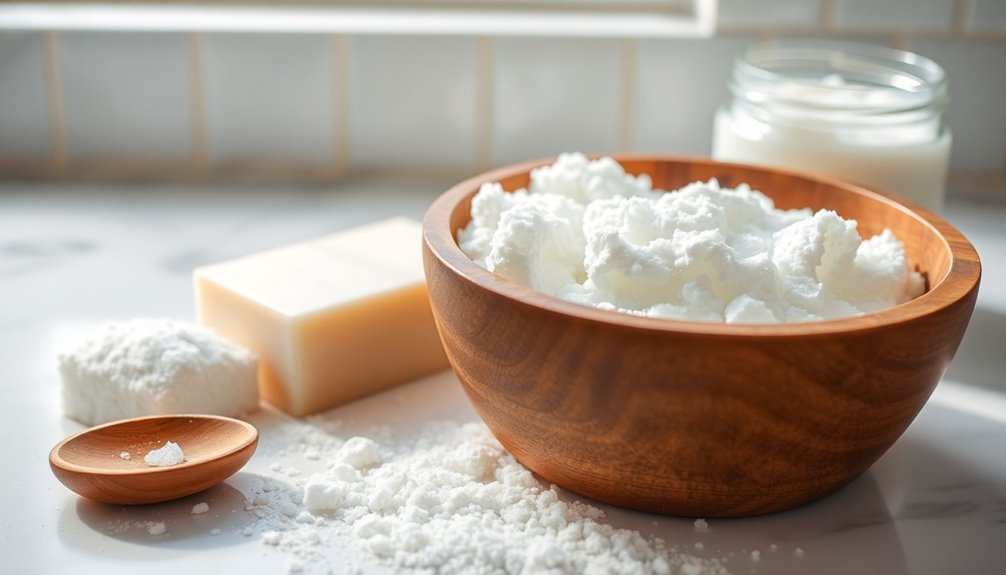
Now that you’ve gathered your essential ingredients, it’s time to get mixing!
Follow these simple steps to create your soft scrub and learn the best application techniques for tackling those tough stains. Remember, the combination of baking soda and lemon juice not only enhances your cleaning power but also provides a natural disinfectant effect that eliminates germs.
You’ll have a sparkling sink in no time!
Gather Your Ingredients
To create your DIY soft scrub for sinks, you’ll need a few simple ingredients that you probably already have at home. First, grab baking soda, a fantastic base for your scrub that’s effective and eco-friendly.
Next, you’ll need liquid castile soap, which not only cleans but also supports sustainable cleaning practices. A few drops of essential oil, like lemon or tea tree, can add a pleasant fragrance and boost germ-fighting power.
Finally, have some water ready to achieve the right consistency. When it comes to ingredient sourcing, look for products that are biodegradable and free from harsh chemicals.
This way, you’re not only cleaning effectively but also being kind to the environment. Happy scrubbing!
Mixing and Application Techniques
Creating your DIY soft scrub is a simple three-step process that anyone can master.
First, mix 1 cup of baking soda with 1/4 cup of liquid soap in a bowl. This mixing ratio guarantees you get a paste that’s thick enough to cling to surfaces. Adjust the consistency by adding more baking soda or soap as needed.
Next, scoop a small amount of the scrub onto a sponge or cloth. For application methods, use circular motions to gently scrub your sink, focusing on stains and buildup.
Finally, rinse the surface thoroughly with water. Enjoy your sparkling clean sink, and store any leftover scrub in an airtight container for future use!
How to Effectively Use the Scrub on Different Surfaces
When you’re ready to tackle various surfaces with your DIY soft scrub, knowing the right approach can make all the difference.
Here are some effective cleaning techniques to scrub surfaces:
- Sinks: Apply the scrub with a soft sponge, focusing on stubborn stains.
- Counters: Use a microfiber cloth to gently buff the soft scrub, ensuring you don’t scratch the surface.
- Bathtubs: Let the scrub sit for a few minutes on tough grime, then scrub in circular motions.
- Tiles: For grout lines, use an old toothbrush to get into crevices while scrubbing. Additionally, regular cleaning and disinfection of tiles can prevent bacterial growth and maintain a hygienic bathroom environment.
These techniques will help you maximize the effectiveness of your DIY soft scrub while keeping your surfaces sparkling clean!
Tips for Storing Your DIY Soft Scrub
Proper storage of your DIY soft scrub guarantees it stays effective and ready for use. To maximize scrub longevity, choose airtight storage containers that prevent moisture from seeping in.
Glass jars with tight-fitting lids work well, but durable plastic containers can also do the job. Label each container with the date you made the scrub, so you know when it’s time to make a fresh batch.
Keep your scrub in a cool, dry place away from direct sunlight, as heat can affect its consistency. If you notice any changes in color or smell, it’s best to discard it. Additionally, incorporating baking soda’s non-toxic nature into your soft scrub ensures it’s safe for use around your family and pets.
Following these tips will help maintain your DIY soft scrub remains potent and ready for tackling those tough cleaning jobs.
Common Stains This Scrub Can Tackle
DIY soft scrub is versatile and can tackle a variety of common stains found in sinks and other surfaces.
With effective cleaning techniques, you can easily eliminate stubborn stains and keep your space looking fresh.
Eliminate stubborn stains effortlessly and enjoy a fresh, clean space with effective cleaning techniques.
Here are four types of stains this scrub can handle:
- Hard Water Deposits: Buildup from minerals leaves unsightly spots.
- Food Residue: Grease and grime from cooking can cling to surfaces.
- Soap Scum: A common issue in bathrooms, leaving a dull finish.
- Coffee and Tea Stains: These dark marks can be tough to remove.
Using your DIY soft scrub, you’ll find tackling these stains much easier and more satisfying, giving your sinks a sparkling clean look! Regular cleaning can help prevent grease buildup in your kitchen, ensuring all surfaces remain pristine.
Safety Precautions When Using Homemade Cleaners
Although homemade cleaners can be effective and eco-friendly, it’s crucial to take safety precautions while using them.
First, always wear safety equipment like gloves and goggles to protect your skin and eyes from potential irritation. Even natural ingredients can cause allergic reactions in some individuals, so it’s smart to do a patch test before using your scrub extensively.
Make certain to work in a well-ventilated area to avoid inhaling any dust or fumes that may arise during cleaning.
Never mix different homemade cleaners, as chemical reactions can occur, leading to harmful gases.
Finally, store your homemade cleaners out of reach of children and pets to guarantee their safety. Taking these precautions will help you enjoy a safer cleaning experience. Additionally, using non-toxic cleaners contributes to a hygienic environment that prioritizes family safety.
Variations to Customize Your Soft Scrub
After taking the necessary safety precautions, you can start customizing your soft scrub to suit your specific cleaning needs.
Here are some ideas for scent variations and texture modifications:
- Citrus Twist: Add a few drops of lemon or orange essential oil for a fresh scent.
- Herbal Freshness: Incorporate lavender or eucalyptus oil for a calming aroma.
- Coarse Texture: Mix in a bit of sea salt or sugar for extra scrubbing power.
- Creamy Consistency: Blend in more liquid soap to achieve a smoother texture.
Additionally, using essential oils can enhance the antibacterial properties of your scrub, creating a cleaner environment for your home while also providing natural antibacterial properties.
Feel free to experiment with these variations until you find the perfect blend that not only cleans effectively but also leaves your space smelling wonderful!
Customizing your soft scrub makes the cleaning process more enjoyable.
Eco-Friendly Benefits of Using Baking Soda and Soap
Have you ever considered how eco-friendly your cleaning routine can be? By using baking soda and soap, you’re making a smart choice for both your home and the planet.
Baking soda uses go beyond just deodorizing; it’s a natural abrasive that effectively tackles grime without harmful chemicals. This means you’re reducing your exposure to toxic substances while keeping your surfaces sparkling clean.
When you opt for soap alternatives that are biodegradable, you help minimize water pollution and environmental impact. These natural ingredients break down more easily, ensuring that your cleaning habits contribute to a healthier ecosystem. Additionally, using eco-friendly products not only supports sustainability but also promotes a healthier living environment.
Conclusion
To sum up, creating your own soft scrub is a simple, sustainable solution for sparkling sinks. With just a few basic baking soda and soap supplies, you can tackle tough stains and transform your cleaning routine. So, don’t hesitate—harness the power of homemade cleaners! By embracing this eco-friendly approach, you’ll not only save money but also contribute to a cleaner planet. So scrub, shine, and savor the satisfaction of a squeaky clean space!