To tackle pesky dust bunnies, you’ll need a solid strategy. Start with microfiber cloths for superior dust capture and consider making a DIY dusting spray using vinegar and essential oils for added freshness. Dust in the right order, starting from high surfaces and working down. Don’t forget to tackle hard-to-reach areas and keep your home well-ventilated to reduce accumulation. You’ll discover even more effective hacks to keep your space clean and dust-free.
Why Dust Bunnies Are a Persistent Problem
Dust bunnies are a persistent problem because they accumulate quickly in our homes, often hiding in corners and under furniture.
You might notice that dust accumulation becomes more pronounced during seasonal changes, as pollen and dirt from outside find their way in. With windows open for fresh air, you inadvertently invite more debris to settle around your living space.
Additionally, everyday activities like walking or moving objects stir up dust, allowing it to cling to surfaces. You might think a quick clean will suffice, but without regular attention, those pesky dust bunnies will keep returning. To combat this issue, it’s essential to establish a consistent cleaning routine that addresses dust accumulation before it becomes overwhelming, starting with dusting first to effectively capture loose dust and debris.
The Best Tools for Effective Dusting
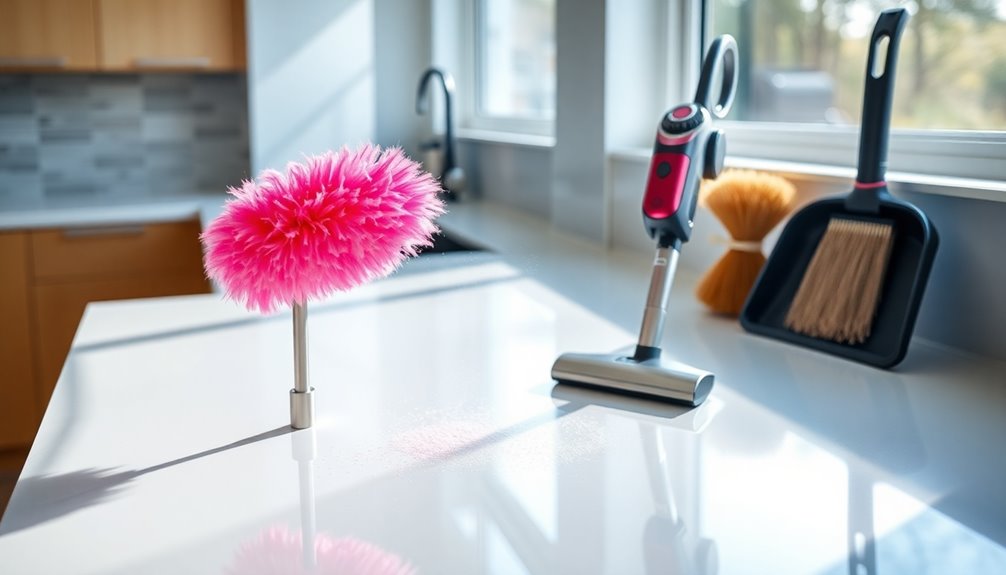
When it comes to dusting, having the right tools can make all the difference. Microfiber cloths trap dust effectively, while extendable dusters let you reach those tricky spots. Plus, using vacuum attachments can help you tackle dust bunnies hiding in corners or on furniture. Incorporating microfiber technology into your dusting routine can enhance efficiency and ensure a thorough clean.
Microfiber Cloths Effectiveness
Microfiber cloths are often hailed as the best tools for effective dusting, and for good reason.
These cloths are made from tiny fibers that trap dust and allergens more effectively than traditional materials. When you use microfiber cloths, you’ll notice an improvement in your cleaning efficiency, as they require less effort to pick up dirt and debris.
Simply dampen the cloth slightly for even better results, and watch as it clings to dust particles. Plus, they’re reusable and machine-washable, making them eco-friendly and cost-effective.
Extendable Duster Advantages
While you might think a standard cloth is all you need for dusting, extendable dusters offer significant advantages that can enhance your cleaning routine.
Their extendable reach allows you to tackle high ceilings, ceiling fans, and hard-to-reach corners without straining your back. With a simple adjustment, you can customize the duster’s length, making it perfect for various surfaces and spaces.
Extendable dusters are excellent for versatile cleaning; they easily adapt to different tasks, whether it’s light dusting or tackling stubborn cobwebs.
Plus, many extendable dusters come with interchangeable heads, so you can switch from fluffy to microfiber options based on your needs. Investing in one of these tools can save you time and effort while keeping your home dust-free.
Vacuum Attachment Functions
If you want to take your dusting game to the next level, vacuum attachments can be your best allies.
These specialized tools enhance your cleaning efficiency, making it easier to tackle those hard-to-reach areas where dust bunnies love to hide. For instance, a crevice tool is perfect for getting into narrow spaces, while an upholstery brush works wonders on furniture.
If you’ve got pets, a pet hair attachment can greatly reduce allergens in your home. Don’t forget about the dusting brush; it lifts dust from delicate surfaces without scratching.
By incorporating these vacuum attachments into your routine, you’ll not only save time but also enjoy a cleaner, fresher living space.
How to Dust Your Home in the Right Order
When you’re ready to tackle dusting, starting from the top and working your way down is key. This top-down method guarantees you don’t re-clean areas you’ve already tackled. Pair that with a room-by-room approach, and you’ll make your dusting routine efficient and effective. Regular cleaning supports clearer thinking and boosts mental well-being, making your home not just cleaner but also more conducive to a positive mindset.
Top-Down Dusting Method
To effectively dust your home, start from the top and work your way down. This top-down technique is a smart dusting strategy that minimizes the chances of redistributing dust.
Here’s how to tackle it:
- Begin with ceiling fans and light fixtures.
- Dust high shelves and cabinets next.
- Wipe down walls and door frames.
- Clean furniture surfaces, starting from the highest pieces.
- Conclude with baseboards and floors.
Room-by-Room Approach
Once you’ve mastered the top-down dusting method, it’s time to apply that strategy room by room for an efficient clean.
Start with the room layout in mind; tackle one space at a time. Begin in areas that collect dust first, like high shelves and ceiling fans, then work your way down to surfaces and floors.
Create a cleaning schedule that rotates through each room to maintain a dust-free home. For bedrooms, dust nightstands and dressers, then move to living areas to clear coffee tables and electronics.
Finally, hit the kitchen and bathrooms, wiping down counters and fixtures. Following this order guarantees you don’t miss a spot and keeps dust from settling back onto already cleaned surfaces.
Use a Microfiber Cloth for Superior Dust Capture
Using a microfiber cloth can transform your dusting routine, as it’s specifically designed to trap dust and allergens more effectively than traditional materials.
These microfiber materials create a static charge that attracts dust particles, ensuring superior dust capture.
Here are a few tips to maximize your dusting with microfiber:
- Choose a cloth with a high GSM (grams per square meter) for better dust retention.
- Use a damp microfiber cloth for stubborn dust, as moisture helps lift debris.
- Wash your cloth regularly to maintain its dust-trapping capabilities.
- Use different colors for various areas to prevent cross-contamination.
- Store your microfiber cloths in a clean, dry place to keep them effective.
Additionally, microfiber cloths capture up to 99% of dust and allergens without the need for harsh chemicals, enhancing your cleaning efficiency.
Incorporating microfiber into your cleaning routine will make a noticeable difference!
Create a DIY Dusting Spray With Essential Oils
Microfiber cloths are great for trapping dust, but pairing them with a DIY dusting spray can elevate your cleaning game even further.
You can easily create a natural cleaning solution using essential oils, which offer numerous benefits. Start with a spray bottle, mixing one cup of water, a cup of white vinegar, and 10-15 drops of your favorite essential oil—lavender or lemon work wonders.
Shake well before each use. Spray lightly onto your microfiber cloth, then wipe surfaces to eliminate dust while leaving a fresh scent. The natural cleaning properties of vinegar combined with essential oils not only help reduce allergens but also create a healthier home environment. Additionally, oils like lemon oil provide antibacterial and antiviral properties, enhancing the effectiveness of your cleaning routine.
Say goodbye to dust bunnies with this simple, effective spray!
Utilize a Vacuum With a HEPA Filter for Dust Removal
While dusting is essential, utilizing a vacuum with a HEPA filter takes your cleaning routine to the next level. A HEPA filter captures fine particles, ensuring you’re not just redistributing dust.
Using a vacuum with a HEPA filter elevates your cleaning by capturing fine particles instead of just moving dust around.
To maximize its effectiveness and maintain your vacuum, consider the following:
- Regularly check and replace the HEPA filter according to manufacturer guidelines.
- Empty the vacuum dust container frequently to prevent clogs.
- Clean the brush rolls to enhance suction power.
- Inspect hoses for blockages or damage.
- Follow proper vacuum maintenance practices to extend its lifespan. Additionally, ensure the vacuum is prepared properly to optimize its cleaning performance.
Dusting With a Dryer Sheet: a Simple Trick
If you’re looking for an easy way to dust surfaces, try using a dryer sheet. This simple trick not only enhances your dusting efficiency but also offers several dryer sheet benefits.
When you wipe down surfaces with a dryer sheet, it attracts dust and hair, making your cleaning process quicker and more effective. Plus, the anti-static properties help repel dust from settling back onto surfaces, keeping your space cleaner for longer.
Just run the sheet over furniture, baseboards, and even electronics. You’ll notice how effortlessly the dust bunnies disappear. Regular dusting minimizes allergens and improves air quality, making it a vital part of your cleaning routine.
It’s a convenient solution that saves you time and effort, leaving your home looking fresh and tidy without the hassle of traditional dusting methods. Give it a try!
The Magic of a Sock on Your Hand for Quick Dusting
If you want a quick and easy dusting solution, try the simple sock technique.
Just slip a clean sock on your hand, and you’ll easily reach those tricky spots around your home.
Plus, it’s an eco-friendly way to tackle dust without any harsh chemicals! This method also aligns with the idea of repurposing everyday items as cleaning tools, promoting sustainability in your cleaning routine.
Simple Sock Technique
When you need a quick and effective way to dust your home, the simple sock technique is a game-changer.
Sock dusting isn’t just easy; it’s also a fun and efficient method for quick cleaning. Here’s how to make the most of it:
- Grab an old sock (preferably cotton).
- Slip it over your hand, making sure it fits snugly.
- Lightly dampen the sock with a bit of water or a gentle cleaner.
- Wipe surfaces like shelves, baseboards, and electronics with your sock-covered hand.
- Toss the sock in the wash afterward for reuse.
With this technique, you’ll effortlessly collect dust bunnies while making your cleaning routine a breeze.
Plus, it’s a sustainable option that saves on paper towels!
Dusting Hard-to-Reach Areas
Dusting hard-to-reach areas can feel intimidating, but with the magic of a sock on your hand, it becomes a breeze. Slip on an old sock, moisten it slightly, and you’re ready to tackle dust lurking on high shelves and behind furniture. The sock’s fabric traps dust effectively, allowing you to cover more ground without scattering particles.
For high shelves, simply stretch your arm and wipe away the dust, letting the sock catch everything.
When it comes to those tight spaces behind furniture, the sock can easily glide in, picking up dust bunnies without needing to move heavy items. Keep a few dedicated dusting socks handy, and you’ll find yourself zipping through those tricky spots in no time!
Eco-Friendly Cleaning Solution
Now that you’ve conquered those hard-to-reach areas with your sock technique, let’s explore how to enhance your dusting routine with an eco-friendly cleaning solution.
Using natural ingredients in homemade recipes not only makes your cleaning safer but also more effective. Here are some simple ideas for your dusting spray:
- Vinegar and water: Mix equal parts for a streak-free finish.
- Olive oil: Combine with vinegar for a nourishing polish.
- Essential oils: Add a few drops for a pleasant scent and added antibacterial properties.
- Baking soda: Mix with water for a gentle abrasive cleaner.
- Citrus peels: Infuse vinegar with peels for a fresh, natural cleaner.
These eco-friendly solutions work wonders while keeping your home safe and healthy!
Using a Ceiling Fan Dusting Tool to Reach High Places
Even if you’re not a fan of heights, tackling dust on ceiling fans can be a breeze with the right tools. A ceiling fan dusting tool is your best ally for effective high place cleaning.
These specialized tools often feature long handles and microfiber heads that easily reach those tricky spots. Simply extend the tool, and you can wipe away dust without climbing on a ladder.
Regular ceiling fan care helps maintain air quality and improves the fan’s performance. Plus, using a dusting tool makes the process quick and efficient, ensuring that you won’t leave behind any pesky dust bunnies. Additionally, using high-quality tools ensures optimal cleaning results and protects your surfaces.
The Power of a Lint Roller for Quick Clean-Ups
Sometimes, you need a quick and easy solution for cleaning up those stubborn bits of lint, pet hair, or crumbs that seem to appear out of nowhere. That’s where a lint roller comes in! Its efficiency makes it perfect for quick cleaning.
Here’s how you can maximize its use:
- Remove pet hair from your furniture and clothing.
- Clean your car’s interior in a flash.
- Pick up crumbs from your kitchen counters.
- Freshen up your curtains without taking them down.
- Touch up your clothes before heading out.
With just a few swipes, you’ll notice the difference. The lint roller’s sticky sheets capture unwanted debris, making it an essential tool in your dust-busting arsenal. Additionally, remember to sanitize cleaning sponges regularly to maintain a hygienic environment while you tackle dust and debris.
How to Dust Electronics Safely Without Damage
When it comes to dusting your electronics, using a microfiber cloth is a smart choice to avoid scratches.
Remember to turn off your devices before you start, and keep moisture to a minimum to protect sensitive components.
With these tips, you can keep your gadgets clean without any risk of damage.
Use Microfiber Cloths
Microfiber cloths are your best friend when it comes to safely dusting electronics. They offer several microfiber advantages, making them ideal for delicate surfaces.
Here are some effective dusting techniques you can use:
- Absorbent fibers trap dust and dirt without scratching.
- Lint-free material guarantees no residue is left behind.
- Static charge attracts particles, making cleaning easier.
- Machine washable for repeated use, saving you money.
- Lightweight and flexible, reaching into tight spaces effortlessly.
Avoid Excessive Moisture
While microfiber cloths are excellent for dusting, it’s important to be mindful of moisture when cleaning your electronics. Excessive moisture can damage sensitive components, leading to costly repairs.
To practice moisture control, lightly dampen your microfiber cloth instead of soaking it. This method provides effective dust prevention without risking water damage. Make sure to wring out the cloth thoroughly before using it, ensuring it’s just slightly damp.
When dusting, focus on surfaces like screens, keyboards, and vents, but avoid any openings where moisture could seep inside. By keeping moisture levels low, you’ll protect your devices while keeping them dust-free.
Turn Off Devices
To guarantee you dust your electronics safely and effectively, always turn off your devices before starting the cleaning process. This simple step not only protects your gadgets but also enhances device maintenance and promotes energy savings.
Here are some tips to keep in mind while dusting:
- Use a microfiber cloth to trap dust without scratching surfaces.
- Avoid using harsh chemicals that can damage screens or casings.
- Clean in a circular motion, focusing on vents and ports.
- Use compressed air to remove dust from hard-to-reach areas.
- Regularly check and clean your devices to maintain performance.
Why Do Regular Dusting Schedules Matter?
Regular dusting schedules matter because they help maintain a clean and healthy living environment. By establishing a consistent dusting frequency, you reduce allergens and dust buildup that can cause respiratory issues.
Incorporating dusting into your cleaning routines guarantees that you stay on top of the mess, making it easier to manage over time. When you stick to a schedule, you also develop a habit that keeps your home feeling fresh and inviting.
Plus, regular dusting can protect your furniture and electronics from damage caused by accumulated dust. So, set aside a specific time each week to dust, and you’ll notice a significant difference in your home’s cleanliness and overall air quality.
Your health—and your home—will thank you!
Make Dusting Fun: Involve the Family
How can you turn dusting from a mundane chore into a fun family activity? By involving everyone and adding some excitement!
Transform dusting from a boring chore into a lively family activity by getting everyone involved and adding some fun!
Here are some dusting games that encourage family participation:
- Dusting Relay: Set a timer and see who can dust the most surfaces in a minute.
- Dust Bunny Hunt: Turn finding hidden dust bunnies into a scavenger hunt.
- Musical Dusting: Play music and pass a duster around; when the music stops, the person holding it dusts a designated area.
- Dusting Bingo: Create bingo cards with different dusting tasks and mark them off as you go.
- Family Dust-Off Challenge: Compete for the best dusting technique and award silly prizes.
With these ideas, dusting can become a fun family bonding experience!
What Is the Best Time of Day for Dusting Your Home?
When’s the best time to tackle dusting in your home? The ideal dusting timing is often in the late morning or early afternoon. By this time, the sunlight streaming through your windows reveals the dust, making it easier to see what needs cleaning.
Plus, you’re likely to have more energy after a good breakfast. Incorporating dusting into your daily cleaning routine can also help maintain a dust-free environment.
You might want to set aside just 10-15 minutes each day to focus on this task, keeping it manageable and less overwhelming. Consistency is key, so choose a time that works best for you, and soon, dust bunnies will be a thing of the past!
Tips for Dusting Hard-to-Reach Areas
Although dusting might seem straightforward, tackling those hard-to-reach areas requires a bit of strategy. You’ll need to use some creative solutions and innovative tools to make the task easier.
Here are a few tips to help you out:
- Use an extendable duster for ceilings and high shelves.
- Attach microfiber cloths to a broom for sweeping corners.
- Utilize a vacuum cleaner with a hose and brush attachment.
- Wrap a cloth around a long object, like a yardstick, to reach narrow gaps.
- Employ a compressed air canister to blow dust out of tight spaces.
How to Keep Dust Out With Proper Ventilation
Dusting those hard-to-reach areas is just one part of maintaining a clean home.
To truly keep dust out, you need to focus on proper ventilation. Good air circulation helps reduce dust buildup by allowing stale air to escape and fresh air to flow in.
Make sure to open windows regularly to promote natural airflow, and consider using exhaust fans in kitchens and bathrooms to eliminate excess moisture and dust.
Additionally, using air purifiers with HEPA filters can greatly improve ventilation benefits by trapping airborne particles.
Remember, a well-ventilated space not only keeps dust at bay but also enhances your overall indoor air quality.
Keep your home fresh and dust-free by prioritizing effective air circulation strategies.
Decluttering: The Key to a Dust-Free Home
To keep your home dust-free, regular decluttering is essential.
By organizing clutter-free spaces, you not only create a more pleasant environment but also reduce dust accumulation.
Take a moment to evaluate items for disposal—your home will thank you!
Importance Of Regular Decluttering
When you tackle clutter in your home, you’re not just making space; you’re also taking a significant step toward reducing dust accumulation.
Regular decluttering boosts your home’s cleanliness and brings several decluttering benefits.
Here are some key reasons to prioritize it:
- Reduces surfaces where dust can settle
- Simplifies your cleaning routine
- Enhances your mental clarity and focus
- Encourages effective organizing strategies
- Creates a more inviting living space
Organizing Clutter-Free Spaces
After clearing out the clutter, it’s time to focus on organizing your newly freed spaces. Effective clutter management is essential for maintaining a dust-free home.
Start by assigning specific places for items, ensuring everything has a designated spot. Use storage solutions like bins or shelves for space optimization, which helps keep surfaces clear and easy to clean.
Group similar items together, making it easier to locate what you need without creating a mess. Don’t forget to regularly assess your organization system; it should evolve with your lifestyle.
Evaluating Items For Disposal
As you commence on the journey of decluttering, evaluating items for disposal becomes essential in creating a dust-free home.
A solid declutter strategy helps you decide what to keep and what to let go. Use these disposal guidelines to assess your belongings:
- Condition: Is the item damaged or worn out?
- Usage: Have you used it in the past year?
- Sentimental Value: Does it hold meaningful memories, or can you let it go?
- Duplicates: Do you have multiple items serving the same purpose?
- Storage: Is it taking up valuable space without serving a function?
The Benefits of Air Purifiers in Dust Reduction
While you may not realize it, air purifiers can play an essential role in reducing dust levels in your home. By filtering out tiny particles, including dust, pet dander, and pollen, air purifiers greatly improve air quality.
This not only creates a cleaner living environment but also makes it easier for you to breathe, especially if you suffer from allergies. The air purifier benefits extend beyond just dust reduction; they also help eliminate odors and other pollutants.
Regular use of an air purifier means you’re investing in your family’s health and comfort, leading to fewer allergy flare-ups and respiratory issues.
Conclusion
In the battle against dust bunnies, you might think they’re just a part of life, but that’s a myth! With the right tools and techniques, you can considerably reduce their presence. By following these dusting hacks, you not only enhance your home’s cleanliness but also improve your indoor air quality. So, seize the day and put these tips into action—your living space will thank you, and you’ll breathe easier knowing you’ve tackled those pesky dust bunnies for good!