To get your fireplace and chimney ready for winter, start by clearing clutter around the fireplace and inspecting the gasket for wear. Don’t forget to replace the batteries in your smoke and carbon monoxide alarms. Check the chimney cap for damage and hire a chimney sweep for a thorough inspection. Store your firewood properly, guaranteeing it’s dry and easily accessible. Schedule a fireplace inspection to enhance safety and efficiency. There’s more to guarantee a warm winter ahead.
Clear the Clutter From Around Your Fireplace
To guarantee a safe and inviting atmosphere around your fireplace, start by clearing any clutter that could pose a fire hazard. Remove magazines, blankets, and decorations from the vicinity, ensuring you maintain a safe distance of at least three feet between the flames and any flammable objects like furniture or rugs.
Regularly check for dust and debris accumulation around the fireplace area; this not only enhances safety but also improves the aesthetic appeal. Store fireplace tools and accessories neatly away from the immediate area of the fire. Additionally, maintaining an organized space encourages overall cleanliness and hygiene, making your fireplace area more enjoyable and safer for gatherings.
Inspect the Fireplace Gasket
A well-functioning fireplace gasket is essential for maintaining heat efficiency and safety in your home.
You should inspect the gasket at least once a year to catch any signs of wear, like cracks, fraying, or hardening. These issues can reduce its effectiveness and pose safety hazards.
If you find a damaged gasket, it’s important to replace it immediately to guarantee peak performance. Use heat-resistant caulk or a new gasket material specifically designed for high temperatures.
Regular inspections not only enhance fireplace safety but also help you identify potential problems early, preventing costly repairs down the line. Additionally, using specialized tools can assist in ensuring that all components of your fireplace are in optimal condition.
Replace the Batteries in Your Smoke and Carbon Monoxide Alarms
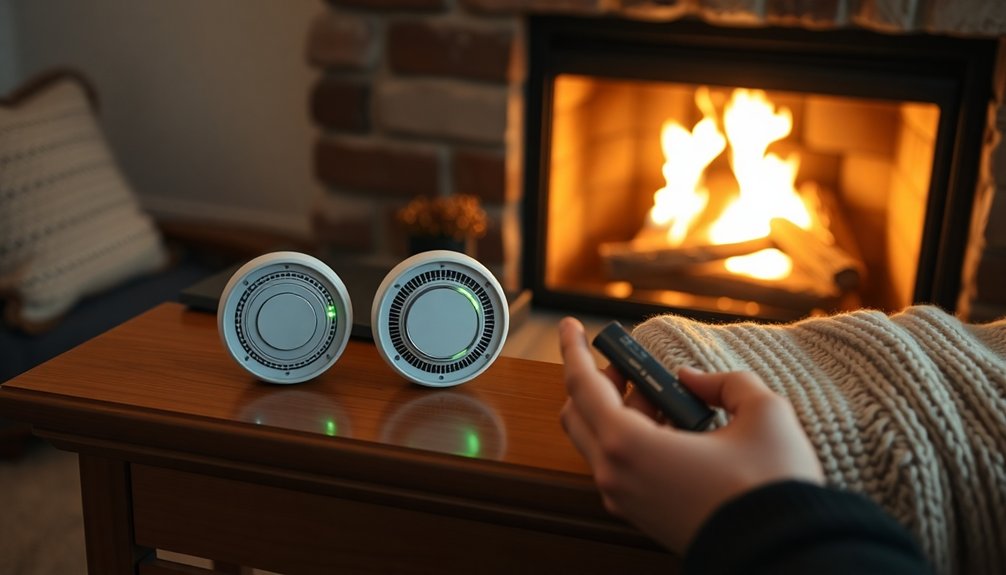
Safety should always be a top priority, especially during the winter months when fireplaces are in frequent use.
One vital step you can take is to replace the batteries in your smoke and carbon monoxide alarms. It’s recommended to do this at least once a year, ideally before winter hits.
Make sure your smoke detectors are strategically placed near sleeping areas and on every level of your home for maximum safety. Many modern smoke detectors have a battery life indicator, letting you know when it’s time to replace the batteries or the unit itself.
According to the National Fire Protection Association, nearly 60% of home fire deaths occur in homes without working smoke detectors, so regular maintenance is essential for your family’s protection. Additionally, ensuring that your home is clean and hygienic can further reduce the risk of fire hazards and improve overall health.
Check the Chimney Cap
Checking your chimney cap is essential for keeping your fireplace safe and functional.
Look for signs of rust or damage, as a compromised cap can lead to water intrusion and unwanted pests.
If you find any issues, replacing or repairing it now can save you from bigger problems later. Additionally, regular inspections detect leaks or issues that could compromise the chimney’s integrity.
Importance of Chimney Caps
While you might focus on lighting your fireplace for warmth, don’t overlook the importance of a chimney cap. A well-installed chimney cap provides essential protection and enhances your fire safety.
Here are four reasons to prioritize it:
- Prevent rain: A chimney cap keeps moisture out, which can cause structural problems.
- Block debris: It stops leaves and twigs from clogging your chimney.
- Deter animals: A cap helps keep pests, like birds and squirrels, from nesting inside.
- Control embers: It prevents embers from escaping and igniting rooftop fires.
If your chimney cap is damaged or missing, be certain to thoroughly clean or replace it.
This simple step can save you from costly repairs and guarantee a safe winter season.
Signs of Damage
How can you be certain your chimney cap is still doing its job? Start by inspecting it for any signs of damage.
Look for signs of rust, corrosion, or physical deterioration. A damaged or missing chimney cap can let rain, debris, and animals into your chimney, leading to blockages and costly repairs.
Pay close attention to any cracks or gaps, as these issues can allow water intrusion that softens mortar and brick.
Additionally, if you notice creosote buildup inside your chimney, it might indicate poor ventilation due to a faulty cap.
Make it a habit to conduct an annual chimney inspection to confirm your chimney cap is secure and effective, protecting your home from potential hazards.
Installation and Maintenance Tips
One essential step for winter preparation is ensuring your chimney cap is in good condition.
A well-fitted chimney cap prevents rain, debris, and animals from blocking your chimney, which can lead to smoke and creosote buildup and even chimney fires.
Here are some tips for inspection and maintenance:
- Inspect regularly for rust or deterioration.
- Replace any damaged or missing caps before the cold season.
- Choose durable materials like stainless steel or copper for longevity.
- Schedule a chimney sweep if you notice blockages or need fireplace repair.
Inspect For Chimney Damage
Before the winter chill sets in, it’s crucial to inspect your chimney for any signs of damage. Look for cracks, loose bricks, and missing mortar; these issues can compromise the safety and integrity of your fireplace system.
Don’t forget to check the chimney liner, as a deteriorating liner can lead to dangerous gas leaks. Also, watch for signs of water damage, like dampness or water stains, which may require waterproofing or repairs.
Regular inspections can help identify blockages caused by animal nests or debris, increasing the risk of chimney fires. To stay safe, schedule an annual inspection with a certified chimney sweep to catch structural issues early and maintain compliance with safety standards. Additionally, ensure proper ventilation techniques to prevent potential hazards related to gas buildup in your home.
Hire a Chimney Sweep
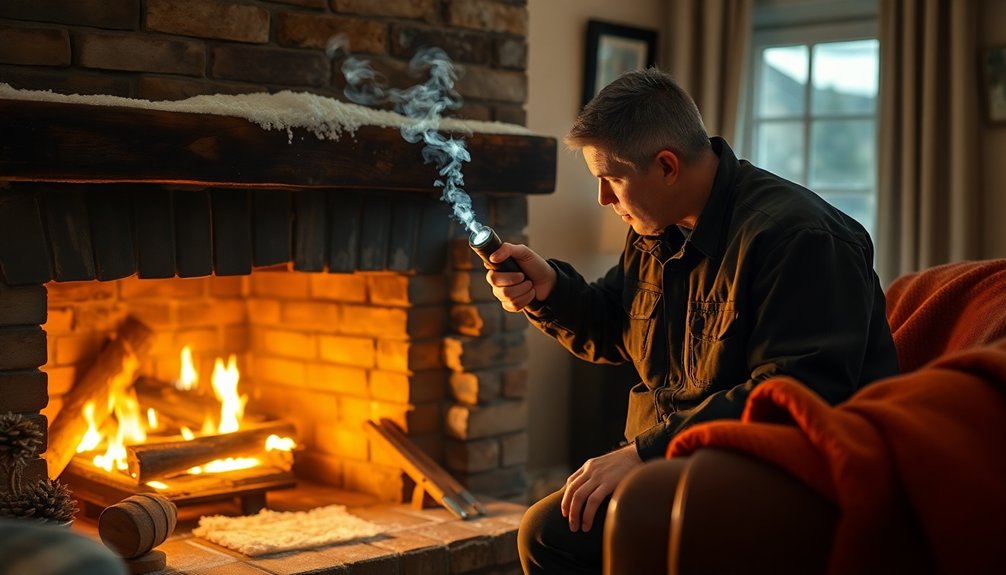
Hiring a chimney sweep is vital for maintaining your fireplace’s safety and efficiency. The National Fire Protection Association recommends annual chimney inspections to prevent dangerous buildups of creosote and soot.
Here’s why you should hire a professional chimney sweep:
Hiring a professional chimney sweep ensures safe removal of creosote and helps identify potential structural issues.
- They safely remove creosote, soot, and debris.
- Regular inspections identify structural issues like cracks or loose bricks.
- A sweep can address blockages from animal nesting or debris.
- The Chimney Safety Institute provides resources to find qualified professionals.
Even if you don’t use your fireplace often, an annual chimney sweep is important for safety. Incorporating a quick clean routine can help you maintain a tidy space around your fireplace.
Don’t wait until it’s too late; make sure your chimney operates efficiently and safely by scheduling your inspection today.
Store Your Firewood Properly Near the Fireplace
When it comes to storing your firewood, location and organization matter.
You’ll want to keep it dry and well-ventilated, while also ensuring easy access during winter.
Cover your wood properly and stack it safely to maintain its quality and avoid fire hazards. Additionally, remember to prioritize high-impact tasks to ensure your fireplace is ready for use when the cold weather hits.
Ideal Firewood Storage Location
To guarantee your fireplace burns efficiently all winter long, it’s crucial to store your firewood in the right location. Here are some key tips to keep in mind:
- Keep your firewood in a dry place, away from moisture, to prevent absorption that can cause increased smoke and creosote buildup.
- Use a firewood rack to elevate the wood off the ground, ensuring it stays dry and maintains quality.
- Organize your firewood within 20 feet of your fireplace for easy access during winter months.
- Rotate your stock by using older wood first, ensuring you always burn seasoned wood, which helps protect your chimney liner and promotes effective burning.
Proper Firewood Cover Techniques
Properly covering your firewood is just as important as storing it correctly. To keep your firewood dry and ready for your fireplace, use a firewood rack that elevates the wood off the ground, protecting it from moisture.
Cover your firewood with a tarp or a dedicated firewood cover to shield it from rain and snow, but guarantee it allows for airflow. Too much moisture can lead to increased smoke and creosote buildup when burned, reducing your fire’s efficiency.
Always prioritize seasoned firewood for burning, and consider rotating your stock to use older wood first. By following these techniques, you’ll enjoy a warm and efficient fire all winter long.
Organizing Firewood for Access
Having your firewood organized and easily accessible can make all the difference on a cold winter night.
To guarantee you have seasoned wood ready to go, follow these steps to organize your firewood for easy access:
- Store firewood in a dry, well-ventilated area to prevent moisture absorption.
- Use a firewood rack to elevate the wood off the ground, keeping it away from moisture and pests.
- Cover your firewood with a tarp during rainy or snowy weather to maintain dryness.
- Stack firewood for easy retrieval, rotating your stock to use older wood first.
Schedule A Fireplace Inspection
Before the winter chill sets in, scheduling a fireplace inspection is essential for ensuring your home remains safe and cozy.
The National Fire Protection Association recommends a professional fireplace inspection at least once a year. This inspection helps identify potential issues like creosote buildup, structural damage, and gas leaks that can lead to serious safety hazards.
A certified chimney sweep will assess the chimney’s integrity and provide necessary cleaning to prevent chimney fires. By catching minor issues early, you can avoid costly repairs and maintain the longevity of your fireplace and chimney. Additionally, just like eco-friendly solutions can benefit your drainage system, ensuring your fireplace is properly maintained can enhance its efficiency and safety.
Make sure to schedule a fireplace inspection before the cold weather hits, so you can enjoy your fireplace worry-free throughout the winter months.
Conclusion
As winter approaches, taking these steps to prep your fireplace and chimney isn’t just smart—it’s crucial. Imagine cozy nights by the fire, free from worry about safety hazards. By clearing clutter, inspecting critical components, and hiring a professional sweep, you’re not just ensuring warmth; you’re investing in peace of mind. So, don’t wait for the first snowfall—get your home ready now, and enjoy the season with the comfort and safety you deserve!