To build a family chore chart that actually gets used, start by involving everyone in the process. Gather input on tasks and preferences to foster buy-in. Choose a visually appealing format that suits your family’s style and assign age-appropriate chores for all members. Make sure responsibilities are evenly distributed and adjust tasks as needed. Track progress and celebrate achievements to keep everyone motivated. Keep going to discover more tips for maximizing engagement and effectiveness!
Why a Family Chore Chart Can Transform Your Household
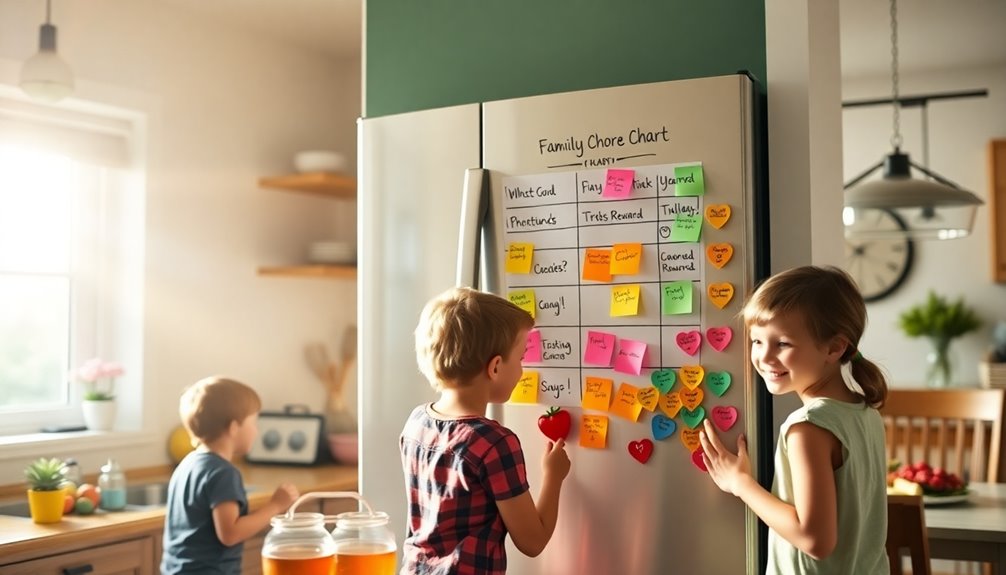
Creating a family chore chart can considerably improve your household dynamics, especially when everyone pitches in. By clearly assigning tasks, you eliminate confusion and resentment, fostering a sense of teamwork.
Each family member knows their responsibilities, which creates accountability and encourages cooperation. This structure promotes household harmony, as chores are no longer a source of contention.
Clear responsibilities foster accountability and cooperation, transforming chores into a source of harmony rather than conflict.
You’ll find that everyone feels more invested in maintaining a clean and organized home. Plus, engaging in shared responsibilities teaches valuable life skills and reinforces the importance of contributing to the family unit. Regular cleaning routines can also boost mental well-being, ultimately leading to stronger relationships and a happier family life.
With everyone on the same page, you can enjoy a more peaceful home environment, ultimately leading to stronger relationships and a happier family life.
Involving Everyone: Getting Family Buy-In
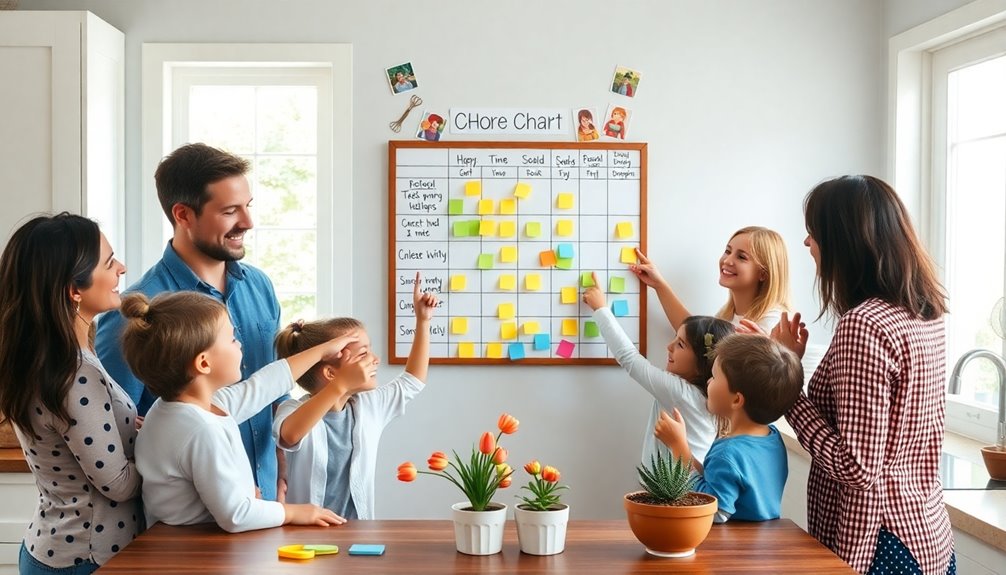
To guarantee everyone is on board with the family chore chart, it’s essential to involve each member in the process. Start by gathering family input on what chores need to be done and who might be best suited for each task. This helps create a sense of shared ownership, making everyone feel valued and responsible.
Encourage open discussions about preferences and availability, so each person feels their voice matters. You might even hold a family meeting to brainstorm ideas and assign responsibilities collaboratively. Additionally, consider implementing a 10-minute daily tidy-up routine to make cleaning feel more manageable and fun for everyone involved.
Choosing the Right Format for Your Chore Chart
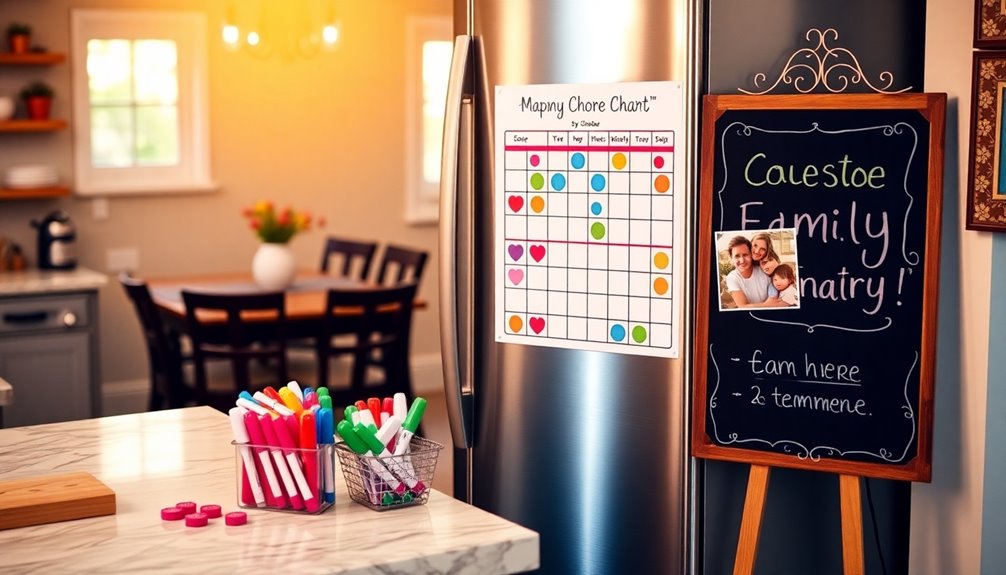
When choosing a format for your chore chart, think about what’ll catch your family’s attention.
Whether you prefer a colorful paper chart or a sleek digital version, visual appeal plays a big role in engagement.
Consider which option fits your home and lifestyle best to keep everyone motivated. Additionally, incorporating age-appropriate responsibilities in your chore chart can enhance engagement and ensure tasks are suitable for each family member.
Visual Appeal Matters
Visual appeal plays an essential role in the effectiveness of your chore chart, as an attractive design can motivate family members to participate.
Start by choosing vibrant color schemes that resonate with your family. Consider chart themes that reflect your household’s personality, whether it’s fun and playful or organized and structured.
Use attractive fonts that are easy to read, paired with engaging graphics to draw attention. Incorporate playful illustrations that spark interest and create a friendly atmosphere.
Opt for bright colors to make the chart stand out, ensuring it’s an eye-catching design. Finally, experiment with creative layouts that allow easy navigation.
When your chore chart is visually appealing, it’s more likely to be embraced by everyone!
Digital vs. Paper Options
Choosing between a digital or paper chore chart can greatly impact your family’s organization and engagement.
Digital tools offer the convenience of access from any device, allowing you to update tasks in real-time and send reminders. They can also come with fun features like rewards systems or progress tracking that might motivate your kids.
On the other hand, paper charts can create a tactile experience that some families find more engaging. They allow you to showcase creativity with colors and drawings, making chores feel more like a fun activity.
Consider your family’s preferences and routines when deciding. Ultimately, whether you choose digital tools or paper charts, the key is to find a format that everyone will use consistently.
Assigning Age-Appropriate Chores for Kids
When assigning chores, it’s essential to take into account your kids’ ages and abilities. Toddlers can handle simple tasks, while preschoolers enjoy fun chores that you can do together. For teens, focus on building responsibility and independence with more complex duties. Additionally, incorporating a drain filter can help prevent clogs caused by hair and debris while teaching kids about household maintenance.
Toddlers: Simple Tasks Only
Introducing age-appropriate chores for toddlers can be a fun way to instill a sense of responsibility while keeping tasks manageable.
Start by selecting simple toddler tasks that are easy to understand. For example, you can have your little one put away their toys, match socks, or help wipe spills with a damp cloth.
These engaging activities not only teach them about contributing to the household but also build their confidence. Make it a game by timing how fast they can complete their tasks or singing a song while they work.
Preschoolers: Fun Chores Together
As your child grows into the preschool years, involving them in fun chores together can foster teamwork and responsibility. Choose age-appropriate, engaging tasks that make chores feel like fun activities rather than chores.
For example, let them help you sort laundry by colors or organize their toys. You can turn cleaning into a game by timing how fast they can pick up items or by singing a silly song while you work together.
Gardening can also be a great option—let them water plants or dig in the dirt. These shared experiences not only teach skills but also create lasting memories.
Teens: Responsibility and Independence
While your teen is steering their journey toward independence, assigning age-appropriate chores can help them develop essential life skills. Start with tasks that match their maturity level, like doing laundry, cooking simple meals, or managing their own schedules.
These chores build independence skills and give them a sense of responsibility. To boost teen motivation, connect chores to their interests; for example, if they love music, let them create a playlist while cleaning.
Encourage them to set goals and reward themselves after completing tasks. Remember, the aim isn’t just to lighten your load but to empower them for adulthood.
Balancing Responsibilities: Fair Distribution of Tasks
To create a harmonious household, you need to guarantee that chores are distributed fairly among family members.
Balancing responsibilities through effective task delegation guarantees everyone contributes to an equitable workload. Here are some tips to contemplate:
- Assess abilities: Identify each family member’s strengths and weaknesses.
- Rotate tasks: Switch chores regularly to prevent boredom and encourage skill development.
- Involve everyone: Engage family members in discussions about their preferences and availability.
- Monitor and adjust: Regularly review the chore chart to guarantee it meets everyone’s needs. Additionally, implementing a reward system can motivate family members to participate actively in their assigned tasks.
Making It Visual: Creative Chart Designs and Layouts
Creating a visually appealing chore chart can make all the difference in encouraging family participation. Start by choosing vibrant color themes that reflect your family’s personality.
Designing a colorful chore chart can spark enthusiasm and boost family engagement in household tasks.
Experiment with different layout styles—consider a grid format or a weekly planner design. Use creative templates available online, or design your own with artistic designs that resonate with your kids.
Incorporate interactive elements like checkboxes or spaces for sticker rewards, making completion satisfying and fun. Magnet boards can also be an engaging option, allowing for easy repositioning of tasks.
If you prefer a digital approach, utilize digital graphics to create an eye-catching chart that can be updated easily. The key is to make it inviting so everyone feels excited to get involved! Additionally, a well-organized environment promotes mental clarity and encourages a positive atmosphere for completing chores.
Incorporating Rewards and Incentives for Motivation
Making your chore chart visually appealing is just the first step; adding rewards and incentives can truly boost motivation.
By implementing effective reward systems and incentive programs, you’ll encourage your family to take ownership of their chores. Here are some ideas to get you started:
- Sticker Rewards: Earn stickers for completed chores, which can be traded for a bigger prize.
- Chore Points: Accumulate points for each task completed, redeemable for a family outing or treat.
- Weekly Contests: Create friendly competitions where the most diligent family member wins a special reward.
- Surprise Bonuses: Occasionally surprise your family with unexpected rewards for consistent effort.
These strategies not only make chores more enjoyable but also foster a sense of accomplishment, as involvement in chores teaches responsibility and essential life skills.
Setting a Routine: Establishing Consistency in Chore Time
To make chores a regular part of your family’s routine, you need to designate specific times for each task. Creating a visual schedule can help everyone see what needs to be done and when. This way, chores become a consistent part of your day, making it easier for everyone to pitch in. Incorporating a chore chart can significantly enhance engagement and accountability among family members.
Designate Specific Chore Times
Designating specific chore times can transform the way your family approaches household responsibilities. By establishing a consistent schedule, you’ll enhance time management and guarantee everyone knows when their turn comes up in the chore rotation.
Here’s how to make it work:
- Choose a regular time: Pick a daily or weekly slot that fits into everyone’s routine.
- Get everyone involved: Allow family members to voice preferences on their chore timing.
- Set reminders: Use alarms or calendars to keep everyone accountable.
- Be flexible: Life happens—adjust chore times when necessary to maintain harmony.
Create a Visual Schedule
A visual schedule can be a game changer for your family chore chart, providing a clear and engaging way to keep track of responsibilities.
By incorporating engaging visuals, you make chores more appealing and easier to understand for everyone. Use colorful charts, stickers, or images that represent each task, turning the chore process into a fun activity instead of a dull obligation.
The visual schedule benefits your family by establishing a consistent routine, helping kids remember their chores without constant reminders. You’ll notice improved accountability as they see their responsibilities laid out in front of them.
Plus, it fosters teamwork, as everyone can see what needs to be done and when, making your household run smoothly.
Encouraging Teamwork: Making Chores a Family Activity
Chores don’t have to be a monotonous task; they can become an enjoyable family bonding experience. By embracing a collaborative spirit, you can turn chores into team-building activities.
Here are some ideas to make chores a fun family affair:
- Create a chore playlist: Sing along while you clean to keep the mood light.
- Set a timer: Race against the clock to see who can finish their tasks first.
- Reward teamwork: Celebrate completed chores with a family movie night or treat.
- Rotate tasks: Change up responsibilities to keep everyone engaged and learning new skills.
Additionally, establishing a regular cleaning routine can help instill the habit of teamwork in your family while maintaining a tidy home.
Tracking Progress: How to Monitor Completion of Tasks
When it comes to keeping track of who’s completed their tasks, a clear system can make all the difference. Start by using a simple chart where everyone can mark off their task completion. You might consider color-coding or using stickers to make it visually appealing and engaging.
Regular progress updates are essential; set aside time each week to review the chart together. This fosters accountability and encourages everyone to stay on track. Additionally, consider incorporating a rewards system for completed tasks to keep motivation high. By monitoring progress collectively, you’ll create a sense of teamwork and responsibility, making chores feel less like a burden and more like a shared family goal. Implementing a chore chart can help ensure that tasks are divided fairly and efficiently among family members.
Adjusting the Chore Chart: Adapting to Changing Needs
As families grow and change, so do the needs for maintaining a balanced household.
It’s essential to regularly adjust your chore chart to reflect evolving needs and adapting responsibilities. Here are a few tips to keep your chart effective:
- Reassess schedules: Check if family members have new commitments or activities.
- Incorporate feedback: Ask for input on which chores feel fair or manageable.
- Rotate tasks: Change responsibilities to prevent boredom and build new skills.
- Celebrate achievements: Recognize completed chores to motivate everyone.
Troubleshooting Common Chore Chart Challenges
How can you tackle the challenges that come with managing a family chore chart? First, identify common mistakes like assigning tasks that are too difficult or not age-appropriate. This can lead to frustration and disengagement.
To avoid chore chart pitfalls, guarantee tasks are balanced and fair. If one family member feels overwhelmed, it’s time to reassess. Regularly check in with everyone to discuss what’s working and what isn’t.
If motivation dips, consider rotating chores to keep things fresh or introduce rewards for completed tasks. Also, be flexible; life happens, and sometimes adjustments are necessary.
Celebrating Success: Recognizing Achievements Together
Celebrating achievements in your family chore chart not only boosts morale but also reinforces teamwork.
When you take time to recognize everyone’s hard work, it creates a positive atmosphere and encourages continued participation.
Here are some fun ways to celebrate:
- Weekly shout-outs: Acknowledge each family member’s contributions during family dinners.
- Milestone rewards: Set specific goals and reward everyone when you hit them together.
- Celebrate with treats: Enjoy a special dessert or snack after completing a week’s chores.
- Create a visual display: Hang up a board showcasing shared achievements and milestones.
Conclusion
With your family chore chart in place, you’re not just organizing tasks; you’re weaving a tapestry of collaboration and responsibility. Each thread represents a family member’s contribution, creating a vibrant picture of teamwork. By celebrating achievements together, you’ll foster a sense of pride and unity, turning chores into shared moments of joy. Embrace the journey, adapt as needed, and watch your household flourish like a well-tended garden, blooming with cooperation and harmony.