To safely clean and disinfect floors in high-traffic areas, start by clearing the space of any furniture or obstructions. Use a vacuum or broom to remove dirt, then mop with a suitable cleaner for your floor type. For added protection, choose eco-friendly disinfectants that are EPA-approved. Be sure to dry the floor completely to prevent slips. Regular maintenance is key, and there’s more to explore on effective techniques and schedules for ideal cleanliness.
Why Cleaning and Disinfecting Floors Is Essential
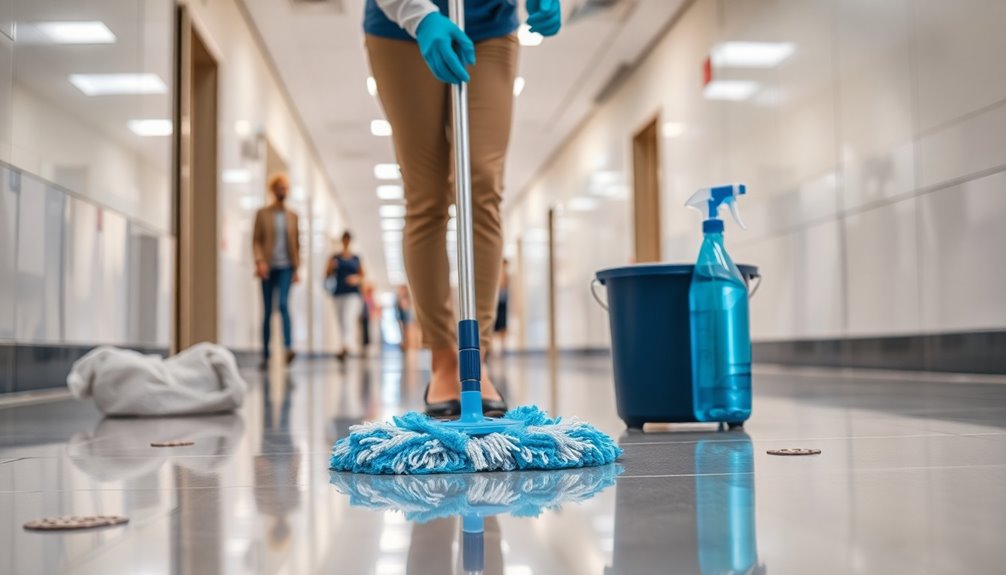
Cleaning and disinfecting floors is essential because it helps maintain a healthy living environment. You mightn’t realize it, but dirty floors can harbor harmful bacteria and viruses that pose risks to your health.
By regularly cleaning and disinfecting, you greatly enhance infection control in your home or workplace. This practice yields numerous health benefits, including reducing allergens and preventing the spread of illnesses.
When you take the time to keep your floors clean, you’re not just tidying up; you’re creating a safer space for yourself and others. Plus, it’s a simple yet effective way to promote overall well-being.
Understanding Different Flooring Materials
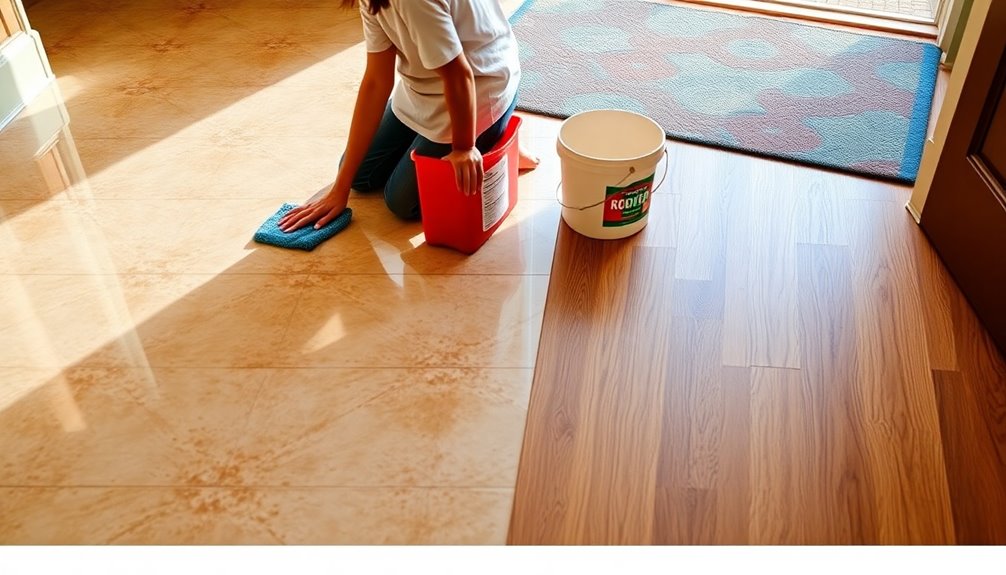
When you consider cleaning and disinfecting your floors, it’s essential to understand the different types of flooring materials you might encounter.
Tile flooring is durable and water-resistant, making it easy to clean with appropriate disinfectants.
Tile flooring offers durability and water resistance, simplifying the cleaning process with suitable disinfectants.
For carpet care, you’ll want to vacuum regularly and use specialized cleaners to tackle stains and odors effectively.
Hardwood maintenance requires gentle cleaning solutions to avoid damaging the finish, while ensuring you don’t oversaturate the wood.
Vinyl cleaning is straightforward, as it typically just needs a damp mop and mild detergent.
Knowing these specifics helps you choose the right cleaning methods and maintain your floors effectively, ensuring your high-traffic areas stay clean and safe. Additionally, it’s crucial to use distilled water in high-moisture areas to prevent water stains and damage during cleaning.
Choosing the Right Cleaning Supplies and Disinfectants
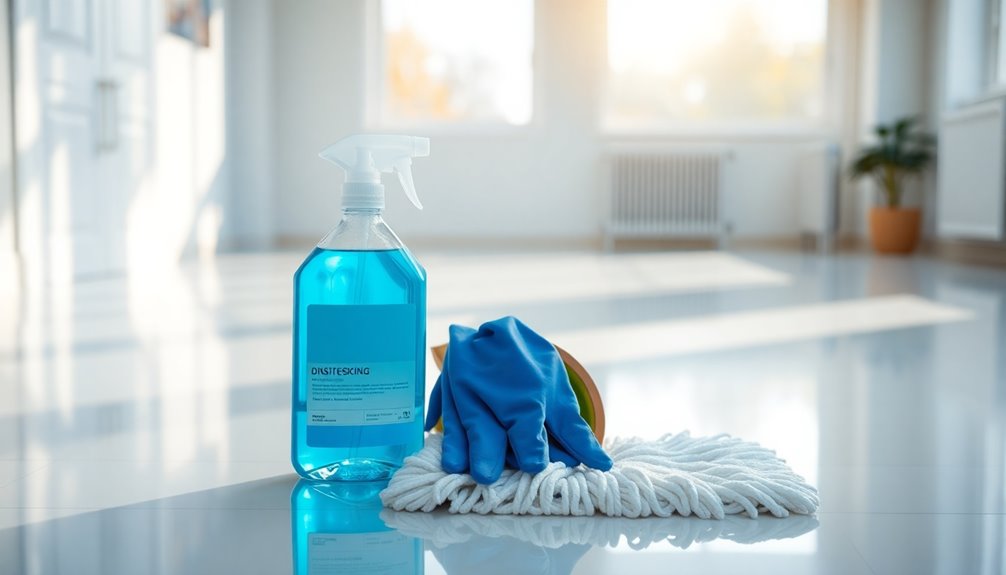
Selecting the right cleaning supplies and disinfectants is key to maintaining the appearance and hygiene of your floors, regardless of the material.
Start by considering eco-friendly options that are effective yet gentle on the environment. Look for products labeled as biodegradable or non-toxic, ensuring they won’t harm your family or pets.
When evaluating disinfectants, check for EPA approval to guarantee their effectiveness against germs and viruses. Always prioritize chemical safety by reading labels carefully and following usage instructions.
Avoid mixing different cleaners, as this can create hazardous reactions. By choosing safe and effective products, you’ll not only keep your floors clean but also contribute to a healthier indoor environment. Additionally, consider using products that contain biodegradable ingredients to further enhance your eco-friendly cleaning efforts.
Preparing Your Space for Effective Cleaning
To guarantee your cleaning session is effective, start by clearing the floor of any furniture, rugs, or obstacles that might hinder your progress. This step is essential for space organization, allowing you to move freely and access every corner.
Once the area is clear, gather your cleaning supplies and organize them in a convenient spot. Having everything you need—like brooms, mops, and disinfectants—within reach will save you time and keep your focus on the task at hand.
Take a moment to inspect your floor for any stains or high-traffic spots that need extra attention. By preparing your space effectively, you’re setting yourself up for a smooth and productive cleaning experience. Additionally, implementing daily decluttering strategies can help maintain a clear and organized space for future cleaning sessions.
Step-by-Step Guide to Sweeping and Vacuuming
With your space now clear and organized, it’s time to tackle the floors by sweeping and vacuuming.
Start by choosing the right cleaning techniques for your flooring type. For hard surfaces, use a broom to gather dirt and debris into a pile. Make certain to get into corners and edges where dust collects. Then, use a dustpan to collect the debris.
Choose the right cleaning techniques for your flooring type, ensuring you get into corners and edges for a thorough clean.
If you’re dealing with carpets, grab a vacuum cleaner and verify it’s set to the correct height for effective floor maintenance. Work methodically, moving from one side of the room to the other. Regularly check for spills or stains to address immediately and maintain cleanliness.
Don’t forget to empty the vacuum’s bag or canister for peak performance. Regular sweeping and vacuuming will keep your floors looking their best.
How to Mop Floors Safely and Effectively
Although mopping may seem straightforward, doing it safely and effectively requires a few key steps.
First, choose the right mopping technique for your floor type; wet mopping works well on hard surfaces, while damp mopping is better for delicate materials.
Before you start, verify the area is free of obstacles to maintain floor safety and prevent slips.
Use a clean mop and an appropriate cleaning solution, and always wring out excess water to avoid puddles.
Start in the corner farthest from the exit and work your way toward the door, using a figure-eight motion for maximum coverage.
Finally, allow the floor to dry completely before walking on it to minimize any risk of accidents. Additionally, consider implementing a regular decluttering schedule to maintain an organized space, which can make cleaning high-traffic areas more efficient.
Disinfecting High-Touch Areas: What You Need to Know
When it comes to disinfecting high-touch areas, having the right supplies is essential.
You’ll want to gather effective disinfectants and cleaning tools to guarantee a thorough job.
Understanding proper techniques will help you tackle these surfaces effectively and keep your space safe. Regular use of non-toxic cleaners promotes a hygienic environment while prioritizing family safety.
Essential Disinfecting Supplies
To effectively disinfect high-touch areas, you’ll need a few essential supplies that make the job easier and more efficient.
Having the right tools on hand guarantees you can tackle those frequently used surfaces with confidence. Here’s what you should gather:
- Disinfecting wipes: Ideal for quick cleaning of surfaces.
- Spray disinfectant: For larger areas or stubborn spots.
- Microfiber cloths: Great for wiping down surfaces without leaving lint.
- Broom and dustpan: To keep floors clear of debris before disinfecting.
- Mop: Use a reliable mop with a suitable disinfectant solution for deeper cleaning.
With these supplies, you’ll be well-equipped to maintain a safe and hygienic environment.
Proper Cleaning Techniques
Having the right supplies is just the start; knowing how to use them effectively is key to disinfecting high-touch areas. First, gather your proper equipment, including microfiber cloths, mops, and EPA-approved disinfectants. Follow your cleaning schedules consistently to guarantee these areas remain sanitized.
When disinfecting, start from the highest point and work your way down. Wipe surfaces like doorknobs, light switches, and handrails thoroughly, allowing the disinfectant to sit for the recommended time.
For floors, mop with a disinfectant solution, focusing on spots that see the most traffic. Don’t forget to change cloths frequently to avoid spreading germs.
Avoiding Common Mistakes When Cleaning Floors
Here are some common pitfalls to watch out for:
- Skipping vacuuming before mopping: Dust and debris can scratch the surface.
- Using the wrong cleaning solution: Verify it’s suitable for your floor type.
- Over-wetting the floor: Excess water can damage certain materials.
- Neglecting to change cleaning pads: Dirty pads can spread grime instead of removing it.
- Failing to follow proper cleaning techniques: Always use a systematic approach to cover the entire area.
Additionally, be sure to choose the right cleaning products to prevent damage to your floors.
Best Practices for Maintaining Clean Floors Daily
Maintaining clean floors daily can greatly enhance the overall appearance of your space and extend the life of your flooring.
Start by sweeping or vacuuming to remove dirt and debris. This daily maintenance prevents scratches and buildup.
Next, mop your floors with a suitable cleaner for the material—be it hardwood, tile, or laminate. Make sure you’re using a damp mop, as excess water can damage some surfaces.
Designate a specific time each day for your floor care routine to establish consistency. Encourage family members or staff to help by setting a cleaning schedule.
Finally, consider using mats at entry points to trap dirt before it reaches your floors. Additionally, regular sweeping or vacuuming prevents dirt buildup and maintains the integrity of your flooring.
With these practices, you’ll keep your floors looking great every day.
How Often Should You Clean High-Traffic Floors?
How frequently should you clean high-traffic floors to keep them looking their best?
Following frequency recommendations can help maintain cleanliness and extend the life of your flooring. Here are some cleaning schedules to evaluate:
- Daily: Sweep or vacuum to remove dirt and debris.
- Weekly: Mop with a suitable cleaner to eliminate stains and germs.
- Bi-Weekly: Deep clean carpets or rugs with a professional service or rental equipment.
- Monthly: Inspect for damage and address any repairs needed.
- Seasonally: Apply a protective sealant or wax to hard surfaces for added durability. Additionally, regular disinfection prevents infections and helps maintain a healthy environment in high-traffic areas.
Eco-Friendly Alternatives for Floor Cleaning
When it comes to cleaning your floors, you don’t have to rely on harsh chemicals.
There are plenty of natural cleaning solutions and DIY disinfectant recipes that are effective and safe for the environment.
Let’s explore some easy options that you can whip up at home. Incorporating eco-friendly scrub brushes can enhance your cleaning routine while minimizing environmental impact.
Natural Cleaning Solutions
While commercial cleaners can be effective, many people prefer natural cleaning solutions for their floors due to their eco-friendly benefits and safety for families and pets.
You can create homemade solutions using simple natural ingredients that are just as powerful. Here are some great options to evaluate:
- Vinegar and water: Mix equal parts for a versatile cleaner.
- Baking soda: Use it as a gentle abrasive for scrubbing.
- Essential oils: Add a few drops for pleasant scents and added antibacterial properties.
- Castile soap: This plant-based soap is effective for many surfaces.
- Lemon juice: Use it for its natural antiseptic qualities and fresh aroma.
These natural cleaning solutions will help you maintain clean and safe floors without harsh chemicals.
DIY Disinfectant Recipes
If you’re looking for effective ways to disinfect your floors using natural ingredients, you’re in luck. You can easily whip up homemade disinfectants that are powerful yet eco-friendly.
One simple recipe includes mixing one cup of white vinegar, one cup of water, and a few drops of your favorite essential oil blends, like tea tree or lavender, for added antimicrobial properties.
Another option is combining two cups of water, half a cup of hydrogen peroxide, and a few drops of essential oils. These solutions not only clean but also leave your space smelling fresh.
Remember to test any DIY disinfectant on a small area first to guarantee it won’t damage your flooring. Enjoy a clean home without harsh chemicals!
Tips for Professional-Quality Results at Home
Achieving professional-quality results at home requires more than just a quick sweep and mop; it demands attention to detail and the right techniques.
For effective floor cleaning and disinfecting techniques, follow these tips:
- Choose the right cleaner: Use a suitable floor cleaner according to your flooring type.
- Prep the area: Remove furniture and debris to guarantee a thorough clean.
- Use a microfiber mop: It traps dirt and dust better than traditional mops.
- Work in sections: Focus on one area at a time to avoid missing spots.
- Let it dry properly: Allow floors to air dry completely to prevent slips and guarantee disinfecting agents work effectively.
When to Call in Professional Cleaning Services?
Knowing when to call in professional cleaning services can save you time and guarantee a deep clean that DIY methods mightn’t achieve.
Look for signs of necessity, like persistent stains, strong odors, or an overwhelming amount of dirt and grime. If your floors have lost their shine or you notice discoloration, it’s a good indication that it’s time to hire experts.
Signs that it’s time to hire professionals include persistent stains, strong odors, or floors that have lost their shine.
Additionally, if your high-traffic areas require more than regular maintenance, professionals can bring in specialized equipment and cleaning solutions that you mightn’t have access to.
Don’t hesitate to reach out if you’re preparing for an event or simply want to maintain a healthy environment. A professional touch can make all the difference in keeping your floors pristine.
Conclusion
In conclusion, keeping floors in high-traffic areas clean and disinfected is vital for health and safety. Did you know that about 80% of infections are transmitted by touch? By following the steps outlined, you can greatly reduce the spread of germs in your space. Whether you choose eco-friendly options or professional services, maintaining a clean environment is essential. Regular upkeep not only enhances aesthetics but also promotes well-being for everyone who walks through.