To clean and disinfect your pet’s bowls, toys, and beds safely, use natural solutions like a vinegar and water mix. Rinse bowls, wash them with mild soap, and dry thoroughly. For toys, spray the vinegar solution, let it sit for 10 minutes, then rinse well. Wash pet beds on a gentle cycle with pet-safe detergent. Establish a regular cleaning routine to maintain a healthy environment. Want more tips on keeping your pet’s space clean?
Why Cleaning Pet Bowls, Toys, and Beds Is Essential
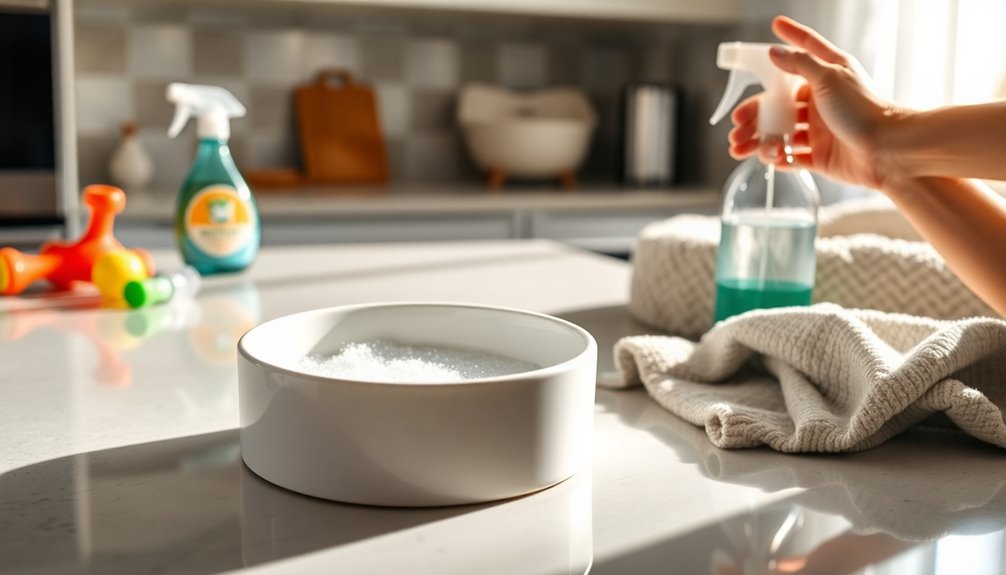
While it might seem like a hassle, regularly cleaning your pet’s bowls, toys, and beds is essential for their health and happiness.
Keeping these items clean not only enhances your pet’s living environment but also promotes good hygiene practices. Dirty bowls can harbor bacteria, leading to digestive issues and infections. By maintaining cleanliness, you guarantee your furry friend enjoys their meals without risk. Cleaning your kitchen sponge can also serve as a reminder that hygiene extends beyond pet items. Toys that aren’t cleaned can collect dirt and pathogens, which can cause skin irritations or illnesses. Additionally, fresh bedding helps prevent allergies and keeps your pet comfortable.
Embracing these simple cleaning routines offers numerous health benefits, guaranteeing your pet stays vibrant and joyful.
Safe Cleaning Supplies for Your Pet’s Essentials
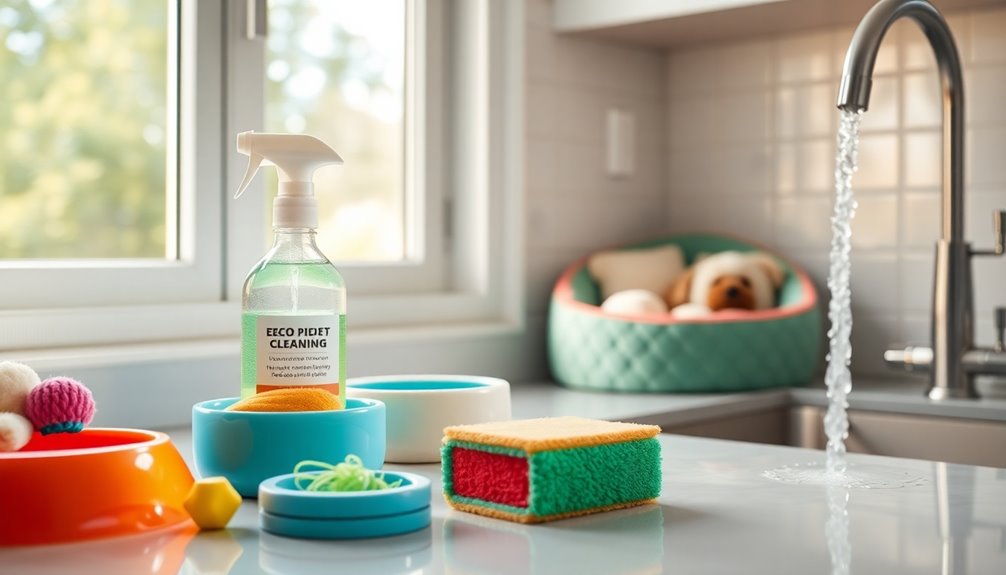
When it comes to cleaning your pet’s essentials, choosing the right supplies is essential. You’ll want to stick with natural cleaning solutions and pet-safe disinfectants that won’t harm your furry friends. Avoiding harmful chemicals will keep their bowls and toys safe while ensuring a clean environment. Consider using products from B Corp certified companies that prioritize sustainability and safety for both pets and the planet.
Natural Cleaning Solutions
Using natural cleaning solutions not only keeps your pet’s bowls and toys safe but also helps create a healthier home environment. Eco friendly cleaners are great alternatives to harsh chemicals, ensuring your furry friends stay protected.
One effective option is a vinegar solution, which you can easily make by mixing equal parts of water and white vinegar. This solution not only disinfects but also eliminates odors, making it perfect for cleaning pet items. Simply soak the bowls and toys in the mixture for a few minutes, then rinse thoroughly with water.
For pet beds, sprinkle baking soda before vacuuming to absorb moisture and odors. With these natural methods, you can maintain a clean and safe space for your beloved pets.
Pet-Safe Disinfectants
To guarantee your pet’s essentials stay clean and safe, choosing the right disinfectants is crucial. Look for products that feature pet safe ingredients, ensuring your furry friends won’t be exposed to harmful chemicals.
Vinegar and baking soda are excellent natural alternatives that can effectively disinfect while being gentle on your pet.
If you prefer commercial options, many brands now offer eco friendly options that prioritize both safety and effectiveness. These products often contain plant-based ingredients that effectively eliminate germs without posing risks to your pet’s health.
Always read the labels and check for certifications that verify their safety. By selecting the right disinfectants, you’ll keep your pet’s bowls, toys, and beds clean without compromising their well-being.
Avoid Harmful Chemicals
Although many household cleaners promise a deep clean, they often contain harmful chemicals that can jeopardize your pet’s health. Instead of risking exposure, opt for safer chemical alternatives. You can create effective cleaning solutions using simple ingredients like vinegar, baking soda, and lemon juice.
These eco-friendly products not only clean well but also keep your furry friends safe from toxic residues.
When cleaning your pet’s bowls, toys, and beds, always rinse thoroughly to remove any cleaning solution. Additionally, look for commercial cleaners specifically designed to be pet-safe, ensuring they’re free from harsh chemicals.
Step-by-Step Guide to Cleaning Pet Bowls
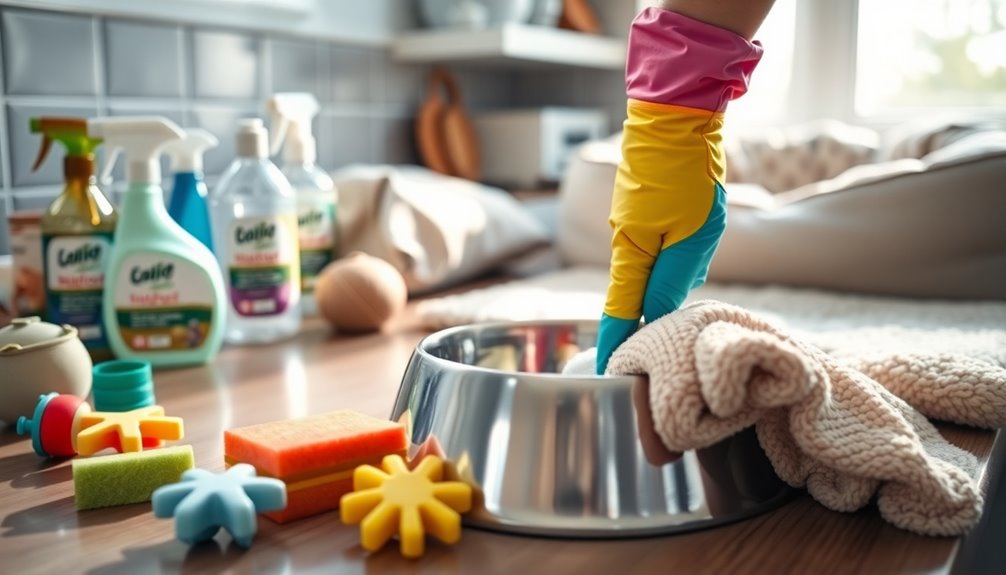
Cleaning your pet’s bowls doesn’t have to be a challenging task; in fact, it can be quite simple with the right approach.
Start by gathering your supplies: mild dish soap, warm water, and a soft sponge. Rinse the bowl to remove any leftover food.
For stainless steel or ceramic bowls, wash them with soap and water, ensuring you scrub all surfaces. If you use plastic bowls, check for scratches where bacteria can hide.
After rinsing thoroughly, dry the bowls with a clean towel. Aim to clean your pet’s bowls daily for food and weekly for water.
Regular cleaning frequency helps prevent bacteria buildup, keeping your furry friend safe and healthy, regardless of the bowl materials you choose. Additionally, using non-toxic cleaners can further ensure a safe environment for your pets during the cleaning process.
How to Disinfect Pet Toys Without Harsh Chemicals
When it comes to keeping your pet’s toys clean, you don’t need harsh chemicals. Natural cleaning solutions can effectively disinfect while ensuring safety for your furry friend. By using eco-friendly products, you can achieve a clean home while minimizing your environmental impact.
Natural Cleaning Solutions
If you want to keep your pet’s toys safe and free from harmful chemicals, natural cleaning solutions are a great choice.
Eco-friendly alternatives like vinegar solutions can effectively disinfect and sanitize without the risks associated with harsh chemicals. To use vinegar, simply mix equal parts of water and white vinegar in a spray bottle.
Spray the mixture on your pet’s toys and let it sit for about 10 minutes before rinsing thoroughly. This not only kills germs but also helps eliminate odors.
You can also add a few drops of essential oils, like lavender or tea tree, for added antibacterial properties.
With these simple, natural methods, you’ll guarantee your pet’s toys are clean and safe for playtime.
Safe Washing Techniques
Natural cleaning solutions provide a fantastic foundation for keeping your pet’s toys safe, but knowing the right washing techniques can further enhance their cleanliness.
Start by rinsing toys with warm water to remove any debris. For a deeper clean, mix equal parts water and white vinegar or use a gentle castile soap solution. Soak the toys for about 10-15 minutes, then scrub with a soft brush to get into crevices. Rinse thoroughly afterward to eliminate any residue.
You should aim for safe washing at least once a week, especially for toys your pet uses frequently. If they’ve been outside, increase the cleaning frequency to keep germs at bay and guarantee your furry friend stays healthy and happy.
Routine Maintenance Tips
Although keeping your pet’s toys clean might seem challenging, it’s easy to maintain a disinfecting routine without resorting to harsh chemicals.
Start by establishing a cleaning frequency that suits your pet’s activity level—weekly for heavy chewers and bi-weekly for light users. Create a maintenance checklist to keep you on track.
Use a mixture of warm water and white vinegar to soak toys for about 10-15 minutes, then scrub with a soft brush to remove dirt and bacteria. Rinse thoroughly and let them air dry.
For plush toys, toss them in the washing machine on a gentle cycle. By following these simple steps, you’ll guarantee your pet’s toys stay safe and clean, promoting their health and happiness.
Effective Methods for Washing Pet Beds and Blankets
While keeping your pet’s environment clean is essential for their health, washing their beds and blankets can be a straightforward task.
Start by checking the care labels for specific washing techniques based on the fabric materials. For machine-washable items, use a gentle cycle with mild detergent. If the bed or blanket is large, consider using a commercial laundromat for larger machines.
For non-machine-washable items, spot clean with a pet-safe cleaner and warm water. Always make sure you rinse thoroughly to remove any soap residue. Regularly washing your pet’s bedding also helps prevent dirt buildup, which is crucial for maintaining a healthy living space.
After washing, dry the items completely to prevent mildew. Regularly washing your pet’s bedding not only keeps it fresh but also helps reduce allergens and odors, making certain a comfy space for your furry friend.
Tips for Maintaining a Clean Pet Environment
To maintain a clean pet environment, you should establish a regular cleaning routine that addresses all areas your pet frequents.
Start by designating specific days for washing pet bowls, toys, and bedding. Incorporate pet hygiene practices such as vacuuming pet hair and wiping down surfaces with pet-safe disinfectants. Regularly check your pet’s favorite spots for dirt and debris, cleaning as needed to guarantee a clean living environment. Don’t forget to wash your hands after handling pet items to minimize germs. Additionally, using rubber gloves and squeegee techniques can help effectively remove pet hair from various surfaces. Finally, create a checklist to track your cleaning tasks and guarantee nothing is overlooked.
Signs Your Pet’s Items Need Cleaning or Replacing
Keeping an eye on your pet’s belongings is essential for their health and well-being. If you notice a foul odor coming from their bowls, toys, or beds, it’s a clear sign that they need cleaning. Odors can harbor bacteria, posing a threat to your pet’s health.
Additionally, visible dirt, such as food residue, hair, or grime, indicates that it’s time to scrub those items down. Don’t ignore worn-out or damaged toys, as they can become a choking hazard. If items are excessively stained or frayed, replacing them is the safest choice. Regularly checking for these signs helps maintain a clean environment and keeps your furry friend happy and healthy. Remember, prevention is always better than cure! Incorporating natural cleaning techniques can help ensure that your pet’s items are cleaned safely and effectively.
Common Mistakes to Avoid When Cleaning Pet Items
When it comes to cleaning your pet’s items, overlooking a few key practices can lead to ineffective results.
One common mistake is overcleaning, which can strip away protective coatings and damage materials. You might think more frequent cleaning is better, but this can create overcleaning risks that harm your pet’s belongings.
Another issue is improper drying. If you don’t dry items thoroughly, moisture can lead to mold and bacteria growth, which defeats the purpose of cleaning. Always guarantee bowls, toys, and beds are completely dry before giving them back to your pet. Additionally, regular maintenance of these items can help prevent future buildup of harmful bacteria.
Conclusion
Keeping your pet’s bowls, toys, and beds clean isn’t just about hygiene—it’s about their health, happiness, and well-being. By using safe supplies, following proper cleaning methods, and staying vigilant for signs of wear, you can create a safe haven for your furry friend. So, disinfect with care, wash regularly, and maintain a fresh environment. Remember, a clean space leads to a happy pet, and a happy pet means peace of mind for you.