To safely get rid of mold and mildew in your bathroom, start by scrubbing the affected areas with a mixture of vinegar and baking soda. This natural solution kills spores and lifts grime. Guarantee good ventilation by using exhaust fans and keeping the door open after showers. Keep humidity levels low, and clean surfaces regularly. If mold persists, consider using commercial removers with caution. There’s more you can do to protect your bathroom and health from mold issues.
Understanding Mold and Mildew: What’s the Difference?
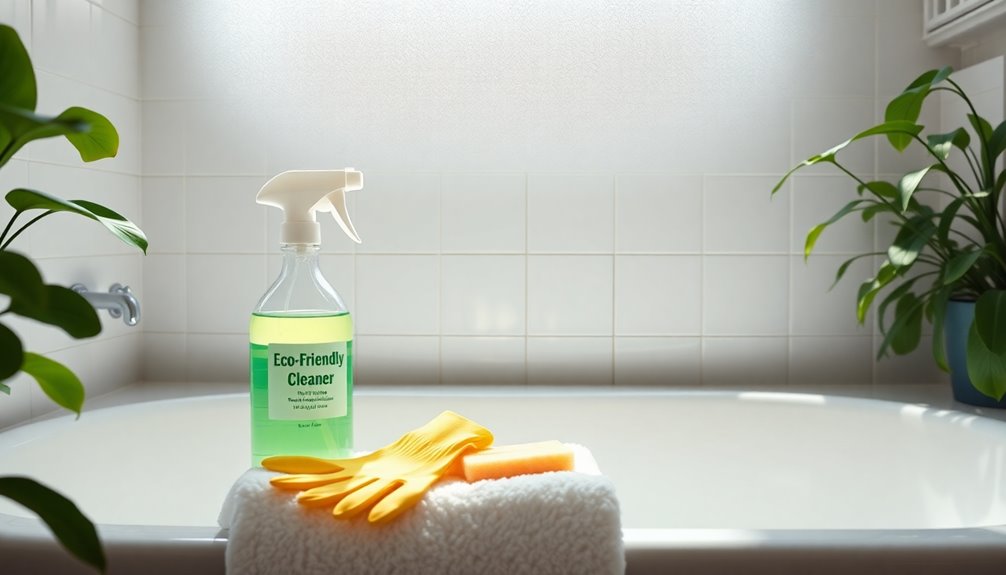
Have you ever wondered why mold and mildew seem to thrive in your bathroom? Understanding their differences is essential.
Mold characteristics include its fuzzy texture and various colors, often appearing in patches. It thrives in damp, warm environments, breaking down organic materials.
On the other hand, mildew is typically powdery and white or gray, forming on surfaces like shower walls and tiles. Mildew causes often stem from high humidity and inadequate ventilation, allowing moisture to settle.
While both fungi can damage your bathroom, distinguishing them helps you tackle the issue effectively. By knowing their traits and triggers, you can take steps to prevent both mold and mildew from making your bathroom their home. Regular cleaning of the bath is essential to prevent build-up and keep it sparkling clean, as a clean bath enhances the relaxation experience.
Identifying Common Areas for Mold Growth in Your Bathroom
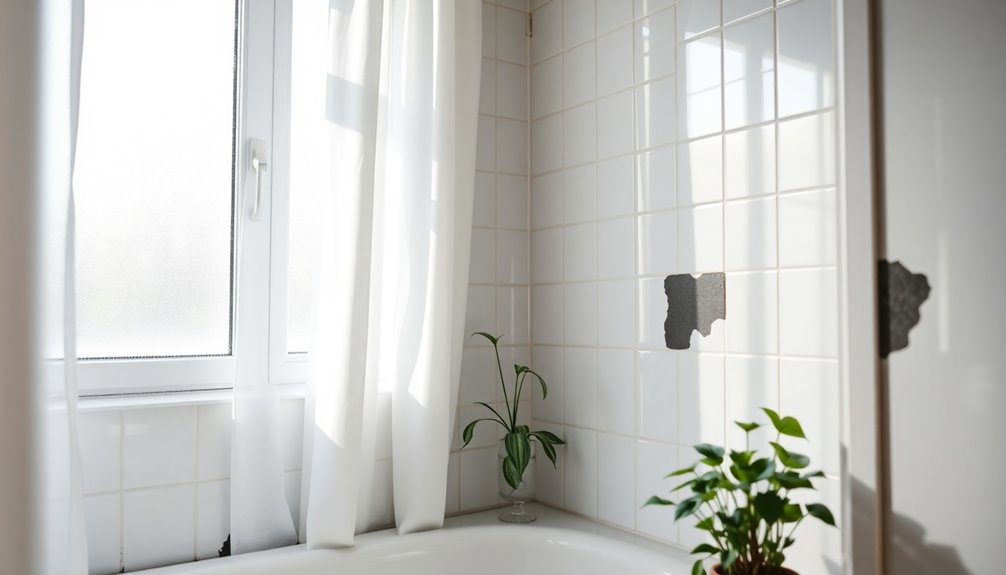
When it comes to mold growth in your bathroom, there are a few key areas to keep an eye on.
Shower walls and curtains, grout lines and tiles, and under-sink areas are all common spots where moisture can lead to problems. Identifying these places early can help you tackle mold before it becomes a bigger issue. Additionally, being mindful of eco-friendly methods can help prevent moisture buildup that encourages mold growth.
Shower Walls And Curtains
One of the most common areas for mold growth in your bathroom is the shower walls and curtains. The humid environment created during showers provides the perfect breeding ground for mold.
To combat this, regularly clean your shower curtain, ideally with a mixture of water and vinegar, which helps with mold prevention. Make sure to dry your shower walls after each use by wiping them down with a towel or using a squeegee.
Additionally, consider using a shower curtain made from mold-resistant materials. Keeping the bathroom well-ventilated by using an exhaust fan or opening a window also helps reduce moisture levels.
Grout Lines And Tiles
Grout lines and tiles can be notorious hiding spots for mold in your bathroom. The porous nature of grout makes it a prime target for moisture retention, leading to mold growth.
To combat this, regular grout cleaning is essential. Use a mixture of vinegar and baking soda or a commercial cleaner specifically designed for grout to remove any existing mold.
After cleaning, consider tile sealing to create a protective barrier that prevents moisture from seeping into the grout. This not only helps keep your bathroom looking fresh but also minimizes the chances of mold returning.
Under-Sink Areas
While you mightn’t think about it often, the area under your sink can be a prime breeding ground for mold and mildew. This hidden space often traps moisture, making it essential to check regularly.
To stay ahead of mold growth, use effective cleaning techniques and focus on moisture control.
Be on the lookout for:
- Leaky pipes that create dampness
- Forgotten cleaning supplies that gather moisture
- Stagnant water from spills or overflows
- Dark corners that remain untouched
Addressing these issues promptly can save you from bigger problems later. Keeping this area dry and clean not only protects your bathroom but also contributes to a healthier home environment.
Regular maintenance is key!
Natural Cleaning Solutions: How to Use Vinegar and Baking Soda
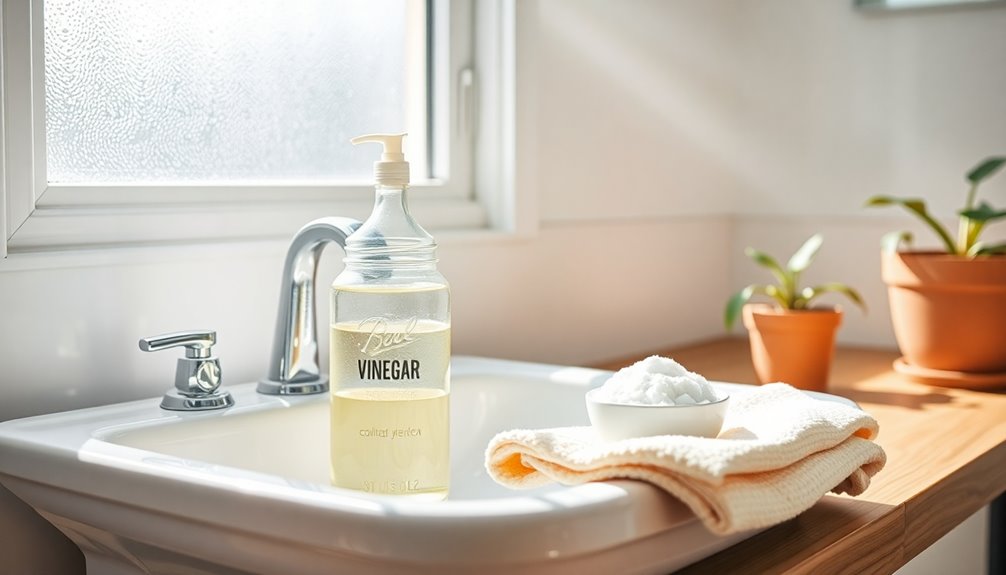
If you’re looking for an effective and eco-friendly way to tackle mold and mildew in your bathroom, vinegar and baking soda are your go-to natural cleaning solutions.
Vinegar benefits include its ability to kill mold spores and neutralize odors. Start by spraying undiluted white vinegar onto the affected areas. Let it sit for about an hour to penetrate the mold.
Next, sprinkle baking soda over the same spots. This combination creates a powerful reaction that lifts the grime. Scrub with a brush, then rinse with water. For stubborn spots, repeat the process.
Using vinegar and baking soda not only eliminates mold but also keeps your bathroom fresh and chemical-free. Additionally, vinegar acts as a natural disinfectant, making it ideal for cleaning surfaces without harsh chemicals. Enjoy a clean, safe space without harsh chemicals!
The Role of Proper Ventilation in Preventing Mold
Proper ventilation is essential in keeping mold at bay in your bathroom.
By ensuring good airflow, you can greatly reduce moisture levels that encourage mold growth. Additionally, maintaining a clean environment can help to foster a calm atmosphere, promoting overall employee well-being in your home workspace. Let’s explore some effective ventilation solutions that can help you maintain a healthier space.
Importance of Airflow
Good airflow is essential in your bathroom to keep mold and mildew at bay.
Without proper air circulation, humidity builds up, creating the perfect environment for unwanted growth.
Here’s why you should prioritize airflow:
- It helps maintain a fresh, clean atmosphere.
- You’ll reduce the risk of respiratory issues from mold exposure.
- A well-ventilated space feels more inviting and relaxing.
- It protects your bathroom surfaces from damage caused by moisture.
Ventilation Solutions to Consider
While you mightn’t realize it, effective ventilation is one of the most essential defenses against mold and mildew in your bathroom. Proper airflow helps reduce humidity levels, which mold thrives on.
Consider installing exhaust fans to remove excess moisture quickly, especially during and after showers. Make sure to use these fans regularly—ideally for at least 20 minutes post-shower.
Additionally, think about window placement. If you can, open windows during and after bathing to let fresh air circulate. Even a small window can make a big difference in reducing dampness.
Combining exhaust fans with strategic window use will greatly improve your bathroom’s ventilation, keeping mold and mildew at bay. Remember, a well-ventilated bathroom is a healthy bathroom!
When to Use Commercial Mold Removers Safely?
How can you determine the right time to reach for commercial mold removers? Knowing when to use these products can make all the difference in your bathroom’s cleanliness and your safety.
If you notice extensive mold growth, especially in hard-to-reach areas, it’s time to evaluate commercial product selection. Use them when:
- You’re dealing with a large infestation
- Natural solutions aren’t cutting it
- The mold is in porous materials like drywall
- You’ve got health concerns, like allergies or asthma
Always follow safety precautions, like wearing gloves and masks, to protect yourself from harmful chemicals. Consider using effective disinfectants like Lysol or Clorox to ensure thorough cleaning and prevention of future mold growth.
Tips for Preventing Mold and Mildew in the Future
After tackling mold problems with commercial removers, it’s time to think about prevention. Start with regular preventive maintenance. Clean your bathroom weekly to minimize mold growth, focusing on corners and damp areas. Ensure proper moisture control by using exhaust fans during and after showers. If possible, leave the door open to promote airflow. Keep towels and bath mats dry; hang them up after use. Consider using a dehumidifier if your bathroom tends to stay humid. Seal any cracks or gaps in tiles and grout to prevent water accumulation. Finally, choose mold-resistant paint and materials for your bathroom fixtures. Implementing these practices not only helps in reducing harmful bacteria but also promotes a healthier environment overall.
Health Risks Associated With Mold and How to Protect Yourself
Mold isn’t just an unsightly nuisance; it can pose serious health risks, especially if you’re exposed to it over time.
Mold can be more than just an eyesore; long-term exposure can lead to significant health risks.
Mold exposure can trigger various health symptoms, impacting your daily life. Here are some potential effects you should be aware of:
- Respiratory issues like asthma attacks
- Skin irritations and rashes
- Fatigue and headaches
- Weakened immune response
To protect yourself, implement prevention strategies such as maintaining low humidity levels and ensuring proper ventilation. Additionally, keeping indoor humidity below 50% humidity levels is crucial in reducing mold growth.
If mold does appear, act quickly to remove it safely. Remember, your health is paramount, and being proactive can help you avoid the harmful effects of mold.
Stay informed and vigilant to keep your bathroom a safe haven.
Conclusion
Getting rid of mold and mildew in your bathroom doesn’t have to be an intimidating task. By using natural cleaning solutions and ensuring proper ventilation, you’ll keep your space invigorating and healthy, like a refreshing breeze on a spring morning. Remember, staying proactive with prevention is key. Regularly check for damp areas, and don’t hesitate to use commercial removers when needed. With these tips, you’ll create a mold-free sanctuary in no time!