To polish wood furniture naturally for a long-lasting shine, mix equal parts olive oil and white vinegar. Apply it with a soft cloth in circular motions, following the wood grain. Buff the surface with a clean cloth for extra shine. Maintain your furniture by regularly dusting it and applying homemade polish every six months. Avoid abrasive materials to prevent scratches. There’s more to learn about essential care tips and effective solutions for keeping your wood furniture beautiful.
Benefits of Natural Wood Polish
When you choose natural wood polish, you’re not just opting for a product; you’re making a safer choice for your home.
With non-toxic ingredients, this polish reduces your exposure to harmful chemicals typically found in commercial options, making it safe for your family and pets.
Choosing natural wood polish minimizes your exposure to harmful chemicals, ensuring a safer environment for your family and pets.
Using homemade wood polish, you can effectively moisturize and protect the wood, preventing drying and cracking while enhancing its natural beauty.
Essential oils add pleasant scents and offer antimicrobial properties, helping maintain a healthier environment.
Plus, it’s cost-effective, utilizing pantry staples instead of expensive commercial products.
Regular application extends the lifespan of your furniture by creating a protective barrier against moisture and dirt, preserving the wood’s integrity and appearance for years to come. Additionally, using eco-friendly products like natural ingredients can contribute to a healthier planet.
Essential Ingredients for Effective Polishing
When polishing wood furniture naturally, you’ll want to focus on key ingredients that enhance both appearance and protection.
Olive oil, white vinegar, and lemon juice each play an important role in creating an effective polish.
Don’t forget to explore essential oils for added fragrance and antibacterial benefits while applying your mixture. Additionally, using non-toxic cleaners can ensure a safe environment while maintaining the beauty of your wood furniture.
Key Natural Ingredients
Polishing wood furniture naturally requires a few key ingredients that not only enhance the wood’s appearance but also safeguard it.
Olive oil is a favorite for its ability to moisturize and add shine without a greasy feel. White vinegar acts as a mild disinfectant, cutting through grime and restoring your wood’s natural beauty.
Lemon juice, with its citric acid, helps lift dirt while providing a fresh scent. To lock in that shine, beeswax forms a protective layer, repelling moisture and dirt.
Finally, adding essential oils like lavender or lemon can elevate your polish, offering antimicrobial benefits and a delightful aroma.
Together, these natural ingredients guarantee your furniture looks stunning and lasts longer.
Essential Oil Benefits
Incorporating essential oils into your wood polish can greatly enhance its effectiveness while adding delightful scents to your cleaning routine. Oils like lemon and tea tree offer natural antibacterial properties, boosting your cleaning power and contributing to a healthier home environment.
The pleasant aroma not only neutralizes unpleasant odors but also makes the task more enjoyable. Essential oils such as lavender and eucalyptus bring calming effects, promoting a sense of well-being as you maintain your furniture.
They also help moisturize and protect the wood, preventing drying and cracking over time. Plus, you can customize your wood polish with a unique scent profile, allowing you to enhance your cleaning experience while enjoying the benefits of essential oils.
Application Techniques
To achieve a beautiful finish on your wood furniture, you need the right application techniques and essential ingredients.
Start by creating a homemade polish using equal parts natural oils, like olive or jojoba oil, and white vinegar. To enhance shine, consider adding a few drops of essential oils, such as lemon, for added fragrance and cleaning properties.
Use a soft, lint-free clean cloth or microfiber cloth to apply the polish, working in circular motions along the direction of the wood grain. This prevents streaks and guarantees an even finish.
After applying, regularly buff the surface with a clean cloth to activate the oils and maintain that long-lasting shine on your wood surfaces.
Step-by-Step Guide to Polishing Wood Furniture
You’re ready to polish your wood furniture naturally, and it all starts with choosing the right essential oil. The application technique is just as vital; it guarantees your polish goes on smoothly and evenly. Let’s explore how to make your wood shine with these simple steps. Additionally, using natural agents like vinegar can enhance the cleaning process and help maintain the wood’s finish.
Essential Oil Selection
Selecting the right essential oils can elevate your wood furniture polishing experience considerably. Consider using lemon or lavender for their natural antibacterial properties and delightful scents, which enhance your cleaning routine.
High-quality essential oils are vital; avoid synthetic additives that can damage wood finishes. Tea tree oil is another excellent choice, offering potent antimicrobial qualities that disinfect surfaces while you polish.
For a fresh, uplifting aroma, sweet orange essential oil is perfect, providing both a pleasant scent and natural cleaning benefits.
Remember to keep the total number of drops in your polish recipe under 30 to maintain a balanced formula, ensuring it’s safe for various wood finishes while maximizing the effectiveness of your chosen essential oils.
Application Techniques
Polishing wood furniture requires a careful approach to achieve a beautiful finish. Start by cleaning the surface with a mild soap solution and a damp cloth to remove dust and grime.
Next, choose a natural polish, like a mixture of olive oil and lemon juice. Apply it in small sections using a soft cloth, following the wood grain to prevent streaking. After a few minutes, allow the polish to absorb before buffing with a clean cloth to enhance the shine.
For moisture protection, consider applying a layer of wax or polish every six months. Regular maintenance, including weekly dusting with a lint-free cloth and deep cleaning every few months, is essential for preserving the wood’s appearance.
Tips for Maintaining Wood Surfaces
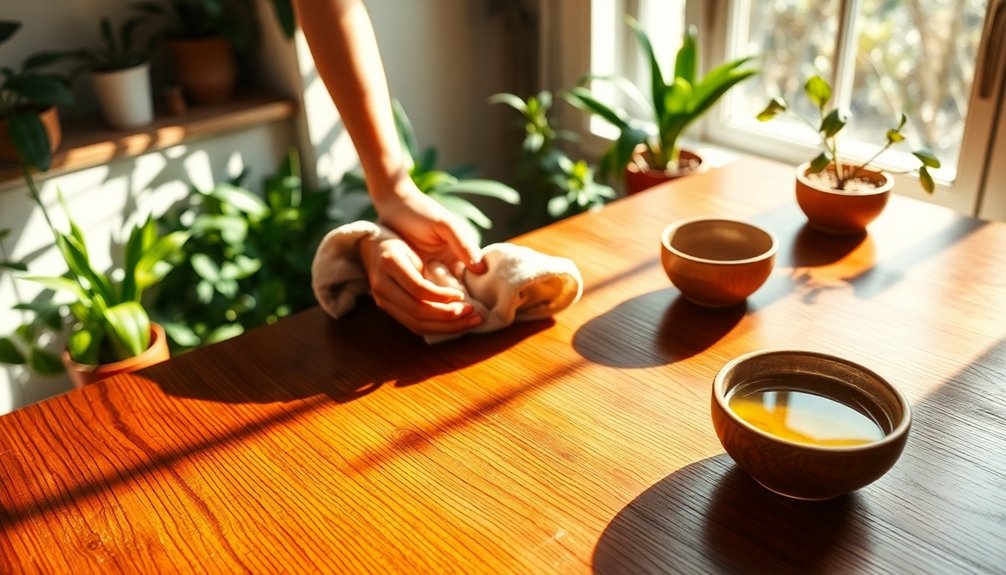
To keep your wood surfaces looking their best, it’s essential to establish a regular maintenance routine that includes simple yet effective practices.
Start by dusting your furniture regularly with a soft, lint-free cloth to prevent scratches and remove grime.
Every few months, clean wood furniture with a natural wood cleaner to maintain its shine without harsh chemicals.
Applying a layer of homemade polish every six months is ideal for protecting the wood from moisture and scratches.
Remember to work in the direction of the grain when polishing to achieve an even finish.
Don’t forget routine inspections for dents or scratches—address them promptly with fine-grit sandpaper to maintain the aesthetic appeal of your furniture. Additionally, using fabric protectors can enhance cleanliness and hygiene, making it easier to care for your wood surfaces.
Common Mistakes to Avoid When Polishing
Maintaining wood surfaces requires not just regular upkeep but also awareness of common pitfalls when polishing.
First, avoid using too much polish, as excessive product can create a sticky residue that attracts dust and dirt.
Avoid overusing polish; too much can leave a sticky residue that collects dust and dirt.
Never apply polish to dirty surfaces; this can scratch your wood and lead to a buildup of grime instead of a clean finish.
Be cautious when using oils, since some, like mineral oil, may damage certain wood finishes over time.
Resist using abrasive materials, such as steel wool or rough sponges, as they can scratch and ruin the surface.
Finally, always follow the manufacturer’s recommendations to guarantee you provide the unique care your furniture needs for best results. Regular maintenance, including gentle cleaning techniques, is essential to preserve the integrity of your wood furniture.
Additional Natural Cleaning Solutions for Your Home
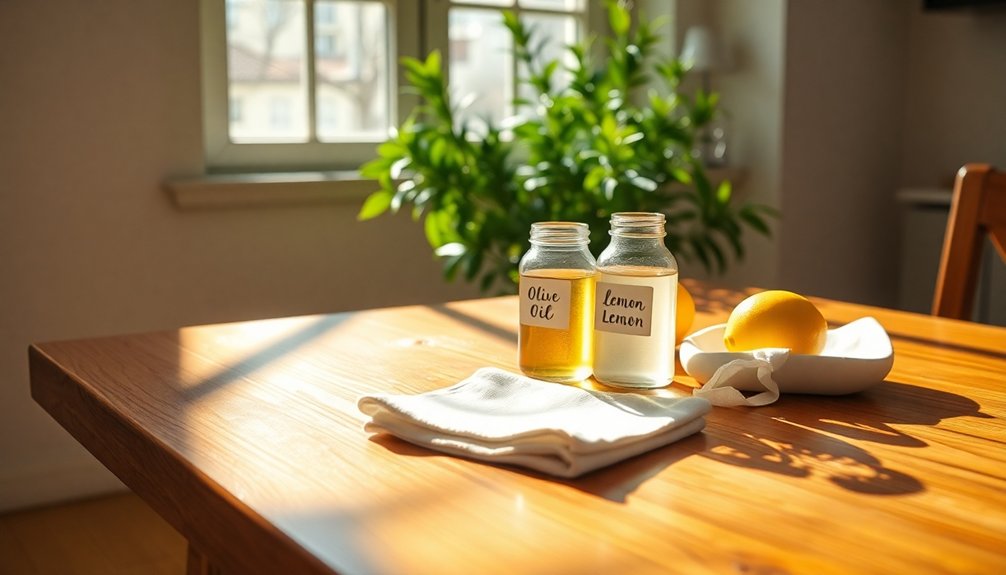
While keeping your home clean, you can easily incorporate natural cleaning solutions that are safe for both your family and the environment.
For tough stains on wood surfaces, mix baking soda with water for a gentle abrasive cleaner that lifts grime without damage. A solution of equal parts water and white vinegar serves as a powerful natural disinfectant for various surfaces.
For a pleasant air freshener, combine water with a few drops of essential oils like lavender or lemon in a spray bottle. Use olive oil mixed with lemon juice as a homemade furniture polish to clean and moisturize wood. Additionally, eco-friendly products like vinegar and baking soda are safe for families and promote sustainable cleaning practices.
Finally, cornstarch mixed with water works wonders as a natural window and glass cleaner, leaving surfaces streak-free.
Conclusion
To sum up, using natural wood polish not only enhances the beauty of your furniture but also protects it from harmful chemicals. Did you know that over 80% of commercial furniture polishes contain toxic substances? By opting for DIY solutions, you’re not just caring for your furniture but also contributing to a healthier home environment. Remember, with the right ingredients and techniques, you can achieve a long-lasting shine while keeping your space safe and inviting!