Last updated: · By Megan Hart
DIY cleaning solutions can handle everyday dirt, grease, and grime well, but most of them clean rather than disinfect. Cleaning removes germs, dirt, and impurities from surfaces, while disinfecting kills most germs, and the two are not interchangeable. This guide gives you five homemade all-purpose cleaners, explains what each one can and cannot do, and lists the safety rules that matter most for US homes.
Key Takeaways
- The CDC says cleaning with soap and water removes most germs from surfaces in most situations, and disinfecting at home is likely unnecessary unless someone is sick.
- A 1:1 mix of distilled white vinegar and water cleans grease and grime on many sealed surfaces, but it is not an EPA-registered disinfectant.
- Rubbing alcohol needs to be about 70% concentration to disinfect well, while a common homemade mix of 1/4 cup rubbing alcohol and 3/4 cup water is only about 17% alcohol.
- Never mix vinegar or ammonia with bleach, because the combination releases toxic gases.
- Vinegar is acidic and can dull or etch natural stone such as marble, limestone, and granite, so keep it off those surfaces.
What Are DIY Cleaning Solutions and What Can They Do?
DIY cleaning solutions are homemade mixtures of common household ingredients, such as vinegar, baking soda, soap, and alcohol, that you use to clean surfaces. They work well for removing soil, grease, soap scum, and fingerprints. Their disinfecting power is limited, and most have not been tested or registered as disinfectants.
Soap and water remain the baseline. The CDC explains that cleaning with soap and water removes most germs from surfaces in most situations, which is why daily cleaning rarely needs a special product. Disinfecting becomes more important when someone in the home is sick or when a surface has been touched by raw meat or bodily fluids.
If you want a more environmentally conscious approach, it helps to know how products are evaluated. The U.S. Environmental Protection Agency explains how it identifies greener cleaning products, including its Safer Choice program and its antimicrobial labeling under the Design for the Environment program. Homemade cleaners are not certified under these programs, but the same principles of using fewer harsh ingredients apply.
How Do You Make a Vinegar and Water All-Purpose Spray?
To make a basic vinegar and water spray, mix equal parts distilled white vinegar and distilled water in a clean spray bottle. It is one of the simplest and cheapest all-purpose cleaners, and it cuts through grease, soap scum, and mineral residue on sealed surfaces such as glass, tile, and laminate countertops.
- Pour 1 cup of distilled white vinegar into a clean glass or plastic spray bottle.
- Add 1 cup of distilled water.
- Label the bottle with the contents and the date you made it.
- Shake gently before each use, spray lightly, and wipe with a clean microfiber cloth.
- Test on a small, hidden area first if the surface is unfinished, waxed, or unfamiliar.
Vinegar is not a registered disinfectant, so do not rely on it to kill bacteria or viruses. It also should not be used on natural stone, unsealed grout, or waxed wood, because its acidity can damage these surfaces over time. Keep it away from electronics and appliance screens unless the manufacturer allows it.
How Do You Make a Vinegar and Essential Oil Spray?
A vinegar and essential oil spray is a variation of the basic vinegar spray that adds scent. Essential oils are concentrated plant extracts. Add 10 to 20 drops of an oil such as lemon or lavender to the basic 1:1 vinegar and water mix, then shake well before use.
Many blogs describe essential oils as strong antibacterial agents, but the evidence is limited. Some laboratory studies show that certain oils slow the growth of some microbes, yet homemade blends are not standardized, and the mixture has not been shown to disinfect surfaces reliably in a home. Treat the oils as a scent and a pleasant addition, not a substitute for disinfecting.
Essential oils also carry safety concerns. Some can irritate skin and eyes, and they can be harmful to cats, dogs, birds, and other pets, especially in closed rooms. Oils should be kept out of reach of children, and you should talk to your veterinarian before using them around pets.
How Do You Make a Baking Soda and Lemon Scrub?
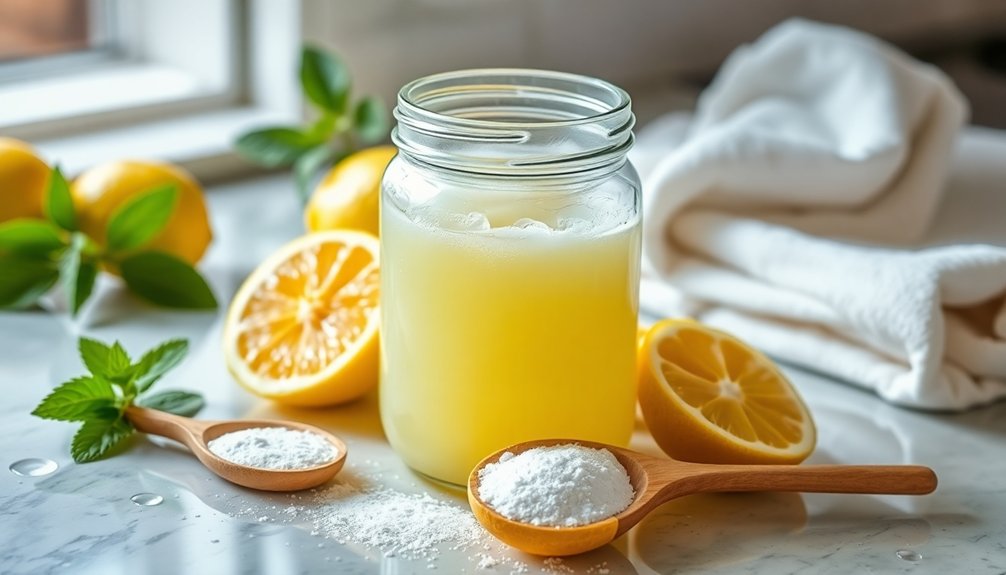
A baking soda and lemon scrub is a mild abrasive paste for stuck-on residue in sinks, tubs, and stovetops. Baking soda, or sodium bicarbonate, is a fine powder that lifts grime when you scrub gently. Lemon juice adds mild acidity and a fresh scent.
- Combine 1/2 cup of baking soda with the juice of one lemon in a small bowl.
- Stir until the mixture forms a thick paste. It will fizz as the acid and base react.
- Apply the paste to the surface and let it sit for a few minutes.
- Scrub gently with a soft sponge or cloth, then rinse thoroughly with water.
- Dry the surface to prevent water spots and to keep the area from looking dull.
The fizzing shows the two ingredients are neutralizing each other, so the mixture works mostly as a scrub rather than a strong cleaner. You get the best results by using baking soda and lemon juice separately: sprinkle baking soda on the surface and scrub, then wipe with lemon juice diluted in water. Make a fresh paste each time rather than storing it. Avoid lemon on natural stone for the same reason as vinegar.
How Do You Make a Castile Soap All-Purpose Cleaner?
A Castile soap cleaner is a plant-based soap mixed with water for everyday cleaning. Castile soap is a vegetable-oil soap that cleans grease and dirt, and it is gentle on most finished surfaces. Mix 1/4 cup of liquid Castile soap with 2 cups of distilled water in a spray bottle, and add 10 to 20 drops of essential oil if you want scent.
This cleaner works well on kitchen counters, painted walls, and bathroom fixtures. Wipe the surface after spraying so soap does not dry into a film. Hard water can react with soap and leave residue, so a small rinse with plain water often helps on glass and tile.
Castile soap cleans effectively, but it does not disinfect. Because it is water-based, it can support microbial growth if left sitting in a dirty bottle, so label the bottle and make small batches you use within a few weeks. If the mixture smells sour, looks cloudy in a way that is new, or has grown visible growth, throw it out and make a fresh batch.
How Do You Make a Rubbing Alcohol Cleaner, and When Should You Use It?
A rubbing alcohol cleaner is a quick-drying spray for glass, stainless steel, and hard, nonporous surfaces. A common recipe mixes 1/4 cup of rubbing alcohol, 3/4 cup of water, and 1 teaspoon of dishwashing liquid in a glass spray bottle. The dishwashing liquid helps lift grease, and the alcohol evaporates quickly, which leaves less residue.
The disinfecting claims for this recipe are often overstated. Alcohol kills many germs on contact, but its effect depends on concentration and contact time, and 70% isopropyl alcohol is the concentration usually recommended for disinfecting. The recipe above is closer to 17% alcohol once diluted, so treat it as a cleaner. For disinfecting, use an EPA-registered product, or follow the label instructions on a product designed for that purpose.
Rubbing alcohol is flammable, so store the bottle in a cool place away from heat, flames, and direct sun. Avoid using it on vinyl, rubber, certain plastics, and painted or varnished surfaces, because it can dull or damage the finish. Keep it out of reach of children and never store it in a food or drink container.
How Do the Five Cleaners Compare?
The five cleaners differ in what they remove best, how they should be used, and where they fall short. Use the table below to choose the right one for each task rather than applying one solution everywhere.
| Cleaner | Main ingredients | Best for | Key limits |
|---|---|---|---|
| Vinegar and water spray | 1 cup distilled white vinegar, 1 cup distilled water | Glass, sealed tile, laminate, light grease | Not a disinfectant; avoid natural stone and waxed wood |
| Vinegar and essential oil spray | Vinegar and water mix plus 10 to 20 drops essential oil | Light cleaning where you want a scent | Oils do not reliably disinfect; can irritate skin and pets |
| Baking soda and lemon paste | 1/2 cup baking soda, juice of one lemon | Sinks, tubs, stuck-on residue | Mild scrub only; fizzing reduces cleaning power; avoid natural stone |
| Castile soap spray | 1/4 cup liquid Castile soap, 2 cups distilled water | Kitchen counters, painted walls, greasy surfaces | Not a disinfectant; can leave film in hard water; can grow microbes if stored |
| Rubbing alcohol spray | 1/4 cup rubbing alcohol, 3/4 cup water, 1 tsp dish soap | Glass, stainless steel, quick-drying cleaning | Diluted version is not strong enough to disinfect; flammable; damages some plastics and paint |
When you need a store product instead, check labels carefully. The EPA Safer Choice standard sets out the requirements that products and their ingredients must meet to earn the Safer Choice label or the Design for the Environment logo. Products with these labels have been evaluated for ingredient safety, which is a useful checkpoint if you are comparing options.
What Safety Rules Should You Follow?
The most important safety rule is never to mix cleaning products that can release dangerous gases or create irritating compounds. Mixing bleach with vinegar releases chlorine gas, and mixing bleach with ammonia or rubbing alcohol creates other toxic fumes. Read the full list of combinations to avoid before you clean.

- Never combine bleach with vinegar, ammonia, rubbing alcohol, or other cleaners.
- Do not mix vinegar and hydrogen peroxide in the same bottle, because the combination forms an irritating acid.
- Label every homemade cleaner clearly, and store it out of reach of children and pets.
- Open a window or run a fan when using any spray, especially in small bathrooms.
- Wear gloves if you have sensitive skin, and rinse surfaces that will touch food.
- Test on an inconspicuous spot before cleaning a new surface.
For a deeper look at unsafe combinations, read our guide to cleaning products you should never mix. If someone swallows a cleaner, gets it in their eyes, or has trouble breathing after exposure, call Poison Control at 1-800-222-1222 right away, or call 911 for severe symptoms.
When Should You Disinfect Instead of Clean?
You should disinfect when germs pose a real risk, such as when someone in the home is sick or when surfaces have touched raw meat, diapers, or bodily fluids. For everyday surfaces, cleaning with soap and water is usually enough. The CDC notes that disinfecting at home is likely unnecessary unless someone is sick.
The CDC advises using an EPA-registered disinfectant or a properly diluted bleach solution when you need to kill most germs. Follow the product label for contact time, meaning how long the surface must stay wet. Clean the surface first, because dirt can block disinfectants from working.
If you want to understand the difference between a spray that cleans and one that disinfects, our article on a DIY antibacterial spray for everyday cleaning covers what homemade sprays can and cannot achieve.
How Should You Store and Maintain Homemade Cleaners?
Store each homemade cleaner in a clearly labeled bottle, away from heat and direct sunlight, and keep it out of reach of children and pets. Glass bottles are a good choice for vinegar and alcohol mixtures because they do not react with the contents. Choosing the right container also makes it easier to spray evenly. Our guide to the best spray bottles for cleaning solutions explains what to look for in a durable, leak-resistant sprayer.
Make small batches, usually enough for a few weeks, because water-based homemade cleaners can support microbial growth over time. Discard any mixture that smells off, separates in a way that does not shake back together, or shows visible growth. Mix baking soda pastes fresh each time.
Can You Use DIY Cleaners as Part of a Cleaning Routine?
Yes, DIY cleaners work well as part of a regular routine when you match each cleaner to the surface and task. Use the vinegar spray for glass and sealed counters, the Castile soap spray for greasy surfaces, and the baking soda paste for stubborn residue. Reserve disinfecting for high-touch surfaces during illness, and use an EPA-registered product when you need to kill germs.
For a structured plan, our room-by-room guide to deep cleaning your home shows where each cleaner fits in a full clean, from kitchens and bathrooms to floors and windows.
Frequently Asked Questions
Can DIY cleaners kill germs?
Most DIY cleaners remove germs by washing them off surfaces, but they do not reliably kill them. Vinegar, Castile soap, baking soda, and essential oil sprays are not EPA-registered disinfectants. If you need to kill germs, use an EPA-registered product and follow the label’s contact time.
Are DIY cleaners safe for kids and pets?
Basic vinegar, baking soda, and Castile soap mixtures are generally low-hazard when used as directed and rinsed from surfaces. Essential oils and rubbing alcohol need more caution because they can irritate skin and harm pets, especially cats. Store all cleaners out of reach and talk to your veterinarian before using oils around animals.
Can I mix vinegar and baking soda?
Mixing vinegar and baking soda produces fizzing from carbon dioxide, and the result is mostly water and a salt called sodium acetate. The reaction neutralizes both ingredients, so the mixture cleans less well than each one used separately. Use them one after another instead, such as sprinkling baking soda first and wiping with vinegar second.
How long do homemade cleaners last?
There is no official shelf life for homemade cleaners, so practical habits matter most. Make small batches, label each bottle with the date, and discard any cleaner that smells sour, changes appearance, or shows growth. Baking soda pastes should always be made fresh.
Is rubbing alcohol a good disinfectant for the home?
Rubbing alcohol at about 70% concentration can kill many germs on hard, nonporous surfaces, but the diluted homemade recipe is too weak for disinfecting. Its flammability and tendency to damage some plastics and painted finishes also limit where you can use it. For disinfecting, an EPA-registered product is a more reliable choice.
What should I do if I swallow a cleaner or get it in my eyes?
Rinse eyes with clean water for several minutes and call Poison Control at 1-800-222-1222 right away. Do not induce vomiting unless a medical professional tells you to. Call 911 or go to the nearest emergency room if someone has trouble breathing, severe pain, or is unresponsive.
Conclusion
DIY cleaning solutions are useful for everyday cleaning when you match each recipe to the right surface and task. Vinegar, baking soda, Castile soap, and rubbing alcohol mixtures remove dirt and grease well, but most do not disinfect, so use EPA-registered products when germs are a real concern. Store your cleaners safely, never mix them with bleach, and talk to a doctor or your veterinarian if you have health concerns about exposure.
More on DIY Cleaning Solutions
- 20 Eco‑Friendly Cleaning Hacks Using Simple Household Ingredients
- Best Homemade Cleaner for Marble Surfaces
- Best Homemade Floor Cleaner for Wood Floors
- Best Homemade Laminate Floor Cleaner for Busy Homes
- Can You Clean Hardwood Floors With Vinegar?
- Can You Use Vinegar on Wood Floors?
- Cleaning Hardwood Floors With White Vinegar: What You Need to Know
- Cleaning Wood Floors With Vinegar and Water: Safe or Not?
- DIY Cleaning Hacks: 9 Clever Tips You’ll Wish You Knew Sooner
- DIY Drain De-Clogger: Baking Soda and Vinegar Reactions
- DIY Soft Scrub for Sinks: Baking Soda and Soap Hacks
- Diy Antibacterial Spray for Everyday Cleaning
- Hardwood Floor Cleaner Vinegar Recipe That’s Safe to Use
- Homemade Detergent Recipe for a Low-Toxic Laundry Routine
- Homemade Febreze: Create Your Own Refreshing Fabric Spray
- Homemade Granite Cleaner: Safe and Streak-Free Recipe
- How to Clean Your Kitchen Using Only Lemon and Salt
- How to Freshen up Stinky Shoes With a Simple Household Item
- How to Make a Natural Ant Repellent Spray for the Kitchen
- How to Store Homemade Cleaners Safely and Effectively
- Is Baking Soda the Only Scouring Powder You Need?
- Ratio of Water to Vinegar for Cleaning Hardwood Floors
- Recipe for Laminate Floor Cleaner You Can Make Today
- The Best Spray Bottles for Cleaning Solutions: What to Look For
- The Ultimate Guide to Cleaning With Baking Soda and Lemon Juice
Related guides: Top 10 Natural Cleaning Products for a Chemical-Free Home · Best Non-Toxic Bleach Alternatives for Cleaning · The Best Oxygen Bleach Brands for Stubborn Stains & Bright Whites
Free tools: Cleaning Products You Should Never Mix
Always follow the product label, test on a hidden area first, and never mix cleaning products such as bleach and ammonia. Read our safety disclaimer and editorial policy.
3 Replies to “5 DIY All-Purpose Cleaners You Can Make at Home”