To remove sticky labels from new kitchenware, first, try soaking it in warm water mixed with dish soap for a few minutes. Use a plastic scraper to gently lift the label. If residue remains, apply cooking oil or rubbing alcohol to soften the adhesive, then wipe with a cloth. For tougher labels, a hair dryer can help loosen them. These tips will guarantee you get a clean finish, and there’s more you can discover for effective removal.
Why Sticky Labels Are Problematic for Kitchenware
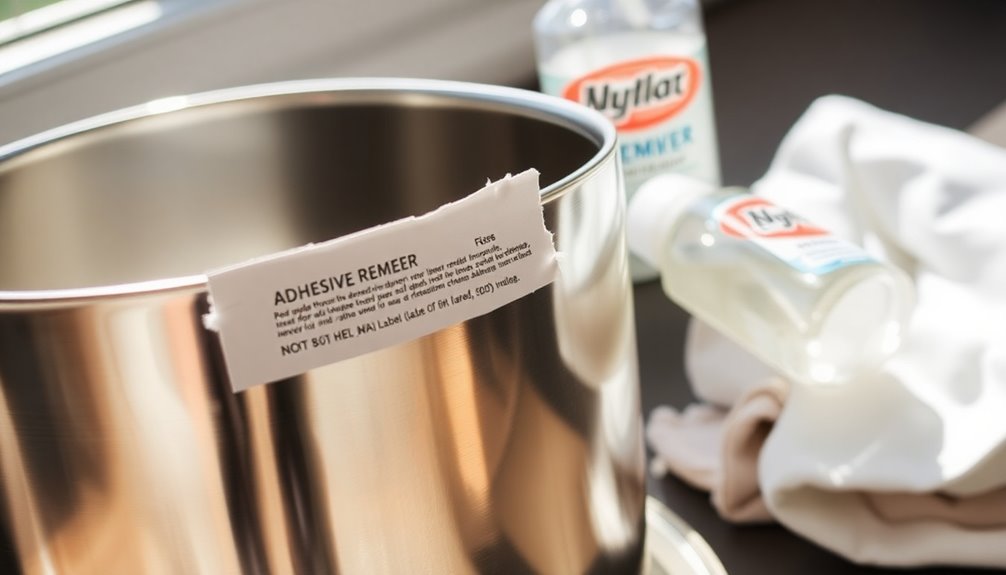
Why are sticky labels such a nuisance for kitchenware? You buy a new pot or pan, excited to use it, but then you’re faced with label adhesive issues.
Those labels often leave behind stubborn residue that’s hard to clean. You might think you can just peel them off, but more often than not, that isn’t the case.
Even if you manage to remove the label, you’re left battling removing residue challenges. It clings to your kitchenware, making it look messy and unappealing.
Plus, if you’re in a hurry, it can feel like a frustrating waste of time. Ultimately, those pesky sticky labels can turn your enthusiasm for new kitchenware into a chore, dampening the joy of cooking. Regular maintenance, such as using natural methods to clean adhesive residue, can help prevent these frustrations.
Essential Tools for Label Removal
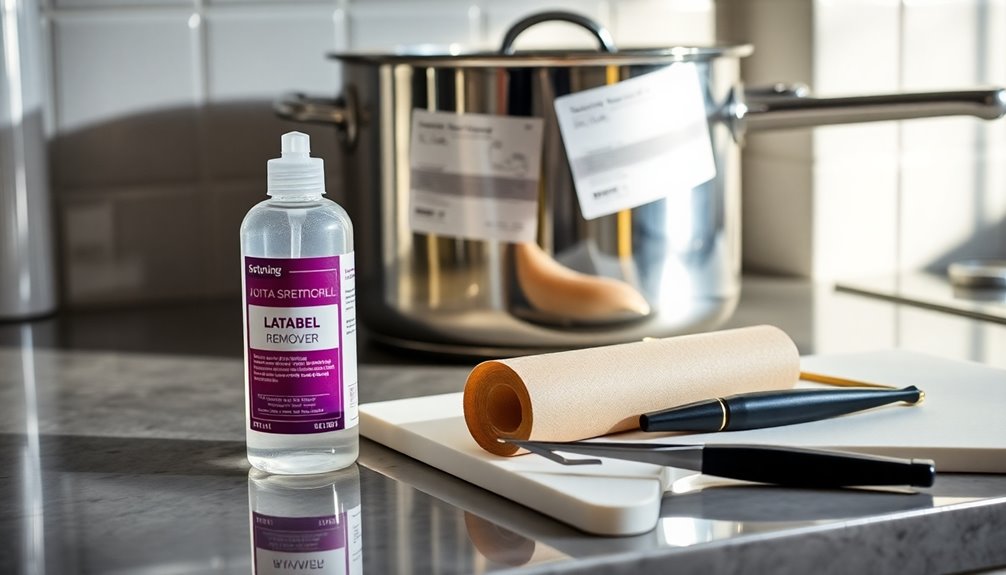
When it comes to removing sticky labels, having the right tools can make a big difference.
You’ll find that common items around your kitchen can be surprisingly effective, along with some eco-friendly alternatives. Utilizing eco-friendly methods not only helps in removing labels but also contributes to a healthier home environment.
Let’s explore these essential tools that can help you tackle those pesky labels with ease.
Common Label Removal Tools
Removing sticky labels from kitchenware can be a breeze with the right tools at your disposal.
Start with a plastic scraper or an old credit card to gently lift the label without scratching your surface. For stubborn adhesive types, a bit of cooking oil or rubbing alcohol can work wonders; just apply it to the label, let it sit for a few minutes, then scrape it off.
If you prefer a more targeted approach, adhesive removers or commercial label removal products are great options. You might also want some paper towels handy to wipe away residue.
Kitchen Staples for Removal
A few kitchen staples can make label removal quick and easy. For most label types, a simple mixture of warm water and dish soap can soften adhesive, making it easier to peel off.
You can also use cooking oil or vinegar for stubborn residues; they’re great removal techniques that many overlook. Grab a sponge or cloth to apply your chosen solution, and let it sit for a few minutes.
If needed, a plastic scraper or credit card can help lift the label without damaging your kitchenware. Remember to rinse and dry the item afterward.
With these common kitchen staples, you’ll tackle those pesky labels in no time, leaving your new kitchenware looking pristine.
Eco-Friendly Alternatives Available
Have you ever considered eco-friendly alternatives for removing sticky labels from your kitchenware?
You can easily tackle this issue using sustainable materials and eco-friendly cleaners that won’t harm the environment. For instance, try using a mixture of warm water and vinegar—simply soak the item for a few minutes, then peel off the label.
Another option is to use olive oil or coconut oil; apply it to the sticky residue, let it sit, and wipe clean.
Baking soda mixed with a bit of water creates a gentle scrubbing paste that can also do the trick.
How to Remove Labels Using Heat
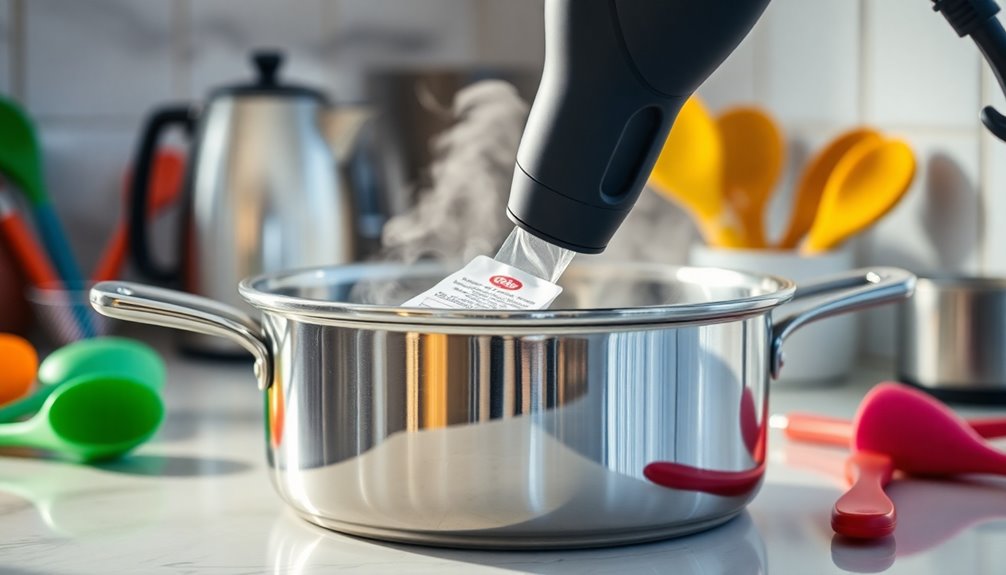
When it comes to removing sticky labels, heat can be your best friend.
You can use a hair dryer to soften the adhesive or try boiling water for tougher labels.
Both methods can make peeling off those pesky stickers much easier. Additionally, applying baking soda and lemon juice as a cleaning solution afterward can help eliminate any remaining residue.
Use Hair Dryer
Using a hair dryer is one of the quickest ways to remove sticky labels from kitchenware.
First, plug in your hair dryer and set it to a medium heat setting. Aim the nozzle at the label, keeping it about 2-3 inches away. Move it back and forth to evenly distribute the heat. The heat application helps break down the adhesive, making it easier to peel off the label.
After about 30 seconds, check if the label starts to lift at the edges. If it does, gently pull it off. If not, apply heat for a bit longer.
Once the label’s off, use a cloth to wipe away any residue. With these hair dryer techniques, your kitchenware will look brand new!
Try Boiling Water
Another effective method for removing sticky labels from kitchenware involves boiling water. This boiling technique softens the adhesive, making it easier to peel off the label.
Here’s how you can do it:
- Boil a pot of water on the stove.
- Once boiling, carefully submerge the kitchenware with the label for a few minutes.
- Remove it and use a cloth or your fingers to gently peel off the label.
- If any residue remains, repeat the process or scrub lightly with a sponge.
This method works well because the heat breaks down the label adhesion, allowing for a smoother removal.
Just be cautious with hot water to avoid burns!
The Best Solvents for Tackling Sticky Residue
While sticky residue can be a nuisance, the right solvents can make removal a breeze.
When it comes to solvent types, you’ve got a few effective options. Rubbing alcohol is excellent for breaking down adhesive, while vinegar can gently lift residue without harsh chemicals.
If you’re dealing with tougher sticky residue effects, consider using acetone or commercial adhesive removers, but test them on a small area first to avoid damage. Baby oil or vegetable oil can also work wonders, especially on delicate surfaces. Regular cleaning routines using mild non-abrasive cleaners can help prevent sticky residue from building up in the first place.
Choose the solvent that fits your kitchenware, and you’ll find that tackling sticky labels becomes a straightforward task. With the right approach, you can enjoy your new kitchenware without the pesky residue lingering around.
Step-by-Step Guide to Using Oil for Label Removal
When it comes to removing sticky labels, using oil can be surprisingly effective. First, you’ll want to choose the right oil—something common like olive or vegetable oil works well. Once you’ve got that, apply it generously to the label and prepare to scrape off the residue. Additionally, using a gentle approach will help maintain the integrity of the kitchenware, similar to how following care label guidelines protects duvet covers from damage.
Choose The Right Oil
Choosing the right oil can make all the difference in removing those stubborn sticky labels from your kitchenware.
Different oil types offer unique benefits that can help you tackle the adhesive residue effectively. Here are some popular options:
- Vegetable Oil – It’s readily available and works well on most labels.
- Olive Oil – Not only is it effective, but it also smells nice while you work.
- Coconut Oil – Its solid form can be easily melted, making it great for stubborn adhesives.
- Baby Oil – Gentle and effective, it’s perfect for delicate surfaces.
Apply Oil Generously
Now that you’ve selected the right oil for the job, it’s time to apply it generously to tackle those sticky labels. Start by choosing oil types like vegetable, olive, or coconut oil—each works well.
Using a clean cloth or cotton ball, pour a good amount of oil onto the surface. Make sure to cover the entire label area, allowing the oil to seep in. You can also use an application technique like gently rubbing the oil in circular motions to enhance penetration.
Let it sit for a few minutes so the oil can break down the adhesive. With this method, you’ll prepare for the next step in removing those pesky labels effortlessly.
Scrape Off Residue
Gently scrape off the residue left by the sticky label using a plastic scraper or an old credit card. This step is essential to remove any remaining sticky residue from the label adhesives.
Follow these steps for effective removal:
- Apply Oil: Verify you’ve applied enough oil to loosen the adhesive.
- Wait a Moment: Let the oil sit for a few minutes to penetrate the sticky residue.
- Start Scraping: Use the scraper to gently lift off the residue without scratching the surface.
- Clean Up: Wipe the area with a cloth to remove any leftover oil and adhesive.
DIY Solutions: Vinegar and Baking Soda Method
If you’re looking for an effective and eco-friendly way to remove sticky labels from your kitchenware, the vinegar and baking soda method is a fantastic option.
Start by soaking a cloth in vinegar, which boasts great benefits in breaking down adhesive. Apply the cloth to the label for a few minutes, allowing the vinegar to penetrate.
Next, sprinkle some baking soda directly on the label. The combination of vinegar and baking soda creates a fizzing reaction that helps lift the label.
Gently scrub with a soft sponge or cloth until the label begins to peel away. Rinse the area with warm water and dry it off.
You’ll be amazed at how easily the sticky residue disappears using this natural solution!
Tips for Removing Labels From Different Materials
When tackling sticky labels, the approach you take can vary considerably depending on the material of your kitchenware.
Different label types require specific removal techniques for the best results. Here are some tips to help you out:
- Glass: Use warm soapy water to soak the label, then gently scrape it off with a plastic scraper.
- Plastic: Apply a small amount of cooking oil or adhesive remover, let it sit briefly, and wipe away.
- Ceramic: Heat the label with a hairdryer for a few seconds, then peel it off carefully.
- Metal: Rubbing alcohol works wonders; soak a cloth and rub the label until it dissolves.
Additionally, ensure you replace your sponge regularly to maintain hygiene while cleaning your kitchenware. Choose the right method for the material, and you’ll have those sticky labels gone in no time!
Preventing Damage When Removing Labels
While removing labels can seem straightforward, taking care not to damage your kitchenware is crucial.
Start by choosing a safe surface to work on, like a clean, flat countertop. This helps prevent scratches as you peel off the label.
Use a plastic scraper or your fingernail to lift one corner of the label gently. Be cautious with label adhesives; pulling too hard can tear the label or leave residue behind.
If you encounter resistance, consider applying a bit of heat from a hairdryer to soften the adhesive without harming the material.
Always test any cleaning solution on a small area first to verify it won’t damage your kitchenware. Additionally, using an eco-friendly cleaner, such as vinegar and Dawn dish soap, can help remove any sticky residues without harming your kitchenware.
Taking these steps will help maintain your kitchenware’s appearance and longevity.
How to Remove Labels Without Leaving Residue
Removing labels without leaving residue can be quick and easy, especially when you know the right techniques.
Different label types and their adhesive strength can impact how you approach removal. Here are four effective methods:
- Heat: Use a hairdryer to warm the label, softening the adhesive for easier removal.
- Oil: Apply cooking oil or baby oil to the label. Let it sit briefly before peeling it off.
- Alcohol: Use rubbing alcohol on a cotton ball to dissolve the adhesive, guaranteeing no residue remains.
- Soak: For stubborn labels, soak the item in warm, soapy water for a few minutes before peeling.
These methods work well to guarantee your kitchenware stays clean and free of sticky remnants! Additionally, using eco-friendly products for cleaning can help reduce environmental impact while ensuring your kitchen remains free from harmful chemicals.
Alternative Methods: Commercial Products for Label Removal
If you prefer a quicker solution for label removal, commercial products designed specifically for this purpose can be a game changer.
You’ll find a variety of commercial label removers available at stores or online, each formulated to tackle sticky residue efficiently. Look for adhesive removal products that are safe for the materials of your kitchenware, guaranteeing you don’t damage your items in the process.
Simply apply the product according to the instructions, let it sit for the recommended time, and then gently peel off the label. Most products work quickly, making the task hassle-free. Additionally, opting for non-toxic detergents ensures that you maintain a safer cleaning environment for your kitchenware.
Just remember to rinse your kitchenware thoroughly after using any commercial product to guarantee no residue remains. Enjoy your label-free kitchenware in no time!
What to Do If the Label Leaves Behind Stains?
Sometimes, even after using commercial products, you might find that stubborn stains are left behind from the label adhesive. This can happen with various label types, especially those with strong adhesive strength.
Don’t worry; you can take simple steps to tackle those pesky stains:
- Baking Soda Paste: Mix baking soda with water to form a paste. Apply it to the stain, let it sit for 15 minutes, then scrub gently.
- Vinegar Solution: Soak a cloth in vinegar and place it over the stain for a few minutes, then wipe clean.
- Olive Oil: Apply a small amount of olive oil to the stain, rub it gently, and wipe away the residue.
- Rubbing Alcohol: Dab some rubbing alcohol on a cloth and rub the stain until it lifts.
Additionally, using natural ingredients like lemon juice and baking soda can enhance the effectiveness of your stain removal efforts.
Try these methods and see the difference!
Conclusion
With your kitchenware gleaming like a fresh canvas, you can now enjoy your new treasures without those pesky labels cramping your style. You’ve turned the sticky mess into a distant memory, transforming frustration into satisfaction. As you cook and create, let your utensils shine bright, unburdened by remnants of the past. Remember, every meal is a masterpiece waiting to unfold, and a clean start is just the first brushstroke on your culinary journey. Happy cooking!