To achieve a spotless kitchen, start by gathering your cleaning supplies, like all-purpose cleaner and microfiber cloths. Declutter your space, organizing items for easy access. Clean surfaces and appliances regularly using the right cleaners, and don’t forget the fridge and small appliances. Establish daily habits like wiping counters and loading dishes promptly. Consistency is key; it helps maintain a healthy, inviting cooking environment. Keep going to discover more tips for seamless kitchen upkeep!
Kitchen Cleaning Essentials and Preparation
A spotless kitchen starts with the right cleaning essentials and a bit of preparation. Gather your cleaning supplies, including all-purpose cleaner, degreaser, microfiber cloths, sponges, and scrubbers.
Don’t forget dish soap, baking soda, and white vinegar; they’re effective for tackling various messes. Prepare a floor cleaner that suits your specific flooring type, ensuring you have everything within reach before you begin.
Slip on your cleaning gloves to protect your hands from harsh chemicals and dirt. Organize your cleaning supplies in a portable caddy to streamline your routine.
Finally, prioritize collecting dirty rugs, dish rags, aprons, and towels for laundering, as fresh textiles contribute greatly to a cleaner kitchen environment. Additionally, consider using natural disinfectants to enhance your cleaning routine and promote a healthier kitchen. A little prep goes a long way!
Decluttering and Initial Cleaning Steps
Before diving into the deep cleaning, start by decluttering your kitchen to create a more organized and efficient space.
Begin by removing items that don’t belong in the kitchen and place them in a designated area for sorting. Next, organize your kitchen items so everything has a specific spot; this enhances accessibility while cooking.
Start by clearing out items that don’t belong, then organize everything to ensure easy access while you cook.
Collect all dirty textiles—rugs, dish rags, aprons, and towels—to wash them together, promoting a cleaner environment. Wash, dry, and put away all dishes or load them into the dishwasher immediately.
After decluttering and organizing, you’ll notice an improved appearance and functionality in your kitchen. This sets the stage for more thorough cleaning tasks, ensuring you maintain a clean kitchen moving forward. Additionally, implementing a one in, one out rule can help prevent clutter accumulation in the future.
Surface and Appliance Cleaning

Cleaning your kitchen surfaces and appliances is essential for maintaining a spotless space. You can keep grease at bay by using the right cleaners and techniques tailored for each appliance. Plus, regular upkeep like wiping down counters after cooking makes a big difference in preventing messes from piling up. Implementing preventive measures can significantly reduce the need for aggressive cleaning agents.
Appliance Cleaning Techniques
Effective appliance cleaning techniques can transform your kitchen maintenance routine and keep your devices in top shape.
Begin by regularly wiping down the surfaces of your appliances with appropriate cleaners based on their materials to prevent buildup. For tough grease and grime, a high-quality degreaser can work wonders, especially on cabinets.
Don’t forget to clean small appliances like microwaves and coffee pots using a vinegar solution—white vinegar mixed with water eliminates odors and residue effectively.
- Unplug appliances before cleaning for safety.
- Use lemon slices in water to freshen your microwave.
- Allow degreasers to sit before scrubbing to lift grime easily.
Implement these techniques for a spotless, efficient kitchen!
Surface Maintenance Tips
A spotless kitchen starts with proper surface maintenance, and it’s crucial to tackle both countertops and appliances regularly.
For countertops, always choose an all-purpose cleaner that suits your material to avoid damage. Wipe clean with a damp microfiber cloth for best results.
Don’t forget small appliances! Regularly clean your microwave by steaming lemon slices in water to lift stains, and remember to remove crumbs from toasters, wiping down their interiors.
For cabinets and pantries, declutter by emptying them, discarding expired items, and wiping out the interiors.
When it comes to the fridge, empty it completely, soak removable parts in warm soapy water, and wipe clean all surfaces with a hot, damp microfiber cloth for a fresh start.
Deep Cleaning Kitchen Surfaces
When it comes to deep cleaning your kitchen surfaces, starting with your countertops sets the tone for the whole space. You’ll want to use effective cleaning techniques to guarantee every inch is spotless, while also organizing your pantry for maximum efficiency. Let’s explore how to tackle both tasks effectively! Additionally, utilizing EPA-certified disinfectants ensures that your kitchen surfaces are not only clean but also free from harmful pathogens.
Countertop Cleaning Techniques
To achieve a spotless kitchen, mastering countertop cleaning techniques is essential. Start by clearing your countertop of all items, then choose an all-purpose cleaner suited to your specific surface material.
For deep cleaning, mix baking soda with water to form a paste; apply it to tough stains and let it sit before wiping it away with a clean, damp cloth. Remember to regularly disinfect your counters, especially after food prep, using a vinegar and water solution to eliminate germs.
- Address spills immediately to prevent staining.
- Wipe down daily with a damp microfiber cloth.
- Incorporate deep cleaning into your routine for lasting cleanliness.
Pantry Organization Tips
Organizing your pantry effectively not only streamlines your cooking process but also assures you use your food supplies efficiently.
Start by removing all items and sorting them into “keep,” “donate,” and “discard” piles. This helps assure only usable products remain.
Once sorted, wipe down shelves and walls with a damp cloth to create a clean environment, preventing pest infestations.
Use clear bins to categorize similar items like grains, canned goods, and snacks, maximizing space and simplifying access.
Implement a first-in, first-out system for perishable items to reduce waste.
Finally, regularly check and restock pantry essentials, making a list of low-stock items. This ongoing pantry organization will keep your kitchen tidy and functional.
Cleaning the Fridge and Small Appliances
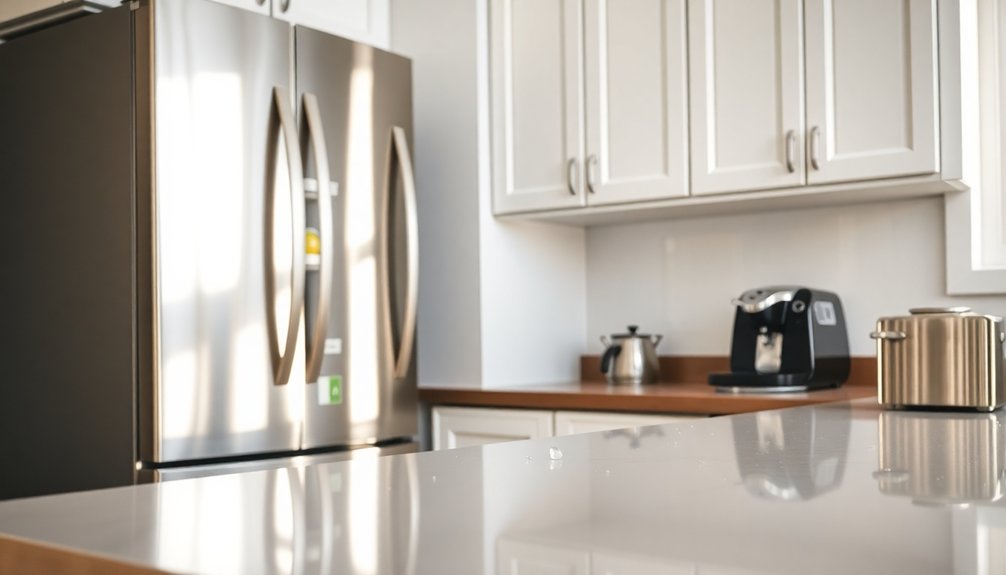
Cleaning your fridge and small appliances might seem intimidating, but it’s essential for maintaining a fresh and hygienic kitchen.
Start by emptying your fridge, tossing expired items, and soaking removable shelves in warm, soapy water. Use a hot, damp microfiber cloth to wipe down the interior. Regular purging expired and spoiled food helps maintain a clean fridge and prevents unpleasant odors.
For small appliances, consider these tips:
- Steam clean your microwave with lemon slices and water for easy residue removal.
- Brew a vinegar and water solution in your coffee pot to eliminate stains and odors.
- Regularly check and clean your toaster, removing burnt bits and wiping the interior with a damp cloth.
Final Touches and Maintenance
Once you’ve tackled the major cleaning tasks, it’s time to focus on the final touches and maintenance that keep your kitchen looking pristine.
Start by emptying the garbage can completely and scrubbing both the interior and exterior with an all-purpose cleaner to maintain hygiene and prevent odors.
After that, mop the floor with a suitable cleaner for your flooring type, ensuring a polished finish.
Don’t forget to replace clean rugs and neatly organize dish towels in drawers to enhance your kitchen’s aesthetic.
Finally, conduct a final check to confirm all areas are clean, leaving no spots missed. Regularly disinfecting countertops after each use minimizes contamination risks, promoting a cleaner kitchen environment.
Store your cleaning tools and supplies properly, keeping your kitchen organized and ensuring easy access for your next deep clean.
Daily Cleaning Habits for a Tidy Kitchen
To keep your kitchen looking its best, adopting daily cleaning habits is essential. By incorporating a few simple routines, you can achieve a spotless kitchen without feeling overwhelmed.
Adopting daily cleaning habits is key to maintaining a spotless kitchen effortlessly.
Here are some quick tidying tasks you can implement:
- Wipe down countertops, sink, and stove after meal prep to prevent food residue.
- Rinse and load dirty dishes into the dishwasher immediately after eating to avoid odors and bacteria.
- Sweep or vacuum the kitchen floor daily to eliminate crumbs and maintain a neat appearance.
Taking just a few minutes each day for these daily cleaning habits will help you enjoy a cleaner, more inviting kitchen. Additionally, regular cleaning routines can significantly reduce bacteria and odors in kitchen sinks, ensuring a hygienic cooking space.
You’ll find that maintaining a tidy space becomes second nature, making cooking and entertaining much more enjoyable.
The Importance of Consistent Cleaning Routines
Establishing consistent cleaning routines is essential for maintaining a spotless kitchen, as it prevents dirt, grease, and bacteria from piling up. By regularly wiping down surfaces after each meal, you can keep germs at bay and markedly reduce the need for deep cleaning sessions.
Daily habits, like doing dishes immediately after use and sweeping floors, create a healthier kitchen space and enhance food safety. Plus, kitchens that are routinely cleaned not only look better but also feel more inviting for cooking and socializing, boosting your overall well-being. Consistent daily habits lead to a clean and organized home, simplifying maintenance and reducing the need for deep cleaning.
Proactive Strategies for Long-Term Cleanliness
While maintaining a spotless kitchen might seem challenging, implementing proactive strategies can make it manageable and even enjoyable.
Start by establishing a daily maintenance routine that includes quick surface cleaning and immediate dishwashing. Incorporate weekly deep cleaning tasks, like wiping down appliances and mopping floors, to tackle dirt accumulation. Use high-quality, environmentally friendly cleaning supplies, such as multi-surface cleaners and natural options like baking soda and vinegar.
- Protect countertops with cutting boards.
- Promptly address spills to minimize mess.
- Regularly declutter and organize pantry items.
These proactive strategies not only keep your kitchen clean but also create a more efficient and inviting cooking space. Additionally, remember that regular maintenance is key to preventing buildup and ensuring a hygienic environment.
Enjoy the satisfaction of a well-maintained kitchen with these simple habits!
Conclusion
Keeping your kitchen spotless is like tending to a garden; a little daily care goes a long way. Just as a single weed can take over a flower bed, a single crumb can lead to mess. By establishing consistent cleaning habits and proactive strategies, you’re nurturing your space and preventing chaos. Remember, a tidy kitchen not only looks great but also makes cooking and entertaining a joy. So roll up your sleeves and enjoy the process of maintaining your culinary oasis!