When choosing between a legal pad and a notebook, consider your needs. Legal pads are great for quick jotting, thanks to their top-bound design and yellow paper that sparks creativity. On the other hand, notebooks excel at long-term organization with their durable binding and acid-free paper, making them ideal for preserving notes over time. Each has its advantages, so think about what fits your style best. There’s plenty more to explore about their unique features and benefits!
Overview of Legal Pads
Legal pads are indispensable tools for anyone who needs to jot down thoughts quickly and efficiently. With their slim, top-bound design and distinctive yellow paper, they’re perfect for structured note-taking.
Legal pads typically feature a 1.25-inch left margin, making it easy to organize your notes, whether you’re capturing ideas, creating to-do lists, or jotting down phone call details.
Legal pads offer a convenient 1.25-inch left margin, ideal for organizing notes, to-do lists, and important details.
Invented in the late 19th century, these writing pads quickly became essential in legal, educational, and business settings. The yellow color is believed to stimulate brain activity, enhancing creativity, especially for left-handed users.
Unlike notebooks, legal pads provide a straightforward way to capture information without the fuss, ensuring you stay focused on what really matters. Additionally, implementing a 10-minute tidy-up routine can enhance your productivity by helping you maintain a clutter-free workspace.
Overview of Notebooks
Notebooks are versatile companions for anyone who values organized note-taking and creativity. Typically stout and spiral-bound, they contain around 96 sheets and often feature a protective cover for durability.
Designed for long-term note-taking, notebooks make retrieving old notes much easier than legal pads. You can choose from various types, like bullet journals for planning, subject-specific notebooks tailored for students, or graph paper notebooks that cater to engineers and mathematicians.
Many notebooks come with preprinted designs, such as lined or blank pages, to aid with your organization. Compared to legal pads, they provide a more structured approach, often including helpful features like page numbering and acid-free paper to guarantee your notes last longer. Regular maintenance of your notebooks can enhance their longevity and preserve quality and appearance.
Effectiveness for Immediate Note-Taking
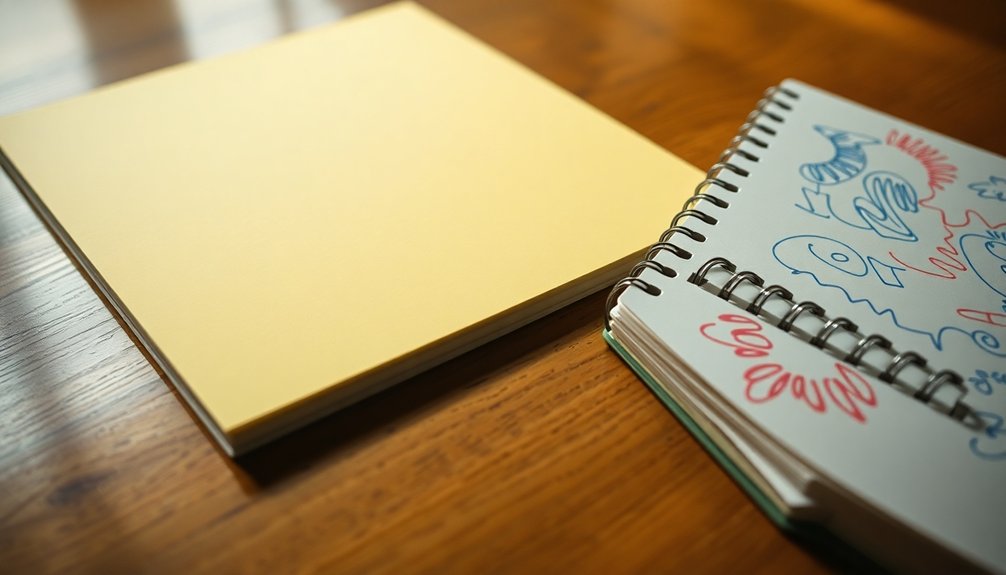
When you’re in a rush to capture ideas, the design of a legal pad shines, offering a quick and accessible way to jot down thoughts.
The top-bound layout and lack of a cover mean you can easily grab a sheet and start taking notes without any fuss. Plus, the bright yellow paper is known to stimulate brain activity, enhancing your creativity as you write.
The top-bound design and vibrant yellow paper make legal pads the ideal choice for quick, creative note-taking.
With a 1.25-inch margin, you can organize your notes efficiently, highlighting key points or listing tasks on the fly. Legal pads typically have around 50 sheets, providing enough space for your immediate note-taking needs without the bulkiness of a standard notebook.
For spontaneous thoughts, legal pads are certainly the better choice. Additionally, implementing time-saving strategies can further enhance your productivity while note-taking.
Long-Term Organization and Preservation
While spontaneity is essential for immediate note-taking, long-term organization and preservation demand a more structured approach. Notebooks excel in this regard, providing durability and a systematic way to keep your notes intact.
Here are a few reasons why notebooks are your best bet for long-term use:
- Bound Pages: Notebooks keep your notes secure, reducing the risk of losing pages, unlike legal pads which can easily fall apart.
- Acid-Free Paper: This prevents yellowing and deterioration, ensuring your notes remain clear and legible for years.
- More Space: With around 100 sheets, notebooks offer ample room for thorough notes, while legal pads often have only 50 sheets.
Additionally, consistent cleaning helps avoid dirt and grime buildup, which parallels the need for organized note maintenance.
Choosing a notebook over a legal pad can greatly enhance your note preservation strategy.
Cultural Significance of Legal Pads
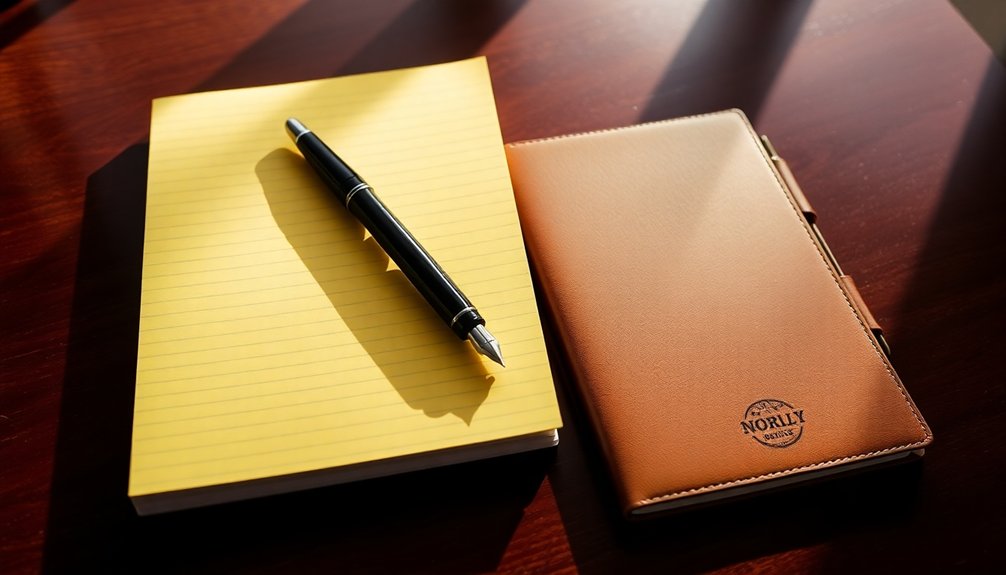
Although you mightn’t realize it, legal pads hold a unique place in our culture, especially in legal and business environments. Invented in the late 19th century, they’ve become iconic, frequently appearing in courtroom scenes in films like “12 Angry Men” and “A Few Good Men.”
Their distinctive yellow color is believed to stimulate brain activity, making them a go-to tool for capturing ideas among legal professionals. The straightforward design conveys professionalism and organization, allowing you to focus on your notes without distractions.
Plus, the top-bound format accommodates left-handed users, enhancing their practicality. While notebooks have various uses, legal pads maintain cultural cachet due to their historical roots and continued popularity among lawyers and professionals. Additionally, the use of non-toxic cleaning solutions in office spaces can further contribute to a healthier work environment.
Various Types of Notebooks
Notebooks come in a variety of types to fit your needs, whether you’re sketching, journaling, or studying.
You might prefer a bullet journal for organizing your thoughts or a graph paper notebook for precise diagrams.
Each format serves a specific purpose, making it easy to find the right one for your creative or academic tasks. Additionally, incorporating efficient storage solutions can help keep your notebooks and other supplies organized and easily accessible, enhancing your productivity.
Specialized Notebooks Overview
When it comes to capturing ideas or organizing thoughts, specialized notebooks offer tailored solutions for different needs. You’ll find a variety of options, each designed to enhance your productivity and creativity:
- Sketchbooks for artists to explore their imagination with blank pages.
- Steno books for journalists, perfect for quick note-taking in a compact format.
- Bullet journals for planning and journaling, helping you stay organized.
Many specialized notebooks feature preprinted designs, like lined or graph pages, that cater to specific tasks.
For example, engineers prefer graph paper for technical diagrams, while inventors benefit from notebooks with page numbers to document their innovations.
Choosing the right notebook can greatly improve your workflow, so consider what suits your needs best!
Popular Notebook Formats
With countless options available, choosing the right notebook format can greatly enhance your writing or creative process.
You might consider sketchbooks if you’re an artist, or bullet journals for detailed planning. For students, subject-specific notebooks can help keep your assignments organized.
If you’re in engineering or math, graph paper notebooks offer precision for diagrams and calculations. Journalists and transcriptionists often prefer steno books for efficient, portable note-taking.
Standard notebooks typically have lined pages for writing, while drawing notebooks come with blank pages for artistic expression.
Many notebooks even feature preprinted designs, like page numbers in inventors’ notebooks, making organization a breeze.
Explore these formats to find the perfect writing pads that suit your needs!
Choosing the Right Tool for Specific Needs
When it comes to taking notes, your specific needs can guide your choice between a legal pad and a notebook.
If you need to capture quick thoughts on the fly, a legal pad is perfect for that fast-paced environment.
For long-term organization and detailed notes, a sturdy notebook will serve you better. Regular disinfection of your workspace can reduce harmful bacteria that may affect your health and focus.
Quick Note Taking
Choosing the right tool for quick note-taking can greatly impact your efficiency. If you’re often jotting down ideas on the fly, legal pads might be your best bet. Their top-bound design allows for easy access, letting you write without flipping pages. Plus, the yellow color stimulates your brain, enhancing creativity.
Consider these factors when choosing your note-taking tool:
- Portability: Legal pads are lightweight and easy to carry, with about 50 sheets perfect for on-the-go notes.
- User-Friendly for Lefties: Their design accommodates left-handed writers, preventing smudging.
- Quick Capture: Legal pads make it easy to jot down quick notes without the formalities of a notebook.
Long-Term Organization
Quick note-taking tools like legal pads serve a specific purpose, but for long-term organization, notebooks stand out. When you need to preserve your notes over time, a notebook is the better choice.
With around 100 sheets, notebooks allow you to organize and retrieve information easily, whereas legal pads, with only about 50 sheets, can quickly become cumbersome. Notebooks often feature helpful designs, like lined or graph paper, that keep your notes clear and structured.
While legal pads excel in spontaneity during meetings, their lack of durability can hinder your ability to maintain organized information. So, if you’re looking to keep your notes accessible for the long haul, opt for a notebook over a legal pad.
Modern Innovations in Note-Taking
How has note-taking evolved in the digital age? With modern innovations in note-taking, you can enjoy the best of both worlds—traditional and digital.
Here are three exciting advancements:
- Hybrid Notebooks: Combine pen and paper with digital capture, letting you save and organize your notes electronically.
- Smart Pens: Convert your handwritten notes into digital format in real-time, enhancing your productivity effortlessly.
- Stylus-Enabled Tablets: Encourage creative note-taking through drawing and diagramming, making the process interactive.
These innovations make it clear that notebooks vs. traditional methods are no longer the only options.
You’ve got tools that not only streamline your note-taking but also keep you engaged and organized in this fast-paced digital age. Additionally, utilizing eco-friendly cleaning products can enhance your workspace, ensuring a healthier environment for your note-taking endeavors.
Practical Considerations for Professionals
When you’re managing the demands of a professional environment, selecting the right note-taking tool can greatly impact your efficiency.
If you often find yourself jotting down quick thoughts during meetings or calls, legal pads are your best bet. Their slim design makes them easily portable, allowing you to capture ideas on the fly.
On the other hand, if you need a more organized approach, notebooks are ideal. They offer more pages and often come with preprinted designs that help you keep your notes clear and accessible.
For those seeking organization, notebooks provide ample pages and structured layouts for clear, accessible notes.
For left-handed users, the top-bound design of legal pads provides a smoother writing experience.
Consider your needs carefully—whether you prioritize portability or organization will guide your decision between legal pads and notebooks. Additionally, implementing vertical storage solutions can help keep your workspace tidy and efficient for your note-taking preferences.
Recommendations for Legal Pads and Notebooks
Choosing the right legal pad or notebook can greatly enhance your note-taking experience. Here are some recommendations to guide your selection:
- Legal Pads: For quick notes and brainstorming, consider the Ampad Dual Evidence Pad. Its strong backing and micro-perforations make it easy to remove sheets when needed.
- Notebooks: If you’re into long-term note-taking or journaling, the Levenger Freeleaf offers a luxurious design with Cornell method divisions, perfect for organized study materials.
- Portability: For on-the-go notes, check out the Pro Pad Pocket Legal Pad.
And if you need something specific for engineering, opt for a graph paper notebook. Additionally, using the right tools can enhance employee productivity by contributing to a more organized workspace, thereby improving your overall note-taking effectiveness.
Conclusion
To summarize, whether you prefer legal pads or notebooks largely depends on your needs and preferences. Did you know that 70% of people find writing by hand helps them remember information better? So, if you want to boost your retention and stay organized, choose the tool that resonates with you. Consider experimenting with both to see which one enhances your note-taking experience and meets your professional demands. Happy writing!