To tackle hard water stains in your kitchen sink, use effective products like CLR or Bring It On Cleaner, which are specifically formulated to dissolve mineral deposits. For a natural approach, try a mixture of vinegar and water, or sprinkle baking soda on stains for extra scrubbing power. Regular maintenance is key, so clean weekly and dry surfaces after use to prevent buildup. Discover more tips and tricks for a sparkling sink and effective cleaning techniques.
What Causes Hard Water Stains?
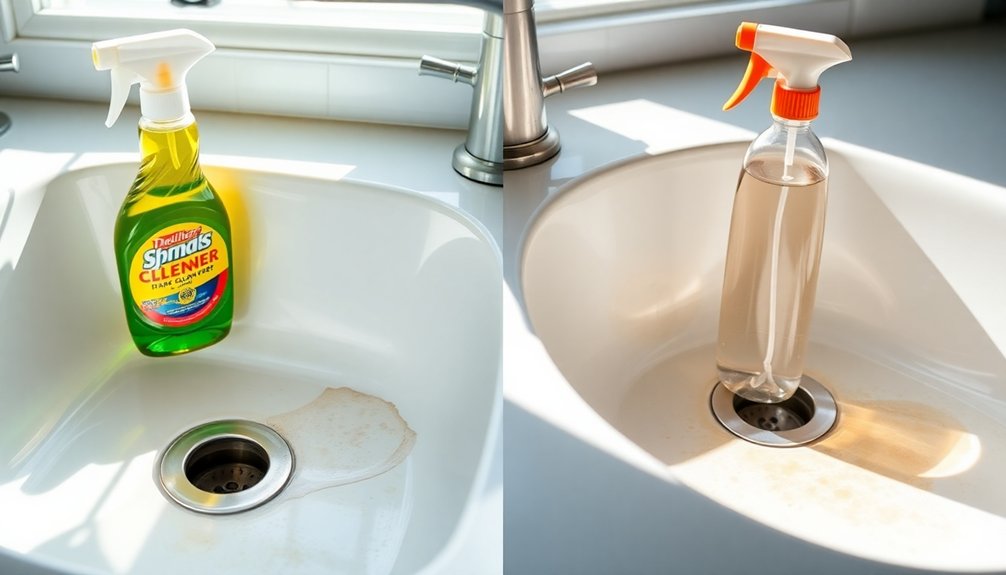
Hard water stains form when your water contains high levels of dissolved minerals, mainly calcium and magnesium. These elements are the primary causes of hard water, leading to the formation of unsightly mineral deposits.
When hard water evaporates from surfaces like your kitchen sink, it leaves behind a chalky residue that manifests as white or cloudy spots. You’ll often notice these stains on faucets and countertops due to their constant exposure to water.
Unfortunately, hard water stains can be stubborn and challenging to remove. Understanding the mineral composition of your water is essential for selecting the right cleaning techniques and preventative measures. Using water softeners can significantly reduce the formation of these stains by eliminating calcium and magnesium from your water supply.
Best Cleaning Products for Hard Water Stains
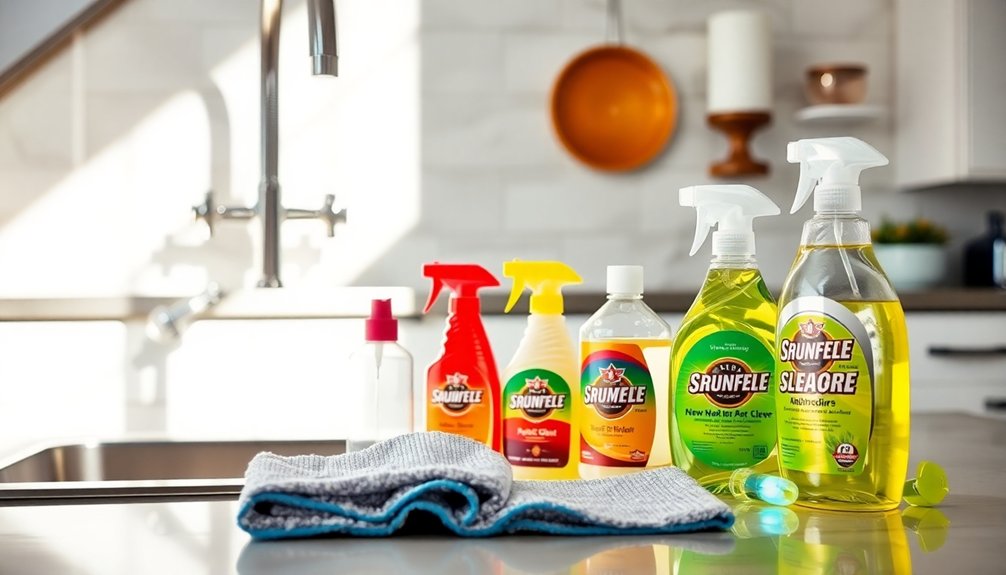
When it comes to tackling hard water stains in your kitchen sink, several effective cleaning products can make the job easier. CLR is a popular choice for dissolving those stubborn stains, while Bring It On Cleaner Hard Water Stain Remover, with its oxygen bleach formula, boasts over 3,000 positive reviews for tackling calcium buildup.
For a more natural approach, mix white vinegar with water to create a cost-effective solution that can help remove hard water stains from various surfaces. You can also combine baking soda and vinegar for an even stronger effect—this fizzing reaction can lift those tough stains. Additionally, natural cleaning methods promote a healthier home environment by reducing the use of harsh chemicals.
Finally, consider using a Pumie Scouring Stick for scrubbing without damaging your sink’s surface.
Vinegar: A Natural Solution
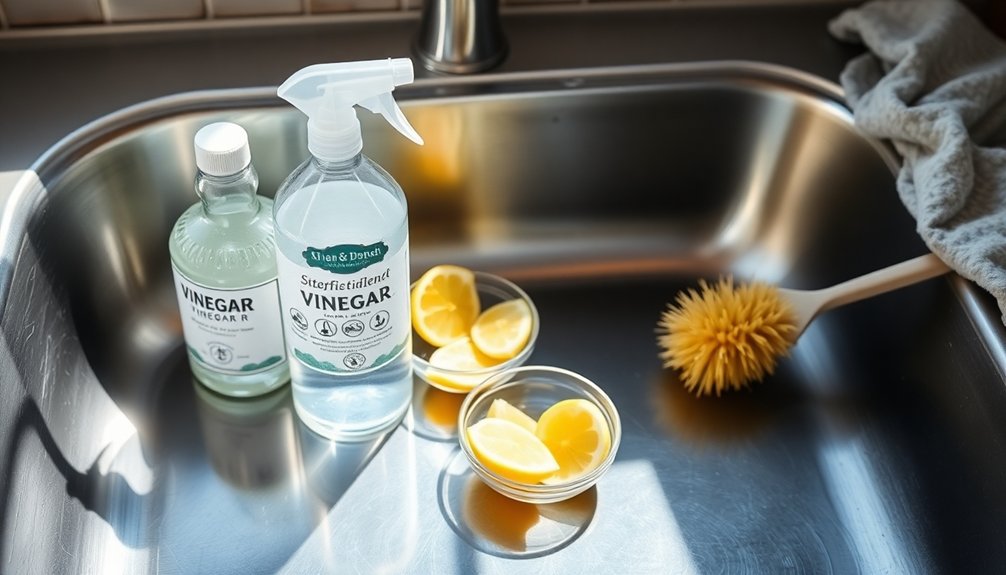
[Vinegar is an excellent natural cleaner that effectively tackles hard water stains thanks to its acidity. You can use a simple mixture of equal parts vinegar and water to spray on the affected areas, letting it sit for 15 minutes before scrubbing. For tougher stains, wrapping a vinegar-soaked cloth around fixtures can really boost your cleaning efforts. Regular use of DIY non-toxic cleaners ensures a hygienic space without safety compromises, promoting sustainable living.]
Vinegar’s Cleaning Properties
Although many commercial cleaners promise to tackle tough stains, vinegar stands out as a natural solution thanks to its powerful cleaning properties. Its acetic acid content effectively dissolves hard water build-up, making it an excellent choice for maintaining your kitchen sink.
Here are some benefits of using vinegar:
- Dissolves mineral deposits: It breaks down calcium and magnesium buildup effortlessly.
- Dual-purpose cleaner: Not only removes stains but also eliminates odors, keeping your kitchen fresh.
- Non-toxic and eco-friendly: Safe for food prep areas, unlike many harsh commercial products.
Regularly using vinegar can also help minimize the occurrence of hard water stains, promoting easier maintenance.
Application Techniques for Effectiveness
To effectively tackle hard water stains in your kitchen sink, you’ll want to apply vinegar using some tried-and-true techniques.
Start by mixing equal parts vinegar and water in a spray bottle. Spray the solution onto the stained areas and let it sit for at least 15 minutes to allow the acidity to work its magic.
For stubborn stains, soak a cloth in vinegar and wrap it around the faucet or sink fixture, enhancing the cleaning effect.
After scrubbing, rinse the area thoroughly with water to remove any residue, protecting your sink’s finish.
Incorporating these cleaning tips into your routine can help prevent hard water stains, keeping your kitchen sink looking fresh over time.
Baking Soda: The Abrasive Powerhouse
Baking soda is a powerful ally when it comes to tackling hard water stains in your kitchen sink. This natural abrasive effectively dissolves calcium deposits without scratching your sink’s surface, making it safe for materials like stainless steel and porcelain.
Here’s how to harness its cleaning power:
- Sprinkle baking soda directly onto the stained area.
- Scrub with a damp sponge to lift tough stains, or mix it with vinegar for a fizzy reaction that helps neutralize odors.
- Rinse thoroughly for a sparkling finish.
Regular use of baking soda in your cleaning routine not only removes existing stains but also helps prevent future buildup, keeping your sink looking polished and clean. Incorporating eco-friendly ingredients into your cleaning routine promotes a healthier kitchen environment.
CLR and Other Commercial Cleaners
When it comes to tackling hard water stains, CLR and other commercial cleaners can be game-changers. CLR, specifically formulated to dissolve calcium, lime, and rust, is highly effective for cleaning sinks affected by hard water.
Many users find that it breaks down tough stains quickly, requiring minimal scrubbing compared to other options. However, it’s vital to follow the manufacturer’s instructions, wear gloves, and guarantee proper ventilation due to its strong acids.
Other cleaners, like Bring It On Cleaner, also target hard water stains using oxygen bleach, effectively addressing calcium buildup without harsh scrubbing. It’s important to note that regular cleaning with disinfectants can help prevent hard water stains from forming in the first place.
While these products excel at removing stains, remember they may not tackle paint stains, so consider a multi-faceted approach for thorough cleaning.
How to Use a Magic Eraser Effectively
Using a Magic Eraser can quickly lift hard water stains from your kitchen sink, making it a handy tool in your cleaning arsenal.
To use it effectively, follow these simple steps:
- Dampen the Magic Eraser with water.
- Gently rub the stained area until the stains disappear, avoiding excessive pressure to prevent scratching.
- For tougher hard water stains, mix it with a cleaning solution like vinegar or baking soda for better results.
Additionally, ensure you regularly disinfect your sink to maintain a hygienic environment as part of your cleaning routine, particularly using eco-friendly disinfectants to minimize harmful impacts.
After cleaning, rinse your sink thoroughly to remove any residue, as this can attract more dirt over time.
Step-by-Step Cleaning Guide for Kitchen Sinks
Cleaning your kitchen sink doesn’t have to be a challenging task; in fact, it can be accomplished in just a few easy steps.
Cleaning your kitchen sink is simple and can be done quickly with just a few easy steps.
Start by gathering your supplies: white vinegar, baking soda, and a non-abrasive sponge.
Mix equal parts vinegar and water in a spray bottle, then spray it on the hard stains and let it sit for at least 15 minutes.
For stubborn stains, sprinkle baking soda over the area before applying the vinegar solution, letting the fizzing action help lift the stains.
Gently scrub the sink with a soft brush or sponge, covering all stained spots.
Finally, rinse thoroughly with warm water to remove any residues. Regular cleaning routine promotes a hygienic sink environment that helps maintain the appearance and integrity of your sink.
Enjoy your sparkling clean sink!
Preventative Measures to Avoid Hard Water Stains
To keep hard water stains at bay, you should establish a regular cleaning routine and dry your sink surfaces immediately after use. Consider investing in a water softener to tackle mineral buildup right from the source. These simple steps can make a big difference in maintaining a spotless kitchen sink, and incorporating weekly cleaning routines can further enhance your sink’s longevity and appearance.
Regular Cleaning Routine
While hard water stains can be a persistent nuisance, establishing a regular cleaning routine can make a significant difference.
Here are some effective practices to keep your kitchen sink stain-free:
- Mix equal parts vinegar and water for a quick cleaning solution that removes mineral deposits.
- Wipe down your sink with a dry cloth immediately after use to minimize water spots and prevent stains.
- Apply a preventative spray, like Pam cooking spray, to create a barrier against mineral buildup.
Use Water Softener
A water softener can be a game-changer for households dealing with hard water. By installing one, you greatly reduce the mineral content in your water, minimizing the likelihood of hard water stains on your kitchen sink and other surfaces.
Water softeners work by exchanging calcium and magnesium ions for sodium or potassium ions, preventing those pesky minerals from depositing on your fixtures. Regular maintenance is essential; a malfunctioning water softener can lead to a resurgence of hard water stains.
Plus, using a water softener alongside routine cleaning practices can extend the lifespan of your kitchen sink and cut down on deep cleaning frequency.
In the long run, investing in a water softener can save you money by reducing cleaning product needs and plumbing wear.
Immediate Surface Drying
Installing a water softener makes a significant difference in reducing hard water stains, but it’s not the only step you can take. Immediate surface drying is essential to prevent hard water from leaving mineral deposits.
Here are a few tips you can easily incorporate into your routine:
- Use a soft, absorbent cloth to wipe down sinks and countertops after each use.
- Establish a habit of drying surfaces immediately, minimizing the risk of soap scum and buildup.
- Regularly check for and remove any lingering water droplets to keep your sink looking polished.
Long-Term Maintenance Tips for Your Sink
To keep your kitchen sink looking pristine and free from hard water stains, it’s essential to incorporate a few long-term maintenance strategies into your routine.
Regularly check your sink for new spots; catching hard water stains early can prevent significant buildup. Establish a consistent cleaning schedule, ideally weekly, to maintain its appearance.
After cleaning, apply a thin layer of Pam cooking spray to create a barrier against future stains. Consider investing in a water softener to reduce mineral content in your water supply, decreasing the chances of stains forming.
Finally, promptly address any spills or water accumulation by drying the sink surface immediately. These long-term maintenance tips will help keep your sink beautiful and stain-free! Regular maintenance also ensures a clean and hygienic environment, which is vital for your overall health risks of neglecting disinfection.
Community Recommendations and Experiences
When it comes to tackling hard water stains, community members have plenty of tips and tricks to share.
Many swear by white vinegar and baking soda, while others find success with CLR or even Pam cooking spray for prevention. Eco-friendly products, such as vinegar-based cleaners, are also recommended for their effectiveness and safety in removing stains.
Let’s explore these effective cleaning techniques and product recommendations that have worked for fellow sink owners.
Effective Cleaning Techniques
Although hard water stains can be a nuisance, community members have shared some effective cleaning techniques that make tackling this issue easier.
Here are a few methods you can try:
- Mix vinegar and baking soda for a fizzy solution that helps dissolve stains.
- Soak a cloth in vinegar and wrap it around faucets and showerheads for about an hour to loosen mineral deposits.
- Regularly apply Pam cooking spray to surfaces as a preventative measure, keeping them clean longer.
Using white vinegar as your primary cleaning agent is widely endorsed due to its acidity, which effectively breaks down mineral deposits.
For tougher stains, a pumice stone can work wonders, especially in toilets and porcelain sinks.
Product Recommendations and Tips
Community members have shared their favorite products and tips for removing hard water stains, enhancing your cleaning routine with tried-and-true solutions.
CLR is highly recommended for effectively tackling hard water stains in kitchen sinks, while white vinegar stands out as a cost-effective and versatile cleaner for dissolving mineral deposits.
For porcelain sinks, many users swear by the Pumie Scouring Stick, citing its durability and effectiveness over traditional brushes.
If you prefer a natural alternative, try mixing baking soda with white vinegar; it’s not only great for cleaning but also deodorizes your sink.
Regular maintenance and prompt stain removal using these products can considerably reduce hard water buildup, keeping your sink looking its best.
Conclusion
In summary, tackling hard water stains doesn’t have to be an intimidating task. By using products like vinegar or CLR, you can restore your sink’s shine with ease. For example, Sarah, a busy mom, turned her dingy sink into a sparkling centerpiece in just 15 minutes using baking soda and vinegar. With the right methods and consistent maintenance, you can keep your sink looking brand new and make cleaning a breeze!