To keep your sofa and upholstery stain-free, regular cleaning is essential. Vacuum weekly to remove dust and allergens. Identify fabric types to choose the right cleaning methods, and tackle stains immediately to prevent setting. Use eco-friendly cleaners and tools like upholstery brushes and microfiber cloths for effective maintenance. Apply fabric protectants for added safety against spills. With a seasonal deep cleaning schedule, you can extend the life of your furniture. Find out more tips to guarantee your upholstery stays in top shape!
Why Regular Cleaning Is Essential for Upholstery

While you may think your upholstery looks fine, regular cleaning is essential for maintaining its appearance and longevity. Dust, dirt, and allergens accumulate over time, making your furniture look worn and affecting your indoor air quality.
To guarantee upholstery longevity, establish a cleaning frequency that suits your lifestyle—ideally, you should vacuum your upholstery weekly and schedule a deep clean every six to twelve months. This proactive approach not only enhances the look of your furniture but also prevents stains and odors from settling in. Additionally, understanding fabric cleaning codes helps ensure you use the right cleaning methods for your upholstery.
Plus, it keeps the fabric fibers intact, extending the life of your investment. By prioritizing regular cleaning, you can enjoy a fresh, inviting space that stands the test of time.
Understanding Different Upholstery Fabrics
Knowing how to clean your upholstery effectively starts with understanding the different fabrics used in your furniture.
Understanding your upholstery’s fabric is key to effective cleaning and maintenance.
You’ll typically encounter natural fibers like cotton, linen, and wool, which offer a soft feel but may be more susceptible to stains and wear. When you choose these fabrics, keep in mind that they often require gentle cleaning methods to maintain their appearance.
On the other hand, synthetic blends, such as polyester and acrylic, are more durable and stain-resistant, making them easier to clean. However, they mightn’t breathe as well as natural fibers. Understanding the fabric cleaning codes helps you select the right cleaning approach and products, ensuring your upholstery remains pristine and lasts longer.
How to Identify Stains Before They Set?
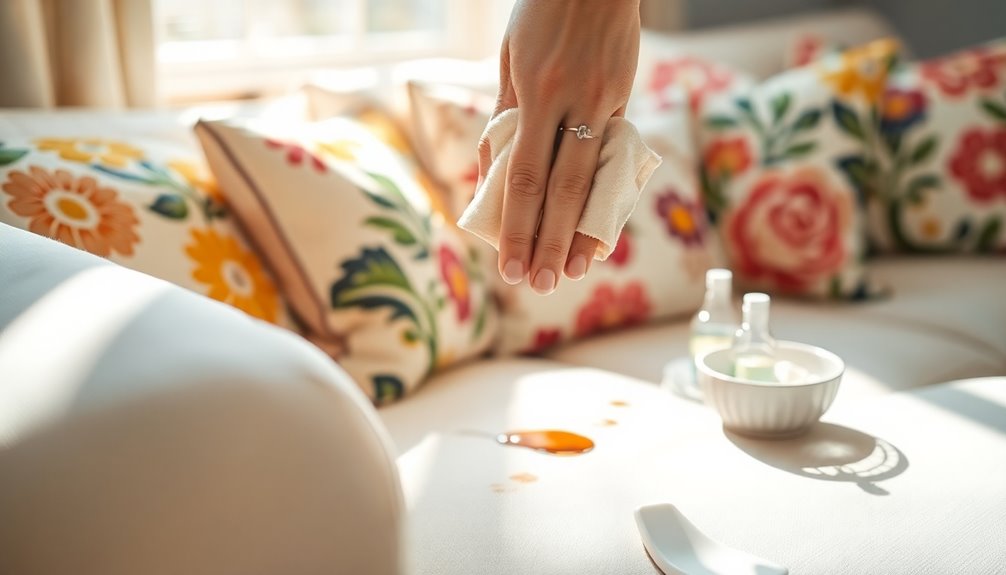
How can you spot stains before they set in? Early detection is essential for maintaining your furniture’s beauty.
By being aware of different stain types, you can act quickly and prevent permanent damage. Here are three tips to help you identify stains:
- Watch for discoloration: Keep an eye on areas where spills may occur, as they often show color changes before a stain fully develops.
- Smell for odors: Some stains, like food or pet accidents, can produce distinctive smells. If you notice an unusual odor, investigate immediately.
- Feel for texture changes: If a fabric feels sticky or rough, it could indicate a spill that needs attention. Additionally, using non-toxic cleaning alternatives can help ensure that your cleaning methods are safe for your family while effectively addressing any stains.
Best Tools and Supplies for Upholstery Cleaning
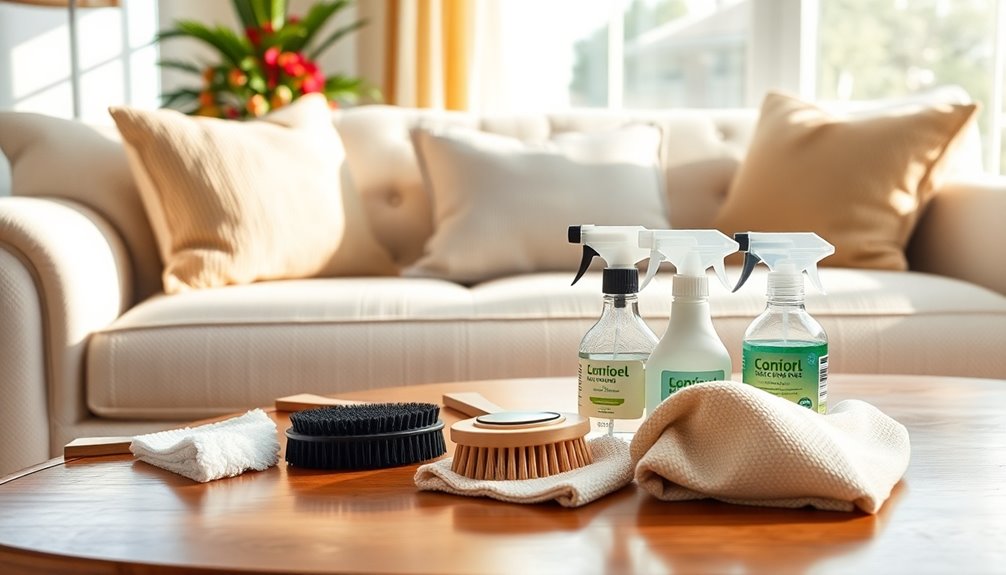
To keep your upholstery looking fresh and clean, having the right tools and supplies is essential. Start with high-quality upholstery brushes that can effectively lift dirt and debris from your fabric. A soft-bristled brush works wonders for delicate materials, while a stiffer brush can tackle tougher fabrics.
Next, choose eco-friendly cleaners that are safe for both your furniture and the environment. Look for a gentle yet effective formula that can break down stains without damaging the upholstery. Incorporating non-toxic cleaners into your cleaning routine not only protects your furniture but also promotes a healthier living space.
Opt for eco-friendly cleaners that gently eliminate stains while protecting both your upholstery and the environment.
Don’t forget microfiber cloths; they’re perfect for spot cleaning and absorbing spills. Having a spray bottle handy can make applying your eco-friendly cleaner easier.
With these tools and supplies, you’ll be well on your way to maintaining beautiful, stain-free upholstery.
How to Vacuum Your Sofa Effectively
To vacuum your sofa effectively, start by choosing the right vacuum that suits your upholstery type.
Pay special attention to the crevices where dirt and crumbs accumulate, as these spots often get overlooked.
Finally, use the proper attachments carefully to guarantee you clean every inch without damaging the fabric. Incorporating multiple brush heads can enhance your vacuuming efficiency, allowing you to tackle different upholstery textures effortlessly.
Choose The Right Vacuum
Choosing the right vacuum can make all the difference when it comes to keeping your sofa clean and fresh.
With so many vacuum types available, it’s essential to pick one that suits your needs and offers strong suction power. Here are three key factors to evaluate:
- Vacuum Type: Opt for a handheld or upright vacuum designed for upholstery. These typically come with attachments specifically for furniture.
- Suction Power: Look for a vacuum with adjustable suction settings. This lets you safely clean delicate fabrics without causing damage.
- Attachments: Choose a vacuum that includes upholstery brushes or crevice tools to effectively reach every corner of your sofa.
Investing in the right vacuum will help you maintain a spotless and inviting living space!
Focus On Upholstery Crevices
While you may focus on the visible surfaces of your sofa, it’s the crevices that often trap dirt, dust, and crumbs. To guarantee effective upholstery maintenance, grab your vacuum and tackle these hidden spots.
Start by removing any cushions; this gives you better access to the gaps. Run the vacuum nozzle along seams and between cushions to suck up debris that could damage your fabric.
Don’t forget to check under the sofa as well. Regularly cleaning these areas helps maintain fabric longevity and keeps your furniture looking fresh.
Make this crevice cleaning part of your routine, and you’ll find that your upholstery not only looks better but lasts longer too. A clean sofa is a happy sofa!
Use Proper Attachments Carefully
After tackling those hidden crevices, it’s time to focus on using the right vacuum attachments for your sofa.
Choosing the appropriate attachment types enhances your vacuum techniques and guarantees a thorough clean. Here’s how to do it effectively:
- Crevice Tool: Perfect for reaching tight spaces between cushions and along seams.
- Upholstery Brush: Ideal for loosening dirt and pet hair from fabric surfaces without damaging them.
- Dusting Brush: Great for delicate fabrics and hard-to-reach areas, it gently collects dust.
Using these tools, you’ll be able to maintain your sofa’s appearance and prolong its life.
Remember to adjust your vacuum’s suction power as needed, especially on delicate materials.
Happy cleaning!
Quick Fixes for Common Stains
How can you tackle those pesky stains on your sofa before they set in? First, act quickly!
Act swiftly to combat stubborn sofa stains—quick action is key to preventing them from setting in!
For food spills, gently blot the area with a clean cloth to absorb as much as possible. Then, use stain removal techniques like mixing mild dish soap with water to treat the stain.
For ink stains, dab a cotton ball in rubbing alcohol and gently blot until the stain lifts.
When dealing with wine, sprinkle baking soda on the stain to absorb it and then vacuum.
Always test any cleaner on a hidden area first to verify it won’t harm your upholstery. Additionally, consider using baking soda as a versatile cleaning agent for various stains.
Regular upholstery care, like vacuuming and spot cleaning, can help prevent stains from setting in the first place.
DIY Cleaning Solutions You Can Make at Home
If you’re looking for effective ways to clean your upholstery without harsh chemicals, you’ve got some great options at home.
A vinegar and baking soda mixture or a lemon juice solution can tackle tough stains while being eco-friendly. Additionally, using a homemade fabric freshener spray can help maintain a pleasant scent in your upholstery after cleaning.
Let’s explore how to whip up these simple DIY cleaning solutions.
Vinegar And Baking Soda
While commercial cleaners can be effective, you might find that vinegar and baking soda are all you need for a powerful DIY cleaning solution.
These two ingredients aren’t only affordable but also offer various vinegar benefits, like deodorizing and stain removal.
Here’s how you can use them:
- Stain Remover: Mix equal parts of vinegar and water in a spray bottle. Spray on stains, let it sit for a few minutes, then blot with a clean cloth.
- Deodorizing Paste: Combine baking soda and a little water to form a paste. Apply it to any smelly spots on your upholstery, let it dry, and vacuum it up.
- All-Purpose Cleaner: Mix vinegar and baking soda for a bubbly cleaner that tackles tough grime.
Give these solutions a try for a fresh, clean look!
Lemon Juice Solution
Lemon juice is a powerful natural cleaner that not only helps brighten your upholstery but also leaves behind a rejuvenating scent.
The lemon juice benefits include its ability to cut through grease and eliminate stains effectively.
For a simple lemon juice application, mix equal parts lemon juice and water in a spray bottle. Lightly mist the stained area and let it sit for about 10 minutes.
Then, gently blot with a clean cloth to lift the stain. This method works wonders on various fabric types, leaving your furniture fresh and clean.
Remember, always test a hidden spot first to verify the fabric can handle the acidity.
Enjoy your stain-free upholstery with this easy, DIY solution!
The Importance of Spot Testing Cleaners
Here’s how to spot test effectively:
- Choose an inconspicuous area: Find a hidden spot on your upholstery to test the cleaner.
- Apply a small amount: Use a cotton swab or cloth to apply the cleaner.
- Wait and observe: Allow it to sit for a few minutes, then blot and check for any discoloration or damage. Regular spot treatment is essential for maintaining fabric condition and ensuring your upholstery remains in top shape.
How to Properly Treat Pet Stains and Odors
When your furry friend has an accident on your upholstery, quick action can prevent lasting stains and odors. Start by blotting the area with a clean cloth to absorb as much liquid as possible. Avoid rubbing, as this can push the stain deeper.
Next, use enzyme cleaners specifically designed to break down pet waste, effectively eliminating both stains and odors. Follow the product instructions for the best results.
After treating the stain, apply pet odor neutralizers to guarantee any lingering smells disappear. Let everything dry completely before using the furniture again. Regularly cleaning your upholstery can help maintain its appearance and keep pet-related odors at bay, guaranteeing your space remains inviting and fresh. Additionally, incorporating frequent cleaning routines can significantly reduce the risk of tough stains and odors from becoming a persistent issue.
When to Call in Professional Upholstery Cleaners?
If you’re struggling with stubborn stains that just won’t budge, it might be time to call in the pros. When you’re short on time or need specialized care for delicate fabrics, professional cleaners can save you the hassle. Knowing when to seek help can keep your upholstery looking its best. Additionally, professionals often use steam cleaning techniques that effectively remove tough stains and germs, ensuring a thorough clean.
Persistent Stains Require Experts
While you might tackle minor stains on your upholstery with DIY methods, persistent stains often require the expertise of professional cleaners.
When you find yourself facing tough stains that just won’t budge, it’s time to call in the pros. Here are three signs you should seek professional services for stain removal:
- Stains are deep-set: If the stain has been there for a while and penetrated the fabric, DIY methods mightn’t cut it.
- Specialized fabrics: Delicate materials like silk and velvet need expert care to avoid damage.
- Multiple stains: If your upholstery has multiple stains or high-traffic areas, professionals can restore its look effectively.
Don’t hesitate to invest in professional services when needed!
Time Constraints and Convenience
Balancing a busy schedule often leaves little time for deep cleaning your upholstery, making it tempting to call in the professionals.
If you find yourself stretched thin with work, family, and other commitments, it’s wise to prioritize time management. While cleaning hacks can help maintain your furniture, significant stains or heavy wear might require expert attention.
If you’re facing a tough stain or your upholstery needs a refresh but you can’t squeeze it into your schedule, hiring professionals is a smart choice. They not only save you time but also bring specialized equipment and expertise.
Specialized Fabric Care Needs
Knowing when to call in professional upholstery cleaners can save you time and prevent damage to your furniture.
If you have delicate fabrics or unique upholstery types, it’s essential to recognize when DIY cleaning isn’t enough. Here are three signs it’s time to bring in the pros:
- Stubborn Stains: If stains persist despite your efforts, specialists have the right tools and solutions to tackle them.
- Delicate Fabrics: For high-end materials like silk or velvet, professional care guarantees no harm comes to the fibers.
- Heavy Soil: If your furniture’s heavily soiled or smells, a thorough professional cleaning can refresh and restore its appearance.
Don’t risk damaging your valuable pieces—know when to seek expert help!
Protecting Your Sofa With Fabric Protectants
How can you keep your sofa looking fresh and new? One effective way is by using fabric protectants.
These sprays create a barrier that helps repel spills and stains, making your fabric care routine much easier. Before applying a protectant, make sure your sofa is clean and dry.
Follow the manufacturer’s instructions for the best results. Regularly applying fabric protectants not only aids in stain prevention but also extends the life of your upholstery.
Remember, it’s easier to keep your sofa looking great than to clean it after a spill. So, take the time to protect your investment, and you’ll enjoy your beautiful furniture for years to come.
Don’t wait—start your fabric care journey today!
Tips for Maintaining Leather Upholstery
Is your leather upholstery looking a bit tired? Keeping it in top shape requires regular care and attention.
Is your leather furniture showing signs of wear? Regular maintenance is key to preserving its beauty and longevity.
Here are three essential tips to help maintain your leather and guarantee it stays beautiful:
- Regular Cleaning: Wipe down your leather with a soft, damp cloth weekly to remove dust and dirt. Avoid harsh chemicals that can harm the finish.
- Leather Conditioning: Every 6-12 months, apply a quality leather conditioner. This keeps the material supple and prevents cracks, enhancing its lifespan.
- Stain Prevention: Quickly address spills by blotting them with a clean, dry cloth. Avoid rubbing, as it can push stains deeper into the leather.
With these tips, your leather upholstery won’t only look great but also last longer!
Seasonal Deep Cleaning: A Schedule to Follow
Maintaining leather upholstery sets a solid foundation for your seasonal deep cleaning routine.
To keep your furniture looking its best, create a seasonal checklist that outlines specific tasks for each season. In spring, focus on removing dust and allergens, while in summer, consider deep cleaning any stains or spills.
Autumn is perfect for conditioning leather, and winter is ideal for checking for signs of wear and tear.
Establishing a cleaning frequency helps you stay on track. Aim for monthly spot cleaning, with a deep clean every season.
This schedule guarantees that your upholstery remains in great shape, extending its lifespan and enhancing your living space.
Stick to this routine, and you’ll enjoy a fresh, stain-free environment all year round.
How to Revive Faded Colors in Upholstery
If your upholstery has lost its vibrant colors over time, don’t worry—you can bring it back to life with some simple techniques.
Here are a few effective color restoration techniques you can try:
- Upholstery Dyeing Methods: Use fabric dye specifically designed for upholstery. Follow the manufacturer’s instructions for the best results.
- Color Enhancers: Apply fabric-safe color enhancers or sprays to revive the original hue without the need for dyeing.
- Professional Services: If DIY methods aren’t your thing, consider hiring professionals who specialize in upholstery color restoration.
These methods can help you restore your furniture’s beauty and make it look as good as new.
Revive your furniture’s charm and make it shine like new with these effective color restoration techniques.
Don’t hesitate to experiment to find the best solution for your upholstery!
Preventing Future Stains With Regular Maintenance
To keep your upholstery looking fresh, you need a regular maintenance routine.
Start by vacuuming weekly to remove dirt and debris, and don’t forget to tackle spills immediately with spot treatment techniques.
Additionally, consider using protective fabric sprays to guard against future stains and extend the life of your furniture.
Regular Vacuuming Schedule
Regularly vacuuming your sofa and upholstery is essential for keeping them looking fresh and preventing future stains.
Establishing a consistent vacuuming frequency not only removes dirt and debris but also helps maintain the integrity of your fabric.
Here are three tips to help you with your upholstery maintenance:
- Vacuum Weekly: Aim for at least once a week to keep dust and allergens at bay.
- Use the Right Attachment: Opt for a soft brush attachment to gently lift debris without damaging the fabric.
- Pay Attention to Crevices: Don’t forget to vacuum between cushions and in seams where crumbs and dirt often hide.
Spot Treatment Techniques
While maintaining a clean sofa is essential, knowing how to effectively treat spots as they occur can help prevent permanent stains.
Start by identifying the type of stain and using appropriate spot cleaning techniques. For liquid spills, blot the area immediately with a clean cloth—never rub, as this can spread the stain. Use stain removal products designed for your specific upholstery material. Always test these products on a hidden area first to confirm they won’t damage the fabric.
For greasy stains, sprinkle baking soda to absorb the oil before applying your stain remover.
Regularly treating spots not only keeps your sofa looking fresh but also extends its lifespan, making your furniture a lasting investment.
Protective Fabric Sprays
Incorporating protective fabric sprays into your sofa maintenance routine can considerably reduce the risk of future stains.
These protective sprays and fabric coatings create a barrier that repels spills and dirt, making cleanup easier.
Here are three essential tips for using them effectively:
- Choose the Right Spray: Select a protective spray specifically designed for your upholstery type. Always read the label to guarantee compatibility.
- Test First: Before applying, test the spray on a hidden area to check for any discoloration or damage.
- Reapply Regularly: Depending on usage, reapply the protective sprays every few months to maintain their effectiveness.
Conclusion
So, you thought your sofa was immune to stains? Ironically, it’s the very place you’ve spilled countless snacks and drinks that deserves your attention the most. By following these tips, you’ll not only keep your upholstery looking fresh but also be the envy of every couch potato. Who knew that maintaining your furniture could be so rewarding? Now, get ready to tackle those stains like a pro—and maybe keep the popcorn at a safe distance next movie night!