To remove hard water stains from any surface, use a solution of equal parts white vinegar and water. Spray it on the stained area and let it sit for 10-15 minutes. For tough stains, make a paste with baking soda and water, apply it, and scrub gently with a microfiber cloth. Rinse everything thoroughly with warm water. Regular maintenance can prevent future buildup, and you can discover more effective tips to combat stains here.
Understanding Hard Water Stains
Hard water stains, those pesky white deposits that can mar your surfaces, are primarily caused by the minerals in your water—especially calcium and magnesium.
When water evaporates, these minerals leave behind chalky residues on various surfaces. You might notice cloudy patches on glass, white spots on dishes, or soap scum on faucets.
If you ignore cleaning hard water stains, they can build up over time, making them tougher to remove and potentially damaging your surfaces. While these stains aren’t harmful, they can affect plumbing and appliances, leading to inefficiencies and higher energy costs. Regular maintenance and using natural cleaners like vinegar and baking soda can help you manage and prevent those stubborn hard water stains effectively. Additionally, regular cleaning is essential to prevent the accumulation of grease and other residues that can worsen the appearance of your surfaces.
Identifying Hard Water Issues
You mightn’t realize it at first, but identifying hard water issues is key to maintaining your home and health.
Look for signs like hard water stains, which often appear as white, chalky deposits on surfaces. You’ll notice mineral buildup in sinks, toilets, and bathtubs, along with soap scum on glassware and dishes.
Signs of hard water include white chalky stains, mineral buildup in sinks and toilets, and soap scum on dishes.
If your appliances, like dishwashers and water heaters, aren’t performing efficiently, limescale from hard water may be the culprit. Additionally, if your skin feels dry after bathing or your clothes appear dingy and stiff, hard water could be to blame.
Regularly check plumbing fixtures for mineral buildup to catch these issues early, helping you avoid long-term damage and ensuring a cleaner, healthier home. Incorporating non-toxic cleaning solutions can also help in effectively removing hard water stains without compromising your family’s health.
Best Cleaning Solutions for Hard Water Stains
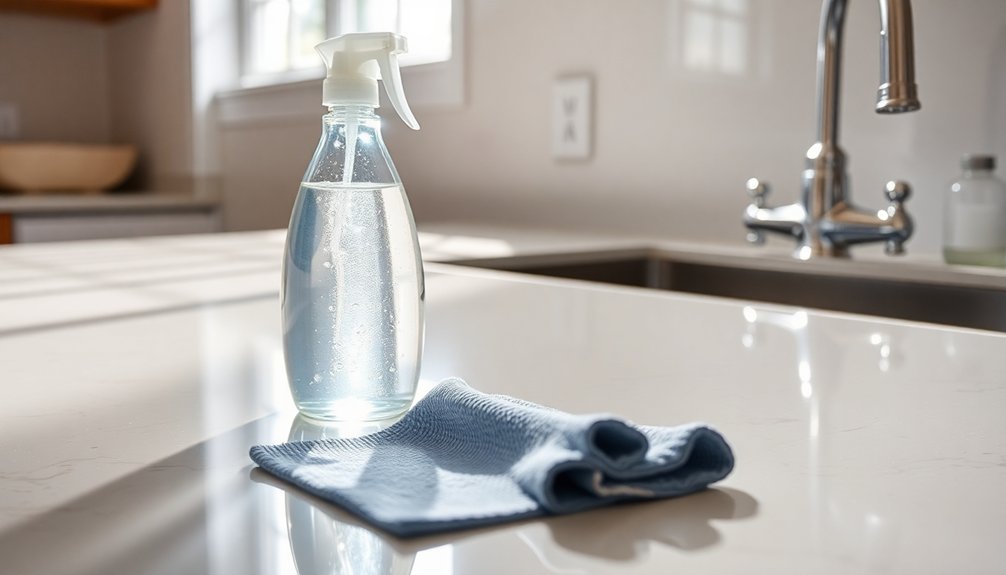
When it comes to tackling hard water stains, you’ve got a range of effective options. Natural cleaning ingredients like vinegar and baking soda can work wonders, while commercial stain removers are designed for tougher jobs. Depending on the surface you’re cleaning, choosing the right solution can make all the difference in restoring shine and clarity. Additionally, using eco-friendly scrub brushes can enhance your cleaning efforts while being kind to the environment.
Natural Cleaning Ingredients
Many natural cleaning ingredients can tackle hard water stains effectively and safely.
Vinegar is a fantastic choice due to its acidic properties, which dissolve mineral deposits on surfaces like glass and tile. Combine it with baking soda for a fizzy reaction that acts as a mild abrasive, scrubbing away stains without scratching.
For lighter surfaces, hydrogen peroxide works wonders when mixed with baking soda; it lightens discoloration while removing tough stains.
You can also create a potent paste by combining vinegar with borax to dissolve stubborn residues on resilient surfaces.
Finally, lemon juice, with its citric acid, can be a great option for cleaning, especially when diluted and paired with other ingredients for enhanced effectiveness.
Commercial Stain Removers
For anyone struggling with persistent hard water stains, commercial stain removers offer a powerful solution that can simplify the cleaning process.
Products like CLR and OxiClean Foam-Tastic are specifically designed to dissolve tough mineral deposits and limescale. These commercial cleaners utilize potent acids, such as citric and sulfamic acid, which efficiently penetrate and break down hard water stains.
OxiClean Foam-Tastic’s foaming action clings to vertical surfaces, lifting stains as it works. To maximize effectiveness and guarantee safety, always follow the manufacturer’s instructions regarding application and dwell times.
Regular use of these commercial stain removers not only helps remove hard water stains but also prevents their buildup, prolonging the life of your fixtures and minimizing overall cleaning time.
Surface-Specific Solutions
While commercial stain removers provide a strong solution for hard water stains, specific surfaces require tailored approaches for the best results.
For water stains on glass, mix equal parts white vinegar and water, spray it on, let it sit for 10-30 minutes, then scrub with a damp cloth.
Stainless steel fixtures benefit from the same vinegar solution; just let it sit before scrubbing with a non-abrasive sponge.
To tackle hard water stains in toilets, pour vinegar into the bowl, wait 10 minutes, and add baking soda for fizzing action.
For bathtubs and sinks, create a paste of vinegar and baking soda, apply it, and scrub after 10 minutes.
Finally, wrap faucets with a vinegar-soaked microfiber cloth to remove limescale.
How to Remove Hard Water Stains From Glass
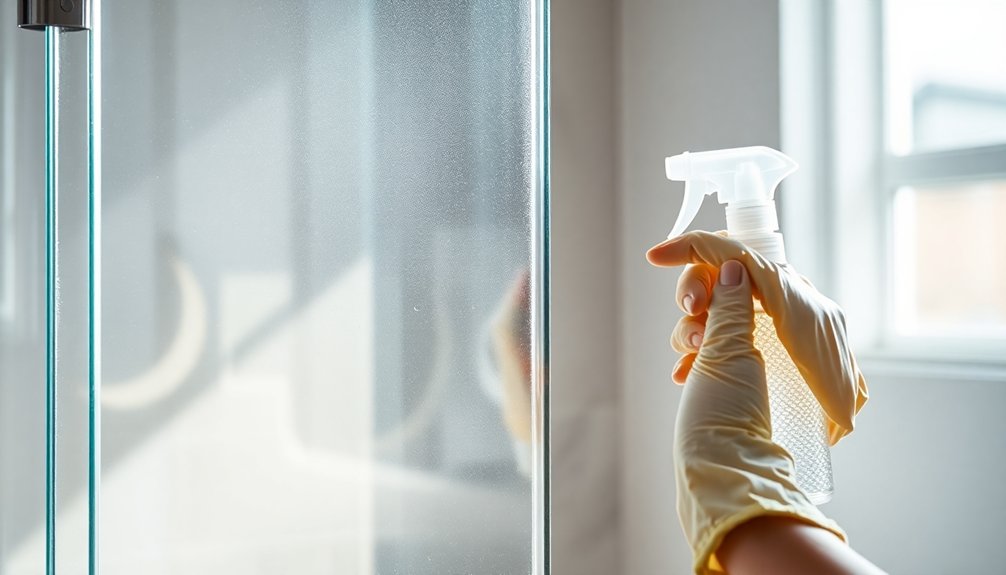
If you’ve noticed unsightly hard water stains on your glass surfaces, don’t worry—removing them is easier than you might think.
Start by creating a solution of equal parts white vinegar and water in a spray bottle. Spray it on the stained area and let it sit for about 10-15 minutes to dissolve the mineral deposits.
For tougher stains, apply a baking soda paste afterward, scrub gently with a microfiber cloth, and rinse thoroughly with warm water.
To prevent new stains from forming, dry the glass surfaces with a squeegee or a microfiber cloth. Regularly clean glass surfaces at least once a month with vinegar or a specialized cleaner to minimize hard water stains and maintain clarity. Incorporating eco-friendly cleaning agents like vinegar not only helps in stain removal but also promotes a healthier home environment.
How to Remove Hard Water Stains From Showers and Bathtubs
When hard water stains start to tarnish your shower and bathtub, tackling them promptly can save you time and effort later.
Begin by making a paste with equal parts baking soda and water. Apply it to the stained areas and scrub gently with a non-abrasive sponge.
For a deeper clean, mix equal parts white vinegar and water in a spray bottle, spray it on the stains, and let it sit for 10-15 minutes before scrubbing.
If stains persist, soak a microfiber cloth in vinegar and wrap it around the area for an hour. Regular disinfection can also help prevent future buildup of stains and harmful bacteria.
Remember these cleaning tips: regular maintenance, like wiping down surfaces after use, can greatly reduce hard water buildup over time.
How to Remove Hard Water Stains From the Toilet
Hard water stains can also wreak havoc in your toilet, making it look dingy and unkempt. Start by pouring one cup of white vinegar into the bowl, swishing it around to cover all stained areas. Let it sit for about five minutes to dissolve mineral deposits.
For stubborn stains, add one cup of baking soda followed by another cup of vinegar; this fizzing reaction will help lift the stains. Let it sit for 10-20 minutes before scrubbing with a toilet brush, focusing on the under-rim and water line.
Flush to rinse away the cleaning agents. If stains persist, pour hydrogen peroxide into the bowl and let it sit for 20 minutes before scrubbing again for powerful stain removal. Maintaining a clean toilet is essential for preventing the buildup of harmful bacteria, which can lead to infections and illnesses.
How to Remove Hard Water Stains From the Sink
Removing hard water stains from your sink is a straightforward process that can restore its shine.
Start by creating a paste with equal parts baking soda and water. Apply this paste to the stained areas and let it sit for 10-15 minutes. Then, gently scrub with a non-abrasive sponge.
Create a paste of baking soda and water, apply it to stains, and let it sit before scrubbing gently.
For tougher stains, mix equal parts vinegar and water in a spray bottle, apply it to the stains, and let it sit for about 10 minutes before scrubbing and rinsing thoroughly. To enhance your cleaning, consider using a vinegar solution after each use to keep stains at bay.
If needed, consider using a commercial hard water stain remover, but always follow the manufacturer’s instructions for safe use.
How to Remove Hard Water Stains From Faucets and Showerheads
To tackle those pesky hard water stains on your faucets and showerheads, start by soaking a microfiber cloth in vinegar and wrapping it around the affected area for about an hour. This will help dissolve the mineral buildup.
After soaking, grab an old toothbrush or a non-abrasive sponge and scrub the fixtures gently to remove any remaining stains and residue. For stubborn hard water stains, make a paste with baking soda and vinegar, apply it to the stains, and let it sit for 10-15 minutes before scrubbing.
Rinse everything with warm water to reveal clean surfaces. To prevent hard water stains from forming in the future, regularly wipe down your faucets and showerheads after use and consider installing a water softener. Incorporating natural cleaning solutions into your routine can enhance overall kitchen hygiene and promote a healthier indoor environment.
How to Remove Hard Water Stains From Dishware
When it comes to removing hard water stains from your dishware, you’ve got some effective solutions at your fingertips.
Using common household items like vinegar or baking soda can make a real difference in restoring your dishes. Additionally, regular cleaning of dish brushes and sponges prevents bacteria buildup that can contribute to stains.
Plus, adopting a few prevention techniques can help keep those stains from coming back.
Effective Cleaning Solutions
Hard water stains on dishware can be a frustrating issue, but with the right cleaning solutions, you can restore their shine.
Here are three effective methods to tackle those pesky stains:
- Vinegar Soak: Mix equal parts white vinegar and water. Soak your stained dishware for about 30 minutes to dissolve the mineral buildup.
- Baking Soda Paste: For stubborn spots, combine baking soda and water to form a paste. Apply it to the stains and gently scrub with a soft sponge before rinsing thoroughly.
- Regular Maintenance: Clean your dishware regularly with a vinegar solution to maintain their shine and prevent hard water stains from accumulating over time.
With these cleaning solutions, your dishware will look brand new again!
Prevention Techniques
Keeping your dishware free from hard water stains starts with preventative measures. Regularly using a water softener can reduce the minerals in your water supply, helping to prevent hard water stains from forming.
After washing your dishware, immediately dry it with a microfiber cloth to minimize standing water, which can lead to new mineral deposits. If you notice any stains, soak the affected items in a solution of equal parts white vinegar and water for 15-30 minutes.
For stubborn stains, create a paste with baking soda and water, apply it, and gently scrub with a non-abrasive sponge. You can also enhance cleaning effectiveness by using lemon juice and vinegar together to tackle calcium buildup.
Preventing Hard Water Stains
To effectively prevent hard water stains, it’s essential to establish a routine that addresses moisture and mineral deposits right after they occur.
Here are three simple steps you can take:
- Regularly wipe down surfaces after each use to eliminate moisture and mineral buildup, preventing stains from forming.
- Use a vinegar solution to routinely spray high-risk areas, like faucets and showerheads, to dissolve any developing mineral deposits before they set.
- Install absorbent mats or towels in areas prone to splashes, soaking up excess water and reducing the likelihood of stains.
Additionally, consider installing a water softener to lower mineral content in your water supply. Regular disinfection of surfaces with eco-friendly disinfectants can also help maintain a cleaner bathroom environment and prevent stains from setting.
Conclusion
Now that you’ve got the tools and techniques for tackling hard water stains, think of your surfaces as a blank canvas. Just like an artist wipes away smudges to reveal a masterpiece, you can restore the shine to your home with a little effort. Remember, consistent maintenance keeps those pesky stains at bay, ensuring your space sparkles like freshly fallen snow. Embrace the challenge, and soon, your home will be a gleaming showcase of your hard work!