Hydrogen peroxide is a kitchen magic that acts as a powerful disinfectant and cleaner, keeping your surfaces germ-free and safe. It neutralizes odors and removes pesticide residues from fruits and vegetables, enhancing their freshness. You’ll love how it tackles tough stains without harsh chemicals, too. Plus, it’s eco-friendly and non-toxic when used right. Want to discover even more ways to incorporate this versatile cleaner into your routine? There’s plenty more to uncover!
Why Hydrogen Peroxide Is a Kitchen Essential
Hydrogen peroxide is a must-have in any kitchen, and for good reason. It’s a powerful ally in maintaining kitchen hygiene.
This versatile cleaner can tackle a variety of tasks, from disinfecting countertops to sanitizing cutting boards. You’ll appreciate how easily it breaks down bacteria and viruses, making your food prep area safer.
Plus, it’s safe to use around food, so you don’t have to worry about harmful residues. With hydrogen peroxide on hand, you can easily wipe away stubborn stains and odors, keeping your kitchen fresh and inviting.
It’s an eco-friendly alternative to harsher chemicals, making it a smart choice for your home. Additionally, it reduces exposure to harmful chemicals while effectively cleaning and disinfecting surfaces. Invest in this essential cleaner, and elevate your kitchen’s cleanliness and safety.
How to Use Hydrogen Peroxide for Cleaning Surfaces
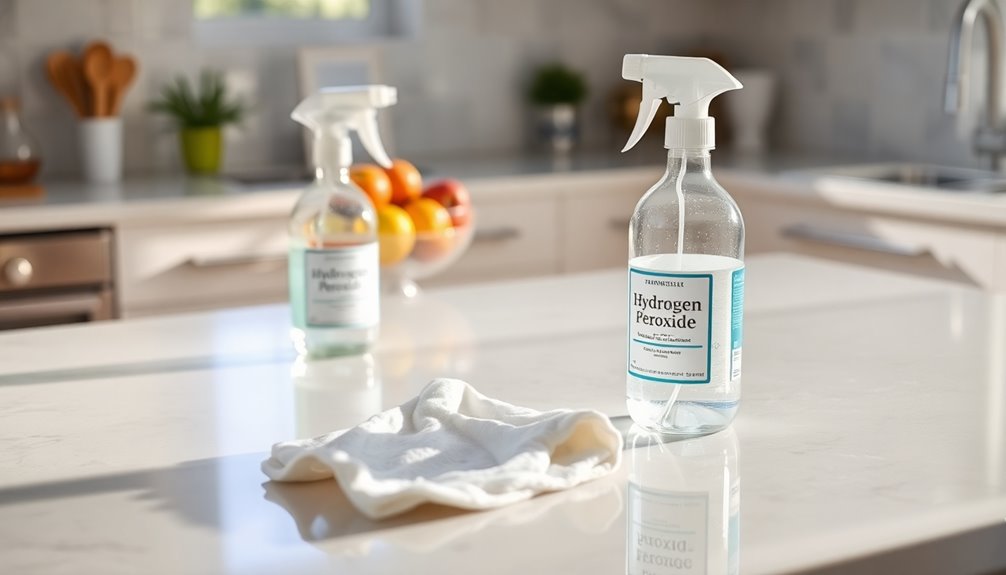
When it comes to cleaning surfaces, hydrogen peroxide is a safe and effective disinfectant you can rely on. It tackles tough stains and helps sanitize your kitchen without harsh chemicals. Additionally, using natural disinfecting agents like hydrogen peroxide can help ensure a hygienic environment while prioritizing family safety. Let’s explore how you can use it for both disinfecting and stain removal.
Safe Surface Disinfectant
If you’re looking for an effective and eco-friendly way to disinfect surfaces in your kitchen, hydrogen peroxide is a fantastic choice. Its powerful disinfectant properties make it ideal for killing germs without harmful chemicals.
To use it safely, pour 3% hydrogen peroxide into a spray bottle. Spray the solution on your countertops, cutting boards, and other surfaces. Let it sit for about 10 minutes to guarantee maximum effectiveness. After that, wipe the area with a clean cloth.
This method not only guarantees surface safety but also leaves your kitchen fresh and free from harmful bacteria. Remember to store hydrogen peroxide in a dark container to maintain its potency, and always keep it out of reach of children.
Stain Removal Solutions
For stubborn stains on kitchen surfaces, hydrogen peroxide serves as a powerful ally. To tackle grease stains, simply apply a small amount directly onto the affected area. Let it sit for about 10 minutes before wiping it away with a cloth. You’ll be amazed at how easily it cuts through that grime!
For wine spills, act quickly. Blot the area to absorb excess liquid, then dab with hydrogen peroxide. Allow it to sit for a few minutes before rinsing with water. This method helps lift the stain without damaging your surfaces.
Always test a small, inconspicuous area first to verify there’s no discoloration. With these tips, you’ll keep your kitchen looking pristine!
Freshening up Produce With Hydrogen Peroxide

You can freshen up your produce and remove pesticide residue with hydrogen peroxide.
Just a simple rinse can help extend the freshness of your fruits and vegetables, making them safer and tastier to eat. Additionally, using eco-friendly cleaning options, like plant-based ingredients, can enhance your kitchen’s cleanliness while being gentle on the environment.
Let’s explore how this versatile solution can keep your kitchen staples in top shape.
Remove Pesticide Residue
While many enjoy the fresh taste of fruits and vegetables, concerns about pesticide residue often linger. You can enhance your produce safety by using hydrogen peroxide for effective pesticide removal. Here’s how to do it:
- Mix one part hydrogen peroxide (3%) with three parts water.
- Soak your fruits and vegetables in the solution for about 5-10 minutes.
- Rinse thoroughly under cold water to guarantee all residues are washed away.
- Pat dry with a clean cloth or paper towel.
This simple method not only helps remove harmful chemicals but also gives you peace of mind as you enjoy your fresh produce.
Embracing hydrogen peroxide in your kitchen routine can be a game-changer for healthier eating!
Extend Freshness Duration
To keep your fruits and vegetables looking fresh for longer, consider using hydrogen peroxide as a natural preservative. By diluting it with water—typically a 1:10 ratio—you can create a solution that helps extend shelf life considerably.
Simply soak your produce in this mixture for a few minutes, then rinse thoroughly. This process not only removes bacteria but also helps to enhance flavor, making your food taste even better.
You’ll notice that your berries stay plumper, leafy greens remain crisp, and other produce lasts longer in your fridge. With hydrogen peroxide, you can enjoy fresher, tastier ingredients while reducing waste.
It’s a simple yet effective way to elevate your kitchen game!
The Benefits of Disinfecting Your Kitchen With Hydrogen Peroxide
Disinfecting your kitchen with hydrogen peroxide offers a powerful solution to combat harmful bacteria and germs that can thrive in food preparation areas.
By incorporating hydrogen peroxide into your cleaning routine, you enhance kitchen safety and guarantee a healthier environment for you and your family.
Here are some benefits of using hydrogen peroxide:
- Kills a broad spectrum of bacteria, viruses, and fungi.
- Non-toxic and safe around food when used correctly.
- Leaves no harmful residues, making it ideal for food surfaces.
- Cost-effective and widely available for regular use.
Additionally, it is recommended to follow contact time instructions for disinfectants to ensure maximum effectiveness.
With these advantages, you can confidently tackle kitchen hygiene, knowing that you’re taking a significant step toward a cleaner, safer cooking space.
Tackling Tough Stains: Hydrogen Peroxide as a Stain Remover
When it comes to tough food stains, hydrogen peroxide is a powerful ally. You can safely use it on various surfaces without worrying about damage. Let’s explore how it tackles those stubborn marks effectively. Additionally, it is particularly effective for protein-based stains due to its enzymatic properties.
Effective On Food Stains
Stains from food can be a real headache, but hydrogen peroxide offers a powerful solution for tackling those tough marks.
Whether you’re in the middle of food preparation or just cleaning up afterward, this versatile agent helps with stain prevention and removal.
Here’s how you can use it effectively:
- Apply hydrogen peroxide directly to the stain.
- Let it sit for a few minutes to break down the stain.
- Blot the area gently with a clean cloth.
- Rinse with cold water and repeat if necessary.
Safe For Various Surfaces
Although you might worry about damaging your surfaces, hydrogen peroxide is surprisingly safe for a variety of materials when used correctly.
It boasts excellent surface compatibility, making it an ideal choice for tackling tough stains on countertops, cutting boards, and even fabric. Just be sure to test a small, inconspicuous area first to verify material safety.
For hard surfaces like tile or glass, hydrogen peroxide effectively lifts stains without causing harm. On fabrics, it can help remove stubborn spots, but always dilute it to prevent discoloration.
With proper application, you can confidently use hydrogen peroxide to keep your kitchen looking spotless while maintaining the integrity of your surfaces. Enjoy the cleaning magic without the worry!
Using Hydrogen Peroxide for Odor Elimination
If you’re looking for an effective way to eliminate unpleasant odors in your kitchen, hydrogen peroxide can be a game changer. This powerful compound not only disinfects but also acts as a natural deodorizer.
Here are some odor absorption techniques using hydrogen peroxide:
- Mix equal parts hydrogen peroxide and water in a spray bottle for a quick spray on surfaces.
- Soak a cloth in diluted hydrogen peroxide and place it in the fridge to neutralize food odors.
- Use it to wipe down trash cans and recycling bins to keep them fresh.
- Combine hydrogen peroxide with baking soda for an effective paste to scrub stubborn odors.
Additionally, using eco-friendly products supports a healthier living space while effectively eliminating odors. These natural deodorizing methods can help keep your kitchen smelling clean and inviting!
How to Safely Store and Handle Hydrogen Peroxide in the Kitchen
After tackling odor elimination with hydrogen peroxide, it’s important to contemplate how to store and handle this compound safely in your kitchen.
Always choose opaque storage containers to protect hydrogen peroxide from light, as exposure can degrade its potency. Keep the containers tightly sealed and store them in a cool, dry place away from heat sources.
When handling hydrogen peroxide, wear gloves to prevent skin irritation, and avoid mixing it with other cleaning agents. Always read labels for specific handling guidelines, especially if you’re using different concentrations. Hydrogen peroxide is a versatile disinfectant that can break down bacteria and viruses without harsh chemicals, making it an excellent choice for disinfecting bathroom surfaces.
Remember to keep it out of reach of children and pets to guarantee safety. By following these precautions, you can enjoy the benefits of hydrogen peroxide without any risks.
The Science Behind Hydrogen Peroxide’s Cleaning Power
Hydrogen peroxide’s cleaning power lies in its unique chemical structure, which makes it an effective disinfectant and stain remover. Its molecular structure consists of two hydrogen atoms and two oxygen atoms, enabling it to engage in an oxidation process. This process breaks down stains and eliminates bacteria, making your kitchen cleaner and safer.
Here’s how it works:
- Releases oxygen when it decomposes
- Destroys cell walls of bacteria and viruses
- Breaks down organic compounds in stains
- Acts as a bleaching agent without harsh chemicals
Additionally, hydrogen peroxide is capable of eliminating harmful bacteria that can thrive in damp conditions, making it an ideal choice for maintaining a hygienic environment in your kitchen.
Comparing Hydrogen Peroxide to Other Cleaning Agents
While many cleaning agents promise to keep your kitchen spotless, hydrogen peroxide stands out for its effectiveness and safety.
When you compare it to alternative cleaners like bleach or ammonia, hydrogen peroxide offers a powerful disinfecting solution without the harsh chemicals. Its effectiveness in killing bacteria and viruses is comparable, yet it’s gentler on surfaces and the environment.
In an effectiveness comparison, hydrogen peroxide often wins due to its dual action as both a cleaner and a deodorizer. Additionally, it is non-toxic and safe for children and pets, making it an ideal choice for households with little ones.
Plus, it breaks down into water and oxygen, leaving no harmful residues.
Creative Uses for Hydrogen Peroxide Beyond Cleaning
Many people think of hydrogen peroxide solely as a cleaning agent, but its uses extend far beyond just disinfecting surfaces.
You can tap into its creative applications for various kitchen hacks that make your life easier. Here are some ideas you might find useful:
- Fruit and Veggie Wash: Mix hydrogen peroxide with water to remove pesticides and bacteria.
- Cutting Board Sanitizer: Spray it on your cutting boards to eliminate germs without harsh chemicals.
- Stain Remover: Use it on fabric or carpets to tackle stubborn stains from food spills.
- Freshen Up Sponges: Soak your sponges in a hydrogen peroxide solution to kill bacteria and odors.
Using hydrogen peroxide in your kitchen can help maintain a grease-free kitchen by effectively sanitizing surfaces and eliminating stubborn food residues.
These creative applications can enhance your kitchen routine while keeping it safe and fresh!
Tips for Incorporating Hydrogen Peroxide Into Your Kitchen Routine
Incorporating hydrogen peroxide into your kitchen routine can be both simple and effective, making it a versatile tool for various tasks.
Start by using a 3% solution of hydrogen peroxide as a natural disinfectant for countertops and cutting boards. Just spray it on, let it sit for a few minutes, then wipe away.
Utilize a 3% hydrogen peroxide solution to effortlessly disinfect countertops and cutting boards—just spray, wait, and wipe!
For those stubborn stains on kitchen utensils, mix hydrogen peroxide with baking soda to create a paste—apply it, let it sit, and rinse off for sparkling results.
You can also use hydrogen peroxide to clean fruits and vegetables; just soak them in a solution of water and hydrogen peroxide for a few minutes.
These kitchen hacks will help you maintain a cleaner, safer cooking environment effortlessly.
Safety Considerations When Using Hydrogen Peroxide
When using hydrogen peroxide in your kitchen, it’s essential to prioritize safety to guarantee a worry-free experience.
Here are some key safety considerations to keep in mind:
- Always use proper dilution; a 3% solution is generally safe for household use.
- Avoid contact with your skin to prevent irritation; consider wearing gloves if you have sensitive skin.
- Store hydrogen peroxide in a cool, dark place to maintain its efficacy and prevent degradation.
- Keep it out of reach of children and pets to avoid accidental ingestion or misuse.
Frequently Asked Questions About Hydrogen Peroxide in the Kitchen?
After understanding the safety considerations for using hydrogen peroxide in your kitchen, you might’ve some questions about its applications and effectiveness.
One common query is, “Can I use hydrogen peroxide on food surfaces?” Yes, but make sure you rinse thoroughly afterward for kitchen safety.
Another question is, “How should I store it?” Keep it in a dark container, away from sunlight, to maintain its potency.
You may also wonder, “Is hydrogen peroxide effective against bacteria?” Absolutely! It’s a powerful disinfectant that can help eliminate germs.
Finally, remember to use a 3% solution for household tasks. If you follow these guidelines, you’ll safely harness the magic of hydrogen peroxide in your kitchen!
Conclusion
Incorporating hydrogen peroxide into your kitchen routine can be a game-changer. Did you know that a study found that using hydrogen peroxide can reduce harmful bacteria by up to 99.9% on surfaces? With its versatile uses, from cleaning to freshening produce, it’s a true kitchen essential. By following safety tips and creative applications, you can harness the power of this simple compound to keep your kitchen clean and safe for your family. Give it a try—you won’t regret it!