Technology’s transforming commercial cleaning in modern offices by implementing automated solutions like robotic cleaners and real-time monitoring systems. These advancements boost efficiency and hygiene standards while minimizing human contact. Touchless systems reduce germ transmission, and data-driven insights optimize cleaning schedules. Innovations like electrostatic sprayers and UV-C disinfection techniques enhance safety and air quality. Embracing these tech-driven solutions is essential for a healthier workplace. Discover how these trends can improve your office cleaning practices for the future.
The Shift From Traditional to Tech-Driven Cleaning Solutions
As businesses adapt to modern needs, the shift from traditional cleaning methods to tech-driven solutions has become essential for maintaining a pristine office environment.
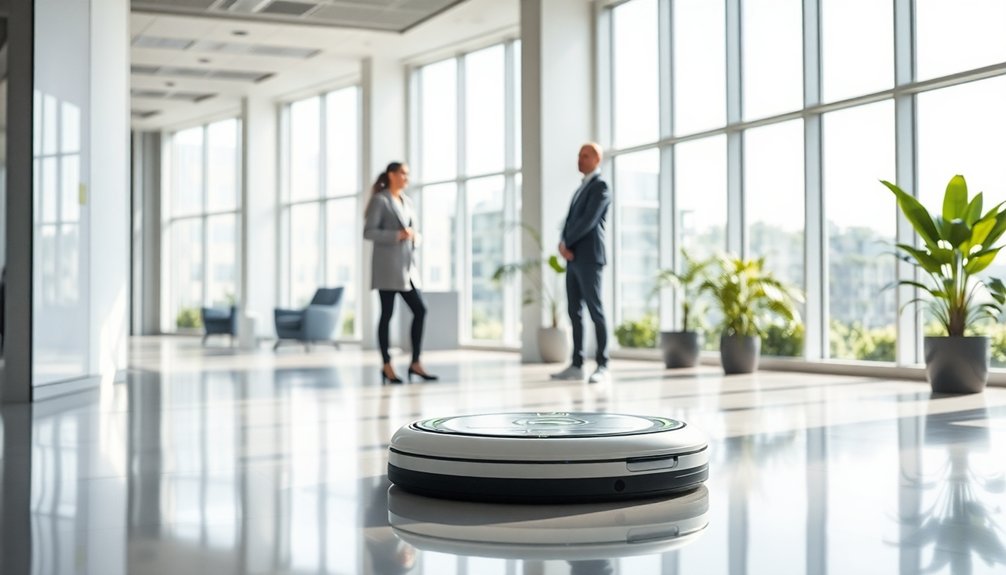
You’ll find that cleaning technologies now include automated cleaning robots, which tackle tasks like vacuuming and mopping with minimal human intervention.
Smart cleaning solutions leverage IoT devices to monitor cleanliness levels in real-time, allowing you to optimize cleaning schedules based on occupancy patterns.
Smart cleaning technologies utilize IoT devices for real-time monitoring, enhancing cleaning efficiency by adapting to occupancy trends.
Additionally, electrostatic sprayers and UV-C disinfection technology have revolutionized disinfection practices, offering effective pathogen elimination without harsh chemicals. Regular disinfection is crucial for maintaining a hygienic workplace, reducing the risk of illness among employees.
Touchless cleaning systems are gaining popularity, as they minimize human contact and reduce germ spread, aligning with the preferences of 82% of consumers.
Embracing automation in cleaning is no longer optional; it’s a necessity.
Benefits of Automation in Commercial Cleaning
With the rise of tech-driven cleaning solutions, automation in commercial cleaning brings a host of benefits that can transform your business operations. By utilizing smart technology like robotic floor scrubbers, you can greatly reduce labor costs and enhance efficiency. This allows your staff to focus on more complex tasks that require a human touch.
IoT-enabled systems monitor cleanliness levels in real-time, ensuring targeted cleaning and reducing resource wastage. Automated scheduling tools help you adjust cleaning frequencies based on occupancy patterns, optimizing operations.
Plus, data-driven automation generates valuable insights for continuous improvement and better resource allocation, leading to considerable cost savings. Embracing automation not only improves hygiene standards but also streamlines your overall cleaning processes. Additionally, a streamlined cleaning routine can further enhance efficiency and maintain a healthier work environment.
Electrostatic Sprayers: Revolutionizing Disinfection
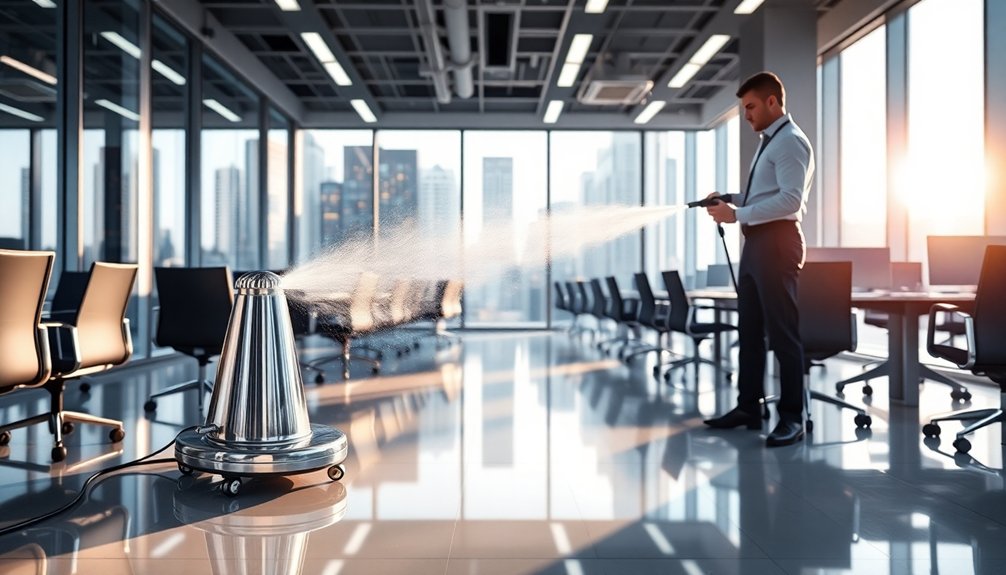
Electrostatic sprayers are transforming disinfection by applying charged disinfectant particles that wrap around surfaces, guaranteeing complete coverage—even in hard-to-reach areas.
This innovative technology kills pathogens like Clostridioides difficile in just five minutes, making it essential for high-risk environments. By using electrostatic sprayers, you can notably reduce chemical usage, leading to cost savings for your business while enhancing hygiene standards in shared spaces.
This advanced disinfection technology eliminates pathogens in minutes, reducing chemical usage and boosting hygiene standards for safer shared spaces.
Many organizations, from healthcare to commercial offices, have adopted this method to improve sanitation and reduce pathogen transmission. Additionally, integrating green cleaning techniques into your disinfection process can further enhance indoor air quality and promote a healthier work environment.
Integrating electrostatic sprayers into your commercial cleaning services guarantees compliance with health guidelines, enhancing the safety of your environment, especially in our post-pandemic world.
Embrace this revolution in disinfection for a cleaner, safer workplace.
The Role of UV-C Technology in Office Hygiene
When it comes to office hygiene, UV-C technology offers impressive benefits that can transform your workspace. It not only eliminates harmful pathogens without harsh chemicals but also enhances air quality for everyone. Incorporating non-toxic cleaning solutions alongside UV-C technology ensures a comprehensive approach to maintaining a safe and healthy office environment.
UV-C Disinfection Benefits
As businesses seek effective ways to enhance office hygiene, UV-C disinfection technology stands out for its ability to swiftly eliminate harmful pathogens. This innovative approach uses short-wavelength ultraviolet light to damage the DNA of bacteria and viruses, killing them on surfaces without harsh chemicals.
In high-traffic office environments, UV-C disinfection can eradicate pathogens like Clostridioides difficile in as little as five minutes. By reducing reliance on chemical disinfectants, this technology contributes to healthier indoor air quality, fostering a safer workspace.
Implementing UV-C disinfection not only boosts hygiene standards but also promotes employee well-being by minimizing the spread of infectious diseases. As cleanliness becomes a priority, this eco-friendly solution is rapidly gaining traction among commercial cleaning companies.
Safety Protocols and Guidelines
Implementing UV-C disinfection in office cleaning not only enhances hygiene but also requires adherence to specific safety protocols.
UV-C technology effectively targets pathogens, eliminating up to 99.9% of harmful microorganisms, but it’s essential to use it safely. You must guarantee no direct exposure to skin or eyes during disinfection.
Trained personnel should operate the UV-C equipment to maintain compliance with hygiene standards and safeguard everyone’s well-being.
Furthermore, following these safety protocols helps businesses align with CDC guidelines, particularly in high-touch areas.
Touchless Cleaning Systems: Enhancing Employee Safety
Touchless cleaning systems are transforming office hygiene by greatly reducing germ transmission. With features like automated restroom solutions and sensor-driven waste management, you can guarantee a cleaner and safer workplace. As employees return to the office, enhanced hygiene standards are more important than ever for their peace of mind. Additionally, incorporating energy-efficient equipment can further enhance overall cleanliness while reducing utility costs.
Reduced Germ Transmission
When you prioritize touchless cleaning systems in your office, you’re not just enhancing hygiene; you’re actively reducing the risk of germ transmission in shared spaces.
With touchless soap dispensers and smart restroom technology, you minimize human contact, which is vital for maintaining a healthy environment. Studies show that 82% of consumers prefer businesses with touchless facilities, underscoring the significance of hygiene for customer satisfaction.
Sensor-driven waste management systems guarantee hygienic disposal, further diminishing cross-contamination risks. Additionally, automated self-cleaning restroom surfaces continuously sanitize high-traffic areas, making them safe for both employees and visitors.
Enhanced Hygiene Standards
As employees navigate shared spaces, the need for enhanced hygiene standards becomes increasingly clear.
Touchless solutions are essential for creating a safer work environment. Here are three key advantages of implementing these technologies:
- Reduced Germ Transmission: Touchless soap dispensers and smart restroom technology minimize human contact, lowering the risk of germs spreading.
- Sensor-Driven Waste Management: Automated systems guarantee hygienic waste disposal by monitoring waste levels, preventing overflow and unsanitary conditions.
- Continuous Sanitation: Automated self-cleaning restroom surfaces maintain hygiene in high-traffic areas, providing reliable sanitation.
Automated Restroom Solutions
Automated restroom solutions are revolutionizing workplace hygiene by minimizing contact and enhancing safety for employees.
With touchless cleaning systems, you can markedly reduce the spread of germs in shared spaces. Research shows that 82% of consumers prefer businesses equipped with these advanced facilities, highlighting a strong demand for enhanced hygiene.
Automated self-cleaning surfaces continuously sanitize, providing a safer experience and lessening the need for manual cleaning. Smart restroom technology, like touchless soap dispensers and sensor-driven waste management, guarantees hygienic practices and efficient disposal.
By integrating touchless cleaning systems, you also comply with health regulations, especially in high-traffic areas where sanitation is vital.
Elevate your workplace hygiene and prioritize your employees’ safety with these innovative solutions.
Smart Dispensers and IoT in Streamlining Operations
Smart dispensers and IoT technology revolutionize the way cleaning operations are managed, ensuring that supplies are always on hand and processes run smoothly.
With these advancements, you can greatly enhance cleaning efficiency in your facility. Here’s how:
- Real-time tracking: Smart dispensers monitor supply levels and automatically reorder products, preventing shortages and ensuring constant availability.
- Data analytics: IoT-connected systems analyze cleaning efficiency, providing insights that allow you to optimize operations and allocate resources effectively.
- Waste reduction: These technologies precisely dispense cleaning agents based on actual usage, leading to reduced waste and cost savings. Additionally, implementing strategies for time management can further streamline cleaning processes and improve overall productivity.
The Impact of Robotics on Cleaning Efficiency
Robotics is transforming the landscape of commercial cleaning, offering remarkable efficiency that can streamline your operations.
Automated floor scrubbers and AI-powered vacuums enhance cleaning efficiency by performing tasks with minimal human intervention. These robotic systems operate autonomously, letting your team focus on more complex tasks, which boosts workforce productivity and reduces labor costs.
Equipped with advanced sensors, they navigate office spaces, adapt to various environments, and avoid obstacles, ensuring consistent cleaning outcomes. Research shows that integrating robotics can cut cleaning time by up to 30%, leading to substantial cost savings. Additionally, implementing high-quality cleaning tools can further enhance the effectiveness of robotic systems in maintaining cleanliness.
Data-Driven Decision Making for Improved Cleaning Standards
As cleaning technology evolves, harnessing data-driven decision-making can elevate your cleaning standards even further.
By integrating smart cleaning solutions with real-time analytics, you can optimize your cleaning processes for maximum efficiency. Here are three ways to implement this approach:
- Optimize Schedules: Use occupancy patterns to focus cleaning efforts where they’re needed most.
- Monitor Cleanliness: Leverage IoT devices to identify high-traffic areas that require immediate attention, enhancing hygiene.
- Track Performance: Employ cloud-based software to generate quality assurance reports, ensuring transparency and accountability.
With predictive analytics, you can forecast supply needs and reduce waste, leading to measurable improvements in efficiency—some companies report up to a 30% reduction in cleaning time and costs. Additionally, multi-purpose cleaners can further streamline your cleaning tasks, making the process even more efficient.
Preparing for the Future of Commercial Cleaning Technology
While the landscape of commercial cleaning technology continues to evolve, preparing for future advancements is vital for your business’s success.
Start by evaluating your current cleaning pain points; identifying inefficiencies will help you pinpoint where new cleaning technology can enhance performance.
Create a phased technology implementation roadmap to gradually adopt innovations, minimizing disruptions to your existing cleaning methods.
Make certain your cleaning contracts are flexible to adapt to rapid technological changes.
Investing in staff training for emerging technologies is essential; well-trained employees can effectively use new tools and maintain high hygiene standards.
Finally, take a proactive approach in exploring tech-driven janitorial services, positioning your business to stay ahead and boost operational efficiency in the competitive cleaning landscape. Additionally, implementing time-saving strategies can further streamline your cleaning processes and increase overall productivity.
Conclusion
As technology continues to reshape the commercial cleaning landscape, staying ahead of these innovations is essential for any office environment. Embracing automation, advanced disinfection methods, and smart systems not only enhances hygiene but also boosts employee safety and productivity. Isn’t it time you considered how these cutting-edge solutions could transform your workplace? By investing in modern cleaning technologies, you’re not just cleaning; you’re creating a healthier, more efficient space for everyone.