A clean home can remarkably reduce allergy triggers in several ways. By regularly vacuuming, washing bedding, and using damp cloths, you’ll trap dust and eliminate allergens. Keeping humidity below 50% prevents mold and dust mites. Plus, using HEPA air purifiers continuously cleans the air, capturing up to 99.97% of allergens. These steps not only create a healthier environment but also provide relief from allergy symptoms. Discover more effective strategies to keep your home allergen-free.
The Importance of Indoor Air Quality
When you consider that most people spend a significant amount of time indoors, it’s clear that maintaining good indoor air quality is essential for managing allergies.
A clean home can help reduce allergens like dust mites and mold, which worsen asthma symptoms. The Environmental Protection Agency suggests keeping humidity levels below 50% to limit mold growth and dust mite proliferation. Using a HEPA filter in your air cleaner can effectively trap airborne allergens, ensuring cleaner air. Regularly changing your air filter and maintaining your HVAC system also contribute to better indoor air quality. Additionally, incorporating allergen-proof bedding covers can significantly reduce exposure to dust mites, enhancing overall sleep quality.
Common Indoor Allergens
Indoor allergens can greatly impact your health, especially if you suffer from allergies or asthma. Common culprits include dust mites, which thrive in bedding and upholstered furniture, affecting around 80% of allergy sufferers.
Pet dander from cats and dogs is another significant allergen, found in about 60% of homes. Mold spores often proliferate in damp areas, triggering asthma and allergy symptoms, especially in high humidity.
Cockroach droppings are also notable indoor allergens, commonly found in urban settings, exacerbating asthma in sensitive individuals. Additionally, pollen can easily enter through open windows or on clothing.
To combat these indoor allergens, maintaining a clean home and using a vacuum cleaner can help reduce moisture and minimize exposure. Regular daily cleaning habits can significantly enhance your efforts in controlling allergens in your living space.
Effective Cleaning Strategies
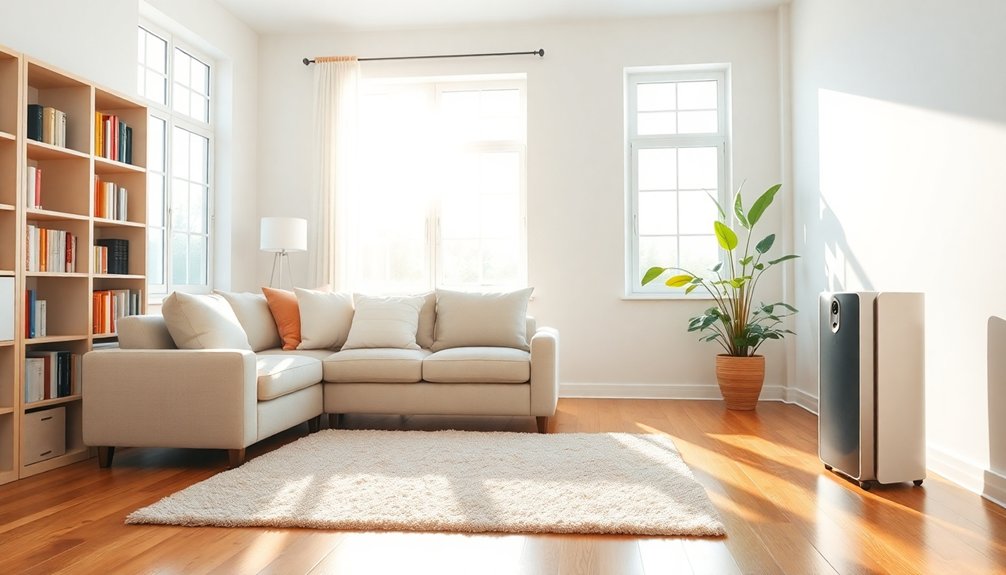
To keep your home free from allergens, it’s essential to adopt effective cleaning strategies that target common triggers.
Start by vacuuming regularly with a Certified Asthma & Allergy Friendly® vacuum to reduce dust, pet dander, and other allergens from your carpets and upholstery.
Wash your bedding, including sheets and pillowcases, in hot water weekly to minimize dust mite populations and improve sleep quality.
Use damp microfiber cloths to clean surfaces; they trap dust effectively and prevent it from becoming airborne.
Establish a weekly cleaning routine that includes scrubbing bathrooms and kitchens to eliminate mold and debris, which can impact indoor air quality. Additionally, incorporating eco-friendly cleaning methods can further enhance your efforts in reducing allergens while promoting a healthier living environment.
Managing Humidity Levels
Managing humidity levels is essential for maintaining a healthy home environment, especially if you’re prone to allergies. Keeping indoor humidity below 50% helps reduce allergens like dust mites and mold, which thrive in damp conditions.
To effectively manage humidity, consider using a dehumidifier in moisture-prone areas like basements and bathrooms. Regularly checking humidity with a hygrometer can help you monitor and adjust levels. During high humidity periods, keep windows closed and use air conditioning to control indoor moisture, ensuring clean air in your home. Additionally, regularly sanitizing surfaces with non-toxic cleaners can further help in minimizing allergen build-up.
Utilizing Air Purifiers
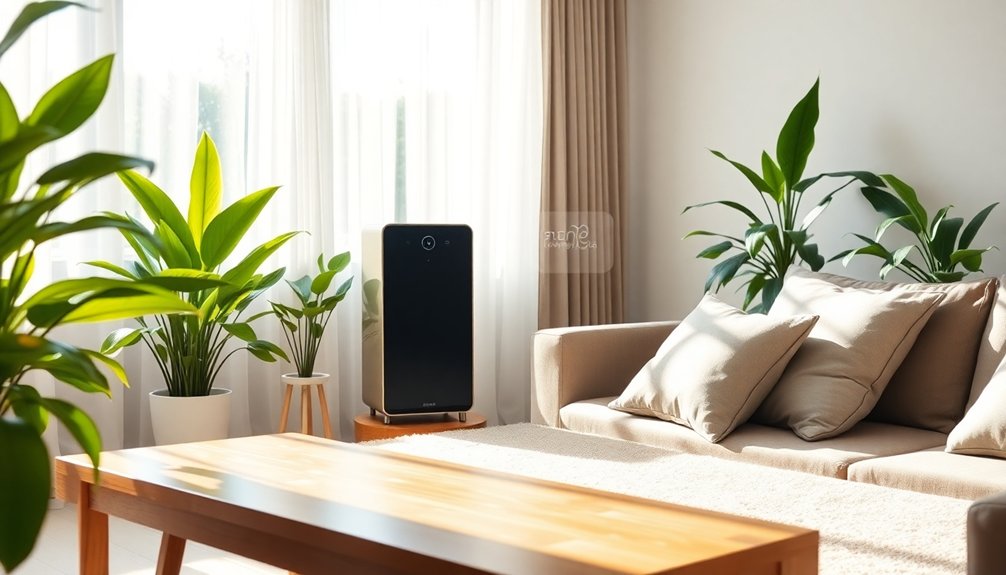
Air purifiers are a powerful tool in the fight against allergens in your home. Equipped with a HEPA filter, they can capture up to 99.97% of airborne allergens like dust mites, pet dander, and pollen, considerably improving indoor air quality.
To get the most out of your air purifier, consider its Clean Air Delivery Rate (CADR) to guarantee it’s effective for your room size. Regular filter replacement is essential; most manufacturers recommend changing filters every 3 to 12 months.
Using air purifiers alongside your cleaning routines helps reduce allergen levels by continuously filtering out particles disturbed during cleaning. For allergy sufferers, these devices provide much-needed relief by lowering the concentration of allergens in the air. Additionally, maintaining indoor air quality can significantly benefit your overall health and comfort.
Conclusion
Imagine walking into your home, where the air is crisp and fresh, free from the sneezes and sniffles that once plagued you. By keeping your space clean and managing humidity, you create a sanctuary that breathes well with every inhale. Investing in effective cleaning strategies and air purifiers transforms your living environment, allowing you to embrace each moment without the burden of allergies. A clean home isn’t just visually appealing; it’s your personal haven for health and comfort.