To breathe easier, focus on enhancing your indoor air quality with a clean home. Regularly clean surfaces to reduce dust and allergens while using safe cleaning products. Guarantee proper ventilation to keep air fresh and consider using air purifiers for ideal results. Don’t forget to maintain your HVAC system to prevent pollutants. By adopting these strategies, you can greatly improve your health and comfort. There’s more to discover about effective practices for maintaining clean indoor air.
Understanding Indoor Air Quality
Indoor air quality (IAQ) plays an important role in your health and comfort at home or in the workplace. It refers to the condition of indoor air and how it can greatly impact your well-being.
Poor IAQ can expose you to various pollutants, like dust, pet dander, and volatile organic compounds, leading to health issues such as allergies and respiratory diseases. Studies reveal that indoor air can be up to 100 times more polluted than outdoor air, making it crucial to monitor and manage your environment. Implementing allergy-friendly dusting techniques can significantly improve air quality by reducing allergens in your home.
Regular testing for specific pollutants, including radon and particulate matter, helps you assess IAQ effectively. By maintaining good indoor air quality, you enhance your overall health and comfort, potentially reducing medical expenses linked to respiratory problems.
Common Indoor Pollutants
Many common indoor pollutants can greatly affect your health and well-being, often without you even realizing it. Dust, pet dander, and mold spores are just a few culprits that can compromise your air quality.
Volatile organic compounds (VOCs) are emitted from everyday products like cleaners and paints, introducing harmful chemicals into your home. Additionally, tobacco smoke contains thousands of toxic substances that can linger in the air.
High humidity can lead to mold growth, while low humidity can cause respiratory issues. Particulate matter from cooking and heating can penetrate deep into your lungs, posing significant risks.
Finally, radon, a naturally occurring gas, can seep into homes, making regular testing essential for safety. Non-toxic cleaners can help reduce pollutants and improve indoor air quality, so stay vigilant to keep your indoor environment healthy.
The Impact of Poor Air Quality on Health
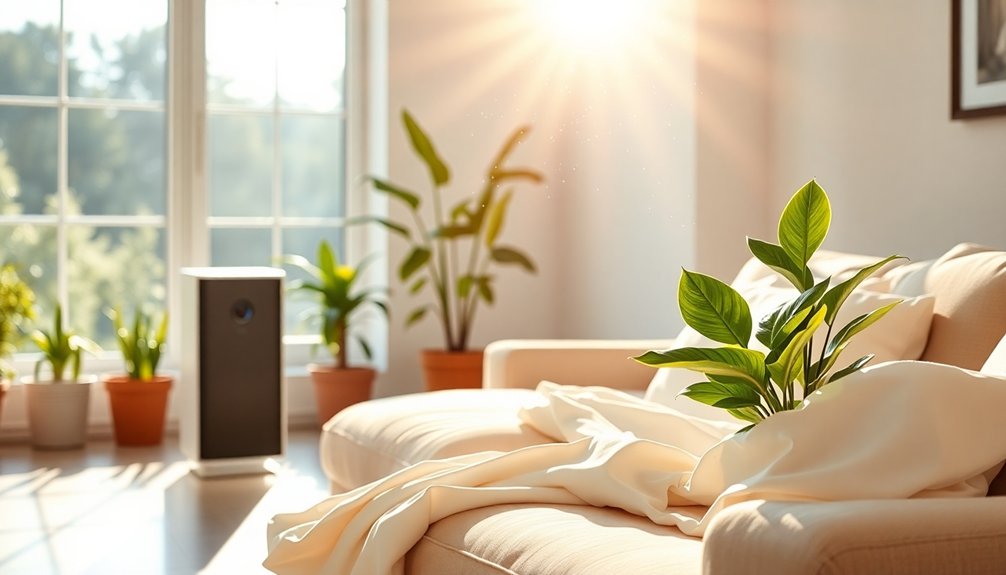
The air you breathe at home can considerably impact your health. Poor indoor air quality (IAQ) can lead to immediate health effects like headaches, respiratory problems, and skin irritation, especially for vulnerable groups like young children and the elderly.
Long-term exposure to indoor pollutants, such as particulate matter and volatile organic compounds, is linked to serious issues, including chronic respiratory diseases and cardiovascular problems. In fact, studies show that indoor air can be up to 100 times more polluted than outdoor air.
Common pollutants like mold spores and pet dander can worsen existing lung conditions, resulting in hospitalizations. By understanding the impact of poor air quality, you can take steps to protect your well-being and improve your living environment. Incorporating green cleaning methods can further enhance indoor air quality by reducing harmful chemicals in your home.
Importance of Proper Ventilation
When it comes to maintaining a healthy home, proper ventilation plays a vital role in reducing indoor air pollutants. By removing stale air and introducing fresh air, you can greatly improve indoor air quality.
Inadequate ventilation can lead to a buildup of harmful contaminants, making your indoor air up to 100 times more polluted than outside. To combat this, implement effective ventilation systems, such as exhaust fans and open windows, to lower levels of volatile organic compounds (VOCs) and moisture that can cause mold. Additionally, using natural disinfectants can help reduce indoor air pollutants, creating a healthier environment overall.
If you’re remodeling, prioritize ventilation to guarantee adequate airflow. Regular maintenance, including cleaning air ducts and changing filters, is essential for peak performance in keeping your indoor environment healthy and safe.
Effective Cleaning Practices for Better IAQ

To improve your indoor air quality, adopt effective cleaning practices that target dust and allergens. Regularly dusting with microfiber cloths and vacuuming with a HEPA filter can make a big difference. Plus, choosing safe cleaning products helps keep harmful chemicals at bay. Implementing a weekly dusting routine can significantly reduce allergens like pet dander from accumulating.
Regular Dusting Techniques
Regular dusting is essential for maintaining indoor air quality, and doing it at least once a week can greatly reduce allergens in your home.
Use microfiber cloths for your regular dusting techniques, as they can capture up to 99% of dust and allergens, effectively minimizing particulate matter in the air.
Opt for damp cloths instead of dry dusters; this prevents dust from becoming airborne and guarantees pollutants are effectively trapped.
Don’t forget to pay special attention to high-touch surfaces like light fixtures, shelves, and electronics, which often harbor considerable amounts of dust and dust mites.
Vacuuming With HEPA Filters
After implementing effective dusting techniques, the next step in improving indoor air quality is vacuuming with HEPA filters.
HEPA filters can capture at least 99.97% of particles as small as 0.3 microns, including dust, pollen, and pet dander. This greatly reduces allergens in your home, which is essential if you or anyone in your household has asthma or lung conditions.
Regular vacuuming—at least twice a week—helps minimize allergen accumulation and respiratory irritants. Focus on carpets, rugs, and upholstery to eliminate hidden dust that contributes to poor IAQ.
For best results, combine vacuuming with other cleaning practices, like dusting and washing bedding, to further decrease airborne pollutants and create a healthier living environment.
Safe Cleaning Products
Using safe cleaning products is essential for maintaining better indoor air quality (IAQ). Choose nontoxic or low-VOC cleaners to minimize harmful chemical exposure. Instead of aerosol sprays, opt for pump sprays or liquid cleaners that considerably reduce volatile organic compounds (VOCs) in your home.
Regularly wash your cleaning cloths and sponges to prevent the buildup of bacteria and allergens that can harm IAQ. Consider making simple homemade solutions like vinegar and baking soda, which are effective and safe alternatives to commercial products.
Finally, guarantee proper ventilation while cleaning by opening windows or using exhaust fans to help reduce indoor pollutants. By adopting these practices, you’ll breathe easier and enjoy a healthier living space.
Controlling Humidity Levels
When it comes to maintaining a comfortable indoor environment, controlling humidity levels is essential for your health and well-being. Aim to keep indoor humidity between 30% and 50% to prevent mold growth and reduce discomfort from dry throats and nasal passages.
Use dehumidifiers and air conditioners effectively, especially in damp areas like basements and bathrooms. Regularly monitor humidity with a hygrometer so you can act if levels rise.
Don’t forget to repair water leaks promptly to avoid moisture buildup that can harm your indoor air quality. Proper ventilation in high-moisture areas, such as kitchens and bathrooms, is vital for reducing humidity levels and enhancing overall air circulation, ensuring a healthier living space. Additionally, maintaining a clean kitchen sink is crucial, as it can help promote a sanitary kitchen environment that reduces bacteria growth and improves air quality.
The Role of Air Purifiers
Air purifiers play a vital role in improving your indoor air quality by removing harmful particles and odors.
You’ll find a variety of types, each with unique benefits, designed to suit different spaces and needs.
To keep your air purifier working efficiently, regular maintenance and filter changes are essential. Incorporating eco-friendly cleaning products can further enhance the air quality by reducing harmful chemical residues in your home.
Types of Air Purifiers
Choosing the right type of air purifier can greatly enhance your indoor air quality, especially if you’re sensitive to allergens or pollutants.
True HEPA air purifiers capture 99.97% of airborne particles, effectively removing dust, pollen, and pet dander, guaranteeing you breathe clean air.
UV-C light purifiers neutralize harmful microorganisms like mold and bacteria, improving indoor air quality by damaging their DNA.
Electronic air purifiers use electrostatic attraction to efficiently capture allergens and pollutants.
While ozone generators can neutralize odors, use them cautiously, as significant ozone exposure can harm your respiratory health.
To maximize effectiveness, make sure you select an appropriately sized air purifier for your space to truly improve indoor air quality and create a healthier living environment.
Benefits of Air Purifiers
By filtering out harmful particles and pollutants, air purifiers remarkably enhance your indoor environment.
A high-quality air purifier equipped with a true HEPA filter captures up to 99.97% of airborne particles like dust, pollen, and pet dander, greatly improving indoor air quality. This leads to a healthier and more comfortable space, especially for those with allergies or asthma.
Many purifiers also feature activated carbon filters to reduce odors and volatile organic compounds from household items. Some models utilize UV-C light technology to neutralize dangerous microorganisms, further purifying the air you breathe.
In homes with pets, air purifiers help control allergens, creating a more pleasant and safe environment for everyone.
Maintenance Tips for Purifiers
While enjoying the benefits of an air purifier, it’s vital to keep up with regular maintenance to guarantee it operates at peak efficiency.
Here are some essential tips to help you maintain your air purifiers:
- Change or clean filters every 3 to 6 months to confirm optimal performance.
- Choose a unit with a Clean Air Delivery Rate (CADR) suited for your room size.
- Use a HEPA-filter vacuum to clean around the air purifier, reducing dust and allergens.
- Run your purifier continuously, especially during allergy seasons or high pollution times.
Utilizing Indoor Plants for Air Quality
Indoor plants can greatly enhance your living space’s air quality, making it a healthier environment for you and your family.
Plants like spider plants, snake plants, and Boston ferns effectively remove common pollutants, including volatile organic compounds (VOCs) like formaldehyde and benzene. Studies show that incorporating indoor plants can reduce VOC levels by up to 50%, markedly improving air quality.
Additionally, certain plants, such as peace lilies and bamboo palms, act as natural humidifiers, enhancing humidity levels. This can alleviate respiratory discomfort and reduce dry throats and nasal passages. Furthermore, incorporating tranquil greenery fosters a natural sanctuary feel, transforming your home into a calming retreat.
Regular Maintenance of HVAC Systems
To keep your indoor air quality at its best, regular maintenance of your HVAC system is essential.
You should schedule inspections, change air filters frequently, and clean your ductwork to prevent dust and allergens from circulating. Regular inspections help maintain peak water flow and enhance your home’s comfort and health while saving you money on energy bills.
Schedule Regular Inspections
Regular inspections of your HVAC system are essential for maintaining ideal indoor air quality. By scheduling regular inspections, you can guarantee that your system operates efficiently and effectively.
Here are some benefits of routine maintenance:
- Improves airflow, reducing indoor pollutants.
- Identifies leaks or blockages in ductwork, guaranteeing effective air circulation.
- Prevents dust and allergens from building up, which can worsen respiratory conditions.
- Increases the lifespan of your HVAC system by 5-10 years, guaranteeing long-term effectiveness.
To truly improve your indoor air, make it a point to have your HVAC system serviced at least twice a year. This proactive approach keeps your air quality high and your home healthy.
Change Air Filters Frequently
Maintaining your HVAC system through regular inspections sets the stage for another essential aspect of indoor air quality: changing air filters frequently.
By swapping out your filters every 1 to 3 months, you guarantee your HVAC systems operate efficiently, minimizing the circulation of dust, pollen, and other allergens.
Clogged filters can restrict airflow, forcing your system to work harder and increasing energy bills by 5% to 15%.
Opting for high-efficiency particulate air (HEPA) filters captures 99.97% of airborne particles, markedly improving indoor air quality.
Regularly changing filters also helps prevent the buildup of mold and bacteria, which can lead to respiratory issues.
Follow your manufacturer’s recommendations to enhance your HVAC system’s effectiveness and prolong its lifespan.
Clean Ductwork Regularly
While you might overlook your ductwork during routine maintenance, keeping it clean is crucial for ideal indoor air quality. Regular cleaning of ductwork helps remove dust, allergens, and pollutants, greatly reducing respiratory issues.
Don’t neglect this important aspect of your HVAC systems. Here are some reasons to prioritize clean ductwork:
- Improves airflow efficiency, reducing strain on your HVAC system.
- Lowers energy costs by preventing the system from working harder.
- Reduces the risk of mold growth, protecting your health.
- Enhances indoor air quality, creating a healthier living environment.
Consider scheduling an annual inspection and cleaning with a professional service to guarantee your ductwork is thoroughly addressed.
Your lungs will thank you!
Conducting Indoor Air Quality Assessments
When it comes to ensuring a healthy living environment, conducting indoor air quality (IAQ) assessments is essential.
These assessments test for air pollutants like dust mites, pollen, pet dander, volatile organic compounds (VOCs), and particulate matter (PM) that can affect your respiratory health.
Additionally, radon testing is vital, as this harmful gas poses serious health risks, including lung cancer.
Professional assessments help evaluate current air quality levels and identify pollution sources, leading to tailored recommendations for your home.
Regular IAQ assessments allow you to detect changes in air quality over time, helping you address issues before they escalate into health problems or increased medical costs.
Consider using services like Always Plumbing and Heating for accurate testing and reliable results. Maintaining a clean and hygienic environment, such as regularly disinfecting your bathtub surfaces, is crucial for reducing harmful bacteria that can affect indoor air quality.
Conclusion
So, you thought a clean home was just about looks, huh? Well, it turns out that keeping your space tidy is also key to breathing easier and boosting your health. By tackling indoor pollutants, ensuring proper ventilation, and even welcoming some green friends into your home, you can transform your environment. Who knew that a little dusting and some plants could do so much? Now, go ahead—make your home your healthiest sanctuary yet!