When it comes to keeping your prep areas safe, the top five food-safe sanitizers include quaternary ammonium compounds, chlorine-based solutions, vinegar, hydrogen peroxide, and eco-friendly brands. Each of these options effectively eliminates harmful bacteria and reduces cross-contamination risks. Make sure to follow the manufacturer’s instructions for best results and consider eco-friendly alternatives to minimize your environmental impact. Stick around to discover more insights on how to use these sanitizers effectively and maintain a clean kitchen.
Why Sanitizing Your Prep Areas Is Essential for Food Safety
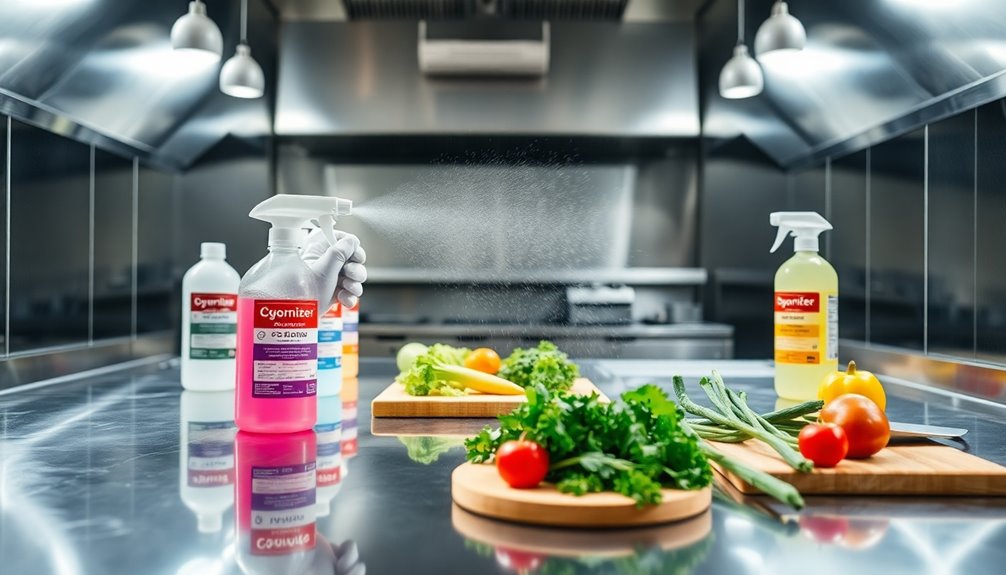
Sanitizing your prep areas is crucial for maintaining food safety because it helps prevent the spread of harmful bacteria and contaminants. When you prioritize the importance of sanitization, you create a safer environment for food preparation.
It’s essential to clean surfaces, utensils, and equipment regularly to eliminate any potential threats. Neglecting this step can lead to cross-contamination, where harmful pathogens from one food item transfer to another, increasing the risk of foodborne illnesses.
By consistently sanitizing, you guarantee that your prep areas remain hygienic and reduce the chances of your customers becoming sick. Remember, a clean workspace not only protects your diners but also upholds your reputation as a responsible food handler. Additionally, using non-toxic cleaners can provide an effective way to sanitize without introducing harmful chemicals into your food preparation areas.
Stay vigilant and make sanitization a priority.
Top Food-Safe Sanitizers: Our Expert Picks
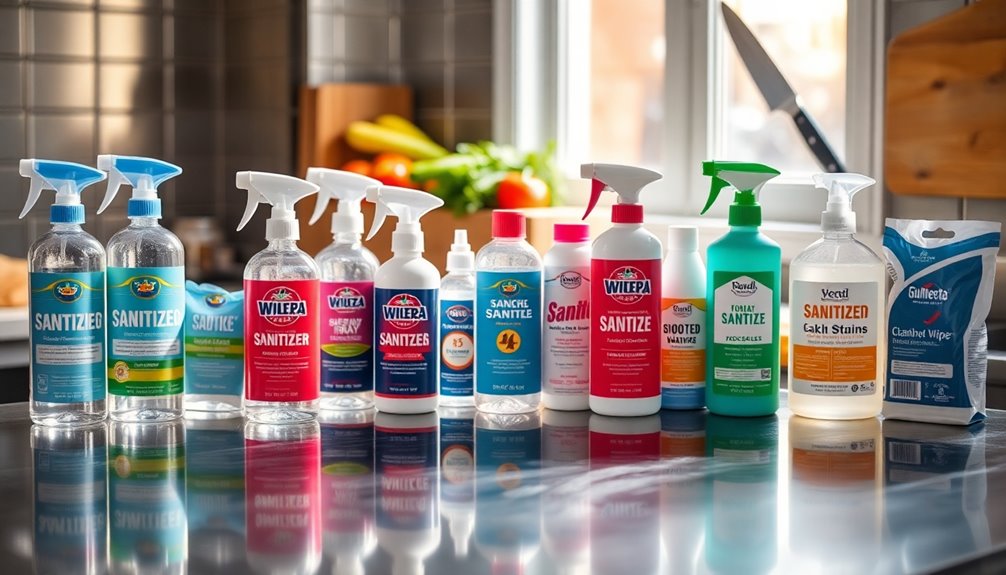
To maintain a safe and hygienic prep area, using the right sanitizers is key. You want options that not only kill harmful bacteria but also guarantee food safety.
Our expert picks include a range of effective sanitizers, from traditional chemical solutions to natural alternatives like vinegar and hydrogen peroxide. These natural options can be just as effective when used correctly. Additionally, consider using natural degreasers to ensure surfaces remain free from grease, as this promotes a cleaner environment for food preparation.
Always check the sanitizer effectiveness against specific pathogens to confirm you’re making the best choice for your kitchen. Consider eco-friendly brands that prioritize safety while delivering top-tier performance.
Whether you prefer chemical or natural solutions, you’ll find that keeping your prep area sanitized is easier with the right products on hand.
How to Use Each Sanitizer Effectively
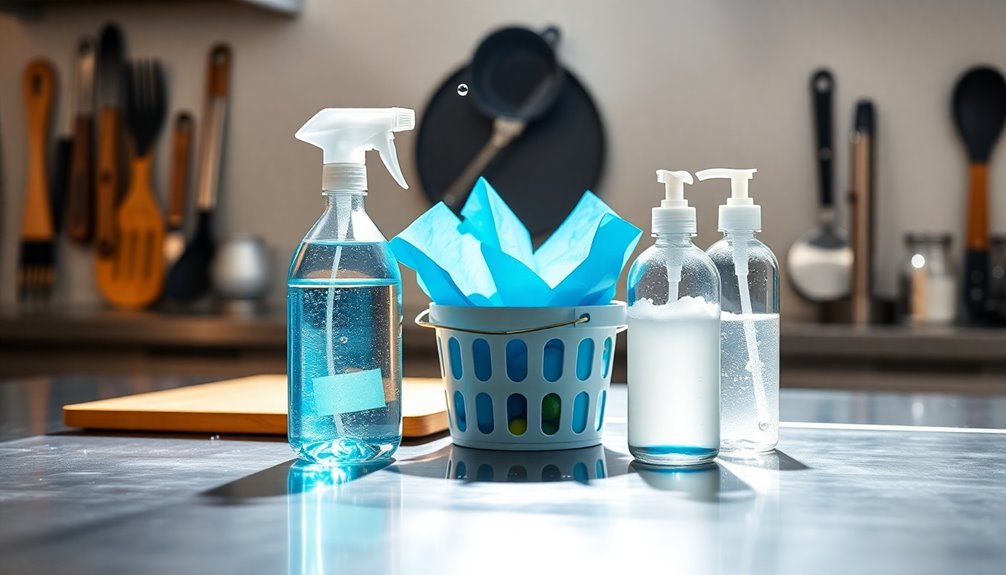
Using sanitizers effectively can make a significant difference in maintaining a safe prep area.
First, always check the sanitizer concentration to confirm you’re using it at the recommended level. Too weak, and it won’t eliminate germs; too strong, and it may damage surfaces.
Always verify sanitizer concentration to ensure effective germ elimination without risking surface damage.
Next, choose the right application technique. Spray sanitizers directly onto clean surfaces and let them sit for the required contact time—this is key for killing pathogens. If you’re using wipes, confirm they’re thoroughly saturated and cover the entire surface.
Don’t forget to follow up by rinsing with water if required, especially on food-contact surfaces. Additionally, consider using eco-friendly disinfectants that are effective while being safe for the environment, such as those made with plant-based ingredients.
Comparing the Features of the Best Sanitizers
When it comes to selecting the best sanitizers for your prep areas, understanding their unique features can guide your decision.
You’ll want to look closely at sanitizer effectiveness comparisons, which reveal how well each product kills bacteria and viruses. Some sanitizers, like quaternary ammonium compounds, offer fast action but may require longer contact times for full effectiveness.
Others, such as chlorine-based options, are known for their broad-spectrum efficacy but can pose risks if not diluted properly. Conducting an ingredient safety analysis is also essential; some formulations contain harsh chemicals that could affect food safety. Additionally, opting for eco-friendly methods can further enhance safety while minimizing environmental impact.
Tips for Maintaining a Clean and Safe Cooking Environment
To guarantee your kitchen remains a hygienic space, follow these essential tips:
- Establish regular cleaning routines for surfaces and equipment.
- Use food-safe sanitizers according to manufacturer instructions.
- Train staff on safety protocols to prevent cross-contamination.
- Keep cleaning supplies organized and easily accessible.
- Implement effective odor management strategies to maintain a fresh and inviting kitchen atmosphere.
Conclusion
In the culinary world, keeping your prep areas pristine is like adding the final dash of seasoning to a gourmet dish. Armed with the right food-safe sanitizers, you’re not just protecting your kitchen—you’re crafting a fortress against harmful bacteria. Use these products wisely, and you’ll create a safe haven where creativity can flourish. Remember, a clean kitchen is the heart of delicious meals, so keep those surfaces sparkling and your culinary dreams alive!